
Written by Arthur Simitian | PartsAdvisory
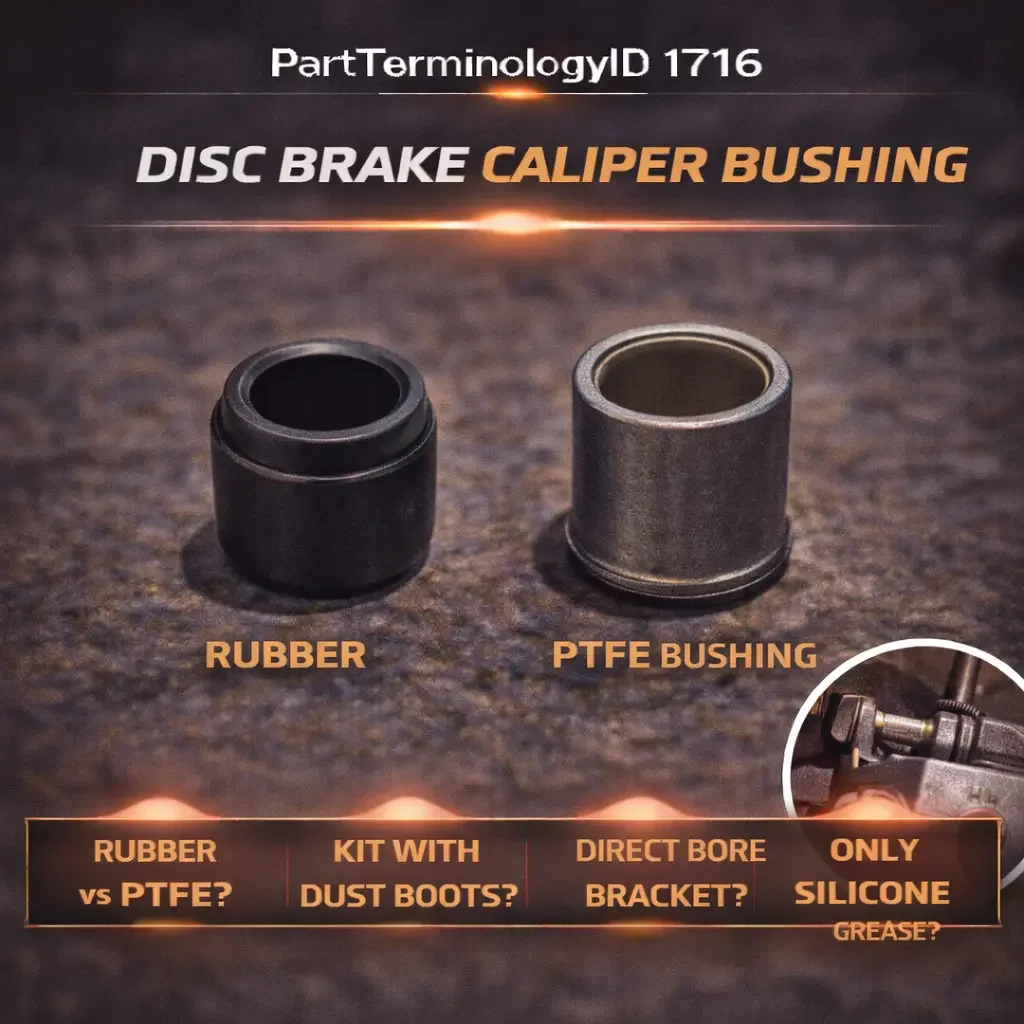
The disc brake caliper bushing is a rubber, Teflon-lined, or composite sleeve pressed into the caliper bracket's slide pin bore that provides a low-friction bearing surface for the slide pin to glide through. On floating caliper designs, the caliper body must slide laterally on its guide pins to center itself over the rotor and apply equal clamping force to both brake pads. The bushing is what makes this sliding motion smooth, quiet, and consistent. Without the bushing, the steel slide pin would ride directly in the cast iron or aluminum bracket bore, metal on metal, with no damping, no contamination barrier, and rapid wear.
Not all floating caliper designs use bushings. Some designs have the slide pin riding directly in a machined bore in the bracket with only grease and a dust boot between the pin and the bore. On these designs, there is no separate bushing component, and the bracket bore itself is the bearing surface (which is why bracket bore corrosion on these designs requires bracket replacement, as covered in PartTerminologyID 1714). Other designs use a pressed-in bushing that can be replaced independently of the bracket, which is the product covered by this PartTerminologyID.
The caliper bushing is a low-cost component ($3 to $15 per bushing, sold individually or in kits of 2 or 4) that is frequently included in caliper hardware kits but also sold separately for buyers who are servicing the slide pin system without replacing the full hardware set.
PIES/PCdb: PartTerminologyID 1716 - Disc Brake Caliper Bushing
PIES 8.0 / PCdb 2.0: No change
What Disc Brake Caliper Bushing Means in the Aftermarket
Bushing types
Rubber bushings. The most common type on domestic and Japanese floating calipers. A molded rubber sleeve (sometimes with an internal steel reinforcement ring) that presses into the bracket bore. The slide pin slides through the rubber bushing with a film of silicone grease between the pin and the bushing inner surface. The rubber provides vibration damping (reducing brake noise transmitted through the caliper) and some tolerance for pin misalignment. Rubber bushings degrade from heat cycling, brake fluid contamination (if the dust boot fails and fluid reaches the bushing), ozone exposure, and age hardening. A hardened rubber bushing loses its damping properties and its ability to maintain a consistent grease film, leading to pin binding, noise, and uneven pad wear.
Teflon-lined (PTFE) bushings. A composite bushing with a Teflon or PTFE inner surface bonded to a metal or rubber outer shell. The Teflon surface provides extremely low friction and does not require as much grease as a plain rubber bushing. Teflon-lined bushings are common on European vehicles (BMW, Mercedes-Benz, Volkswagen/Audi) and on some performance applications. They provide smoother caliper movement and more consistent brake feel, but they are more expensive and can be damaged if the wrong lubricant is used (petroleum-based grease attacks the Teflon bond).
Metal-backed rubber bushings. A rubber bushing with a thin steel outer sleeve that provides a press-fit interference with the bracket bore. The steel sleeve prevents the rubber from creeping or extruding under repeated pin cycling. These are common on heavier vehicles (trucks, SUVs) where the caliper mass and slide forces are greater.
How the bushing fails
Heat degradation. Brake temperatures cycle from ambient to several hundred degrees Fahrenheit during normal driving, and can reach 600 degrees F or higher during aggressive braking. The bushing is located close to the rotor and pad, exposing it to conducted and radiated heat. Repeated heat cycling hardens rubber bushings, causing them to shrink slightly and lose elasticity. A hardened bushing grips the slide pin instead of allowing it to glide, creating the same binding effect as a corroded bore.
Contamination. When the slide pin dust boot tears, road water, salt, and debris enter the pin bore and contact the bushing. Water causes rubber to swell (temporarily improving the seal but increasing friction). Salt accelerates degradation of both rubber and Teflon bonds. Debris embeds in the bushing surface and scores the slide pin, creating a rough surface that accelerates bushing wear.
Wrong lubricant. This is the most common preventable failure. Petroleum-based grease (chassis grease, white lithium grease, general-purpose grease) causes rubber bushings to swell and deteriorate. It can also attack the adhesive bond on Teflon-lined bushings, delaminating the Teflon layer. Only brake-specific silicone grease should be used on caliper bushings and slide pins. A single application of the wrong grease can destroy a new bushing within months.
Improper installation. The bushing must be pressed squarely into the bracket bore. A cocked bushing narrows the bore opening on one side, causing the pin to bind. If the bracket bore is corroded or scored, the bushing will not seat properly and may push out under pin cycling. The bore must be clean and smooth before bushing installation.
What Is Included
Caliper bushings are sold in several configurations:
Single bushing (one bushing for one pin bore)
Bushing pair (two bushings for one caliper bracket, since each bracket has two pin bores)
Bushing kit for one axle (four bushings for two brackets)
Bushing with dust boot and grease packet (a mini slide pin service kit)
The listing must specify the quantity per package and whether the bushing includes the dust boot (the external rubber seal that keeps contamination out of the pin bore). On many designs, the bushing and the dust boot are separate components. On some designs, the bushing incorporates the boot as a single molded piece. The buyer who orders a bushing expecting it to include the boot, or vice versa, will have an incomplete repair.
Top Return Causes
1) Vehicle does not use replaceable bushings
The buyer's caliper bracket has the slide pin riding directly in a machined bore with no separate bushing. The "bushing" in the catalog does not apply to their design. The buyer receives a part they cannot install.
Prevention: "Fits caliper brackets with replaceable pressed-in slide pin bushings. Not all caliper designs use separate bushings. Some designs have the slide pin riding directly in the bracket bore. Verify your bracket uses a replaceable bushing before ordering."
2) Already included in the caliper hardware kit or caliper assembly
The buyer orders a caliper hardware kit or a loaded caliper (PartTerminologyID 1704) that includes new bushings, then separately orders bushings. Duplicate purchase.
Prevention: Cross-reference with the caliper hardware kit and loaded caliper listing. "Verify whether your brake hardware kit or replacement caliper already includes slide pin bushings before ordering separately."
3) Wrong bushing type (rubber versus Teflon-lined)
The buyer's bracket uses Teflon-lined bushings and they receive rubber bushings, or vice versa. The bushing outer diameter, inner diameter, or length may be the same, but the material is wrong. A rubber bushing substituted for a Teflon-lined bushing will have higher friction and different wear characteristics. A Teflon bushing substituted for a rubber bushing may not provide adequate vibration damping.
Prevention: Bushing material in the listing: "Rubber bushing" or "Teflon-lined (PTFE) bushing." "Match the bushing material to your OE specification for proper caliper function."
4) Dust boot not included
The buyer orders the bushing expecting the dust boot to be included (or integrated). The bushing arrives without a boot. The buyer cannot complete the slide pin service without a boot to seal the bore.
Prevention: "Bushing only - dust boot NOT included" or "Bushing with integrated dust boot." Cross-reference the dust boot part number if sold separately.
5) Bushing destroyed by wrong lubricant after installation
The buyer installs new bushings and lubricates them with petroleum-based grease instead of brake-specific silicone grease. The rubber swells or the Teflon delaminates. The bushing fails within weeks. The buyer returns the bushing as "defective."
Prevention: "Lubricate with brake-specific silicone grease ONLY. Do NOT use petroleum-based grease, white lithium grease, or chassis grease. Petroleum-based lubricants damage rubber and Teflon bushings and will cause premature failure."
Catalog Checklist for Attributes
Core taxonomy: Component type: caliper slide pin bushing (sleeve/liner). Bushing material: rubber, Teflon-lined/PTFE, metal-backed rubber. Position: front, rear. Quantity: per bushing, per caliper (2), per axle (4). Separate from caliper bracket (PartTerminologyID 1714), caliper slide pin, caliper dust boot, caliper hardware kit, disc brake caliper (PartTerminologyID 1704).
Fitment: Year, make, model, submodel, trim, engine. Brake package. Position (front/rear). Caliper manufacturer (OE caliper type determines bushing specification).
Specifications: Bushing material (rubber, Teflon/PTFE, metal-backed rubber). Outer diameter. Inner diameter. Length. Integrated dust boot (yes/no).
Included components: Bushing quantity. Dust boot (yes/no). Grease packet (yes/no).
Installation notes: Clean bracket bore before pressing in bushing. Press bushing squarely into bore. Lubricate with brake-specific silicone grease only. Verify slide pin moves freely after bushing installation. Install new dust boot (if not integrated). Check for proper boot seating to prevent contamination entry.
Images: Bushing showing inner and outer surfaces. Bushing installed in bracket bore (cutaway or reference). Boot integration (if applicable). Comparison of rubber versus Teflon-lined if both are offered for the same application.
FAQ
How do I know if my caliper bracket uses replaceable bushings?
Remove the slide pin from the bracket and look inside the pin bore. If you see a rubber or composite sleeve lining the bore, the bracket uses a replaceable bushing. If you see bare metal (cast iron or aluminum) with no liner, the pin rides directly in the bore and there is no separate bushing to replace. On direct-bore designs, if the bore is corroded, the bracket itself must be replaced (PartTerminologyID 1714).
Should I replace the bushings every time I change brake pads?
Inspect them during every pad change. If the bushings are hardened, cracked, swollen, or if the slide pins do not move freely after cleaning and re-greasing, replace the bushings. If the bushings are soft, resilient, and the pins slide freely with fresh grease, they can be reused. Many technicians replace bushings at every other pad change as preventive maintenance, or whenever the dust boots are replaced.
Can I use white lithium grease on caliper bushings?
No. White lithium grease is petroleum-based and will cause rubber bushings to swell and deteriorate. It can also attack Teflon-lined bushings. Use only brake-specific synthetic silicone grease rated for brake caliper temperatures (typically 400-600 degrees F). This grease is chemically compatible with rubber and Teflon and will not cause bushing degradation.
Final Take for Aftermarket Teams
Disc Brake Caliper Bushing (PartTerminologyID 1716) is a low-cost slide pin bearing component where returns are driven by three issues: the vehicle does not use replaceable bushings (the pin rides directly in the bracket bore), the bushing is already included in a hardware kit or caliper assembly (duplicate purchase), and the wrong lubricant destroys the new bushing after installation. The catalog teams that handle this product well specify whether the vehicle uses replaceable bushings in the fitment notes, cross-reference with hardware kits and caliper assemblies to prevent duplicates, state the bushing material (rubber versus Teflon), and include the silicone-grease-only warning that prevents the most common post-installation failure in the category.