
Written by Arthur Simitian | PartsAdvisory
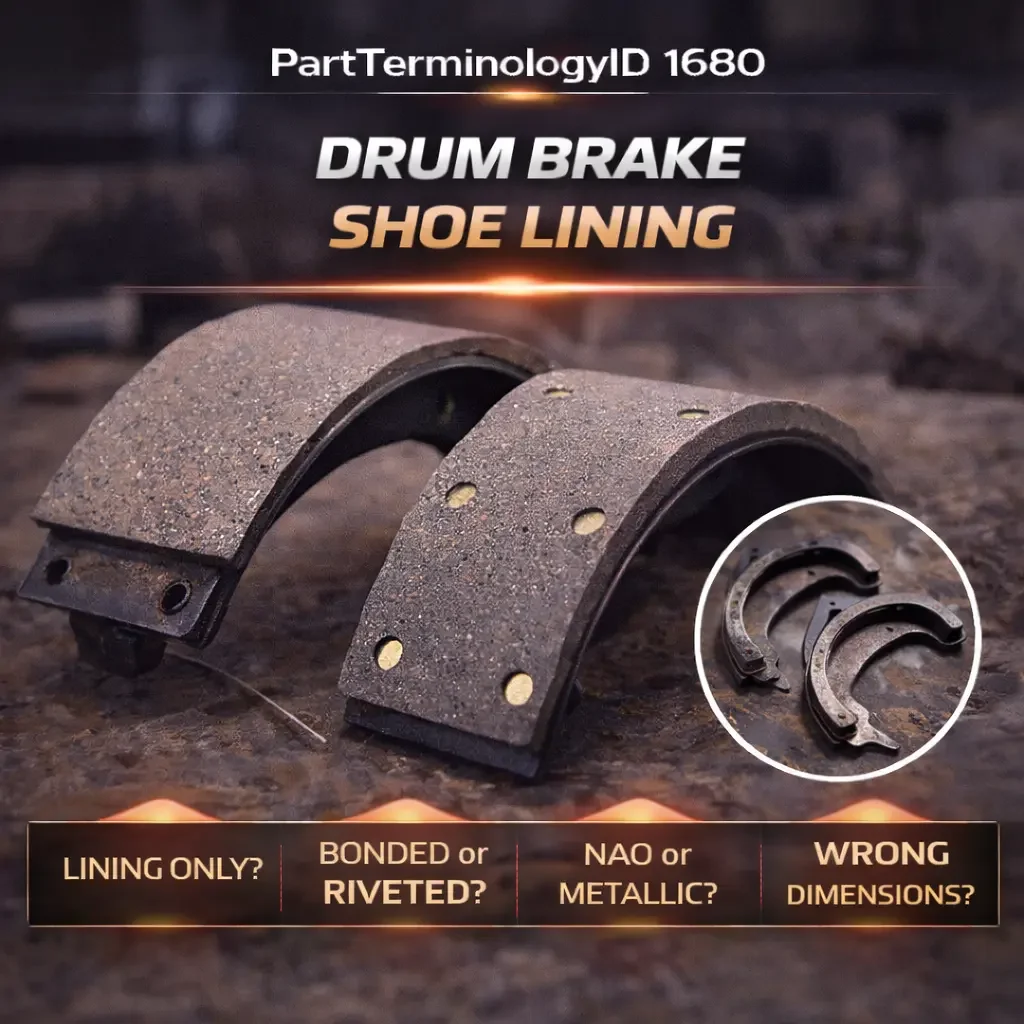
The drum brake shoe lining is the friction material attached to the metal brake shoe platform (the shoe web or table) that contacts the inner surface of the brake drum when the brakes are applied. It is the wear surface that converts the vehicle's kinetic energy into heat through friction, slowing the wheel. When the lining wears down to minimum thickness, the brake shoe must be replaced or, in some applications, the shoe can be relined by bonding or riveting new friction material to the existing shoe platform.
This PartTerminologyID covers the lining material itself - either as a standalone replacement lining (for relining services) or as the friction component specification within a brake shoe listing. In the modern aftermarket, standalone lining material is a niche product used primarily by brake relining shops, fleet operations, heavy-duty truck service, and classic vehicle restorers. The vast majority of passenger vehicle drum brake services replace the complete brake shoe (shoe platform + bonded lining) as a unit rather than relining the old shoe.
PIES/PCdb: PartTerminologyID 1680 - Drum Brake Shoe Lining
PIES 8.0 / PCdb 2.0: No change
What This Part Covers
Standalone lining material (for relining)
Raw friction material sold as a shaped or unshaped piece that a brake shop bonds (with high-temperature adhesive) or rivets to a bare or stripped brake shoe platform. The lining must be arc-ground after installation to match the drum's inner diameter. This product is identified by the shoe dimensions (length, width, thickness) and the friction material formulation.
Lining as a specification within brake shoe listings
When brake shoes are sold as complete assemblies (shoe + bonded lining), the lining material formulation is a key specification that affects braking performance, noise, dust, and wear life. Common formulations include:
Non-asbestos organic (NAO). Made from organic fibers, fillers, and binders. Quiet operation, low dust, gentle on drums. Lower heat tolerance than other formulations. Common on passenger vehicles.
Semi-metallic. Contains metallic fibers (steel, copper, iron) mixed with organic materials. Higher heat tolerance, better fade resistance, longer wear. More aggressive on drum surfaces and noisier than NAO. Common on trucks and towing applications.
Ceramic. Ceramic fibers with organic binders. Low dust, quiet, good heat management, long wear. More expensive. Less common in drum brake applications than in disc brake pads but available for some vehicles.
What this part is NOT
This is NOT the complete brake shoe assembly (which includes the shoe platform, lining, and any attached hardware). Complete brake shoes are a separate PartTerminologyID. PartTerminologyID 1680 specifically covers the friction lining material.
Why Drum Brake Shoe Linings Are Replaced
Normal wear
The lining wears down with every brake application. Most linings have a minimum thickness specification (typically 1/16 inch or 1.5mm above the rivets on riveted shoes, or 1/16 inch total on bonded shoes). Below this thickness, braking effectiveness degrades and the shoe platform or rivets can contact the drum, scoring the drum surface.
Contamination
Differential fluid (from a failed axle shaft seal, as discussed in the PartTerminologyID 1632 post), brake fluid (from a leaking wheel cylinder), or grease contamination saturates the lining material. Contaminated lining cannot be cleaned or restored - it must be replaced. Oil-soaked linings lose friction, create a burning smell, and cause dangerous braking imbalance between left and right sides.
Glazing
Repeated light braking or dragging brakes can heat-polish the lining surface, creating a hard, glassy layer that reduces friction. Glazed linings can sometimes be restored by scuffing with coarse sandpaper, but severe glazing requires replacement.
Cracking or delamination
The lining can crack from thermal stress (repeated heating and cooling) or delaminate (separate from the shoe platform) if the bonding adhesive fails. A delaminated lining can jam between the shoe and drum, locking the wheel.
Fitment Variables
Shoe dimensions: Length, width, and thickness of the lining must match the shoe platform and the drum diameter.
Attachment method: Bonded (glued) or riveted. Bonded linings can be worn thinner before replacement. Riveted linings must be replaced before the rivets contact the drum.
Friction formulation: NAO, semi-metallic, or ceramic. Must match the application's braking demands and the buyer's performance expectations.
Position: Primary (leading) and secondary (trailing) shoes on the same wheel may use different lining lengths, widths, or friction formulations. The secondary shoe is typically longer and does more braking work in a duo-servo system.
Top Return Causes
1) Buyer expected complete brake shoes, received lining material only
The buyer searches "brake shoe lining" expecting assembled shoes and receives raw lining material.
Prevention: "This listing is for brake shoe LINING MATERIAL ONLY (friction material for relining). This is NOT a complete brake shoe assembly. For complete brake shoes with lining already bonded, see [cross-reference]."
2) Wrong dimensions
The lining does not match the shoe platform dimensions or the drum diameter.
Prevention: Lining length, width, and thickness in the specifications. Drum diameter compatibility. Shoe part number cross-reference.
3) Wrong friction formulation for the application
The buyer installs a lining formulation that is too aggressive (scoring the drum) or too soft (fading under load).
Prevention: Friction formulation in the listing. Application guidance: "NAO recommended for standard passenger vehicle use. Semi-metallic recommended for towing and heavy-duty applications."
FAQ
Is relining still done, or should I just buy new shoes?
For passenger vehicles, buying complete new shoes is almost always more practical and cost-effective than relining. Relining is still common for heavy-duty trucks (where shoe platforms are expensive and durable enough to reline multiple times), fleet operations (where volume justifies the relining equipment), and classic vehicle restorations (where correct-appearance linings may not be available as complete shoe assemblies).
How do I know when the lining is worn out?
Inspect through the drum inspection hole (if equipped) or remove the drum. Measure lining thickness. Replace when thickness reaches 1/16 inch above the rivets (riveted shoes) or 1/16 inch total (bonded shoes). Many vehicles also have a wear indicator that produces a scraping sound when the lining is near minimum thickness.
Final Take for Aftermarket Teams
Drum Brake Shoe Lining (PartTerminologyID 1680) is a niche product in the modern passenger vehicle aftermarket but remains relevant for heavy-duty, fleet, trailer, and classic vehicle applications where relining is still practiced. The primary catalog concern is preventing confusion between the lining material (1680) and the complete brake shoe assembly - the buyer who expects assembled shoes and receives raw lining material has received a product they cannot use without specialized relining equipment. Clear labeling ("LINING MATERIAL ONLY") and cross-referencing to the complete shoe assembly listing prevents this return.