
Seat Cover (PartTerminologyID 1316): SKU Explosion, Fitment Complexity, and the Return Problem Nobody Talks About
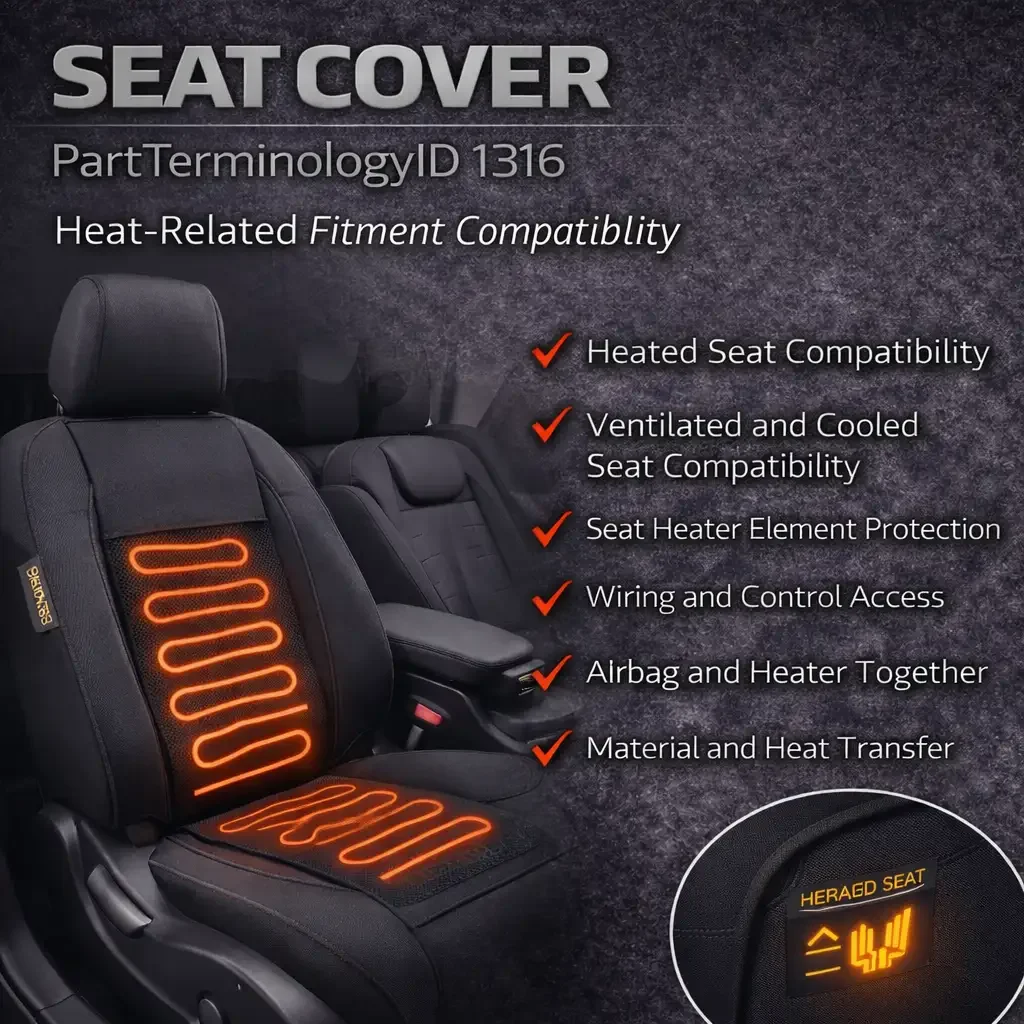
Seat Cover is one of the largest, most complex, and most return-prone part names in the entire aftermarket industry.
It is also one of the most misunderstood from a catalog perspective. Teams treat Seat Cover like a simple accessory category. It is not. It is a fitment, safety, material, configuration, and expectation management problem that touches every corner of the catalog: ACES applications, PIES attributes, product content, images, marketplace listings, and customer service workflows.
The SKU count in this category can be staggering. A single vehicle platform can generate dozens of sellable variations when you account for seat type, row position, split configuration, material, color, fit type, and optional features like airbag compatibility, headrest design, and armrest access. Multiply that across thousands of YMM applications and three fit types (custom, semi-custom, universal), and you are looking at catalogs that easily exceed hundreds of thousands of active SKUs in Seat Cover alone.
This is exactly why PartTerminologyID 1316 needs a disciplined PartsAdvisory approach. Seat Cover is not just a soft trim accessory. It is the single highest-touch interior product in the aftermarket, and every variable multiplies both the catalog and the return rate.
This post is built for aftermarket catalog teams, marketplace sellers, and buyers who want fewer mistakes and fewer returns.
Status in New Databases
Status in New Databases
Current: PIES 7.2 + PCdb Future: PIES 8.0 + PCdb 2.0 Status: No change
What Seat Cover Means in the Aftermarket
Seat Cover in the aftermarket refers to any protective or decorative covering that fits over a vehicle's existing seat upholstery. Unlike seat upholstery replacement (which replaces the factory-installed material), a seat cover is an overlay product that sits on top of the original seat surface.
In aftermarket reality, this shows up in many different product forms:
Custom-fit seat covers designed for a specific vehicle's exact seat dimensions and contours
Semi-custom seat covers sized to fit categories of seats (small bucket, large bucket, bench, etc.)
Universal seat covers designed to fit a broad range of vehicles with elastic, straps, or hook-and-loop attachment
Individual seat covers sold per seat (driver, passenger, rear left, rear right)
Row-based seat cover sets (front pair, rear bench, full vehicle set)
Seat cushion covers (seat bottom only, no backrest)
Seat protector covers (temporary protection for work, pets, children, or outdoor use)
Heated or cooled seat cover overlays with integrated heating or ventilation elements
Pet-specific seat covers designed for rear seat or cargo area animal transport
Child seat protector covers designed to protect the seat surface under a child car seat
This is where catalogs go wrong first. Buyers use "seat cover" to mean very different things:
Some mean a full custom replacement-look cover that fits like factory upholstery
Some mean a cheap throwover cover for temporary protection
Some mean a heated seat pad that sits on top of the seat
Some mean a pet hammock or rear seat protector
Some mean just a bottom cushion cover, not a full seat cover
Some mean a complete vehicle set, others mean a single seat
If the listing title and structured data do not define the product form, coverage, and fit type clearly, buyers will order the wrong product. And in this category, they will return it.
Why This Category Creates So Many SKUs
Seat Cover is the textbook example of a SKU multiplier category. Every variable creates a new sellable combination. Here is what drives the explosion.
Seat type and position
Vehicles have different seat types in different positions. Front seats are typically bucket seats (individual left and right). Rear seats can be a solid bench, a 60/40 split bench, a 40/20/40 split bench, individual captain's chairs, or a third-row bench. Each configuration requires a different cover pattern.
A single vehicle can have:
Driver bucket seat
Passenger bucket seat (may differ from driver if it has no power controls or different bolster shape)
Rear 60/40 split bench (left section, right section, backrest left, backrest right)
Optional rear center armrest with cup holder pass-through
Optional third-row bench or third-row individual seats
Each of these is a different SKU or a different component within a set.
Split configuration
Rear seat split ratios vary widely:
Solid (no split)
60/40
40/20/40
50/50
40/60
Individual captain's chairs
A seat cover set designed for a 60/40 split will not fit a 40/20/40 split. This is one of the highest-frequency return causes in the category.
Headrest type
Some seats have removable headrests. Some have integrated (non-removable) headrests. Some have adjustable headrests with specific post widths. A seat cover designed for removable headrests will have separate headrest covers and openings. A cover for integrated headrests must wrap the headrest as part of the backrest cover. Wrong headrest configuration means the cover either does not go on or bunches at the top of the seat.
Armrest and console access
Many front seats have side-mounted armrests. Rear benches often have fold-down center armrests with cup holders. Some front seats have seat-mounted controls (power adjust, lumbar, heat) on the side. Seat covers must accommodate these features with cutouts, flaps, or pass-through openings. A cover that blocks the center armrest fold-down or covers the power seat controls will be returned.
Side airbag compatibility
This is a safety-critical fitment point. Most modern vehicles have side-impact airbags (SRS) integrated into the outboard side of the front seat backrest. The airbag deploys through a seam in the seat fabric during a collision. If a seat cover does not have an engineered airbag-compatible seam in the correct location, it can block or delay airbag deployment, creating a serious safety hazard.
Custom-fit seat covers from reputable manufacturers are designed with airbag-compatible seams aligned to the specific vehicle's SRS deployment zone. Semi-custom and universal covers often are not. This is not just a fitment issue. It is a liability and safety issue that catalog teams must take seriously.
Seat-mounted features
Modern seats include an expanding list of features that affect seat cover design:
Power seat adjustment controls (side-mounted switches or buttons)
Seat heater and ventilation controls
Seat memory buttons
Seat belt guides and buckle routing
Under-seat storage drawers (trucks)
Built-in child seat tether anchors (LATCH/ISOFIX)
Seat occupancy sensors (for airbag and seatbelt warning systems)
Active headrest systems
Each of these features requires the seat cover to either accommodate access through a cutout or avoid interference. A universal cover that blocks the seat belt buckle, covers the seat occupancy sensor, or prevents access to the power seat switch will be returned or create a safety problem.
Material options
Seat cover material is a major purchase driver and a major return driver. Common materials include:
Neoprene (water-resistant, popular for outdoor and work use)
Leatherette / synthetic leather / PU leather (appearance upgrade)
Canvas / duck cloth (heavy-duty work protection)
Mesh (breathable, lightweight)
Velour (soft, OE-like appearance)
Sheepskin (luxury comfort and temperature regulation)
Ballistic nylon (extreme durability, military-grade)
Microfiber / suede (soft touch, premium feel)
Denim (casual, durable)
Camo patterns (hunting, outdoor lifestyle)
Custom prints, logos, team colors, and personalized designs
Each material may be offered in multiple colors, and each color creates a separate SKU or variant.
Color options
A single material in a single fitment can be offered in many colors:
Black
Charcoal / dark gray
Gray / light gray
Tan / beige
Saddle / brown
Red
Blue
Two-tone combinations (black/gray, black/red, black/tan)
Camo variants (multiple patterns)
Custom colors
Even within "black," there are variations (jet black, off-black, charcoal black) that buyers will return if the shade does not match their interior.
Coverage and set configuration
Sellers offer seat covers in multiple configurations:
Single seat cover (driver only, passenger only)
Front pair (driver and passenger)
Rear bench only
Rear split set (left and right pieces)
Full vehicle set (front pair plus rear bench/split)
With or without headrest covers
With or without armrest covers
With or without console cover
Each configuration is a different buyable product.
Fit type
The three fit types (custom, semi-custom, universal) each create a parallel product line for the same vehicle. A catalog team can easily have three times the SKU count just from fit type alone.
This is how Seat Cover becomes one of the largest categories in any aftermarket catalog.
Naming Confusion That Causes Buyer Mistakes
Seat Cover suffers from several naming overlaps that cause incorrect purchases.
Seat Cover vs. Seat Upholstery
A seat cover is an overlay that goes over the existing factory seat fabric. Seat upholstery is a replacement for the factory fabric itself, typically requiring removal of the old material and installation by a professional. Buyers who want an interior refresh sometimes order seat covers expecting a permanent upholstery replacement, or order upholstery expecting a simple slip-on cover.
Seat Cover vs. Seat Cushion
A "seat cushion" is usually a pad that sits on the seat surface for added comfort. A "seat cover" wraps the entire seat (bottom and backrest). Listings that use these terms interchangeably cause confusion.
Seat Cover vs. Seat Protector
"Seat protector" usually refers to a temporary or utilitarian cover designed for specific use cases: protecting seats from pets, children, work wear, or outdoor activity. A seat protector is not the same as a full seat cover intended for permanent installation and interior appearance enhancement. If the listing blurs this line, buyers who want a fitted interior upgrade will receive a loose utility cover and return it.
Seat Cover vs. Pet Seat Cover / Pet Hammock
Pet seat covers are a specialized subcategory. They typically cover the rear bench and extend upward to create a barrier between the front and rear seats. They are designed for scratch resistance, waterproofing, and easy cleaning. They are not interchangeable with standard rear seat covers. Buyers searching "rear seat cover" may click a pet hammock listing or vice versa.
Seat Cover vs. Seat Heater / Heated Seat Pad
Heated seat pads sit on top of the seat and plug into the 12V outlet. Some sellers list these as "heated seat covers." Buyers who search for a seat cover and find a heated pad are confused, and buyers who search for a heated seat cover may receive a standard fabric cover with no heating element.
The Three Fit Types You Need to Separate
This is the most important structural decision in the Seat Cover category. Every catalog team must separate these three fit types in both backend logic and buyer-facing content.
Custom-Fit Seat Covers
Custom-fit covers are designed for a specific vehicle's exact seat dimensions. The pattern follows every contour, bolster, and feature of the original seat. Custom-fit covers include engineered airbag-compatible seams, precise cutouts for controls and features, and vehicle-specific headrest accommodation.
Best for
Buyers who want a factory-like appearance
Long-term interior protection and appearance upgrade
Vehicles with side airbags (SRS compatibility required)
Buyers willing to pay more for precision fit
Typical fitment needs
Exact year, make, model, submodel
Exact seat configuration (bucket, bench, split ratio)
Exact row position (front, rear, third row)
Headrest type (removable, integrated, adjustable)
Armrest configuration
Side airbag location
Power seat controls
Seat belt routing
Trim level (seat design can differ between base and premium trims)
Common issues
Wrong model year (seat design changed between generations or facelifts)
Wrong split configuration ordered
Wrong trim level (base trim has different seat shape than premium trim)
Custom covers are typically non-returnable because they are made to order
Semi-Custom Seat Covers
Semi-custom covers are designed for categories of seats rather than specific vehicles. They come in standardized sizes (small bucket, large bucket, standard bench, etc.) and are shipped based on the buyer's vehicle year, make, and model. They offer a better fit than universal covers but are not vehicle-specific.
Best for
Buyers who want a good fit at a lower price than custom
Standard seat configurations without unusual features
Vehicles where custom-fit options are not available
Buyers who want quick shipping (no made-to-order wait time)
Typical fitment needs
Vehicle year, make, model (used to select the best size category)
General seat type (bucket vs. bench)
General headrest type
Approximate seat dimensions
Common issues
Fit is close but not exact, leading to visible bunching or gaps at bolsters
May not align properly with side airbag deployment zones
May not accommodate vehicle-specific features (fold-down armrest, under-seat storage)
Buyers expect custom-level fit at semi-custom pricing
Universal Seat Covers
Universal covers are one-size-fits-many products that rely on elastic, straps, hook-and-loop, or stretch fabric to adapt to a range of seats. They offer basic seat protection at the lowest price point.
Best for
Temporary or utilitarian protection (work, pets, outdoor use)
Buyers on a tight budget
Older vehicles where no custom or semi-custom option exists
Seasonal use (beach trips, winter sports, etc.)
Typical fitment needs
General seat size (compact, standard, full-size, truck bench)
Attachment method
Basic dimension compatibility
Common issues
Poor fit on most vehicles (shifting, bunching, sliding)
Does not accommodate side airbags
Does not accommodate power seat controls or armrests properly
Buyer expected a fitted look and received a loose throwover cover
Cover does not stay in place during daily entry and exit
Material wears faster at stress points due to constant movement
The catalog rule: never let a universal seat cover listing inherit the buyer messaging of a custom-fit product. These are fundamentally different products that happen to share the same category name.
Side Airbag Compatibility Is Not Optional
This deserves its own section because it is a safety issue, not just a fitment issue.
Most vehicles manufactured after 2000 have side-impact airbags integrated into the front seatbacks. These airbags deploy through a designated seam in the seat fabric during a side collision. If a seat cover is installed over this deployment zone without an engineered tear-away or breakaway seam, it can:
Delay airbag deployment
Alter the direction of airbag deployment
Prevent the airbag from fully inflating
Create a safety hazard for the vehicle occupant
Custom-fit seat covers from reputable manufacturers are designed with airbag-compatible seams that align precisely with the vehicle's SRS deployment zone. The seam is engineered to tear open under the force of airbag deployment, allowing the airbag to inflate as designed.
Semi-custom and universal seat covers often lack this feature. Some may include a generic "airbag compatible" label without vehicle-specific engineering. This is a gray area that catalog teams need to address clearly.
Catalog best practice:
If the seat cover is airbag-compatible, state it clearly and note that it is designed for vehicles with side-impact airbags
If the seat cover is NOT airbag-compatible, state that clearly and note that it should not be used on seats with integrated side airbags
Never use vague language like "may be compatible with airbags" or "check with your dealer"
Include the SRS or side airbag badge or callout in product images
Color and Material Are Not Small Details
For Seat Cover, color and material are primary purchase drivers and primary return drivers. They are not cosmetic extras. They are core to the buying decision.
Color issues that cause returns
"Black" seat covers can vary from jet black to charcoal to dark gray. If the listing shows one shade and the product arrives in another, the buyer returns it.
Two-tone covers (black/red, black/tan) must match the buyer's interior color scheme. If the "tan" is too warm or too cool compared to the OEM interior, it gets returned.
Aged OEM interiors make new seat covers look mismatched even when the color is technically correct. A new black cover on a sun-faded dark gray interior will look noticeably different.
Photos shot under warm studio lighting make dark gray look like black, leading to expectation mismatch.
Material issues that cause returns
Buyer expected leather-look and received a matte vinyl that does not look like leather
Buyer expected soft neoprene and received stiff, plasticky material
Buyer expected breathable mesh and received a non-breathable synthetic
Canvas covers are stiffer and harder to install than the buyer expected
Sheepskin covers shed fibers onto clothing, which the buyer did not anticipate
Material does not match the feel or texture of the existing interior, creating a mismatched sensory experience
Practical catalog fix
Treat color and material as high-priority attributes in both structured data and buyer-facing content. Include:
Controlled color vocabulary with swatches
Material type clearly labeled in title and first bullet
Texture and stiffness descriptions where relevant
Real-world installed photos under neutral lighting
A disclaimer about color variation between screens and physical product
Top Return Causes in Seat Cover
1) Wrong fit type expectation
Buyer ordered a universal cover expecting a custom-fit look. Or ordered semi-custom expecting custom-level precision.
Prevention: State fit type (Custom-Fit, Semi-Custom, Universal) in the listing title. Do not bury it in the description. Show installed photos for each fit type.
2) Wrong seat configuration
Buyer ordered a 60/40 split cover for a 40/20/40 split seat. Or ordered a bench cover for bucket seats.
Prevention: Add split configuration as a primary fitment qualifier. Include seat diagram images. Add "Does NOT fit 40/20/40 split" exclusion notes where applicable.
3) Airbag incompatibility
Buyer installed a non-airbag-compatible cover on a seat with side airbags.
Prevention: State airbag compatibility clearly. Flag universal covers as "not recommended for seats with integrated side airbags."
4) Color mismatch
Buyer selected the right fit but wrong shade.
Prevention: Use consistent color naming. Include real-world color photos. Add a note that monitor color display varies.
5) Missing feature access
The cover blocks the power seat controls, fold-down armrest, seat belt buckle, or center console pass-through.
Prevention: Note feature accommodation in the listing. Include images showing cutouts for controls, armrest access, and seat belt routing.
6) Product type confusion
Buyer wanted a full seat cover and received a seat cushion pad, pet protector, or heated seat overlay.
Prevention: First line of description: "This is a [full seat cover / seat cushion / pet protector]. It [covers the entire seat including backrest / covers the seat bottom only / is designed for pet transport]."
7) Custom covers are non-returnable
Buyer orders a custom-fit cover, discovers it is made-to-order and non-returnable after it arrives and does not meet expectations.
Prevention: State "made to order" and "non-returnable" clearly before purchase. Require the buyer to confirm vehicle details during checkout.
Compatibility Checklist for Buyers
1) Confirm the exact product type
Full seat cover (backrest + seat bottom + headrest)
Seat cushion cover only (seat bottom, no backrest)
Pet seat protector
Heated or cooled seat overlay
Temporary or utility seat protector
2) Confirm fit type
Custom-fit (made for exact vehicle, best fit, usually non-returnable)
Semi-custom (sized to seat category, good fit, usually returnable)
Universal (one-size-fits-many, basic fit, returnable)
3) Confirm full vehicle details
Year
Make
Model
Submodel and trim level (seat design can change between base and premium trims)
Body style (if applicable)
Country of manufacture (some global models have different seat designs by market)
4) Confirm seat configuration
Front: bucket or bench
Rear: solid bench, 60/40, 40/20/40, 50/50, captain's chairs
Third row: bench or individual (if applicable)
Headrest: removable, integrated, adjustable
Center armrest: fold-down or fixed
Center console: full console or no console
5) Check for side airbags
Look for "SRS" or "Side Airbag" markings on the outboard side of the front seat
If side airbags are present, only use covers marked as airbag-compatible
Universal covers typically are NOT airbag-compatible
6) Verify feature access
Power seat controls accessible
Seat heater/ventilation controls accessible
Seat belt buckle and routing unobstructed
LATCH/ISOFIX child seat anchors accessible
Under-seat storage accessible (trucks)
7) Confirm coverage and set contents
Single seat, pair, or full vehicle set
Front row, rear row, or both
Headrest covers included or separate
Armrest covers included or separate
Console cover included or separate
8) Confirm color and material
Match listing color to vehicle interior color
Confirm material type matches expectations
Review installed photos under neutral lighting
9) Review return policy
Custom-fit covers are usually non-returnable
Semi-custom and universal may be returnable
Confirm before ordering
10) For vehicles with seat-mounted features, confirm compatibility
Heated seats: does the cover allow heat to pass through?
Ventilated seats: does the cover allow airflow?
Seat sensors: does the cover interfere with occupancy detection?
Catalog Checklist for Attributes and Structured Data
Core taxonomy and naming
Terminology Name: Seat Cover
Product form attribute required: Full Seat Cover, Seat Cushion Cover, Pet Seat Protector, Heated Seat Overlay, Utility Seat Protector
Fit type attribute required: Custom-Fit, Semi-Custom, Universal
Controlled synonyms for search: car seat cover, auto seat cover, truck seat cover, seat protector, seat wrap
Fitment structure for custom-fit products
Year
Make
Model
Submodel and trim level
Body style
Seat row (front, rear, third row)
Seat type (bucket, bench)
Split configuration (60/40, 40/20/40, 50/50, solid, captain's chairs)
Headrest type (removable, integrated)
Armrest configuration
Side airbag location and compatibility
Power seat controls location
Seat belt routing
LATCH/ISOFIX anchor access
Heated/ventilated seat compatibility
Notes for mid-year seat design changes
Fitment structure for semi-custom and universal products
Seat size category (compact bucket, standard bucket, full-size bucket, standard bench, full-size bench)
Vehicle class guidance (sedan, truck, SUV)
Dimensional guidance (seat width, backrest height)
Airbag compatibility flag
Stretch or adjustment method
Dimensions
Seat bottom width
Seat bottom depth
Backrest height
Headrest height
Overall installed dimensions
Material attributes
Primary material (neoprene, leatherette, canvas, mesh, velour, sheepskin, etc.)
Secondary material if two-tone or multi-material
Water resistance level
UV resistance
Fire retardancy rating if applicable
Breathability rating
Machine washable yes or no
Dryer safe yes or no
Color attributes
Primary color
Secondary color (if two-tone)
Color family (for filtering)
Manufacturer color name
OEM interior match guidance if available
Swatch image
Safety attributes
Side airbag compatible yes or no
Airbag seam type (engineered tear-away, breakaway stitch, none)
Seat occupancy sensor compatible yes or no
FMVSS or similar testing certification if applicable
Coverage and package content
Coverage: single seat, front pair, rear set, full vehicle set
Headrest covers included yes or no
Armrest covers included yes or no
Console cover included yes or no
Installation hardware included yes or no
Installation instructions included yes or no
Installation
Slip-on design
Strap-and-buckle attachment
Hook-and-loop attachment
Requires seat removal yes or no
Professional installation recommended yes or no
Installation time estimate if available
Customization fields (if offered)
Embroidered logo option
Custom color option
Custom stitch color option
Monogram or name option
Team, brand, or fleet logo option
Non-returnable custom flag
Lead time for custom orders
Image requirements
Main hero image (installed, front seat)
Installed rear seat view
Close-up material texture
Color swatch
Side airbag seam detail (for custom-fit)
Feature access detail (controls, armrest, seat belt)
Packaging contents
Dimensional callout
Universal vs. custom comparison (if both are offered)
Common Buyer Scenarios
Scenario 1: Buyer wants an interior upgrade for a daily driver
The buyer wants their car to look better inside and searches "seat covers" plus their vehicle name. They expect a fitted, clean, leather-look cover.
What goes wrong:
They order a universal cover at a low price expecting custom fit
The cover shifts, bunches, and looks worse than the original seat within a week
They return it and leave a negative review
What helps:
Clear fit type in the title (Custom-Fit, Semi-Custom, Universal)
Installed comparison photos showing each fit type on a similar seat
A note that universal covers will not achieve a factory-like appearance
Price context: custom-fit costs more because it fits better
Scenario 2: Buyer with a newer vehicle with side airbags installs a universal cover
The buyer installs a universal seat cover on a 2022 vehicle with integrated side airbags. The cover has no airbag-compatible seam.
What goes wrong:
In a collision, the side airbag may not deploy properly
Potential injury or liability
What helps:
Every listing for a non-airbag-compatible cover must carry a visible warning
Custom-fit listings must highlight airbag compatibility as a selling point
Add "Not recommended for seats with integrated side airbags" to universal cover listings
Scenario 3: Buyer orders the wrong split configuration
The buyer has a 2020 Toyota Tacoma with a 60/40 split rear bench. They order a rear seat cover for a 40/20/40 split because the listing year range covers both configurations.
What goes wrong:
The cover arrives and does not fit the seat
The return costs shipping both ways and loses the sale
What helps:
Split configuration as a required fitment qualifier
Seat diagram showing the split pattern
Fitment exclusion: "Does NOT fit 40/20/40 split bench"
Scenario 4: Marketplace seller loads thousands of SKUs without enrichment
The seller publishes supplier data with titles like "Seat Cover Black" and basic YMM fitment. No material, no fit type, no configuration detail.
What goes wrong:
High traffic but low conversion
High return rate
Negative reviews citing poor fit, wrong product type, or missing feature access
Marketplace metrics decline, affecting ranking and visibility
What helps:
Mandatory enrichment rules before publish
Fit type in every title
Material in every title or first bullet
Coverage (front, rear, full set) in every title
Split configuration and airbag compatibility in structured data
Scenario 5: Buyer confuses seat cover with pet seat protector
The buyer searches "back seat cover" and clicks a pet hammock listing because the title says "rear seat cover."
What goes wrong:
The buyer receives a pet hammock with side flaps and a headrest strap barrier
It is not what they wanted
What helps:
Product type in the first line: "This is a pet seat protector designed for animal transport, not a standard rear seat cover."
Installed photos showing the product in pet-use context
Category separation in filters and breadcrumbs
Scenario 6: Buyer wants a heated seat cover
The buyer searches "heated seat cover" wanting a plug-in heated pad. They receive a standard fabric seat cover because the listing used "heated seat cover" as a keyword-stuffed term.
What goes wrong:
Product does not heat. Return filed as "not as described."
What helps:
Separate heated seat overlays from standard seat covers in catalog taxonomy
If the product does not include a heating element, never use "heated" in the title
If it does include a heating element, note power source (12V, USB) and heating zones
FAQ
Is Seat Cover the same as seat upholstery?
No. A seat cover is an overlay that fits over existing factory upholstery. Seat upholstery is a replacement for the factory material itself, typically requiring professional installation.
Will a universal seat cover fit my car?
It will physically go on the seat in most cases, but it will not fit well. Universal covers rely on elastic and straps, resulting in a loose appearance with bunching and shifting. If you want a fitted look, use custom-fit or semi-custom covers.
Are seat covers safe with side airbags?
Only if the seat cover is specifically designed with an airbag-compatible seam that aligns with the vehicle's SRS deployment zone. Custom-fit covers from reputable manufacturers include this feature. Most universal covers do not.
Why does the split configuration matter?
Because the seat cover must match the exact way the rear seat divides. A 60/40 cover will not fit a 40/20/40 seat. The pieces are different shapes and sizes. Ordering the wrong split is one of the top return causes in this category.
Can I wash my seat covers?
It depends on the material. Some neoprene and mesh covers are machine washable. Canvas covers may be machine washable. Leatherette and sheepskin covers usually require hand cleaning or professional care. Check the product care instructions before washing.
Are custom-fit seat covers returnable?
Usually not. Custom-fit covers are made to order for a specific vehicle configuration. Because they cannot be resold to another customer, most manufacturers and sellers have a no-return policy on custom orders. Confirm this before ordering.
How do I know if my vehicle has side airbags in the seats?
Look for "SRS" or "Side Airbag" labels on the outboard side of the front seatbacks. Check your vehicle owner's manual. If in doubt, assume your vehicle has side airbags and choose only airbag-compatible seat covers.
What information do I need to order a custom-fit seat cover?
Year, make, model, submodel, trim level, seat row, seat type (bucket or bench), split configuration, headrest type, armrest configuration, and whether your vehicle has side airbags and power seat controls. The more detail you provide, the better the fit.
Do seat covers work with heated and ventilated seats?
Custom-fit covers designed for vehicles with heated and ventilated seats are made with materials that allow heat and airflow to pass through. Universal covers may block heat transfer or airflow. If your vehicle has heated or ventilated seats, confirm compatibility before ordering.
Final Take for Aftermarket Teams
Seat Cover (PartTerminologyID 1316) is one of the largest, most variable, and most return-prone categories in the aftermarket. It combines vehicle-specific fitment, safety requirements, material and color variation, and three fundamentally different fit types into a single part name.
The catalog teams that win in this category are the ones that:
Separate custom-fit, semi-custom, and universal products clearly in every title and listing
Treat split configuration, headrest type, and airbag compatibility as primary fitment qualifiers, not optional notes
Treat color and material as core purchasing attributes, not cosmetic extras
Clarify product type at the top of every listing (full seat cover, cushion cover, pet protector, heated overlay)
State return policy clearly, especially for made-to-order custom covers
Flag airbag compatibility prominently as a safety requirement
Build structured data that supports filtering by fit type, coverage, material, color, and configuration
If your team gets Seat Cover right, you are not just fixing one category. You are building a catalog discipline that scales to every other high-variation, multi-attribute interior accessory category in your catalog.