
Door Lock Knob (PartTerminologyID 1290): Small Hardware, High Mismatch Risk
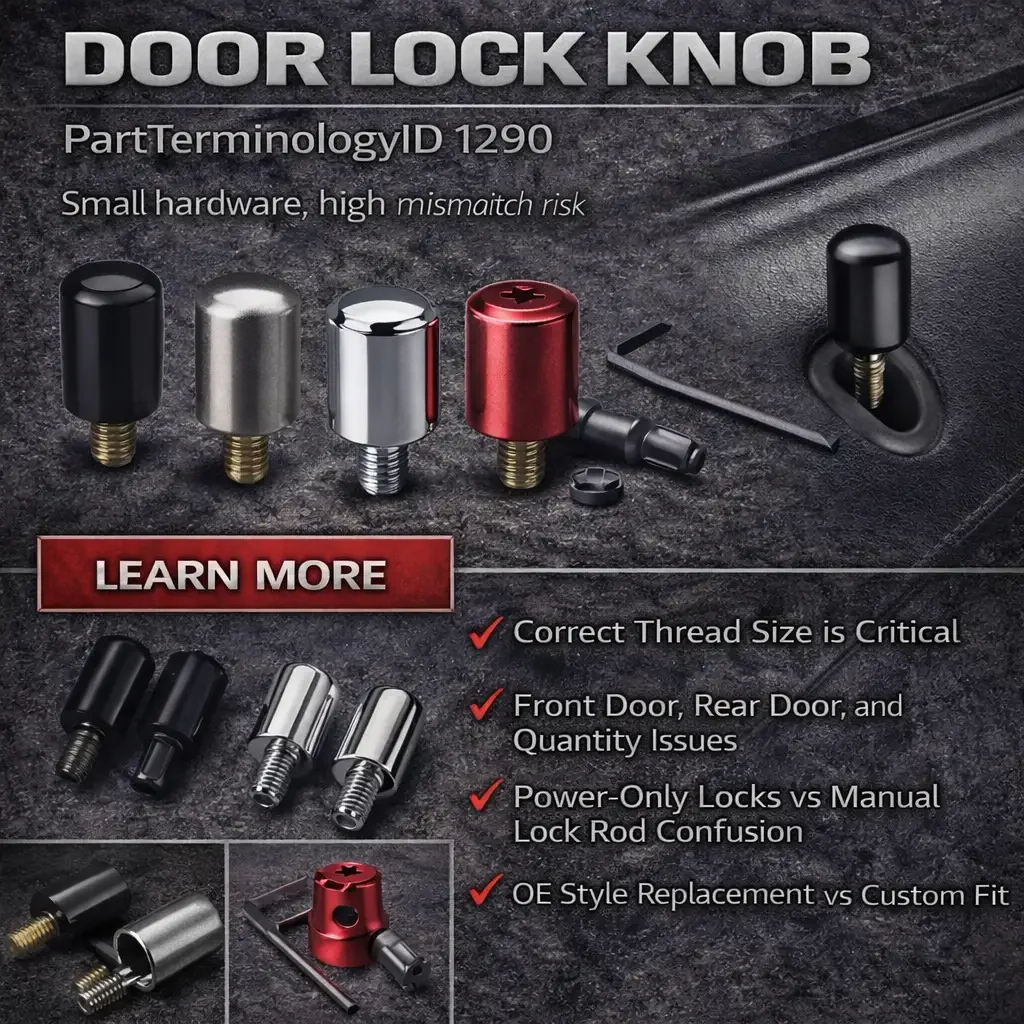
Door Lock Knob is one of those parts that looks too simple to fail in a catalog, and that is exactly why it gets mislisted.
It is small, inexpensive, and easy to overlook. Many teams treat it like generic hardware. Buyers often do the same. They search a quick term, pick a photo that looks close, and assume it will fit.
Then the returns show up.
For PartsAdvisory teams, PartTerminologyID 1290 Door Lock Knob is a perfect example of a small part that still needs strong catalog discipline. The problems are not only fitment. They are also naming, thread type, quantity expectations, and finish matching.
This is a category where a basic title and one photo are not enough.
Status in New Databases
Status in New Databases
Current: PIES 7.2 + PCdb
Future: PIES 8.0 + PCdb 2.0
Status: No change
Why Door Lock Knob Creates More Returns Than It Should
Most buyers think a door lock knob is universal.
Sometimes it is close enough. Many universal knobs exist. But in real aftermarket selling, the mismatch risk is higher than people expect because the buyer may need one of several different things:
a direct replacement knob for an OE lock rod
a custom accessory knob with set screw fitment
a knob cap only
a knob with insert adapter
a matching pair or full set
a specific finish to match interior trim
If the listing is vague, the buyer fills in the missing details. That usually means wrong expectations on thread, quantity, or style.
The result is a low-dollar return that still costs time, margin, and seller reputation.
What a Door Lock Knob Actually Is
A Door Lock Knob is the visible knob or pull piece attached to the door lock rod, usually near the top of the interior door trim area. It lets the user manually lock or unlock the door by moving the lock rod.
Depending on the vehicle and product type, it may be:
a threaded OE-style replacement knob
a push-on style knob
a custom universal knob with a set screw
a decorative upgrade knob
a cap/trim piece for the lock rod area
This is where catalog clarity matters. A listing titled only "Door Lock Knob" is not enough to tell the buyer what they are actually getting.
Naming Confusion That Causes Wrong Orders
This category has a lot of overlap in buyer language. Different people call the same part by different names, and some terms point to nearby parts, not the knob itself.
Common naming confusion
Door Lock Knob vs Door Lock Pin
Many buyers call it a lock pin. That is a valid search synonym, but listings should still identify the exact product type clearly.
Door Lock Knob vs Door Lock Pull
Some buyers use "lock pull" for the same part. Others mean the entire rod and knob assembly. This can create confusion if the listing is only for the knob.
Door Lock Knob vs Door Lock Rod
The rod is the metal linkage shaft. The knob is the top piece. Buyers sometimes search for the rod and order only the knob.
Door Lock Knob vs Door Lock Switch
Modern vehicles with electronic lock switches may not use a traditional exposed knob at all. Buyers can confuse switch trim and lock knobs.
Door Lock Knob vs Door Lock Bezel / Grommet
Some buyers need the trim ring or bezel where the lock rod passes through the door panel. That is a different part from the knob.
Door Lock Knob vs Child Safety Lock Parts
Rear child lock hardware is unrelated, but marketplace search terms can overlap.
The catalog fix is simple:
Keep the terminology standard as Door Lock Knob
Support search synonyms like Door Lock Pin and Lock Pull Knob
Clearly separate knob, rod, bezel, and switch-related parts
Why Fitment Is Harder Than Buyers Expect
This category looks like a simple screw-on part, but there are multiple compatibility points that can fail.
1) Thread size and thread pitch
This is the biggest fitment issue.
Door lock knobs often install on a threaded rod, but thread specs vary. A knob that looks correct can fail to install because:
thread diameter is wrong
thread pitch is wrong
thread depth is too shallow
Universal aftermarket knobs may include adapters, but direct replacement buyers often expect exact thread match.
2) Threaded vs push-on vs set-screw designs
Not all knobs mount the same way.
Common designs include:
threaded OE-style
press-on style
set-screw custom knobs
adapter-based universal styles
If the listing does not explain the mounting style, return risk increases immediately.
3) Manual lock rod vs power lock interior style
Some vehicles still have visible lock rods even with power locks. Others do not.
Buyers may order a knob for a vehicle that uses:
flush lock switch
integrated electronic lock control
different door trim design with no exposed rod
This is a common marketplace issue when the buyer only searches by vehicle and not by actual interior configuration.
4) Front door vs rear door differences
Some vehicles use the same knob front and rear. Others can differ by:
rod length exposure
trim clearance
knob height
style matching
This is less common than thread mismatch, but it still causes returns.
5) Height and diameter clearance
A knob may thread on correctly but still be wrong because:
it sits too tall
it hits trim
it feels oversized
it interferes with window or door panel contours
This matters a lot for custom accessory knobs.
6) Finish and style match expectations
In interior categories, appearance returns are common.
Buyers may need:
black plastic OE look
chrome look
brushed metal style
color-matched set
retro or custom style
If the finish is not clearly shown and described, even correct fit can still get returned.
Common Return Causes in This Category
Door Lock Knob returns usually come from expectation mismatch, not just pure fitment errors.
1) Wrong thread type
Buyer says it "does not screw on" even though the knob looks right in the photo.
2) Buyer expected a set, received one piece
This is one of the most common low-dollar returns in small hardware categories.
If the listing does not clearly say:
Quantity: 1
orQuantity: Pair
buyers assume.
3) Buyer needed the rod or bezel, not the knob
Weak naming causes this. The listing attracts the right search term but the wrong buyer intent.
4) Vehicle does not use an exposed lock knob
This happens on newer vehicles and some trim packages.
5) Custom knob style looked different in person
Fit may be fine, but size, finish, or shape did not match the buyer's interior expectations.
6) Universal product required adapter or set screw install
Buyer expected direct screw-on replacement and did not realize the product is universal/custom.
This is exactly why the title, specs, and images need to work together.
Compatibility Checklist for Buyers
For Door Lock Knob, a Compatibility Checklist is the right choice because thread type, mounting style, and quantity matter just as much as vehicle fitment.
Compatibility Checklist
1) Confirm your vehicle actually uses a visible door lock knob
Some vehicles use electronic lock switches only and do not have an exposed lock rod knob.
2) Confirm what you need
Make sure you need:
knob only
and notlock rod
bezel or trim ring
lock switch
door latch or actuator parts
3) Confirm vehicle details
Year
Make
Model
Submodel or trim
Door hardware details can vary by trim and generation.
4) Check mounting style
Verify whether your original knob is:
threaded
push-on
set-screw style
adapter-based
Do not assume all knobs are threaded.
5) Check thread size and pitch if possible
This is the most important fit step for threaded knobs.
If the listing provides thread specs, match them.
6) Confirm quantity needed
Check whether the listing includes:
one knob
pair
full set (2 or 4)
Do not assume based on the photo.
7) Compare knob size and shape
Check:
height
diameter
tapered or straight shape
top profile
This matters for comfort and interior clearance.
8) Confirm color and finish
Match your interior expectations:
black
chrome
satin
brushed
colored custom finish
9) Check what is included for universal knobs
Some universal/custom knobs include:
set screws
adapter inserts
hex key
extra hardware
Make sure the hardware is included if needed.
10) Review install expectations
Direct replacement knobs install quickly. Universal/custom knobs may need minor setup, tightening, or adapter selection.
Catalog Checklist for Attributes and Structured Data
This is where sellers and catalog teams can clean up a category that gets treated too casually.
Catalog Checklist for PartTerminologyID 1290 Door Lock Knob
Core naming and taxonomy
Terminology Name: Door Lock Knob
Controlled synonyms:
Door Lock Pin
Door Lock Pull Knob
Lock Knob
Keep separate from:
Door Lock Rod
Door Lock Bezel / Grommet
Door Lock Switch
Door Latch / Actuator
Required product type and mounting attributes
OE-style replacement or custom accessory
Mounting style:
Threaded
Push-On
Set-Screw
Adapter-Fit
Thread specification field for threaded products
Set screw size / adapter included field for universal products
This should be mandatory for publish.
Fitment structure
Year
Make
Model
Submodel
Body style if relevant
Door position notes if applicable (front/rear, all doors)
Interior configuration notes if needed
Physical attributes
Overall height
Top diameter
Base diameter
Shape style (round, tapered, billet-style, OE-style)
Material (plastic, aluminum, metal alloy, other)
Finish and appearance attributes
Color family
Finish type (matte, gloss, chrome, satin, brushed)
OE-style appearance yes or no
Decorative/custom style yes or no
Quantity and package contents
Quantity per package
Adapter inserts included yes or no
Set screws included yes or no
Tool included yes or no
Quantity is one of the most important return prevention fields in this category.
Return prevention content
"Knob only"
"Verify thread type before ordering"
"Universal/custom style may require set screw installation"
"This part does not include the lock rod or bezel"
"Sold individually" or "Sold as a pair"
Image requirements
front view
side view
underside / thread opening close-up
hardware included photo
size reference image
finish close-up photo
A thread opening close-up alone can prevent a lot of returns.
Common Buyer Scenarios
Scenario 1: Buyer with a missing knob on an older vehicle
The buyer lost a door lock knob and wants a quick replacement.
What goes wrong:
they order a universal custom knob and expect OE look
thread size does not match
listing did not clearly show quantity
What helps:
OE-style vs custom label in title
thread spec field
quantity shown clearly
Scenario 2: Buyer wants a custom interior look
The buyer wants chrome or billet-style lock knobs for appearance, not just repair.
What goes wrong:
they expect direct screw-on fit with no setup
knob height looks too tall after install
finish does not match the rest of the interior
What helps:
universal/custom install note
dimensions
finish close-up photos
included hardware list
Scenario 3: Buyer searches "door lock pin" and lands on knob listing
This is normal search behavior.
What goes wrong:
buyer actually needed the lock rod or trim bezel
listing title and description are too generic
What helps:
synonyms for search but exact product naming in listing
"Knob only" callout near the top
parts-not-included note
Scenario 4: Marketplace seller publishes generic small hardware title
Supplier title says "Door Lock Knob Black."
What happens:
traffic comes in
conversion is inconsistent
returns happen for thread mismatch and quantity confusion
What helps:
required attributes before publish:
mounting type
thread spec
quantity
OE-style vs custom
Scenario 5: Newer vehicle buyer assumes all cars still have lock knobs
Buyer enters YMM and orders without checking interior style.
What goes wrong:
vehicle has lock switches, no exposed lock rod
buyer says product does not fit
What helps:
fitment notes that mention exposed lock rod requirement
product photos showing actual use case
FAQ
Is Door Lock Knob the same as a door lock pin?
Often yes in buyer language. Many people use the terms interchangeably. In catalogs, it is best to standardize on Door Lock Knob and support Door Lock Pin as a search synonym.
Does Door Lock Knob include the lock rod?
Usually no. Most listings are knob only. The rod is a separate part.
Are all door lock knobs threaded the same?
No. Thread size and pitch can vary. This is one of the biggest return causes.
Do newer vehicles still use door lock knobs?
Some do, and some do not. Many newer vehicles use electronic lock switches and may not have an exposed lock knob.
Why did my new knob not screw on?
Most likely causes are thread mismatch, wrong mounting style, or a universal/custom knob that uses a set screw instead of direct threading.
Are door lock knobs sold individually or in sets?
Both exist. Always check quantity per package. Buyers often assume they are getting a pair.
Can I use a universal custom knob as a replacement?
Sometimes yes, but universal knobs may need adapters or set screws and may not match the original appearance.
What should sellers include in a strong Door Lock Knob listing?
Mounting style, thread spec, quantity, finish, dimensions, hardware included, and a clear "knob only" note.
Final Take for Aftermarket Teams
Door Lock Knob (PartTerminologyID 1290) is a small part, but it behaves like a precision category in the aftermarket.
The mistakes are predictable:
vague titles
missing thread data
unclear quantity
mixed product types
weak images
The fix is also predictable:
define knob vs rod vs bezel clearly
require mounting style and thread attributes
make quantity impossible to miss
separate OE-style and custom styles
use close-up images of the thread opening and included hardware
If your team applies real catalog discipline to small parts like this, you reduce returns and build a stronger foundation across the entire Body and Doors category.