
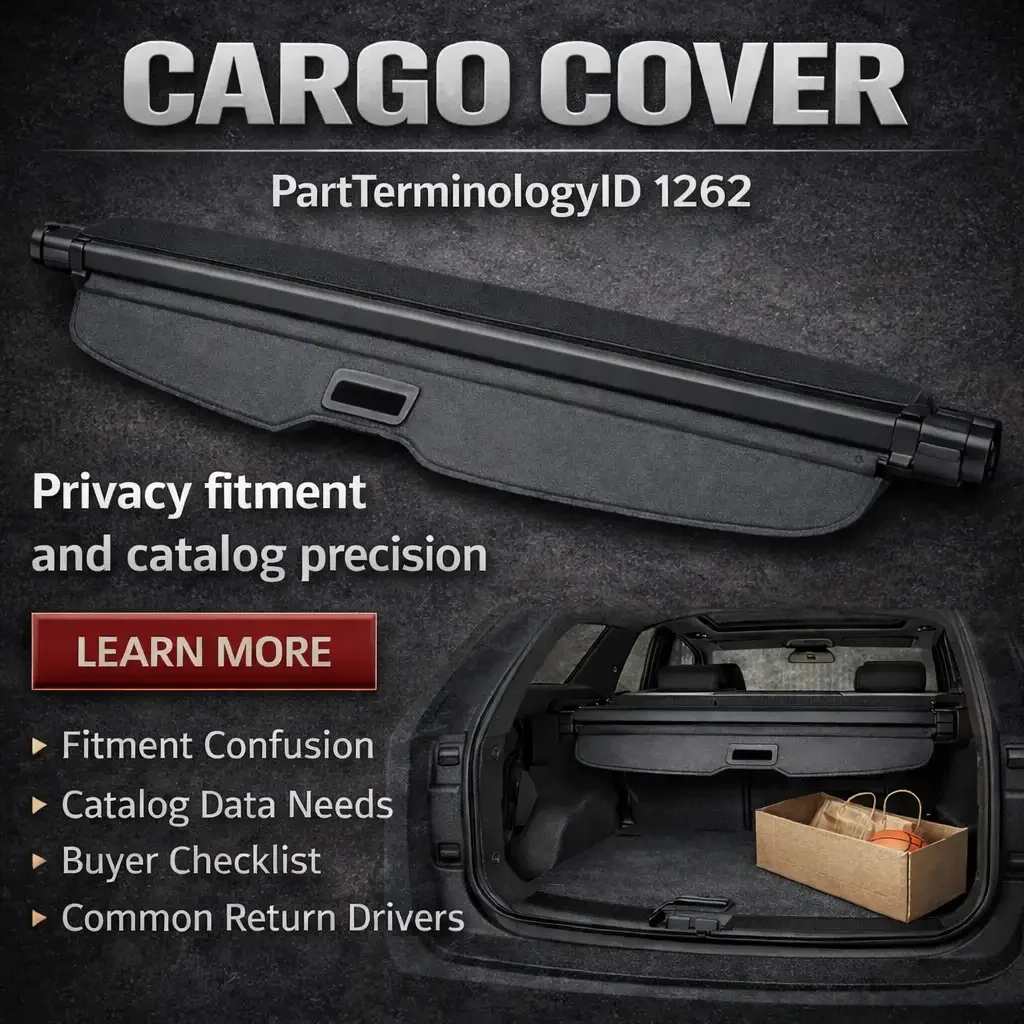
Cargo covers look simple, but they create a surprising number of buyer mistakes and catalog issues.
In the aftermarket, this part is often treated like a generic interior accessory. That is where trouble starts. Buyers assume a cargo cover is universal. Sellers copy short titles from supplier feeds. Marketplace listings mix cargo cover with cargo shade, luggage cover, parcel shelf, and even pickup tonneau cover language. The result is predictable: bad fitment, unhappy buyers, and avoidable returns.
PartTerminologyID 1262 Cargo Cover deserves tighter handling than most teams give it.
This is a practical guide for aftermarket catalog teams, marketplace sellers, and buyers who want to get the right part the first time.
Status in New Databases
Status in New Databases
Current: PIES 7.2 + PCdb
Future: PIES 8.0 + PCdb 2.0
Status: No change
What a Cargo Cover Actually Is
A cargo cover is a privacy and concealment panel used in the rear cargo area of an SUV, crossover, wagon, or hatchback. Its main job is to hide items stored behind the rear seats so they are not visible through the glass.
Depending on the vehicle, the cargo cover may be:
Retractable roller style
Folding hard panel style
Fixed shelf style
Liftgate attached style
Side rail mounted style
From a buyer perspective, the goal is simple: privacy, cleaner look, and light cargo organization.
From a catalog perspective, the part is not simple at all. It is highly vehicle specific and often trim specific.
Why This Part Gets Misnamed So Often
Cargo Cover is one of those terms that gets mixed with several nearby terms in search results and supplier feeds.
Common alternate names include:
Cargo Shade
Luggage Cover
Trunk Cover
Privacy Cover
Cargo Screen
Parcel Shelf (more common in hatchback and some wagon contexts)
This naming confusion is not just a wording issue. It causes real fitment and expectation problems.
The most common naming mixups
Cargo Cover vs Cargo Net
A cargo net restrains items. A cargo cover hides items. Buyers often search for one and click the other because listing titles are too short or too broad.
Cargo Cover vs Pickup Tonneau Cover
Both are called covers. They are completely different product types. One covers a pickup bed. The other covers the interior cargo compartment of an SUV or hatchback.
Cargo Cover vs Parcel Shelf
In some vehicles, especially hatchbacks, the factory part behaves like a parcel shelf. Sellers may list it as a parcel shelf, cargo shade, or cargo cover. If your catalog does not normalize the naming and provide synonyms, you will miss search demand or attract the wrong clicks.
Cargo Cover vs Rear Trunk Lid Trim
Some buyers think the part is a trim panel or floor panel. If images are weak, they may order the wrong interior piece.
For PartsAdvisory style catalog quality, the fix is simple: keep the official part name as Cargo Cover for PartTerminologyID 1262, then support discovery with controlled synonyms in titles, bullets, and product content.
Why Fitment Is Tricky for Cargo Covers
Many teams assume fitment can be handled at make, model, and year level. That is not enough for cargo covers.
Cargo covers are shaped around the cargo opening, side trim panels, seatback position, and mounting points. Even within the same model year, there can be multiple configurations.
Fitment variables that often break compatibility
Body style differences
SUV, crossover, wagon, and hatchback versions of the same nameplate can use different covers.
Wheelbase differences
Standard wheelbase and long wheelbase versions often have different cargo area dimensions and mounting positions.
Trim level interior differences
Higher trims may have side rails, premium side panels, or built in anchor points that base trims do not.
Seat configuration
Vehicles with 2 row and 3 row configurations may use different cover shapes and lengths.
Load floor height
Some trims have adjustable cargo floors. The cover and side support points may change.
With or without factory rails or side slots
Many cargo covers rely on molded side notches or rail hardware. If the vehicle interior lacks them, the cover will not mount correctly.
Color and interior code differences
Fit may be correct, but buyers still return the part if black, gray, beige, or tan does not match their interior.
Liftgate attached vs body mounted design
Some covers move with the liftgate. Others stay in place and retract from a roller canister. Buyers need to know which design they are buying.
This is why Cargo Cover is a classic return trap for sellers who rely on broad vehicle fitment without structured attributes.
Pros and Cons
Cargo Cover is an accessory part, not a standard component that comes with every vehicle in every trim or in every used vehicle sale. It often gets added later, replaced, or sourced after a used purchase. That makes a Pros and Cons section especially useful.
Pros
Improves privacy
Keeps bags, tools, and shopping items out of plain sight.
Cleaner interior look
Makes the cargo area look finished and organized.
Helps reduce sun exposure on cargo
Offers some protection from direct sunlight depending on the vehicle glass and cover material.
Often easy to remove
Many designs can be lifted out when extra cargo height is needed.
Strong resale appeal
Buyers of used vehicles often want missing cargo covers replaced to restore an OEM look.
Cons
Highly fitment sensitive
Wrong body style, trim, or seat setup can make the part unusable.
Color mismatch returns are common
Even when fit is correct, interior color mismatch leads to dissatisfaction.
Used vehicle variation creates confusion
Mounting brackets or side panels may be missing on the vehicle, and buyers blame the cover.
Some designs reduce quick cargo access
Retractable covers are convenient, but fixed or rigid designs can be annoying for frequent loading.
Not always obvious if hardware is included
If listing content is unclear, buyers expect clips, brackets, or side inserts that may not be included.
Compatibility Checklist for Buyers
For Cargo Cover, a Compatibility Checklist is better than a generic buyer checklist because fitment details matter more than price or brand alone.
Use this before ordering.
Compatibility Checklist
1) Confirm exact vehicle details
Year
Make
Model
Submodel or trim
Body style
2) Confirm row configuration
2 row or 3 row setup
Folded third row storage area if applicable
3) Check how the cover mounts in your vehicle
Side slots
Side rails
Peg style mounts
Liftgate tether points
4) Verify cover style
Retractable roller
Folding panel
Fixed shelf
Liftgate connected style
5) Check interior color
Black
Gray
Beige
Tan
Other OEM style color names
6) Confirm hardware contents
Does it include brackets or clips
Is it cover only
Are side supports included
7) Compare product photos to your cargo area
Mounting ends
Canister shape
Handle shape
Cover contour
8) Read notes for exclusions
With premium audio side trim
Without cargo rail package
With adjustable load floor
Without third row
9) Check if the seller is listing OEM style replacement or universal accessory
OEM style is usually vehicle specific
Universal covers need dimensions and may still require modification
10) Ask one last question if anything is unclear
A quick message with your VIN or cargo area photo can prevent a return
Catalog Checklist for Attributes and Structured Data
This is where aftermarket teams can win. Cargo Cover listings perform much better when the catalog carries enough structured detail to support search, fitment filtering, and buyer confidence.
Catalog Checklist for PartTerminologyID 1262 Cargo Cover
Core naming and taxonomy
Terminology Name: Cargo Cover
Controlled synonyms: Cargo Shade, Luggage Cover, Privacy Cover, Trunk Cover (when applicable), Parcel Shelf (where appropriate by platform)
Category placement: Interior Accessories > Cargo Management or Interior Trim and Cargo Accessories (depending on your taxonomy)
Vehicle fitment structure
Year
Make
Model
Submodel
Body style
Bed or cargo configuration where relevant
Notes for row count and cargo floor configuration
Product style attributes
Cover type (Retractable, Folding, Fixed)
Mounting type (Side slot, Rail mounted, Peg mount, Liftgate tether)
Material (Fabric, Composite, Hard panel, Vinyl coated)
Finish or texture (OEM grain, carpeted, smooth)
Color
Position or location (Rear cargo area)
Dimensions and physical validation
Overall width
Span between mounting points
Canister length or housing dimensions for retractable units
Extension length coverage
Depth or panel thickness if rigid
Hardware and package content
Includes brackets yes or no
Includes side clips yes or no
Includes installation instructions yes or no
Includes tether straps yes or no
Package quantity
Interchange and reference data
OEM reference numbers
Supersession references if known
Brand specific part number mapping
Cross references for private label or marketplace SKUs
Buyer facing content fields
Clear compatibility notes
Installation notes
Color disclaimer if needed
What is included in the box
Photos showing mounted and unmounted views
Return prevention flags
Universal vs direct fit flag
Hardware required separately flag
Trim level restrictions
Third row exclusions
Interior color verification required
The key point is this: Cargo Cover is a visual and fitment sensitive product. If your catalog only has a title, a generic image, and broad YMM fitment, your return rate will reflect it.
Common Return Causes and How Sellers Can Prevent Them
Cargo cover returns tend to cluster around a few repeat issues. This makes them very fixable.
1) Wrong trim or body style
What happens
Buyer selects the correct model name but the wrong trim or body style variant.
How to prevent it
Add fitment notes that explicitly call out wagon, hatchback, crossover, long wheelbase, and row count differences. Include cargo area photos when possible.
2) Buyer expected a universal part
What happens
Buyer sees "cargo cover" and assumes it fits most SUVs.
How to prevent it
Use "Direct Fit" or "Vehicle Specific" in titles and bullets. If universal, state required dimensions and installation method clearly.
3) Mounting points are missing in the vehicle
What happens
The ordered cover is correct, but the used vehicle is missing side clips, support rails, or trim inserts.
How to prevent it
Add a note: "Vehicle must have factory cargo cover mounting points." Show close up images of mount ends.
4) Interior color mismatch
What happens
Buyer gets black when their interior is gray or beige.
How to prevent it
Standardize color naming and include multiple photos in neutral lighting. Add a note that screen color may vary but the OEM color code or label is listed.
5) Hardware expectation mismatch
What happens
Buyer expected brackets, clips, or rails, but only the cover arrived.
How to prevent it
Make package contents impossible to miss. Repeat in title bullets, description, and specs.
Common Buyer Scenarios
These scenarios show why cargo cover content has to be both buyer friendly and catalog precise.
Scenario 1: Used SUV owner replacing a missing cargo cover
A buyer purchased a used crossover and noticed the cargo cover was missing. They search "cargo shade" and find several listings. One listing says cargo cover, another says luggage cover, another says parcel shelf.
If your listing includes clear synonyms plus trim specific fitment and a mounted photo, you win the sale and avoid the return.
If your listing is vague, the buyer may order a similar looking unit that does not lock into their side panels.
Scenario 2: Marketplace buyer shopping by photo only
On large marketplaces, buyers often skim images first and read later. If the listing image shows only a studio shot of the cover, they may not understand mounting type or vehicle compatibility.
A better listing includes:
Hero photo of the cover
Mounted in cargo area photo
Close up of mount ends
Color label or finish callout
Hardware photo if included
For Cargo Cover, images carry a lot of the fitment burden.
Scenario 3: Seller using supplier feed with weak data
A seller imports a feed with title "Cargo Cover Black" and a broad fitment list. No trim notes, no mounting details, no dimensions, no hardware content.
Orders come in fast, but so do returns.
This is exactly where catalog discipline matters. Cargo Cover is a good example of a part that needs enrichment before publishing. It is not enough to trust a supplier title.
Scenario 4: Buyer wants privacy but also full cargo space
The buyer wants a cover for daily errands but needs to remove it on weekends for larger cargo. They are deciding between a retractable unit and a rigid panel.
Your listing should explain the usage difference:
Retractable is convenient for everyday use
Fixed or rigid can be sturdier but less convenient to move
A small usage note can reduce both returns and bad reviews.
FAQ
What is the difference between a cargo cover and a cargo shade?
In most aftermarket listings, they usually refer to the same product type. "Cargo shade" is a common alternate term for a cargo cover. The important part is verifying fitment, mounting style, and vehicle configuration.
Is a cargo cover universal?
Usually no. Most cargo covers are vehicle specific and often trim specific. Universal options exist, but they require careful dimension checks and may not look or function like an OEM style unit.
How do I know if my vehicle is missing the mounting hardware?
Check the side trim panels in the cargo area for slots, clips, or attachment points. Compare them to listing photos. If your vehicle is used, some hardware may have been removed.
Does a cargo cover include the side rails or brackets?
Not always. Some listings include cover only. Others include clips or brackets. Always verify package contents before buying.
Why does color matter so much on this part?
Cargo covers are visible through the rear glass and when the liftgate is open. A black cover in a gray interior may fit perfectly but still look wrong to the buyer, which leads to returns.
Can I use a cargo cover if I have a third row SUV?
Sometimes yes, sometimes no. It depends on whether the cover is designed for the cargo area behind the second row or behind the third row, and whether your trim includes the required side mounts. Row configuration should always be checked.
Is a cargo cover the same as a parcel shelf?
Not always, but in many hatchback and wagon applications the terms can overlap. Catalog teams should keep the official terminology as Cargo Cover for PartTerminologyID 1262 and use parcel shelf as a searchable synonym where appropriate.
What is the best way for sellers to reduce cargo cover returns?
Use tighter fitment, stronger images, clear package contents, color accuracy, and explicit notes about mounting points and trim restrictions. Cargo Cover is a classic case where better structured data directly reduces returns.
Final Take for Aftermarket Teams
Cargo Cover (PartTerminologyID 1262) is a small category with outsized return risk if you treat it like a universal accessory.
It sits at the intersection of fitment, visual expectations, and naming confusion. That means your catalog strategy matters as much as your product source.
If you want better conversion and fewer returns, focus on three things:
Normalize naming and synonyms without losing terminology discipline
Capture fitment and mounting details beyond basic YMM
Show buyers exactly what they are getting, including color and hardware contents
For PartsAdvisory style catalog operations, Cargo Cover is a strong example of how clean structure and buyer clarity can outperform bigger ad spend.