
Winch (PartTerminologyID 1240): Ratings, Rope Options, and Mounting Fitment Rules
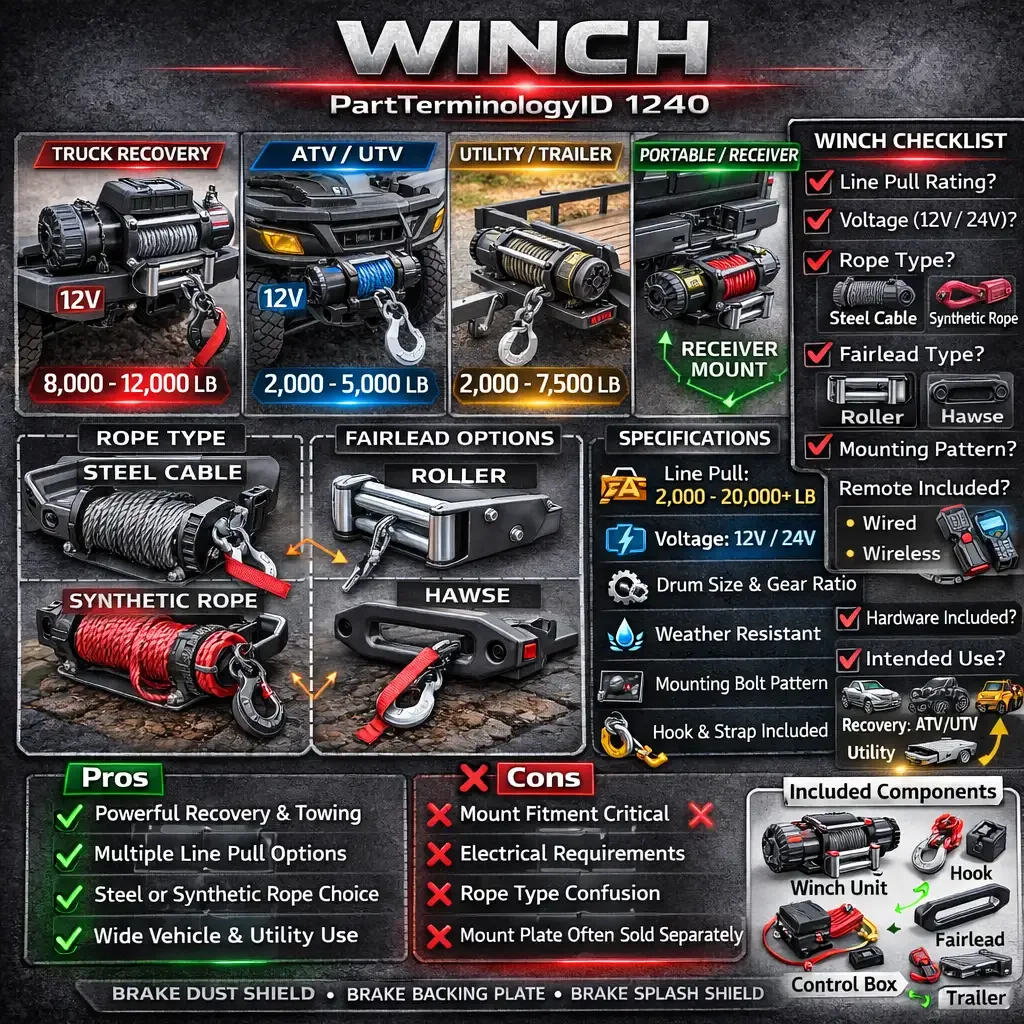
Winch is one of the highest intent categories in truck, off-road, and utility accessories, and one of the easiest categories to miscatalog if your listing is too generic.
Buyers are usually not browsing when they shop for a winch. They are trying to solve a real use case:
vehicle recovery
trailer loading
utility pulling
farm use
work truck use
ATV or UTV recovery
That is why PartTerminologyID 1240 deserves a stricter catalog approach.
The word Winch sounds universal. It is not. Winches vary by line pull rating, mounting pattern, voltage, rope type, drum size, fairlead style, control box layout, weather sealing, and intended use. A 12V recovery winch for a truck bumper is not the same product as a trailer winch, and neither is the same as a smaller ATV winch.
When catalog data is weak, the same problems show up every time:
buyer orders the wrong line pull rating
buyer assumes the winch fits their bumper plate
buyer expects synthetic rope and receives steel cable
buyer expects a roller fairlead but the box includes hawse
buyer does not realize wiring length or battery requirements
buyer expects wireless remote included
buyer orders a utility winch for recovery use
This is a category where listing clarity directly affects safety, install success, and return rate.
This PartsAdvisory guide is built for aftermarket catalog teams, marketplace sellers, and e-commerce operators who want cleaner Winch listings and fewer fitment mistakes.
What a Winch Usually Means in the Aftermarket
In aftermarket automotive and powersports catalogs, Winch usually refers to a powered pulling device with a drum and line (steel cable or synthetic rope), used for recovery, loading, or utility pulling.
Common Winch applications include:
truck and SUV recovery
Jeep and off-road recovery
ATV and UTV use
trailer loading or equipment movement
work vehicle utility pulling
A typical winch system may include:
winch unit (motor, drum, gearbox)
line (steel cable or synthetic rope)
hook
fairlead
control box / solenoid pack
wired remote
mounting hardware (varies by brand and kit)
It usually does not include:
vehicle-specific winch mount plate or bumper
battery upgrade components
recovery straps or shackles
snatch block
tree saver
recovery gloves
isolator switch kit
wireless remote (varies)
This is important because many buyers assume a winch kit is a complete recovery setup. Most are not.
Why Winch Creates Catalog Confusion
Winch is a broad term, and suppliers use it across very different product families.
Naming confusion
Winch may be listed as:
Recovery Winch
Electric Winch
Truck Winch
ATV Winch
Utility Winch
Trailer Winch
Off-Road Winch
These are not interchangeable.
A buyer searching "Winch" may click a product that technically is a winch but wrong for the use case. If the title and attributes do not clarify intended application, the order may fail before installation even starts.
Use-case confusion
The biggest catalog mistake in this category is mixing these use cases:
vehicle recovery winch
trailer utility winch
powersports winch
industrial or non-vehicle pulling winch
If the listing does not clearly identify intended use, buyers compare by price only and choose incorrectly.
Component confusion
Winch kits vary a lot in what is included:
steel cable vs synthetic rope
roller fairlead vs hawse fairlead
wired remote only vs wired and wireless
control box mounted on winch vs remote mount
hook and straps included vs hook only
Catalog teams often publish supplier data without normalizing these fields, which creates avoidable returns.
Status in New Databases
Status in New Databases
PartTerminologyID: 1240
Terminology Name: Winch
Current: PIES 7.2 + PCdb
Future: PIES 8.0 + PCdb 2.0
Status: No change
The terminology remains stable. The return reduction opportunity is in structured product data around line pull, rope type, mount pattern, electrical specs, and included components.
Core Winch Types and Why They Need Separate Catalog Handling
If your catalog treats all winches as one generic product class, buyers will compare the wrong products and return rates will rise fast.
1) Electric Recovery Winches
These are the most common off-road and truck category winches.
Common features:
12V vehicle power (sometimes 24V in certain applications)
planetary gear design on many models
steel cable or synthetic rope
fairlead and remote included on many kits
bumper or mount plate installation
Common confusion:
buyer assumes any electric winch fits any bumper
buyer chooses by price and ignores line pull
buyer expects the same rope type shown in another listing
buyer does not check control box placement clearance
Catalog details that matter:
line pull rating
voltage
rope type and length
fairlead type
mounting bolt pattern
control box style and position
remote type
intended use (recovery)
2) ATV and UTV Winches
Smaller platform-specific winches with different mounting and load expectations.
Common features:
lower line pull ranges than truck winches
compact form factor
powersports-specific mount compatibility
often short line length vs truck recovery winches
Common confusion:
buyer orders truck winch for ATV mount
buyer orders ATV winch for larger side-by-side load needs
buyer assumes universal mount plate fit
Catalog details that matter:
ATV/UTV classification
line pull rating
mount pattern
vehicle or mount compatibility notes
rope/cable type
remote and switch options
3) Utility and Trailer Winches
These may be used for loading or controlled pulling and are often not intended for vehicle recovery.
Common features:
utility-focused marketing
different duty and usage patterns
may have different brake and control behavior
sometimes lower-cost product positioning
Common confusion:
buyer assumes a trailer winch is recovery-ready
buyer expects weather sealing and recovery accessories
buyer compares line pull only and ignores intended use
Catalog details that matter:
intended use
duty notes
line pull rating
power type
mount details
included controls and line type
4) Hydraulic Winches
Less common in general retail but important for some heavy-duty and commercial buyers.
Common features:
hydraulic system integration
different install requirements
consistent duty performance in some applications
Common confusion:
buyer assumes plug-and-play like electric winch
buyer overlooks hydraulic requirements and compatibility
Catalog details that matter:
hydraulic classification
required hydraulic system specs
mount pattern
line pull
line type
control requirements
5) Portable or Receiver-Mounted Winch Systems
These are sold for flexibility across multiple vehicles or use points.
Common features:
portable mount tray or receiver system
quick-connect wiring setups on some kits
utility and recovery crossover use cases
Common confusion:
buyer assumes included receiver mount
buyer assumes wiring kits are universal
buyer expects the same stability as a dedicated bumper mount
Catalog details that matter:
portable classification
receiver mount included yes or no
wiring kit included yes or no
line pull
use-case limitations
Pros and Cons for Buyers and Sellers
Winch is an accessory category, so adding a Pros and Cons section helps buyers choose correctly and helps catalog teams reduce returns.
Pros
High-intent category with strong conversion potential
Strong attachment sales with recovery gear and accessories
Multiple price tiers support broad buyer segments
Premium features like synthetic rope and wireless control improve AOV
Clear spec-based listings reduce returns significantly
Cons
Buyers often choose by line pull only and ignore mount fitment
Rope type confusion (steel cable vs synthetic rope) is common
Mounting pattern and bumper clearance issues cause install failures
Electrical requirements are often underestimated
Utility winches and recovery winches get mixed in weak catalogs
This category performs best when your listing teaches the buyer what matters before checkout.
Line Pull Rating Is Not the Same as Vehicle Fitment
This is the most important catalog education point for PartTerminologyID 1240.
Many buyers think:
“If the rating is high enough, it fits my setup.”
That is not enough.
Line pull rating matters
Yes, line pull is a primary decision factor. It should be visible and structured.
But line pull alone does not answer:
will it mount to the bumper or plate
does the control box clear the grille
does the fairlead match the bumper opening
does the rope type match the fairlead
does the electrical system support the setup
Catalog best practice
For every winch listing, surface:
line pull rating
intended use class (truck recovery, ATV/UTV, utility, trailer)
mounting pattern
rope type
fairlead type
voltage
If you only publish line pull and brand, the listing is incomplete.
Rope Type and Fairlead Compatibility
This is one of the most common return triggers in winch listings.
Steel cable winches
Common features:
durable and familiar to many buyers
often paired with roller fairlead
common in value and utility-focused products
Common buyer confusion:
buyer expected synthetic rope from product photo family
buyer assumes all fairleads are interchangeable
buyer does not check cable length and diameter
Synthetic rope winches
Common features:
lighter weight
popular in premium off-road builds
often paired with hawse fairlead
strong buyer preference in many off-road segments
Common buyer confusion:
buyer orders synthetic rope winch and receives steel cable variant
buyer assumes roller fairlead is included
buyer does not verify rope length or protective sleeve details
Catalog best practice
Always publish:
line type (steel cable or synthetic rope)
line length
line diameter
fairlead included yes or no
fairlead type (roller or hawse)
If the same winch model is sold in both rope variants, do not bury the difference in a long description. Make it a visible attribute and title qualifier.
Mounting Fitment and Bumper Compatibility
Winch returns often happen because the buyer confirms vehicle fitment but not mount fitment.
A winch may be suitable for the vehicle but still not fit the actual hardware on the vehicle.
Mounting details that matter
mounting bolt pattern
winch footprint dimensions
bumper compatibility notes
winch plate compatibility
fairlead mounting spacing
control box mounting position and clearance
clutch lever access after installation
Common buyer mistakes
assumes “fits Jeep” means fits any aftermarket bumper
ignores bumper opening size and fairlead cutout
chooses integrated control box model when bumper requires remote mount control pack
does not check control lever access after install
Catalog best practice
Use a clear compatibility note in plain language:
Vehicle-specific winch mount or winch-ready bumper required
Confirm winch mounting pattern and fairlead opening before ordering
This one note prevents many wrong purchases.
Electrical Requirements and Duty Expectations
Winch buyers often underestimate the electrical side of the setup.
Electrical fields that matter
voltage (12V, 24V, etc.)
motor type if supplied
amp draw information if supplied
control type
wired remote included yes or no
wireless remote included yes or no
battery cable length if included
quick-connect wiring if portable kit
Duty and use expectations
Not every winch is intended for the same usage pattern. Some are built and marketed for recovery. Some are utility-focused. Some buyers expect continuous heavy pulling from a winch not designed for that use profile.
Catalog best practice
Do not invent duty claims. Use manufacturer language for:
intended use
duty notes
operating notes
sealing/weather resistance
This is especially important for preventing misuse and dissatisfaction.
Materials, Weather Resistance, and Finish
Winch is a visible and exposed product. Finish and sealing matter.
Common buyer priorities
corrosion resistance
weather sealing
finish durability
UV resistance on rope and accessories
control box protection
Common catalog mistakes
product title does not identify finish
no weather resistance or sealing info shown
one generic image used across multiple finish or rope variants
Catalog best practice
Include:
finish
corrosion-resistant coating language
weather resistance or sealing rating if supplied
control box configuration and protection notes
For off-road and truck buyers, these are not cosmetic details only. They affect trust and product selection.
Compatibility Checklist for Winch Buyers
Use this high on the product page and in marketplace bullets.
Compatibility Checklist
Confirm your intended use is recovery, ATV/UTV, trailer, or utility
Confirm line pull rating fits your use case
Confirm mounting pattern matches your winch plate or bumper
Confirm your bumper or plate supports the required fairlead mounting
Confirm rope type (steel cable or synthetic rope)
Confirm line length and diameter
Confirm fairlead type (roller or hawse) and whether it is included
Confirm voltage (12V or other) matches your setup
Confirm control box style fits your bumper clearance
Confirm wired remote and wireless remote inclusion
Confirm hardware included and what is not included
Confirm a vehicle-specific winch mount or winch-ready bumper is installed if required
Read all installation and usage notes before ordering
This checklist dramatically reduces wrong-fit and wrong-feature returns.
Catalog Checklist for Structured Data and Attributes
PartTerminologyID 1240 is a category where structured data is the listing.
Catalog Checklist
Use PartTerminologyID 1240 and exact term Winch
Add required Winch Type attribute:
Electric Recovery
ATV/UTV
Utility/Trailer
Hydraulic
Portable/Receiver Mounted
Populate line pull rating
Populate voltage
Populate rope type (steel cable or synthetic rope)
Populate line length
Populate line diameter
Populate fairlead included yes or no
Populate fairlead type (roller or hawse)
Populate mounting bolt pattern
Populate winch dimensions if supplied
Populate control box type and position
Populate wired remote included yes or no
Populate wireless remote included yes or no
Populate hook included yes or no
Populate mounting hardware included yes or no
Populate finish and corrosion-resistant coating
Populate weather sealing / IP rating if supplied
Add a plain-language Contents Included field
Add a plain-language What You May Still Need field
Add a plain-language Mounting Requirements note
Use variant-specific images for steel cable vs synthetic rope versions
A strong internal QA rule for Winch is simple. If line pull, rope type, and mounting pattern are missing, do not publish.
Common Buyer Scenarios and How to Prevent Returns
Scenario 1: Buyer ordered the wrong winch for the job
They bought a utility winch for vehicle recovery because the listing only said "Winch."
Prevention: Put intended use in the title and attributes, not just in description copy.
Scenario 2: Buyer expected synthetic rope but received steel cable
The product family photo showed both variants and the listing title did not specify line type.
Prevention: Put rope type in the title and use separate variant images.
Scenario 3: Winch does not fit the bumper or plate
The buyer checked vehicle fitment but not winch mount pattern and control box clearance.
Prevention: Surface mounting bolt pattern and add a visible bumper/mount compatibility note.
Scenario 4: Buyer expected wireless remote included
The listing mentioned remote control but did not specify wired only vs wired plus wireless.
Prevention: Use explicit inclusion fields for wired remote and wireless remote.
Scenario 5: Buyer expected fairlead included
The winch image showed a fairlead on an installed vehicle photo, but the box contents differed.
Prevention: Add a clear contents section and fairlead included yes or no field.
Scenario 6: Buyer underestimated electrical setup
They did not expect battery cable routing or current draw considerations.
Prevention: Add voltage and control system info prominently and include a brief install expectations note.
Scenario 7: Buyer wanted a hidden bumper setup but cannot access the clutch lever
The chosen winch control layout does not work well with the bumper design.
Prevention: Add control box and clutch access notes when available, and show install photos if possible.
Naming Best Practices for Listings
In the catalog record
Use the exact term:
Winch
In listing titles
Add the details buyers actually compare:
Winch, 12000 lb, Synthetic Rope, 12V, Hawse Fairlead
Winch, 9500 lb, Steel Cable, 12V, Roller Fairlead
ATV/UTV Winch, 4500 lb, Synthetic Rope, 12V
The goal is not to cram every spec into the title. The goal is to answer the biggest questions:
what type of winch
what rating
what line type
In product descriptions
Use one expectation-setting line near the top:
“This listing is for the winch assembly and included components shown in the contents section. Vehicle-specific mount plates or winch-ready bumpers may be required.”
That one line prevents a lot of frustration and support tickets.
FAQ
Is a Winch universal?
No. Even if the line pull rating is right, the winch still needs the correct mount pattern, fairlead setup, and bumper or plate compatibility.
What is the biggest Winch catalog mistake?
The biggest mistake is listing a winch by brand and rating only, without rope type, mount pattern, and intended use.
Does line pull rating alone determine fitment?
No. Line pull is a capacity spec. Fitment depends on mount pattern, dimensions, fairlead setup, and control box clearance.
Why does rope type matter so much?
Buyers often have a strong preference for steel cable or synthetic rope, and each setup usually pairs with a specific fairlead style. If this is unclear, returns go up quickly.
Does a winch include the mount plate or bumper?
Usually no. Many listings include the winch and related components only. Vehicle-specific winch mounts or winch-ready bumpers are often sold separately.
Are all winches for vehicle recovery?
No. Some are utility or trailer winches and are not the same as off-road recovery winches.
What attributes matter most for Winch?
Winch type, line pull rating, rope type, fairlead type, voltage, and mounting pattern are the most important fields.
Should fairlead type be in the listing title?
Yes, especially when the same product family has steel cable and synthetic rope variants. It helps buyers avoid ordering the wrong setup.
Is a wireless remote always included?
No. Some winches include wired remote only, some include both, and some sell wireless kits separately.
What should sellers show in images for Winch?
At minimum, show a product-only image and make sure the listing clearly identifies rope type and included components. Install photos help but should not replace product photos.
Final Takeaway for Catalog Teams and Sellers
PartTerminologyID 1240 Winch is a strong category for sales, but it is also a category where vague listings create expensive mistakes.
The best Winch listings do not just say "Winch." They clearly define:
intended use
line pull
rope type
fairlead type
mount pattern
included components
That is the difference between a high-converting listing and a return-heavy listing.