
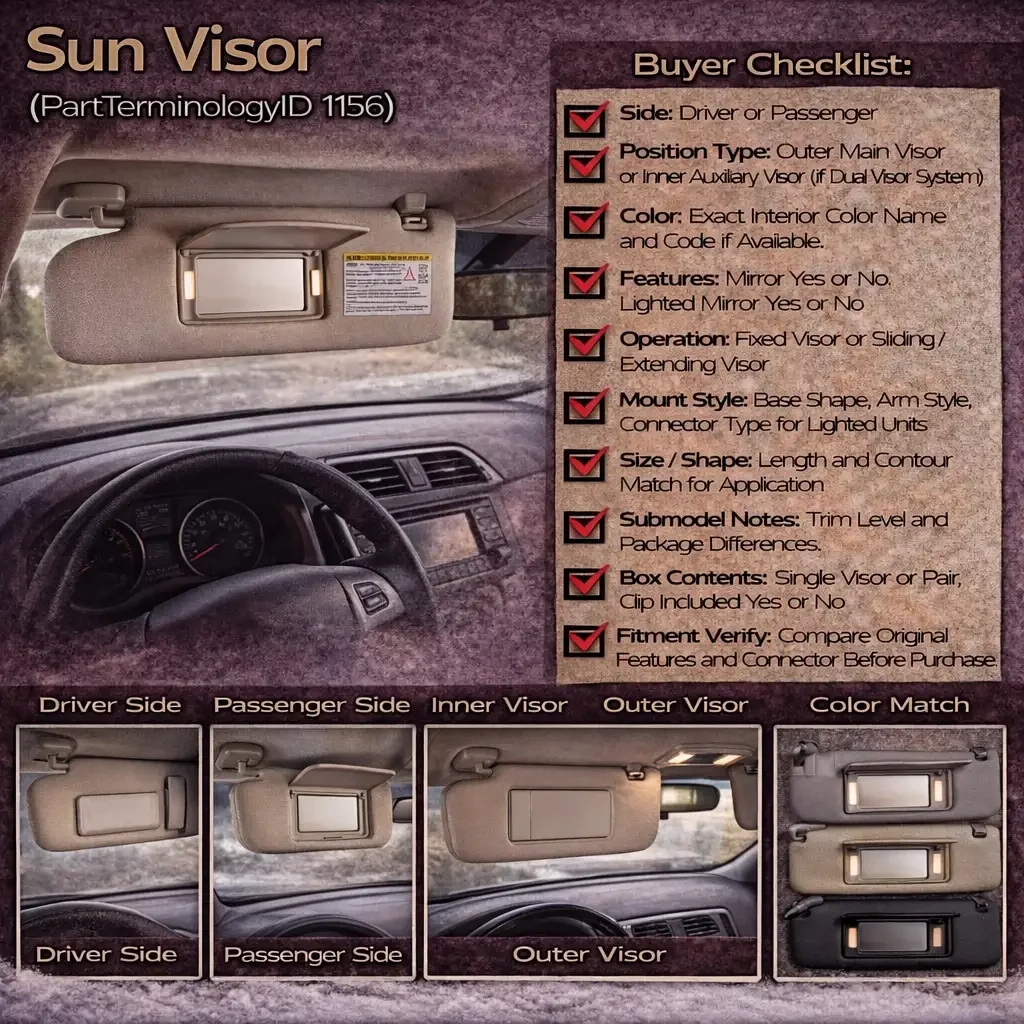
Sun Visor is one of the biggest categories in interior trim because it looks simple, but it is not.
A visor looks like a basic flap near the headliner. In catalog reality, it is one of the most variation heavy interior parts you can list. The buyer thinks they are ordering one thing. In practice, they are ordering a combination of:
side, driver or passenger
color and interior trim match
visor length and shape
mount arm style and pivot geometry
mirror or no mirror
illuminated mirror or non illuminated
wiring connector type
submodel specific features
and in some vehicles, whether the visor is inner or outer because there are two per side
That is exactly why sun visor listings create avoidable returns. The part physically installs, but the color is wrong. Or the mirror is missing. Or the vanity light connector does not match. Or the buyer expected the main visor and receives the smaller auxiliary visor.
This is the PartsAdvisory field guide for PCdb PartTerminologyID 1156: Sun Visor, built for the exact issues you called out, especially color, size, inner and outer visor setups, and feature differences by submodel.
Status in New Databases
PartTerminologyID: 1156
Terminology Name: Sun Visor
Current: PIES 7.2 + PCdb
Future: PIES 8.0 + PCdb 2.0
Status: No change
What buyers call this part
Customers use a lot of overlapping names when they search for a visor.
Common names:
sun visor
visor
sunshade visor
driver visor
passenger visor
vanity visor
illuminated visor
lighted sun visor
roof visor interior (often confused wording)
sun visor assembly
Commonly confused with:
exterior windshield visor
door window visor
dash sun shade
sunshade screen
visor clip only
visor retainer
overhead console
This matters because a buyer may search only "visor" and click the wrong category. Your title and first lines need to make it clear that this is the interior headliner mounted sun visor assembly.
What a Sun Visor actually is
A sun visor is an interior trim component mounted near the windshield header that pivots to block sun glare. On many vehicles, it also includes convenience features.
Depending on the application, a sun visor assembly may include:
visor body
hinge arm and pivot rod
mounting base
vanity mirror
vanity mirror cover
vanity light
wiring pigtail or connector
clip or retainer (sometimes sold separately, sometimes included)
labels and warning cards
extension or slider section on some designs
This is the core problem in the category. Sellers use the same part name for very different feature levels. A "sun visor" can be a basic manual flap, or it can be a lighted, sliding, telescoping, mirror equipped assembly with a custom connector and a color coded finish.
Why Sun Visor is a high return category
Most sun visor returns are not because the part is defective. They happen because the listing did not define the right variant.
The most common failure points are:
wrong color, close but not matching the headliner
wrong side, driver vs passenger
wrong mirror configuration
illuminated vs non illuminated mismatch
wrong connector shape for lighted visors
wrong length or contour
wrong mount angle or base style
buyer expected a pair, received one visor
buyer expected outer visor, received inner auxiliary visor
This category rewards detailed attributes. If your listing is vague, the return is almost guaranteed.
The Sun Visor family tree
This is where you remove confusion before it becomes a return.
1) Driver side vs passenger side
This sounds obvious, but many buyers still search by color and forget side.
Why it matters:
mirror features often differ by side
warning labels often differ by side
mount arm bend and mirror placement differ
some passenger visors have airbag labels or special mirror arrangements
Best practice:
State side in the title and again in the first bullet. Do not rely on the photo alone.
2) Standard visor vs vanity mirror visor
Some visors are plain. Some include a mirror.
Common variants:
no mirror
mirror with cover
mirror without cover
mirror with integrated frame trim
Return trigger:
Buyer expects a vanity mirror because their original visor has one, but the listing only says "sun visor" and the product is a plain version.
This is especially common in base trim vs premium trim differences.
3) Illuminated visor vs non illuminated visor
This is one of the biggest submodel split issues in the category.
Illuminated visor assemblies usually include:
vanity light
wiring pigtail or connector
lamp housing integrated into visor or mirror frame
sometimes switch activation through mirror cover
Return triggers:
buyer receives non illuminated visor for a lighted application
buyer receives lighted visor with wrong connector
buyer expects plug and play, but connector shape differs by year or trim
Catalog lesson:
"Mirror yes" is not enough. You need a separate attribute for vanity light yes or no and ideally connector details.
4) Sliding or extending visors
Many mid range and premium vehicles use visors that slide or telescope to provide side window coverage.
Common names buyers use:
extendable visor
sliding visor
telescoping sun visor
Return trigger:
Buyer expects the extending function and receives a fixed visor because the listing did not specify extension type.
This is a major comfort feature. Customers notice immediately when it is missing.
5) Dual visor systems, inner and outer
This is the exact point you brought up and it is a huge one in premium vehicles and some advanced submodels.
On some vehicles, each side can have two visor pieces:
Outer visor, the main visor near the side window and windshield edge
Inner visor, a smaller secondary panel closer to the center or additional glare control zone
Different manufacturers describe these differently:
auxiliary visor
secondary visor
center visor
inner visor panel
dual visor assembly components
Return triggers:
buyer orders the small inner visor when they needed the main outer visor
listing uses "left sun visor" but does not specify inner or outer
both pieces appear in the same photo but only one is included
This is one of the strongest reasons to use a specific attribute such as:
Visor Position Type: Outer / Inner / Main / Auxiliary
If you skip that field, the category becomes chaos.
6) Basic trim vs premium trim vs luxury trim visor assemblies
Sun visor features can change dramatically by submodel.
Examples of feature differences by trim:
mirror on passenger only vs mirrors on both sides
illuminated mirror in higher trim
lighted mirror on both sides in luxury trim
slide extension in premium trim
integrated HomeLink style buttons on some applications
different upholstery material and stitching
different warning label format
different mounting base cover style
This is why make, model, and year alone is often not enough. The submodel matters, and sometimes the interior option package matters too.
Color is the number one customer complaint
You called this out, and you are exactly right. Sun visors are one of the most color sensitive interior parts a customer will buy.
A visor can be technically correct and still look wrong if the shade is off.
Why color matching is hard in this category
Interior colors are not just "gray" or "tan." OEM interiors use many shades:
light gray
medium gray
dark gray
shale
dove
stone
parchment
beige
tan
camel
black
ebony
charcoal
ivory
Then add:
material texture differences
aging and sun fade on the original interior
camera/photo lighting variations
aftermarket color names that do not match OEM naming
A buyer may order a "tan" visor and receive a perfectly good tan visor that still looks wrong because their interior is parchment or camel.
Best practice for color listings
To reduce returns, your sun visor listings should include:
color name in the title
color name in item specifics
interior color code if known
multiple photos in neutral lighting
a note that color names vary by OEM and trim
a closeup of material texture
This category absolutely needs stronger color data than many exterior parts.
Size, shape, and contour matter more than buyers expect
Many customers assume visors are all about the mounting point. They are not.
Sun visors vary by:
overall length
width and taper shape
curve to match windshield header geometry
thickness
corner shape
cutouts around mirror area
extension mechanism size
Even within the same vehicle generation, a visor may change because of:
sunroof package
overhead console design
trim level
safety feature packaging near the mirror area
If the visor shape is wrong, it can still mount and then:
not sit flat
hit the rearview mirror area
leave a gap
look visibly incorrect
interfere when rotated to the side window position
This is a category where shape photos are as important as fitment text.
Mounting style and base geometry
A lot of returns happen because "the screw holes look close" but the visor arm and base do not match.
Key differences:
mounting base shape
number of screws
hidden screw cover style
pivot arm diameter
arm bend angle
arm length
arm clocking angle relative to visor panel
wire pass through location for illuminated units
Common problem:
The buyer sees the same exterior shape but the arm angle is different, so the visor sits crooked or does not clip correctly.
For catalog quality, mount geometry needs to be treated as a real compatibility factor, not a minor detail.
Mirrors, covers, lights, and convenience features
This is the feature cluster that separates basic and premium visor assemblies.
Vanity mirror
The mirror can be:
absent
open mirror
mirror with flip cover
framed mirror
mirror with integrated lighting surround
Vanity lights
Lighted visors can vary by:
bulb style
LED vs older lamp style
connector type
polarity and pin count
switch activation through visor cover
Labels and insert details
Some visors have:
airbag warning labels
bilingual labels
market specific compliance labels
This can matter for buyers who want an exact OEM style match, especially on premium vehicles.
Other premium features
Some applications include:
sliding extender section
integrated garage buttons
special trim stitching
soft touch or suede style covering
The more features involved, the more important the listing scope becomes. "Sun visor" is too broad by itself.
Submodel matters, often more than year
This is one of the most important points for your 1156 post.
A sun visor can change by submodel because submodels often define:
interior trim color sets
package level
mirror lighting options
panoramic or standard roof package
luxury package content
wiring and convenience features
Two vehicles with the same year, make, and model can have different visors because one is a base trim and the other is a premium trim.
Your fitment notes should encourage verification by:
VIN
interior color code
original visor feature set
connector shape
trim or submodel
That kind of guidance protects both the buyer and the seller.
What buyers expect in the box
Sun visor listings cause many "not complete" complaints because photos and descriptions are not clear enough.
Possible packaging outcomes:
one visor only
left and right pair
visor plus mount
visor only, no retainer clip
visor with wiring pigtail
visor without clip or hardware
Buyers often assume:
they are getting both sides
they are getting the retainer clip
illuminated units include the exact connector or pigtail
color will match perfectly from a single photo
Best practice:
Spell out contents in plain language and do not hide "single side only" in the fine print.
Buyer Checklist
This is the right side panel language for the infographic and the blog format.
Every Sun Visor listing should answer:
Side: Driver or passenger
Position Type: Outer main visor or inner auxiliary visor (if dual visor system)
Color: Exact interior color name and code if available
Features: Mirror yes or no, lighted mirror yes or no
Operation: Fixed visor or sliding / extending visor
Mount Style: Base shape, arm style, connector type for lighted units
Size / Shape: Length and contour match for application
Submodel Notes: Trim level and package differences
Box Contents: Single visor or pair, clip included yes or no
Fitment Verify: Compare original features and connector before purchase
This checklist alone will eliminate a large percentage of the returns in this category.
Catalog checklist for PartTerminologyID 1156
If you want this category to behave correctly in marketplaces and feeds, capture these attributes:
PartTerminologyID 1156
Side: left / right (or driver / passenger)
Visor position type: outer / inner / auxiliary
Color name
Interior color code (if known)
Material finish: cloth / vinyl / molded / premium trim surface
Vanity mirror: yes or no
Vanity light: yes or no
Connector type or pin count (for illuminated visor)
Sliding extension: yes or no
Mount base style
Arm style and bend type
Clip / retainer included: yes or no
Sold as single or pair
Submodel / package notes
Sunroof / roof package note if applicable
This category needs rich attributes because visual similarity is deceptive. Two visors can look almost identical in a photo and still be wrong.
Common buyer scenarios and the right recommendation
Scenario 1: Buyer wants to replace a sagging visor on a daily driver
Best fit:
exact side match
correct color
same mirror and lighting features as original
Why:
Most sagging visor complaints are solved by a basic replacement, but color mismatch becomes the next complaint if not verified.
Scenario 2: Buyer has a premium trim with illuminated mirror
Best fit:
lighted visor with matching connector
same trim level feature set
color and material matched to interior
Why:
Premium interior buyers notice every mismatch, especially color and lighting.
Scenario 3: Buyer has a vehicle with two visors per side
Best fit:
clear identification of inner vs outer visor
exact photos of the specific piece
explicit single part scope in description
Why:
This is one of the highest confusion setups in the whole category.
Scenario 4: Buyer says the visor "fits but looks wrong"
Most likely issue:
wrong interior color shade
wrong material texture
wrong mirror configuration
wrong contour for that submodel
Why:
Sun visors are a cosmetic and functional part. A close match is not good enough for most buyers.
Scenario 5: Buyer upgrades from non lighted to lighted visor
Possible, but verify:
wiring provision in the headliner
connector compatibility
fuse and switch behavior
mounting and space around overhead console
Why:
Physical fit is only half the story on illuminated visor upgrades.
Practical listing advice for sellers and catalog teams
Sun Visor is a category where better listings make an immediate difference in return rate.
Use this structure in the product page:
Start with the exact visor identity
Driver or passenger. Inner or outer if applicable. Color. Lighted or non lighted.State what is included
Single visor or pair. Clip included or not. Wiring connector included or not.Call out feature level clearly
Mirror, light, slider extension, premium trim details.Add a color verification note
Tell buyers to compare interior color and original visor features before ordering.Show close photos
Front, back, mount base, connector, mirror area, texture closeup.
This category does not need more marketing words. It needs more clarity.
FAQ
Are all sun visors for the same model the same?
No. They can vary by side, color, trim, submodel, mirror type, lighting, and mount style.
What is inner vs outer visor?
Some vehicles use a dual visor setup on each side. The outer visor is the main visor. The inner visor is a smaller auxiliary visor. They are not the same part.
Why is color such a big issue for sun visors?
Because interior colors have many shades and textures. A visor can be mechanically correct and still look wrong if the color or material does not match.
How do I know if my visor is lighted?
Check for vanity lights and a wiring connector near the mounting base. A mirror alone does not always mean it is illuminated.
Can I replace just one side?
Yes, many are sold individually. Make sure the listing clearly states whether it is a single visor or a pair.
Do I need the retainer clip too?
Sometimes. Some visor assemblies include it, some do not. Always verify box contents.
Why PartTerminologyID 1156 is a category worth doing right
Sun Visor looks small, but it is a high volume, high visibility interior part. The customer touches it every day. If the replacement is wrong, they notice it immediately.
That is why this category rewards catalog discipline:
better color data
better feature attributes
better inner vs outer labeling
better submodel notes
better connector details
When you structure those correctly, Sun Visor stops being a "looks the same" return category and becomes a reliable, low friction listing category.