
Sunroof Deflector (PartTerminologyID 1152): The Complete Map of Styles, Mount Types, and Fitment
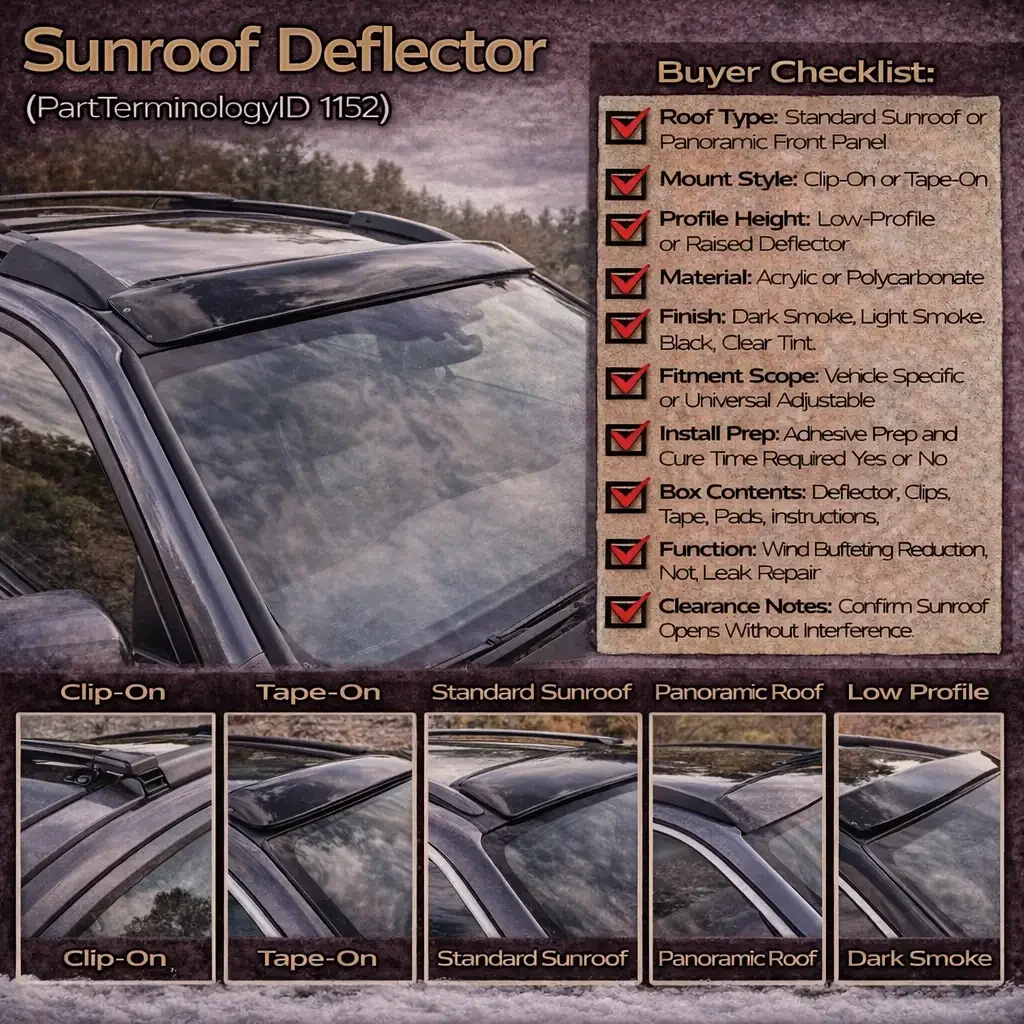
Sunroof Deflector sounds like a simple accessory, but it causes returns for the same reason many exterior parts do.
Buyers think they are buying a universal visor.
They are actually buying a part that depends on:
sunroof opening size
roof contour
mount style
trim and weatherstrip clearance
standard sunroof vs panoramic roof design
When those details are not stated clearly, the buyer gets a deflector that looks close, but does not sit right, whistles, or lifts at speed.
This is the PartsAdvisory field guide for PCdb PartTerminologyID 1152: Sunroof Deflector.
Status in New Databases
PartTerminologyID: 1152
Terminology Name: Sunroof Deflector
Current: PIES 7.2 + PCdb
Future: PIES 8.0 + PCdb 2.0
Status: No change
What people call this part
Customers use several names for the same product type.
Common names:
sunroof deflector
moonroof deflector
sunroof wind deflector
roof wind deflector
sunroof visor
moonroof visor
sunroof bug deflector
Commonly confused with:
window vent visors
rain guards for doors
roof rack fairings
windshield bug shields
sunroof glass seal
That confusion matters. A buyer searching "visor" may be thinking about side windows, not the roof opening.
What a Sunroof Deflector actually does
A sunroof deflector is an aerodynamic shield mounted at the front edge of the sunroof opening area.
Its main job is to reduce:
wind buffeting
low-frequency cabin thumping
direct airflow turbulence when the sunroof is open
A good deflector can also help reduce:
light rain entering the opening at low speeds
bug and debris flow into the cabin
What it does not do:
replace the sunroof seal
fix water leaks
repair a broken sunroof mechanism
make a noisy sunroof motor quiet
This is an important listing point because buyers often order a deflector hoping to solve a leak or mechanical issue.
The Sunroof Deflector family tree
1) Clip-on sunroof deflectors
These use clips or brackets that attach to the roof or sunroof opening area.
Pros:
more secure mechanical attachment on many applications
less adhesive dependency in extreme weather
Cons:
install complexity can be higher
wrong clip geometry means bad fit
some buyers dislike visible hardware
Return trigger:
Buyer expects adhesive only and receives clip hardware, or clips do not match the roof edge profile.
2) Tape-on sunroof deflectors
These use automotive adhesive tape, usually with a molded fit shape.
Pros:
cleaner look
easier install for many users
no metal clips touching painted edges in some designs
Cons:
surface prep is critical
cold-weather install failures are common
poor alignment during install causes lifting
Return trigger:
Buyer installs on dirty or cold surface, adhesive fails, then blames the product.
3) Low-profile deflectors
These sit closer to the roof and have a subtle appearance.
Pros:
cleaner OEM-style look
lower visual impact
Cons:
effect on buffeting can vary by vehicle and height
less dramatic airflow redirect than taller designs
4) Raised or taller deflectors
These have a more pronounced aerodynamic lip.
Pros:
stronger airflow redirection
often better buffeting reduction on some vehicles
Cons:
more visible
can create noise if the fit is wrong
more sensitive to alignment
5) Standard sunroof deflectors vs panoramic front-panel deflectors
This is a big one.
Some products are made for:
standard sunroof openings only
Some are made for:
panoramic systems, usually the front movable panel area only
Return trigger:
Buyer with a panoramic roof orders a standard deflector because the listing only says "fits sunroof."
Materials and finish, what buyers notice first
Most sunroof deflectors are made from:
acrylic
polycarbonate
Typical finishes:
dark smoke
light smoke
black
tinted transparent
Buyer expectations are usually about:
how dark it looks
how glossy it is
whether it matches factory trim
whether it scratches easily
If the finish is "dark smoke" and the customer expects opaque black, that becomes a return even if fitment is correct.
State the finish clearly and show closeup photos.
Wind buffeting, the real reason people buy this part
This is the main value proposition, so the blog should explain it in plain language.
Buffeting is the pressure pulsing or "helicopter" sound you get when the sunroof is open and airflow hits the opening wrong.
A deflector helps by:
redirecting air upward
smoothing the airflow path
reducing turbulence at the roof opening
Important buyer education:
Results vary by vehicle shape, speed, and whether side windows are open.
That is not a product flaw. That is aerodynamics.
What a Sunroof Deflector will not fix
This section reduces bad expectations and keeps your returns lower.
A deflector will not fix:
clogged sunroof drains
broken sunroof tracks
leaking sunroof seals
rattling glass
wind noise from damaged weatherstrip
roof rack wind noise
A lot of buyers try the cheapest visible part first. Your content should help them diagnose correctly.
Mounting and install reality
Tape-on install rules
This is where many failures happen.
Adhesive installs need:
clean surface
wax-free surface
correct temperature
proper alignment before pressing
cure time before high-speed driving or car wash
Most complaints about tape-on deflectors are installation issues, not product issues.
Clip-on install rules
Clip systems need:
correct clip placement
proper pad protection where required
no over-tightening
correct roof edge match
If the wrong hardware is included or missing, fitment fails immediately. This is why box contents matter.
Fitment reality, this category is not universal
Sunroof deflectors are very vehicle shape sensitive.
Fitment can change by:
make, model, year
body style
roof panel size
standard vs panoramic roof
sunroof opening dimensions
roof contour at the front edge
A deflector that is off by a small amount can:
sit crooked
lift at speed
whistle
interfere with sunroof movement
That is why "universal sunroof deflector" listings usually create trouble unless they are truly adjustable and clearly disclosed as universal.
Buyer Checklist
This is the right-side checklist style for your infographic and post format.
Every Sunroof Deflector listing should answer:
Roof Type: Standard sunroof or panoramic front panel
Mount Style: Clip-on or tape-on
Profile Height: Low-profile or raised deflector
Material: Acrylic or polycarbonate
Finish: Dark smoke, light smoke, black, clear tint
Fitment Scope: Vehicle specific or universal adjustable
Install Prep: Adhesive prep and cure time required yes or no
Box Contents: Deflector, clips, tape, pads, instructions
Function: Wind buffeting reduction, not leak repair
Clearance Notes: Confirm sunroof opens without interference
That checklist prevents most of the common returns in this category.
Catalog checklist for PartTerminologyID 1152
If you want this category to behave cleanly in feeds and marketplaces, capture:
PartTerminologyID 1152
Roof type: standard / panoramic-compatible
Mount type: clip-on / tape-on
Material: acrylic / polycarbonate
Finish color: dark smoke / light smoke / black / other
Vehicle-specific vs universal
Hardware included: clips / pads / tape
Install temperature guidance included yes or no
Cure time note required yes or no
Function note: buffeting reduction
Exclusion note: not for leak repair
This is a small accessory category with high return risk if attributes are weak.
Common buyer scenarios and the right recommendation
Scenario 1: Buyer wants less wind thumping with sunroof open
Best fit:
vehicle-specific deflector
clear mount type
proven fit for roof contour
Why:
Buffeting reduction depends on fit and angle, not just having a piece of plastic.
Scenario 2: Buyer wants a clean OEM-style look
Best fit:
low-profile deflector
dark smoke finish
tape-on style if properly installed
Why:
This gives the most subtle appearance when fitment is correct.
Scenario 3: Buyer lives in hot or cold climate
Best fit:
quality polycarbonate or durable acrylic
clear install guidance for temperature
strong adhesive or clip hardware
Why:
Heat and cold expose weak installs quickly.
Scenario 4: Buyer has panoramic roof
Best fit:
panoramic-compatible deflector only
clear note that it is for the front movable panel area if applicable
Why:
Panoramic roof geometry often differs enough to make standard deflectors fail.
FAQ
Is a sunroof deflector the same as a moonroof deflector?
Usually yes. Buyers and sellers use both terms.
Will a sunroof deflector stop leaks?
No. It may reduce some airflow and light rain entry when open, but it does not repair leaks or seals.
Do tape-on deflectors hold up at highway speeds?
Yes, if installed correctly on a clean surface at the proper temperature and allowed to cure.
Can I use a universal deflector?
Only if it is truly adjustable and your roof contour matches. Vehicle-specific deflectors are usually the safer choice.
Will it make the car quieter with the sunroof closed?
Usually no. It is mainly for reducing buffeting when the sunroof is open.