
“Sliding window” sounds like one simple part. In reality, it’s a bundle of decisions hiding inside one word.
Buyers think they’re ordering glass. What they’re really ordering is:
a specific window assembly type
with specific glass features
for a specific cab or body configuration
with specific wiring or seal requirements
If any of those are wrong, the window can look “almost right” but still be unusable. That is why sliding windows can create expensive returns and shipping damage claims.
This is the PartsAdvisory field guide for PCdb PartTerminologyID 1128: Sliding Window.
Status in New Databases
PartTerminologyID: 1128
Terminology Name: Sliding Window
Current: PIES 7.2 + PCdb
Future: PIES 8.0 + PCdb 2.0
Status: No change
What people mean when they say “sliding window”
Most searches fall into two buckets:
1) Rear truck sliding window (rear cab glass)
The most common meaning. Often called:
rear slider
rear window slider
power rear slider
cab rear sliding glass
center slider
2) Side sliding window
Seen on:
vans
RVs
campers and toppers
some SUVs and older wagons
commercial bodies
If your listing does not clearly say rear cab window vs side window, you invite the wrong buyer.
The Sliding Window family tree
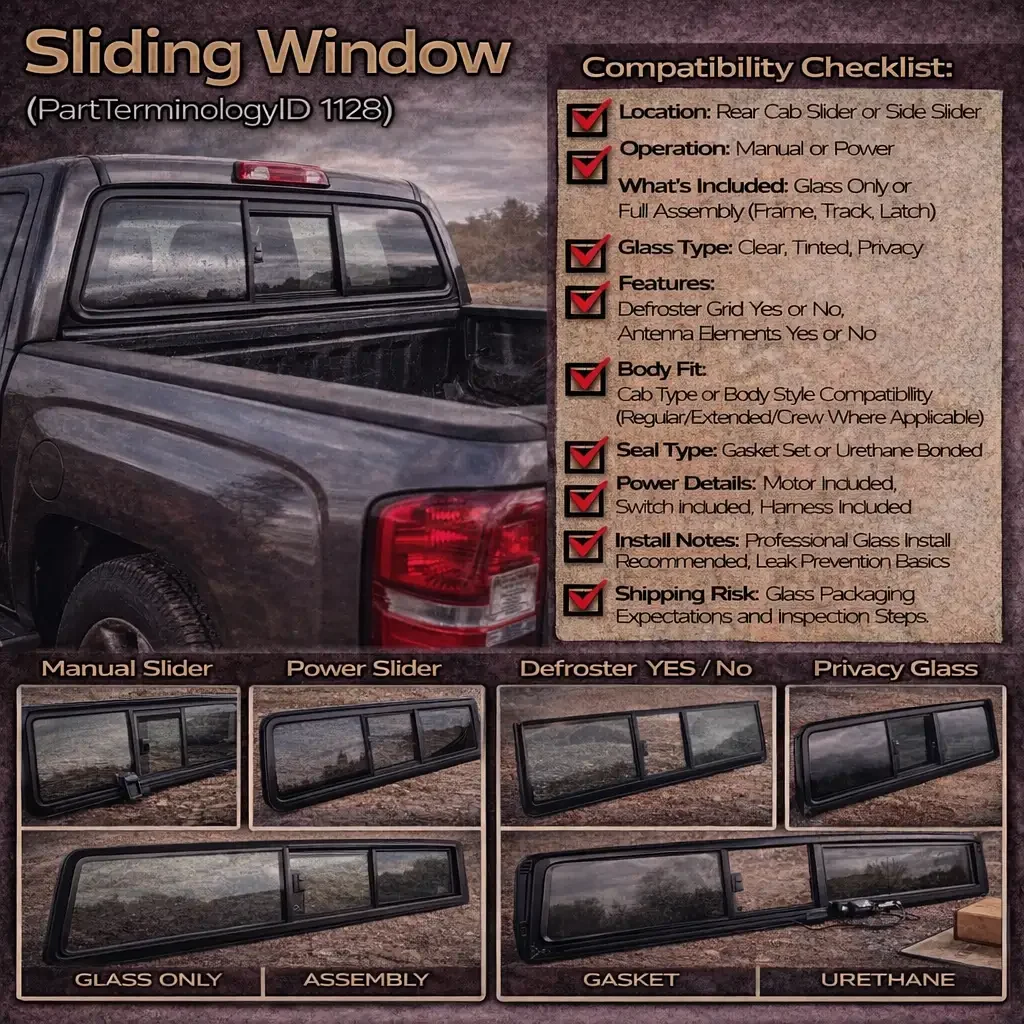
A) Manual slider vs power slider
Manual slider: hand latch, simple track
Power slider: motorized track, switch control, wiring required
Return driver:
Buyer expects power but receives manual, or expects manual replacement glass but buys a full power assembly.
B) Center slider vs full sliding assembly
Center slider is the common truck design: fixed outer glass + center panel slides
Some vehicles use different layouts depending on year and trim.
Return driver:
Buyer expects “the whole rear window,” but slider assemblies can be partial designs with fixed sections.
C) Glass only vs full assembly
This is huge.
Glass only: just glass, usually requires moving hardware
Assembly: frame, tracks, latch, seals, sometimes motor
Return driver:
Buyer buys glass only and expects tracks and seals included.
D) Solid rear window vs sliding rear window conversion
Some buyers are converting from solid glass to a slider. That can require:
different trim
different seals
different wiring harness
sometimes body provisions
Return driver:
Buyer thinks it’s plug-and-play.
Glass options that must be called out
Sliding windows have feature flags buyers care about. Missing one causes “not as described.”
Tint and privacy glass
clear
light tint
privacy (darker)
Defroster grid
Rear defroster can be present or absent.
Third brake light integration notes
Not in the glass itself usually, but related trim and harness routing can matter.
Antenna elements or embedded features
Some rear glass includes embedded antenna elements.
Heated, acoustic, or laminated options
Common on higher trims.
If you do not list these features explicitly, buyers assume the upgraded version.
Frame and seal reality
A sliding window is not just glass, it’s sealing.
Key variables:
frame material (often aluminum or composite)
seal style (gasket vs urethane bonded)
track condition and replacement availability
latch quality and alignment
Buyer complaints usually come from:
wind noise
water leaks
rattle
sticking slider
A correct part can still fail if the install process or seal type is wrong.
Wiring and electronics considerations for power sliders
If it’s a power slider, buyers need to know:
motor included yes or no
switch included yes or no
harness included yes or no
connector type and location
compatibility with factory wiring provisions
Common mismatch:
Truck trims without factory power slider wiring. The window may physically fit but cannot be powered without additional wiring work.
Compatibility Checklist
(Using your new rotating format language, not “listing traps.”)
Every Sliding Window page or listing should answer:
Location: Rear cab slider or side slider
Operation: Manual or power
What’s Included: Glass only or full assembly (frame, track, latch)
Glass Type: Clear, tinted, privacy
Features: Defroster grid yes or no, antenna elements yes or no
Body Fit: Cab type or body style compatibility (regular/extended/crew where applicable)
Seal Type: Gasket set or urethane bonded
Power Details: Motor included, switch included, harness included
Install Notes: Professional glass install recommended, leak prevention basics
Shipping Risk: Glass packaging expectations and inspection steps
That checklist prevents the majority of “wrong part” and “not as described” returns.
Catalog checklist for PartTerminologyID 1128
If you want the data to behave, capture these attributes:
PartTerminologyID 1128
Window position: rear cab / side / quarter (if applicable)
Manual vs power
Glass only vs assembly
Tint level
Defroster grid yes or no
Antenna element yes or no
Seal method: gasket / urethane
Cab configuration fitment notes
Power components included: motor, switch, harness
Notes: conversion vs direct replacement
Quick FAQ
Can I upgrade from solid rear glass to a sliding window?
Sometimes, but it depends on body provisions, trim, seal type, and wiring (for power). Don’t assume plug-and-play.
Do all sliding windows include defroster?
No. Many don’t. If you need defroster, verify it explicitly.
Is “glass only” enough?
Only if you’re reusing the frame and track hardware and it’s in good condition. Many buyers need the full assembly.
Why do sliders leak or rattle?
Seal type, install method, track wear, and latch alignment are common causes.