
Fender aprons are one of those body parts that everyone sees, but most people cannot name.
They sit inside the front fender area and form the inner side wall of the engine bay, tying together multiple structural zones. When they are damaged, the symptoms show up everywhere:
the fender gap looks off
the hood sits wrong
the headlight alignment changes
the core support and front end can shift
body shops start talking about “pulling” and “measurement”
And online, this part is frequently mislisted because sellers confuse:
fender apron (structural sheet metal)
withinner fender liner (plastic splash shield)
withradiator support (front core structure)
withfender brace or mounting bracket (small supports)
That confusion drives returns.
This is the PartsAdvisory field guide for PCdb PartTerminologyID 1116: Fender Apron.
Status in New Databases
PartTerminologyID: 1116
Terminology Name: Fender Apron
Current: PIES 7.2 + PCdb
Future: PIES 8.0 + PCdb 2.0
Status: No change
What people call a fender apron
Different shops and catalogs use different words for the same area.
Common names:
Fender apron
Inner fender apron
Fender apron panel
Inner fender panel (sometimes used for apron, sometimes for liner)
Engine compartment side panel
Apron assembly (often when sold as a larger section)
Fender well panel (can also mean liner, dangerous)
Shock tower apron (on some vehicles where the strut tower is integrated)
Commonly confused with:
Inner fender liner, splash shield (plastic)
Radiator support, core support (front)
Strut tower, shock tower (upper structure)
Fender brace, fender stay (small bracket)
Cowl side panel (rear upper engine bay area)
If you sell this category, you must separate “structural metal” vs “plastic liner.” That single distinction prevents a huge chunk of returns.
What a fender apron actually is
A fender apron is structural sheet metal inside the front fender area that forms the side of the engine bay and supports mounting points for:
fender mounting flanges
headlamp and front end bracketry on some designs
hood hinge reinforcement zones on some vehicles
strut tower integration on some unibody designs
wiring harness routing tabs and clips
splash shields and liners attach to it, but it is not the liner
Depending on vehicle architecture, the apron may be:
a standalone panel
part of a larger inner structure assembly
integrated with the strut tower
tied into the upper rail or cowl structure
This is why it is considered collision structural in many repairs.
Why this part matters, even when the damage looks small
A dented fender is cosmetic. A shifted fender apron is alignment.
Even minor apron distortion can cause:
headlights aiming wrong
hood gap inconsistency
fender sitting proud or sunk
bumper cover misalignment
“front end doesn’t line up after replacing parts”
In other words, it turns into repeated parts swapping and blame ping pong unless the underlying structure is corrected.
For catalog and e-commerce, this matters because customers often buy:
a fender
a headlight
a bumper bracket
…and still cannot align it because the apron is bent.
So your blog should position the apron as a root-cause part in collision alignment issues.
The Fender Apron family tree
This is where you prevent mismatches.
1) Left vs right
This is not interchangeable.
Even when they look similar, they differ by:
wiring tabs
bracket mounts
washer bottle or fuse box mounting zones
air intake snorkel mounts
battery tray integration on some vehicles
Always treat side as a required attribute.
2) Upper vs lower sections
Many aftermarket apron offerings are partial sections:
upper apron section
lower apron patch panel
front apron extension
rear apron extension near cowl
Return driver:
Customer expects full panel, receives patch section.
If it is a patch panel, say patch panel early and clearly.
3) Apron with strut tower vs apron without
Some unibody cars integrate the strut tower into the apron assembly. Some separate them.
Return driver:
Buyer expects strut tower included.
4) Apron assembly vs apron reinforcement
Some parts are reinforcements:
hinge reinforcements
rail reinforcements
mounting reinforcements
Return driver:
Buyer expected the main apron panel.
5) Apron vs inner fender liner
This is the big confusion.
Apron is metal structure.
Liner is plastic shield.
If the part is plastic, it is not a fender apron. Period.
Materials and coatings
Most fender aprons are:
stamped steel
sometimes high-strength steel zones
coated for corrosion resistance from OEM
Aftermarket panels may ship as:
e-coated
primed
bare steel
Important buyer education:
Primed is not paint-ready. It often requires prep, sealing, and paint work.
This reduces “bad quality” complaints that are really just misunderstanding of body repair parts.
Rust zones and why aprons rust differently than fenders
Aprons rust due to:
trapped debris behind liners
moisture retention along seams and spot weld flanges
battery acid exposure (battery side)
washer fluid leaks (washer reservoir side)
collision repairs with missing seam sealer
Common rust zones:
lower rear section near rocker and wheel well
seam where apron meets inner rail
around battery tray integration
around harness clips where paint is pierced
If you mention these zones, you sound like you actually work with these parts. That builds trust and keeps buyers aligned with reality.
Installation reality, this is not bolt-on
Fender aprons are typically:
welded or spot welded in
drilled and plug welded
cut and sectioned
measured and pulled on a frame machine in collision repair contexts
Even if a buyer is DIY, they need to know:
This is body repair. Not bolt-on accessories.
This matters because online buyers often compare apron listings to fenders and think it is similar complexity. It is not.
What buyers assume comes in the box
Fender apron listings cause return surprises when photos imply more than included.
Common assumptions:
full assembly includes strut tower
includes radiator support
includes brace brackets
includes liners
includes all reinforcements
Best practice: list what is included in plain words:
panel only
reinforcement only
patch section only
assembly includes tower yes or no
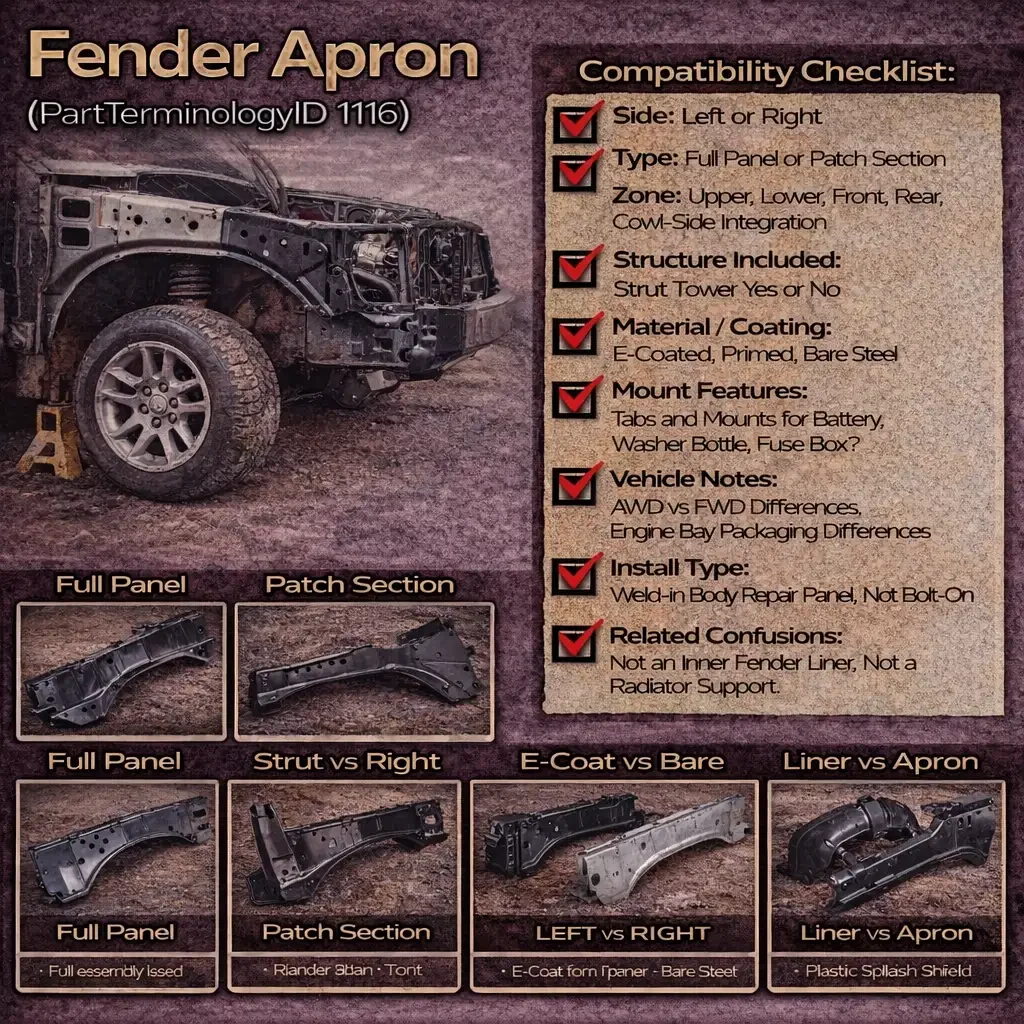
Compatibility Checklist
This is the right-side checklist language for your infographic and your posts.
Every fender apron listing should answer:
Side: Left or right
Type: Full panel or patch section
Zone: Upper, lower, front, rear, cowl-side integration
Structure Included: Strut tower yes or no
Material / Coating: E-coated, primed, bare steel
Mount Features: Tabs and mounts for battery, washer bottle, fuse box (if applicable)
Vehicle Notes: AWD vs FWD differences when applicable, engine bay packaging differences
Install Type: Weld-in body repair panel, not bolt-on
Related Confusions: Not an inner fender liner, not a radiator support
That last line alone prevents a lot of returns.
Catalog checklist for PartTerminologyID 1116
If you are structuring this in a feed, capture:
PartTerminologyID 1116
Side: left or right
Section: full, upper, lower, front, rear, patch
Includes strut tower: yes or no
Includes reinforcements: yes or no
Coating: ecoat, primer, bare
Material: steel type if known
Notes: mounts included, bracket holes present
Notes: liner attachment points included yes or no
Notes: requires welding, body shop install recommended
This is how you keep apron parts from being mis-sold as liners or braces.
FAQ
Is a fender apron the same as an inner fender liner?
No. The apron is metal structure. The liner is a plastic splash shield.
Is this part bolt-on?
Usually no. It is typically welded and requires body repair work.
Will it fix my alignment issues?
If the apron is bent, yes, correcting it is often necessary for proper fender, hood, and headlight alignment.
Does it come painted?
Usually no. Most ship primed, e-coated, or bare and require prep and paint.
Do I need left or right?
Yes. They are side specific.