
If you run catalog, you already know the problem.
“Paint” is not a product. It is a bucket.
It is one of the widest, messiest buckets in the aftermarket because buyers search by outcome, sellers list by whatever the supplier called it, and marketplaces try to force it into a handful of item specifics.
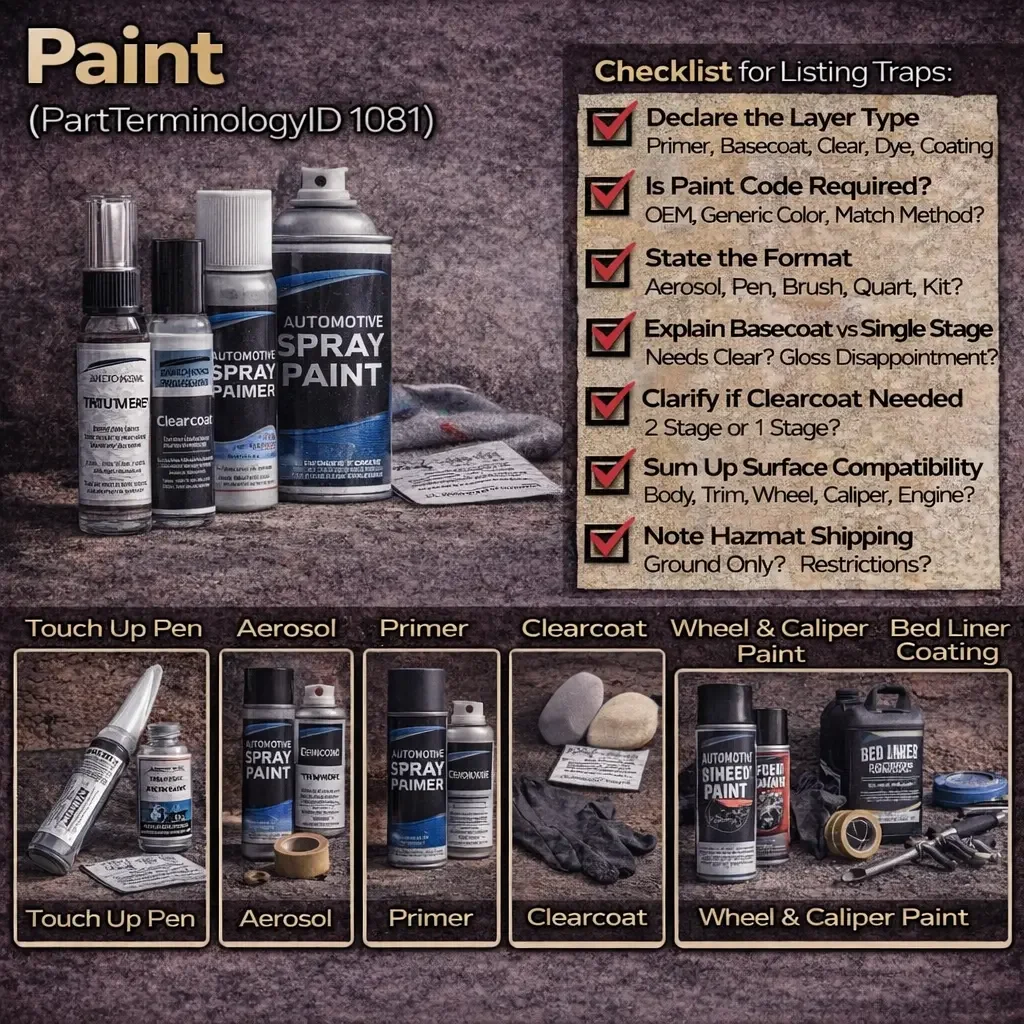
So when we publish PCdb PartTerminologyID 1081: Paint, we are not defining a single part. We are defining a naming zone where the same word can mean:
a paint pen for a rock chip
an aerosol can of basecoat
clearcoat only
primer only
engine enamel
wheel paint
caliper paint
bed liner coating that customers still call “paint”
undercoating
interior vinyl dye
trim blackout paint
a full kit with activator, reducer, and instructions
This is why “Paint” has higher than expected return rates. Not because paint is hard. Because expectations are mismanaged.
This post is the PartsAdvisory field guide for Paint in PCdb PartTerminologyID 1081.
Status in New Databases
Feature: Current (PIES 7.2 / PCdb) -> Future (PIES 8.0 / PCdb 2.0)
PartTerminologyID: 1081 -> 1081 (No change)
Terminology Name: Paint -> Paint
Database Version: PCdb -> PCdb 2.0
Schema: PIES 7.2 -> PIES 8.0
What other people are using “Paint” for
When you look at how real sellers use the word “paint,” it clusters into a few big families. If you do nothing else in your 1081 post, teach readers these families. This is the map.
1) OEM color match touch up paint
This is the largest buyer intent.
The buyer has chips, scratches, and scuffs. They want “factory color.” They search paint, but what they mean is touch up.
Common formats:
paint pen
brush bottle
small jar
touch up kit with multiple steps
The buyer expectation is not “close enough.” It is “match my paint code.” If your listing does not make paint code a first class requirement, you will get returns and angry messages.
Core traps:
wrong paint code
wrong year range for the code
buyer does not know where to find the code
code exists, but vehicle has been repainted
metallic and pearl match disappointment
2) Basecoat plus clearcoat kits (two stage systems)
Many modern OEM colors are not single stage. Color coat alone does not look right without clear.
So sellers bundle:
basecoat color
clearcoat
sometimes primer and prep
This is a huge return reducer when explained correctly, because buyers often buy only the color and then complain it looks dull or does not “blend.”
Core traps:
buyer expects glossy finish from basecoat alone
buyer does not apply enough clear
buyer did not prep, so it peels
kit did not include what the customer assumed was included
3) Clearcoat only
This is common for:
restoring shine
sealing a repair
fixing clearcoat peel in a small area
DIY projects
Core traps:
customer expects clear to hide defects
customer applies clear over poorly prepped surface
mismatch in gloss level or orange peel
4) Primer, adhesion promoter, and prep products sold as paint
A lot of people buy “paint” when what they truly need is prep.
Primer can be:
filler primer to smooth sanding marks
epoxy primer for adhesion and corrosion resistance
self etching primer for bare metal
plastic adhesion promoter for bumpers and trim
Core traps:
wrong primer type
no adhesion promoter on plastic
primer listed like it is topcoat
5) Engine enamel and high heat paint
This is another giant use case.
Buyers want:
heat resistance
oil and chemical resistance
a clean “refreshed engine bay” look
Core traps:
paint is not truly high heat
buyer paints surfaces that get too hot
poor prep leads to flaking
color expectation mismatch
6) Wheel paint
Wheel paint is a major category because it is a fast visual improvement.
Buyers want:
durable finish
resistance to brake dust
correct “factory silver” look, which is harder than it sounds
Core traps:
incorrect shade of silver
wrong gloss
chips easily because prep was minimal
clearcoat needed but not included
7) Caliper paint
This is sold as:
brush on caliper paint
aerosol kits
high temp enamel systems
Core traps:
customer paints dirty calipers
heat cycling causes discoloration
wrong cure expectations
overspray and masking issues
8) Bed liner and undercoating that buyers still call paint
Customers routinely shop bed liner and undercoating under paint keywords.
These are coatings, not paint in the classic sense, but the marketplace does not care.
Core traps:
texture surprise
cure time surprise
smell and VOC expectations
“spray on” vs “roll on” confusion
coverage area confusion
9) Trim blackout and exterior plastic paint
This includes:
bumper and trim refinisher
blackout paint
textured paints
plastic specific coatings
Core traps:
color mismatch, true black vs charcoal
texture mismatch
fades in UV if cheap
prep ignored, so it peels
10) Interior dye and vinyl paint
Often listed under paint, even though it is dye or flexible coating.
Core traps:
wrong sheen
cracking when flexed
customer expected permanent restoration without cleaning and prep
That is the reality. “Paint” is not one thing. It is a family tree.
Why Paint is a catalog and marketplace trap
Paint combines three types of ambiguity:
Ambiguity 1: The product type is unclear
Is it color, clear, primer, or coating?
If the title says “Paint” and the buyer receives clearcoat only, they feel tricked even if the bullet points technically said “clear.”
Ambiguity 2: The application format is unclear
Is it aerosol, pen, brush, quart, or gallon?
If the photo shows an aerosol, but the SKU is a brush bottle, return.
Ambiguity 3: The matching rule is unclear
Does it require a paint code?
If you sell color match paint and do not force a paint code at purchase, you will ship wrong colors.
This is why PartTerminologyID 1081 needs a post that teaches separation and naming discipline.
The Paint taxonomy you should teach in the post
If you want your readers to stop bleeding returns, give them a simple taxonomy they can reuse across titles, bullets, and item specifics.
Step 1: Identify the layer
Primer
Basecoat color
Single stage color
Clearcoat
Coating, bed liner, undercoating
Dye, interior coating
Step 2: Identify the matching method
OEM paint code required
generic color
“closest match” only
universal black, white, silver, etc
Step 3: Identify the delivery format
aerosol can
paint pen
brush bottle
ready to spray bottle
quart or gallon
kit with multiple components
Step 4: Identify the finish and intended surface
gloss level
metallic or pearl
textured
plastic safe
high heat
chemical resistant
If a listing clearly answers those four steps, most buyer confusion disappears.
Pros and cons of buying paint aftermarket
Paint is not a scam category. It is a high expectation category.
Pros
Cost effective
Touch up and aerosol paint can solve a cosmetic problem without a body shop.
Fast transformation
Wheels, calipers, trim, and bed liners can change the whole look quickly.
Protection
Coatings prevent corrosion, reduce chip damage, and extend part life.
DIY friendly for small repairs
A paint pen and clear can make a chip disappear from five feet away.
Cons
Perfect match expectations
Metallic and pearl colors can be hard to blend. Lighting changes everything.
Prep matters more than the paint itself
Bad prep means peeling, fisheyes, and unhappy customers.
Shipping constraints
Aerosols are regulated and often must ship ground. Delivery expectations matter.
Returns can be hazmat sensitive
Paint products can be restricted, which changes how returns and restocking work.
Fitment is replaced by spec accuracy
Paint has no VCDB fitment. It has specification fitment. Wrong spec equals wrong product.
Basecoat, single stage, and the gloss disappointment problem
This is one of the biggest misunderstandings in paint listings.
Basecoat is color. It often dries matte. It is designed to be covered by clear.
Clearcoat provides gloss and UV protection.
Single stage combines color and gloss, but is less common for many modern OEM finishes.
If you sell basecoat without clear and do not explain this, the buyer will claim the paint is defective because it is not shiny.
Your post should say this plainly:
Basecoat alone is not the final finish.
Paint code matching, what buyers think it means
Buyers hear “color match” and assume exact factory match. In practice:
OEM paint codes can have variants
production changes happen mid year
sun fade changes the existing paint
repainted panels do not match factory code
Your job is not to guarantee perfection. Your job is to set expectation and prevent preventable errors.
Best practice listing language:
requires OEM paint code
color match depends on prep and application
blending may be required for best results
metallic and pearl colors vary by lighting and technique
If you are selling paint that requires a code, treat the code like a mandatory fitment attribute.
“Auto off” and electrical concerns, the hidden confusion
Paint is not electrical, but buyers mix paint with:
headlight tint film
lens coatings
protective clear films
undercoating in aerosol
So your post should clarify:
Paint is a coating layer. It does not have electrical control, wiring, or auto shutoff.
This matters because marketplaces sometimes group paint and films together. Buyers are not careful.
Listing traps that cause returns in Paint
Here are the most common traps you should call out in your 1081 blog.
1) The listing title says Paint, but it is clearcoat only
Fix:
Lead with the layer.
Clearcoat, Primer, Basecoat, Single Stage.
2) The photo shows an aerosol can, but the SKU is a brush bottle
Fix:
Put the format in the first 10 words.
Spray, Pen, Brush, Quart, Kit.
3) The buyer expects a kit, but receives only one component
Fix:
Explicitly state what is included.
Basecoat only, Clearcoat only, Base plus Clear kit.
4) Paint code is optional in the listing flow
Fix:
Require it.
If code is missing, do not ship. Ask. Delay is cheaper than returns.
5) Gloss and texture are not described
Fix:
State gloss level.
Textured vs smooth.
Matte vs satin vs gloss.
6) Surface compatibility is not stated
Fix:
Plastic safe, metal safe, high heat rated, wheel safe, caliper safe.
7) Coverage area and volume are not stated
Fix:
State volume and realistic coverage.
This prevents “I ran out” complaints.
8) Shipping and compliance are not disclosed
Fix:
If aerosol must ship ground, say it.
If hazmat rules apply, say it.
Catalog checklist for PartTerminologyID 1081
If you are building a feed, item specifics, or a structured catalog, these attributes reduce returns dramatically.
Product definition
Layer type: primer, basecoat, single stage, clearcoat, coating, dye
Intended surface: body, wheel, caliper, engine, trim, interior, bed, underbody
Matching method: OEM code, generic color, closest match
Color name and color code fields where applicable
Format and quantity
Delivery format: aerosol, pen, brush bottle, ready to spray, quart, gallon
Volume or net weight
Coverage estimate
Finish and performance
Gloss level: matte, satin, gloss
Texture: smooth, textured
High heat rating if applicable
Chemical resistance claim if applicable
UV resistance claim if applicable
System requirements
Clearcoat required yes or no
Primer required yes or no
Adhesion promoter recommended for plastics yes or no
Cure method and dry time if provided
Compliance and logistics
Aerosol yes or no
Ground shipping required yes or no
Hazmat constraints notes where applicable
If you capture those fields, Paint becomes manageable.
Quick FAQ
Do I always need clearcoat?
If you are using basecoat, yes. If it is single stage, not always. The product should say which system it is.
Will paint code matching be perfect?
It can be close, but sun fade and variants can change results. Blending is often required for best appearance.
Can I paint plastic trim with normal paint?
Often no. Plastic needs proper prep and sometimes adhesion promoter. Trim paint products are formulated differently.
Why does my paint look dull after spraying?
If it is basecoat, that is normal until clearcoat is applied.
Why do aerosols ship slower?
Many carriers restrict aerosols and require ground shipping.
Closing: How to make “Paint” safe to sell
If you treat Paint like a generic accessory, it will behave like a return trap.
If you treat Paint like a structured system with a layer, a format, a matching rule, and a finish, it becomes predictable.
That is the whole goal of PartTerminologyID 1081.