
Mud Flap (PartTerminologyID 1080): The Complete Map of Types, Materials, Mounting Methods, and Listing Traps
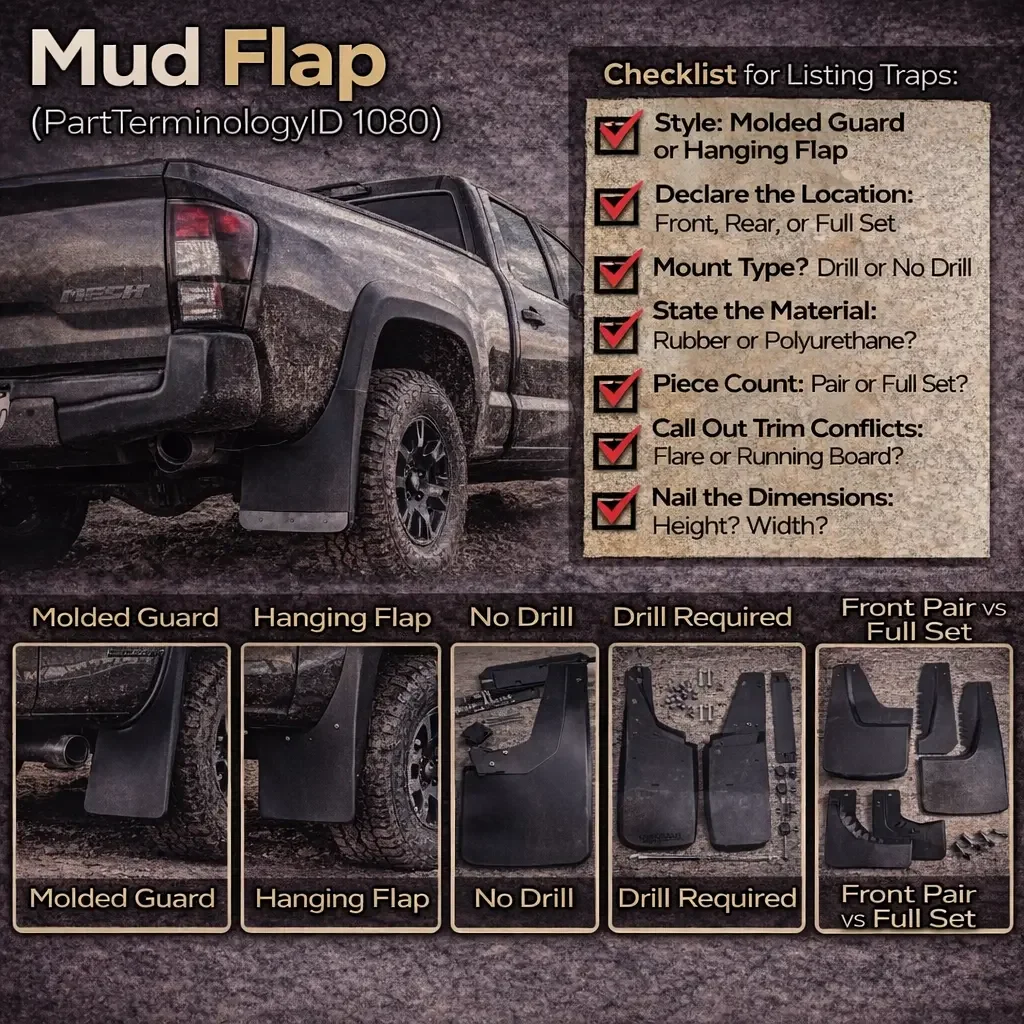
Mud flaps are one of those categories that punish lazy listings.
Everyone thinks they know what a mud flap is. Then the buyer opens the box and realizes they ordered the wrong thing because the listing never said:
front vs rear
pair vs full set
rigid vs flexible
drill required vs no drill
universal trim to fit vs vehicle specific molded
bracket kit included vs reuse factory screws
with logo plate vs blank
coverage size, especially on lifted trucks
Mud flaps are a small accessory with a giant surface area for misunderstanding. That is why return rates can be brutal when the catalog data is vague.
This is the PartsAdvisory field guide for Mud Flap in PCdb PartTerminologyID 1080.
Status in New Databases
Feature: Current (PIES 7.2 / PCdb) -> Future (PIES 8.0 / PCdb 2.0)
PartTerminologyID: 1080 -> 1080 (No change)
Terminology Name: Mud Flap -> Mud Flap
First, what counts as a “Mud Flap”
In the real world, “mud flap” is used for multiple product types:
traditional flexible flaps behind the wheel
molded splash guards that follow the fender contour
heavy duty truck flaps with weight plates and hangers
universal sheet flaps that must be cut to size
rock guards and gravel guards, often sold under the same keywords
fender mounted guards that sit higher and cover less
Your first job as a seller is to decide which one you are actually listing. Because buyers absolutely do not agree on the definition.
All the names buyers use (and why it matters)
Buyers search with whatever term they grew up hearing:
Mud flap
Mudflap
Splash guard
Splash flap
Mud guard
Rock guard
Gravel guard
Wheel splash guard
Fender splash guard
Truck mud flaps
Semi mud flaps
Dually mud flaps
These terms are not interchangeable in fitment reality, but they are interchangeable in search behavior. That is where traps start.
If your listing uses one name but ships another style, the buyer feels tricked even if “technically” it fits.
Why people buy mud flaps
The buyer intent usually falls into four buckets:
Paint protection
Rocks, sand, salt, and slush chew the lower doors and rocker panels. Flaps reduce that damage.Visibility and cleanliness
Mud spray makes rear visibility worse and coats the whole side of the vehicle.Towing and trailer protection
Towed vehicles and trailers get blasted by tire spray.Compliance and expectations
Some regions, fleets, and worksites expect flaps or guards, especially on trucks with aggressive tires.
Your copy and your item specifics should match the intent. A molded splash guard is not a heavy-duty trailer protector.
The two core families: Molded splash guards vs hanging mud flaps
1) Molded splash guards (often called mud guards)
These are shaped pieces that follow the wheel arch and mount to factory points. They usually sit closer to the body and are designed to look OEM.
What buyers expect:
vehicle specific fit
no trimming
clean look
typically no drill using factory screws or clips
Where returns happen:
wrong trim level or wheel well liner design
wrong side set (front vs rear)
hardware missing or reused without being stated
buyer wanted maximum coverage and these are small
2) Hanging mud flaps (traditional flaps)
These hang lower behind the wheel and provide more spray reduction. Trucks, off-road builds, and fleets love these.
What buyers expect:
larger coverage
flexible rubber or polyurethane
adjustable height
sometimes logo plates
Where returns happen:
universal parts that need trimming
drilling required not disclosed
bracket kits not included
flaps too stiff, crack in cold
flaps too soft, fold at highway speeds
wrong width for oversized tires or dually setups
Set coverage: the silent return trigger
Mud flaps are one of the worst categories for “the photo implied a full set.”
Your listing must declare:
Front pair only
Rear pair only
Full set of four
Left only or right only (rare but it happens)
If the product is a pair, the first line should say “front pair” or “rear pair.” Do not hide it in the fitment notes.
Materials and what they actually change
Material is not a cosmetic detail. It changes performance, noise, cold-weather behavior, and lifespan.
Rubber
Common on heavy duty flaps.
Pros: very flexible, good impact absorption, stays quiet
Cons: can warp with heat over time, can be heavy, can degrade with oils and UV depending on quality
Polyurethane
Common in mid to premium flaps.
Pros: durable, abrasion resistant, holds shape better than cheap rubber
Cons: can stiffen in extreme cold depending on formulation, can be noisier if too rigid
Thermoplastic (ABS, PP blends, TPO)
Common in molded splash guards.
Pros: OEM look, stable shape, easier to clean, often uses factory points
Cons: can crack if hit hard in cold weather, coverage is usually smaller
Metal systems (aluminum or steel)
Usually not the flap itself, but the hangers, weight plates, or reinforcement.
Pros: helps flaps hang straight, good for fleets and trucks
Cons: corrosion risk if hardware is cheap, adds complexity
Composite and “carbon look” finishes
Usually style-focused.
Pros: looks premium
Cons: buyers often complain if the finish does not match the photos
If you do not state material, the buyer will assume the material they prefer. That is how you get returns labeled “not as described.”
Thickness, stiffness, and why “heavy duty” means nothing
Mud flaps can be thin and floppy or thick and rigid. Both can be correct depending on use.
Thin, flexible flaps: quiet, easy to install, may flutter at speed
Thick, stiff flaps: hang straight, may crack in cold if too rigid, may rub tires if not positioned right
Better listings specify:
thickness if known
flexible vs rigid
“cold weather flexible” claims only if supported by the brand
whether a weight is included to prevent flutter
Sizes and coverage: height and width are not optional specs
A 12 inch flap and a 24 inch flap are different products with the same name.
What buyers want to know:
flap height
flap width
whether it can be trimmed
how far it drops below the bumper or rocker
clearance for oversized tires
This matters most on:
lifted trucks
dually trucks
vehicles with wider tires or offset wheels
vehicles with fender flares
If you do not list dimensions, buyers guess based on the photo. Photos lie.
Mounting styles: drill vs no drill is the whole game
Mount type is the number one determinant of buyer happiness. Nobody wants surprise drilling.
Factory point mounting (true no drill)
Typical for molded splash guards.
uses factory screws in the wheel well liner
may reuse OEM clips
sometimes includes longer screws
Listing requirements:
“installs using factory mounting points”
hardware included or reuse OEM hardware
front or rear location
Clip-on and clamp systems
Common for universal flaps and some truck systems.
pinch weld clips
clamp brackets
bed rail clamp kits on some builds
Listing requirements:
clamp type and whether drilling is still required
what surfaces the clamp contacts
whether it fits with plastic liners or only metal pinch seams
Bracket and hanger systems
Common for heavy duty and fleet installs.
hanger brackets bolt to frame or existing holes
may include a weight plate
Listing requirements:
bracket kit included yes or no
drilling required yes or no
vehicle specific bracket design vs universal
Screw-in installs (drilling required)
Common for universal flaps on older vehicles and some trucks.
Listing requirements:
drilling required clearly stated
template included yes or no
hardware included yes or no
If drilling is required and you do not say it up front, you will eat returns.
Front vs rear fitment is not symmetrical
Front and rear wheel wells are different. The liner shape is different. The bumper edge is different. The rocker molding is different.
Common trap:
listing says “fits vehicle” but does not say front or rear
buyer orders one and expects it fits both ends
Your catalog data should treat front and rear as separate fitment contexts even if the part terminology is the same.
Trim and package conflicts you need to call out
Mud flaps get weird fast when trims change the wheel well:
off-road packages with different liners
factory fender flares
running boards and mud flap interference
sport bumpers with different lower edges
tow packages with different rear bumper trim
aftermarket lift kits changing spacing and angles
This is why “universal” is risky. The universal flap might physically attach, but it might rub the tire, hit the running board, or look wrong.
If a product is vehicle specific, say it. If it is universal, say it louder.
Pros and cons: what customers love and what they complain about
Pros
Protects paint and rocker panels
This is the real value. Even small molded guards can reduce sandblasting.
Reduces spray on trucks and trailers
Bigger flaps reduce mist and kickback.
Improves cleanliness
Less mud on doors, less sludge on rear bumper.
Can look OEM or rugged
Depending on molded vs hanging style.
Cons
Rubbing and clearance issues
Especially with wider tires or offset wheels.
Install complexity
Hardware, drilling, alignment.
Noise and flutter
Some flaps slap the body or flutter at speed if not supported.
Cracking in cold climates
Happens with low quality rigid plastics.
Corrosion of hardware
Happens when bracket kits use cheap fasteners.
Your post and your listing should acknowledge these in a calm, practical way. Buyers trust sellers who admit reality.
Wiring and “auto off” features (rare but important to mention)
Mud flaps are not electrical parts. But there are two related accessories that buyers confuse with mud flaps:
mud flap mounted lights (common on trailers and semis)
illuminated logo plates in some heavy duty setups
If a product includes lighting or reflectors:
state it clearly
specify whether it is reflective only or powered lighting
include harness details if powered
Most PCdb 1080 mud flaps are unpowered. The confusion still happens in marketplace search.
What should be in the box (and why you must list it)
Mud flap listings fail because the box contents are vague.
Possible box contents:
flaps only
flaps plus brackets
flaps plus brackets plus hardware
flaps plus weight plates
flaps plus templates
flaps plus clips and adhesion pads (on some molded guards)
Your listing should answer:
are brackets included
is hardware included
does it reuse OEM screws
is there a template if drilling is required
When the buyer opens a box and sees “just rubber,” they feel scammed unless you told them.
The marketplace listing traps that cause the most returns
Here are the repeat offenders we see:
The photo shows four, the listing ships two
Fix: say “front pair” or “rear pair” in the first line.“No drill” implied but drilling is required
Fix: declare drilling required yes or no.Universal listed like it is vehicle specific
Fix: call it universal and explain trimming.Material not stated
Fix: rubber vs polyurethane vs molded plastic.Hardware and brackets unclear
Fix: list what is included.Coverage size not stated
Fix: list dimensions or at least size tier.Trim and flare conflicts not mentioned
Fix: add fitment notes for factory flares, running boards, off-road packages.
If you solve those seven, you will reduce returns more than any fancy copywriting ever will.
Catalog checklist for Mud Flaps (PCdb 1080)
If you are building item specifics or improving PIES feeds, these fields matter most:
Style: molded splash guard vs hanging flap
Location: front, rear, full set
Coverage: pair vs set of four
Dimensions: height and width
Material: rubber, polyurethane, thermoplastic
Finish: textured, smooth, gloss, logo plate
Mount type: factory points, clamp, bracket, screw-in
Drilling required: yes or no
Brackets included: yes or no
Hardware included: yes or no
Trimming required: yes or no
Notes: flare compatibility, running board interference, wide tire coverage
That is the minimum to stop the confusion.
Quick FAQ
Do mud flaps fit all trims of the same vehicle?
Not always. Off-road packages, flares, and liners can change mounting points.
Will mud flaps rub my tires?
They can if you have wider tires, different wheel offset, or lifted suspension. Coverage and spacing matter.
Are molded guards better than hanging flaps?
Molded guards look more OEM. Hanging flaps usually provide more spray reduction.
Do I need to drill?
Depends on the kit. Many molded guards use factory points. Many universal flaps require drilling.
Do mud flaps make a difference in winter?
Yes. They reduce slush spray and salt blast, but hardware corrosion becomes a bigger concern.