
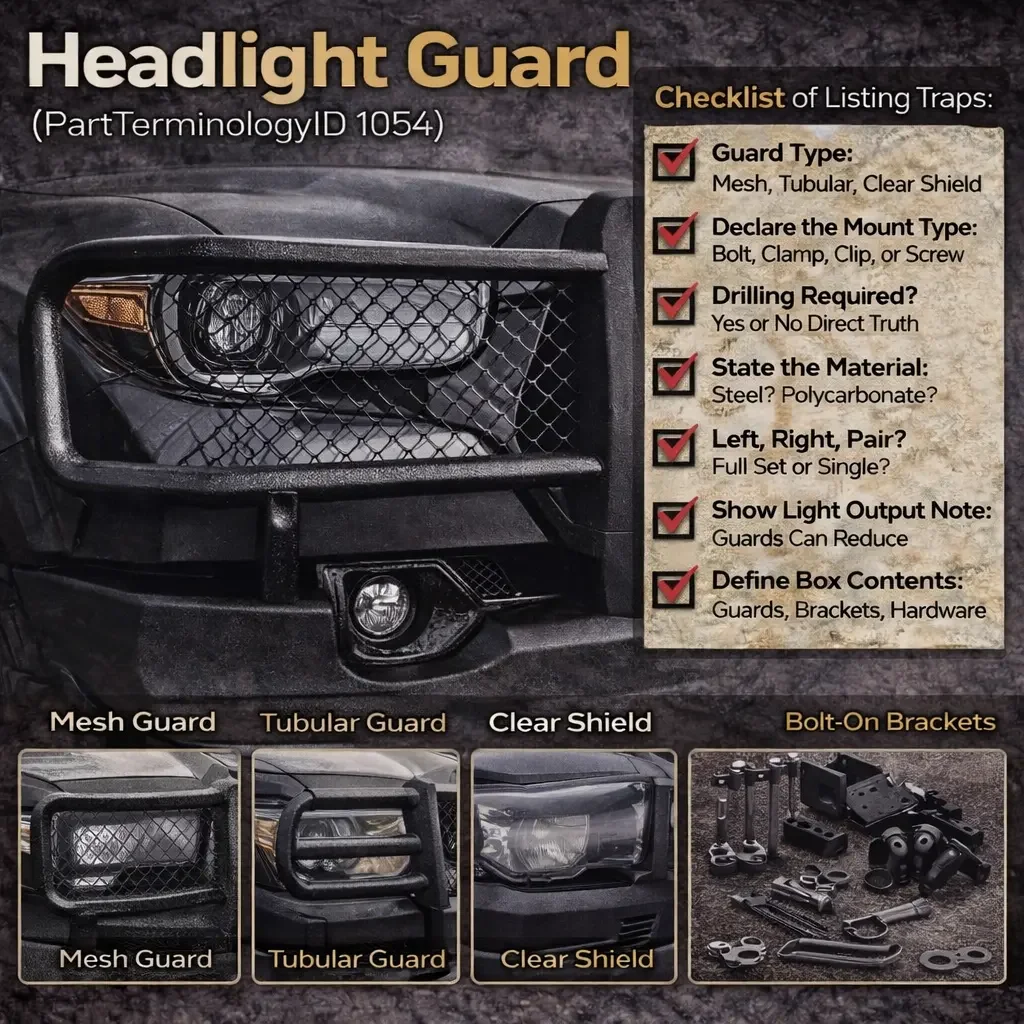
Headlight guards are simple in concept and messy in execution.
Buyers want protection from brush, rocks, and parking lot hits. Sellers get returns because the listing never answers the questions that actually matter:
Is it a mesh screen, a tubular guard, or a clear shield
Does it mount with brackets, clips, or drilling
Does it fit with LED, HID, adaptive headlights
Does it block light output or change the beam pattern
Is it sold as a pair or single side
This is the PartsAdvisory guide for Headlight Guard in PCdb PartTerminologyID 1054.
Status in New Databases (ID 1054)
Feature: Current (PIES 7.2 / PCdb) -> Future (PIES 8.0 / PCdb 2.0)
PartTerminologyID: 1054 -> 1054 (No change)
Terminology Name: Headlight Guard -> Headlight Guard
All the names people use for this part
Customers search the problem, not the standard name:
Headlight guard
Headlamp guard
Headlight protector
Headlight grille
Headlight mesh guard
Headlight screen
Brush guard headlights
Off road headlight guard
Light guard
Lens guard
Important: buyers confuse this with Headlight Cover (1052). A guard is usually rigid and protective. A cover is often cosmetic tint or a clear overlay.
What a headlight guard actually is
A headlight guard is a protective barrier designed to reduce damage from:
brush and branches
rocks and debris
minor front end impacts
It is usually external and can be:
metal mesh
tubular bar design
clear polycarbonate shield
integrated into a grille guard or brush guard assembly
The key tradeoff is always the same: protection vs visibility.
The major guard types
1) Mesh headlight guard
Usually a metal mesh or stamped pattern in front of the lens.
Pros:
strong protection
off road look
typically stable at speed
Traps:
can scatter light and change beam pattern
can look wrong if mesh size is too coarse or too fine
can interfere with headlight washers or trim surrounds
2) Tubular headlight guard
Small tube bars or hoops near the lens area.
Pros:
good impact protection
often matches grille guards and bull bars
Traps:
fitment is trim sensitive
may block part of the beam cut line depending on design
3) Clear shield style guard
A clear polycarbonate shield that mounts in front of the lens.
Pros:
better light output than metal mesh
good protection from debris and sand pitting
Traps:
can haze or yellow if not UV coated
can trap dirt between shield and lens if fit is loose
4) Integrated headlight guard assemblies
Often part of grille guards, brush guards, or front bumper protection systems.
Pros:
consistent design and mounting stability
Traps:
becomes a multi part fitment problem
sensor and camera clearance issues are common
Mounting styles and install reality
This category is not universal. Install method decides everything.
Common mounting types:
bolt-on brackets to grille support or core support
clamp on designs that attach to existing bars or tubes
clip in mounts using factory points
screw in installs, sometimes with drilling
combined mount styles, brackets plus clips
Your listing should answer these clearly:
drilling required yes or no
cutting or trimming required yes or no
hardware included yes or no
installs with basic tools or requires alignment and drilling
Fitment traps that cause returns
Headlights are not standardized even inside the same model year.
Common split points:
halogen vs HID vs LED housings
adaptive headlights vs non adaptive
facelift vs pre facelift
sport trim bumper and grille differences
headlight washer systems
trim bezels and surround shapes
Listings should state:
exact vehicle fitment
trim restrictions when applicable
left, right, or pair
Light output and safety expectations
A guard can reduce brightness or change the beam if it:
uses tight mesh
has thick bars crossing critical lens zones
sits too close and causes reflections
Best practice listing note:
“mesh and bar guards can reduce light output or change beam pattern depending on design”
This is not legal advice. It is expectation management that prevents angry reviews.
Materials and corrosion reality
Common materials:
powder coated steel
stainless steel
aluminum
polycarbonate shields
What buyers care about:
corrosion resistance in salt climates
finish match, matte black vs gloss black
hardware quality, stainless hardware included or not
Box contents, what should be stated
Headlight guard listings fail when box contents are vague.
Possible contents:
left and right guards
brackets and brace pieces
mounting hardware, bolts, washers, spacers
rubber isolators or pads
instructions and templates
Define:
pair or single
bracket kit included or not
hardware complete or reuse OEM
Catalog fields that matter for PartTerminologyID 1054
These are the fields that reduce returns the most:
Guard type: mesh, tubular, clear shield, integrated
Material: steel, stainless, aluminum, polycarbonate
Finish: powder coat, textured, polished, bare
Side coverage: left, right, pair
Mount type: bolt-on, clamp, clip-in, screw-in
Drilling required: yes or no
Cutting required: yes or no
Fitment notes: headlight type, washer compatibility, trim restrictions
Hardware included: yes or no
Light output note: yes for mesh and bar guards
Listing checklist for Headlight Guards
Say what style it is
Mesh, tubular, or clear shield.Declare mounting method
Bolt-on, clamp, clip, screw, drilling yes or no.Clarify side coverage
Left, right, pair.State material and finish
Customers care about rust and look.Call out trim and headlight type restrictions
LED, adaptive, washers, facelift.Add a light output note
Especially for mesh and bars.Define box contents
Guards only vs guards plus brackets and full hardware.
Most common listing mistakes
selling a single side while photos imply a pair
calling it universal when it is trim specific
hiding drilling required
no mention of headlight washer interference
not stating mesh or bar impact on light output
missing brackets or hardware expectations