
Headlight Cover (PartTerminologyID 1052): The Variant Map, Legal Reality, and the Listing Traps That Cause Returns
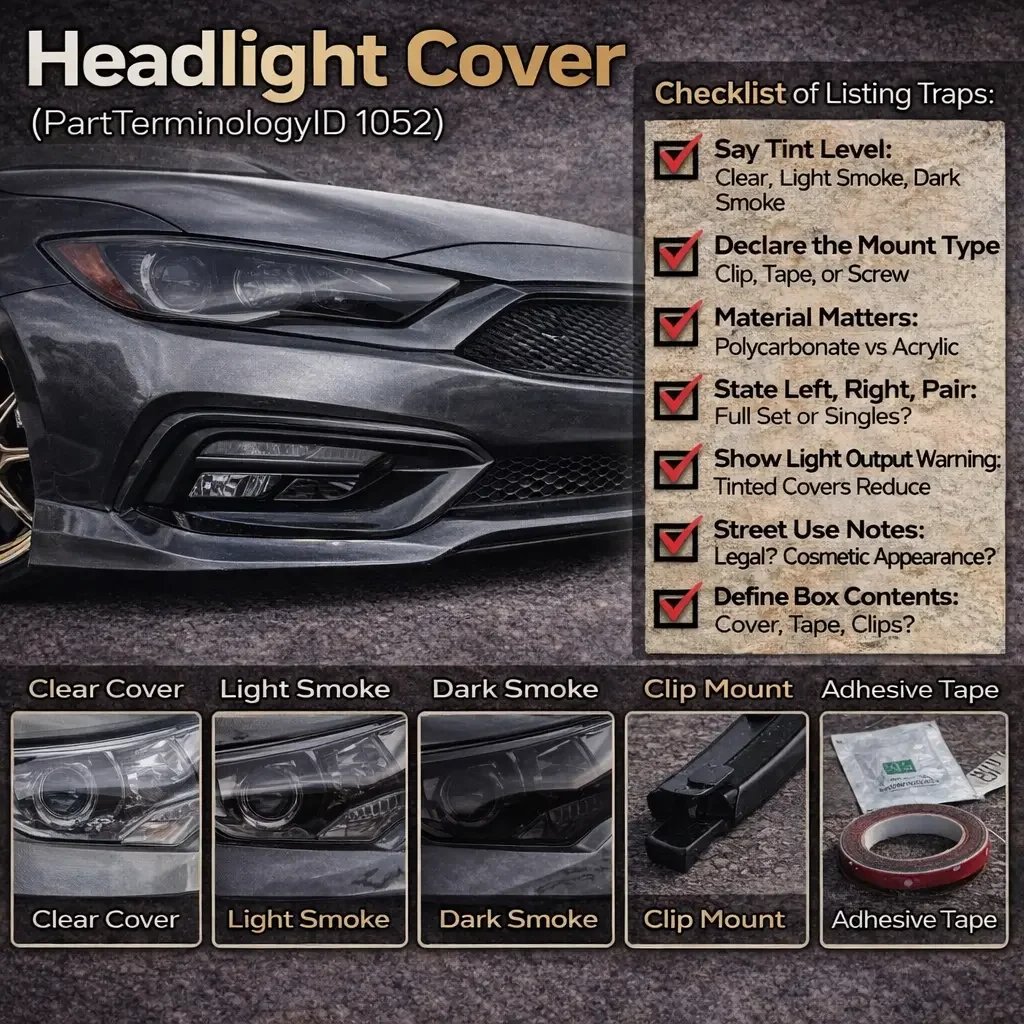
Headlight covers are deceptively dangerous for sellers.
They look simple. They are not. This category mixes three very different buyer intents:
protection from rocks and sand
cosmetic tint or smoked look
restoration band aid for hazy lenses
Each intent has different expectations, and different reasons for returns.
If you list this part like it is a universal plastic piece, you will get complaints. Fitment issues, light output issues, and in some cases legality concerns.
This is the PartsAdvisory guide for Headlight Cover in PCdb PartTerminologyID 1052.
Status in New Databases (ID 1052)
Feature: Current (PIES 7.2 / PCdb) -> Future (PIES 8.0 / PCdb 2.0)
PartTerminologyID: 1052 -> 1052 (No change)
Terminology Name: Headlight Cover -> Headlight Cover
All the names people use for this part
Buyers rarely search the PCdb name first. You will see:
Headlight cover
Headlamp cover
Headlight lens cover
Headlight protector
Headlight shield
Headlight guard
Stone guard
Rock guard
Smoked headlight cover
Tinted headlight cover
Headlight overlay
Headlight film kit (often a different product type, but buyers mix them)
Important: “film” and “cover” get confused. A film kit is usually a thin adhesive layer. A cover is usually a rigid or semi rigid piece.
What a headlight cover actually is
A headlight cover is an exterior add on that sits over the headlight lens to do one of these:
protect against impacts and sand pitting
change appearance through tint or texture
reduce UV exposure and slow lens haze in some designs
It can also reduce light output. That is the tradeoff that must be stated clearly.
The main variant groups
1) Clear protective covers
Buyer goal: protection with minimal light loss.
Common on off road and highway rock zones.
Key listing points:
clear, not tinted
impact resistance claims if provided
UV resistant yes or no
2) Smoked or tinted covers
Buyer goal: appearance.
This is the return magnet.
Key listing points:
tint level, light smoke vs dark smoke
“reduces light output” warning
“for off road use” positioning if the brand states it
3) Patterned covers
Examples: honeycomb, ridged, textured.
Buyer goal: style plus some protection.
Key listing points:
texture may scatter light
visibility at night concerns
4) Film overlays and “skins” that get called covers
If you sell film under the cover terminology, you must clarify it is film, not rigid plastic.
Key listing points:
thickness and material
wet install vs dry install
removal notes
Materials and why they matter
Polycarbonate
best impact resistance
common for real protection products
can yellow over time if not UV coated
Acrylic
clearer look, can crack easier than polycarbonate
often used for cosmetic covers
TPU film, for overlay kits
flexible, self healing on higher end versions
can be hard to install cleanly if buyer is not careful
Listing trap: customers assume every “cover” is polycarbonate. If it is acrylic, say acrylic.
Mounting styles and install reality
This is the second biggest return driver.
Clip on or snap on
often vehicle specific
easiest for customers
may rattle if fit is loose
Adhesive tape
common on universal kits
needs clean prep and temperature guidance
removal concerns come up fast
Screw or bracket mount
more secure
some kits require drilling, many buyers hate that
often off road style “guard” kits
Your listing should answer:
drilling required yes or no
hardware included yes or no
removable without damage yes or no, if stated by brand
Fitment traps that matter
Headlights are not uniform. Even within the same model year, trims can differ.
Common split points:
halogen vs HID vs LED headlight housings
adaptive headlights vs non adaptive
facelift vs pre facelift
sport trim bumper and headlight shape differences
left and right shape differences
Your listing should clearly state:
left only, right only, pair
upper only, full lens coverage
fits which headlight type if specified
Light output, safety, and legality
This is the big one. Headlight covers can reduce brightness and change beam pattern.
For smoked or dark covers, customers will complain:
“I cannot see at night”
“my light is dim”
“inspection failed”
“not street legal”
You do not need to provide legal advice, but you do need to set expectation:
Best practice listing language:
tinted covers reduce light output
check local laws and inspection requirements
for cosmetic appearance or off road use only, if the brand states it
Even clear covers can scatter light if they are textured.
Catalog fields that matter for PartTerminologyID 1052
If you want fewer returns, these attributes matter most:
Coverage: full lens vs partial
Side coverage: left, right, pair
Material: polycarbonate, acrylic, TPU film
Finish: clear, light smoke, dark smoke, textured
Mount type: clip, adhesive, bracket, screw
Drilling required: yes or no
Hardware included: yes or no
Fitment notes: headlight type and trim restrictions
Light output warning: yes for tint and textured products
Box contents: cover only vs cover plus tape, clips, and cleaner wipe
Listing checklist for Headlight Covers
Say what it is, rigid cover or film overlay
Do not let buyers guess.Declare tint level clearly
Clear, light smoke, dark smoke.Declare mounting method
Clip, tape, screw, bracket.Declare the side coverage and piece count
Left, right, pair. Full set or single.State material
Polycarbonate vs acrylic matters.Include a light output note for tint and texture
It prevents angry reviews.Call out trim restrictions
LED vs halogen, adaptive vs non adaptive, facelift differences.
The most common listing mistakes
selling one side while photos imply a pair
no tint level stated
“universal” listed like vehicle specific
adhesive mount not disclosed
no warning about reduced light output
missing headlight type and trim restrictions