
Ground Effects Kit (PartTerminologyID 1048): The Complete Map of Names, Mount Types, and Listing Traps
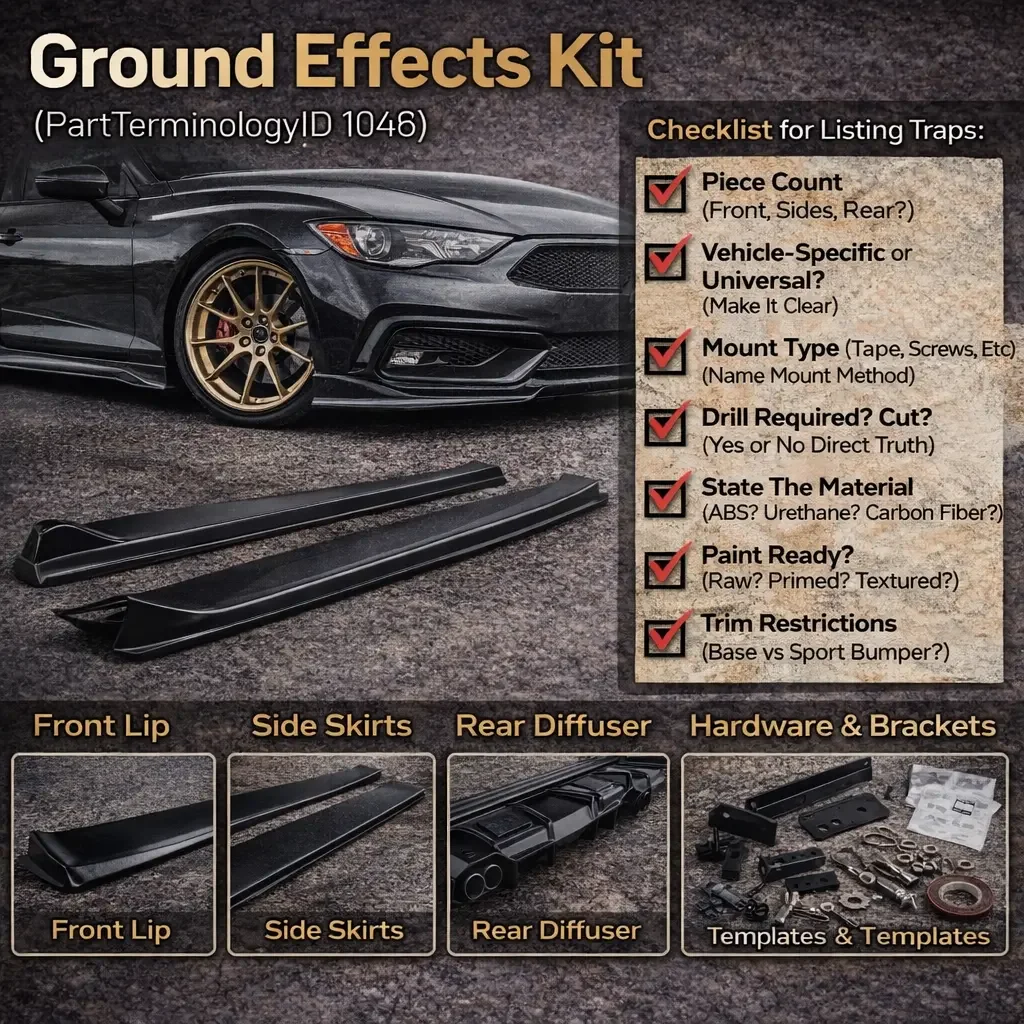
Ground effects kits sell on looks. They return on details.
Customers see a lower stance, sharper lines, “sport package” energy. Then the box arrives and reality hits:
it is only side skirts, not a full kit
it needs drilling, not “easy install”
it is raw fiberglass, not paint-ready
it fits the base bumper, not the sport bumper
it scrapes everywhere because clearance was never discussed
This post is the PartsAdvisory guide for Ground Effects Kit in PCdb PartTerminologyID 1048.
Status in New Databases (ID 1048)
Feature: Current (PIES 7.2 / PCdb) -> Future (PIES 8.0 / PCdb 2.0)
PartTerminologyID: 1048 -> 1048 (No change)
Terminology Name: Ground Effects Kit -> Ground Effects Kit
All the names people use for this item
If you only optimize for “ground effects kit,” you miss searches. Buyers use whatever phrase their forum or TikTok used.
Common names:
Ground effects kit
Body kit
Aero kit
Appearance package
Lip kit
Front lip and side skirt kit
Front splitter kit
Side skirt kit
Rocker extension kit
Under spoiler kit
Chin spoiler kit
Lower valance kit
Rear diffuser kit
Bumper lip kit
Important: some buyers call individual pieces a “kit.” Your listing must define what is included.
What this part actually is
A ground effects kit is a bundle of exterior lower body components that change the vehicle’s appearance, and sometimes airflow.
A “kit” can mean:
front lip only
side skirts only
rear diffuser only
front plus side
side plus rear
full kit: front, side, rear
full kit plus hardware and templates
full kit plus paint match, less common
The first listing trap is letting the word “kit” stay vague.
The core variant splits
1) Full kit vs partial kit
This is the biggest return trigger. Customers assume full kit.
A clean listing states:
piece count
exact pieces included
front only, side only, rear only, or full set
2) OE style vs aggressive aftermarket
OE style: subtle, looks factory
aggressive: splitters, canards, deeper skirts, diffuser fins
Photos sell the aggressive look. Fitment and clearance determine whether it stays on the car.
3) Vehicle specific vs universal
vehicle specific: molded to the bumper and rocker lines
universal: cut-to-fit lips and generic skirts
Universal kits must be labeled as universal. Do not let a buyer assume molded fit.
Mounting methods and install reality
Ground effects kits are not all installed the same. “No drill” is often a half-truth.
Common mount types:
Adhesive tape only
Tape plus screws
Self-tapping screws into bumper cover
Rivets or rivet nuts
Clip-in points using factory holes
Brackets to frame or undertray
Mixed mounting, which is most common
Your listing should answer these in plain language:
Drilling required: yes or no
Cutting or trimming required: yes or no
Hardware included: yes or no
Templates included: yes or no
Professional install recommended: yes or no
Materials and why buyers care
ABS plastic
common for lips and skirts
usually paintable
can crack if hit hard, but generally stable
Polyurethane
flexible, impact tolerant
good for daily drivers
often needs proper prep to paint
Fiberglass
rigid, can crack
often arrives raw and needs bodywork
fitment varies widely by brand, high return risk
Carbon fiber
premium, light, expensive
customers inspect weave quality and clear coat
shipping damage complaints are common
Material needs to be stated. Buyers feel misled when they expected flexible and got brittle.
Paint readiness and finish expectations
A ground effects kit can arrive as:
textured black, not paint matched
smooth black, paintable
primed, paintable
raw, requires prep and filler
pre-painted, rare and usually color code specific
Listing trap: “paintable” does not mean “ready to spray today.”
If it needs sanding, promoter, flex additive, or bodywork, say it.
Clearance and real world use
This category has a silent cost: scraping.
If the kit lowers the front, it changes:
approach angle
driveway clearance
curb and parking stop clearance
winter snow and slush survival
Good listings warn buyers:
may reduce ground clearance
designed for appearance
daily driver friendly vs track style, if known
Returns happen when customers learn this after install.
Trim and bumper restrictions
This is where fitment gets serious.
Common fitment splits:
base bumper vs sport bumper
trim packages with different rocker moldings
facelift vs pre-facelift
widebody vs standard body
performance package with different undertray
If your catalog lumps all trims, you will sell the wrong kit to the right car.
Box contents checklist
A ground effects kit can include many small items that determine install success:
brackets
screws, rivets, washers
edge trim
3M tape
templates
hardware bags labeled by position
instruction sheet
If the kit does not include hardware, say “reuse OEM hardware” or “hardware not included.” Do not let buyers guess.
Catalog fields that matter for PartTerminologyID 1048
If we had to pick the fields that reduce returns most, it’s these:
Vehicle specific vs universal
Pieces included and piece count
Coverage: front, side, rear, full set
Mount type: tape, screws, rivets, brackets
Drilling required: yes or no
Cutting required: yes or no
Material: ABS, polyurethane, fiberglass, carbon fiber
Finish: textured, smooth, primed, raw, painted
Paint readiness notes
Hardware included: yes or no
Trim restrictions: base vs sport bumper, model sub-trims
Listing checklist for Ground Effects Kits
Define what the kit includes
Front, side, rear, piece count.Tell the truth about install
Drill, cut, hardware, templates.State the material
Customers buy based on flexibility and durability expectations.State finish and paint readiness
Primed, raw, textured, smooth.Call out trim restrictions
Base bumper vs sport bumper is the classic failure.Mention clearance reality
If it sits lower, say it.
The most common listing traps
“Kit” shown as full kit, sold as one piece
universal parts sold like vehicle molded parts
drilling required not disclosed
fiberglass sold like paint-ready ABS
sport bumper fitment sold to base bumper buyers
clearance complaints after installation