
Yugo GV Series Parts Fitment Guide: Every US-Market Model From 1986 to 1992
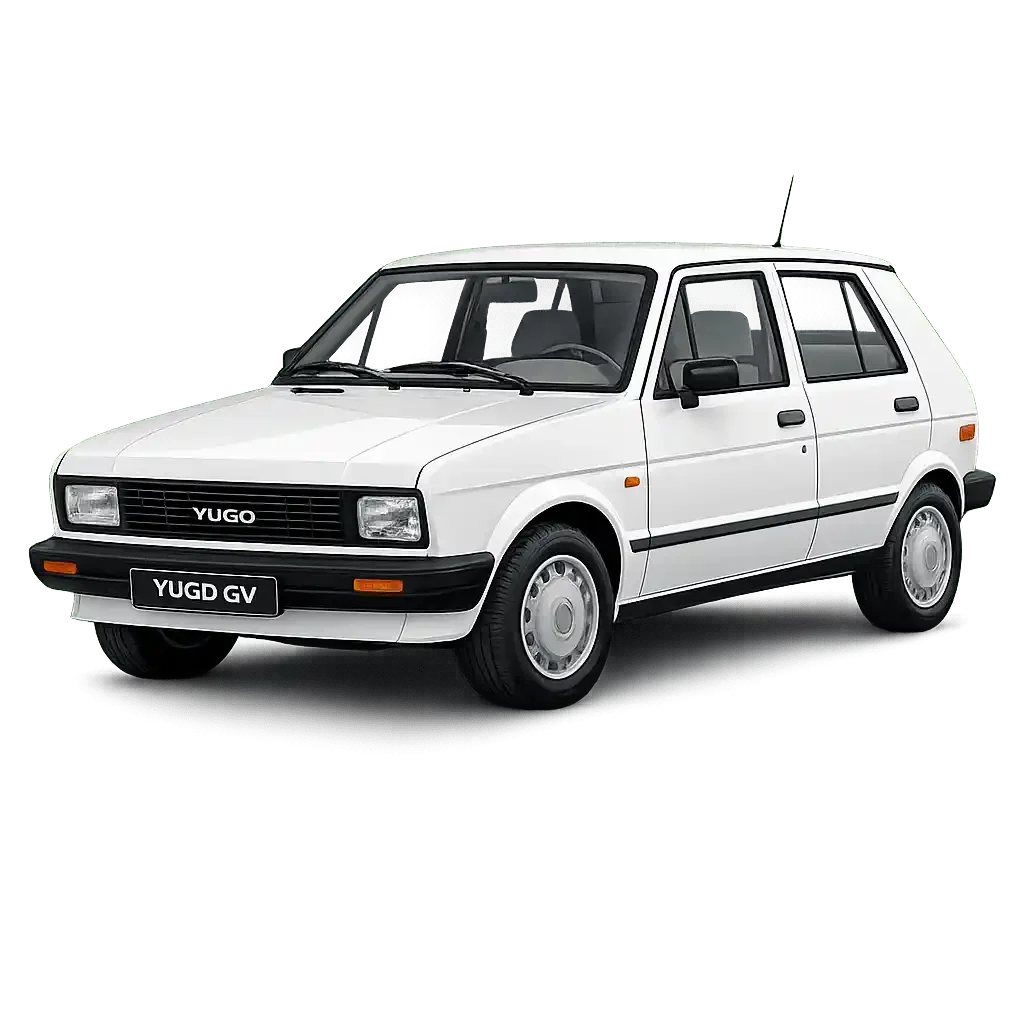
The Yugo is one of the most recognizable names in American automotive history, but not for the reasons its creators intended. Imported from Yugoslavia starting in 1986 and sold through 1992, the Yugo was marketed as the cheapest new car in America at just $3,990. Roughly 140,000 to 145,000 units were sold in the United States before political instability in Yugoslavia and a massive EPA emissions recall forced Yugo America to cease operations.
Three decades later, surviving Yugos have become oddball collector cars, and owners who maintain them still need parts. The vehicle is mechanically simple, but the US-market lineup included multiple trim levels across two engine families, two body styles, and several interior and exterior revisions that create real fitment splits. This guide covers every model, trim, and year sold in the United States and identifies the catalog traps that cause wrong orders.
Brand background
The Yugo was manufactured by Zastava Automobiles (formally Zavodi Crvena Zastava) in Kragujevac, Serbia, then part of Yugoslavia. The vehicle was based on the Fiat 128 platform, itself a derivative of the earlier Fiat 127, and used Fiat-derived engines and running gear. Zastava had been building Fiat-licensed vehicles since the 1950s.
In 1984, American entrepreneur Malcolm Bricklin (previously known for importing the Fiat X1/9 and Subaru to the US) tested the American market for the Zastava-built car, rebranded as "Yugo." His company, Yugo America (initially YugoCars, Inc.), began US sales in mid-1986. Bricklin positioned the Yugo as a new car for people who would otherwise buy used, and as an affordable second car for wealthier households.
Sales peaked in 1987 with nearly 49,000 units sold. By the late 1980s, Yugo America was in financial trouble due to warranty claims, quality reputation issues, and competition from the Hyundai Excel. The company was eventually taken over by Zastava itself. In 1990, the EPA recalled over 126,000 Yugos sold in the US for emissions violations related to the outdated carburetor and catalytic converter design. This recall, combined with Yugoslavia's political collapse, ended US importation in April 1992.
In Europe and Serbia, the vehicle continued production under the Zastava Koral name until 2008, when production finally ended after nearly three decades.
Platform and Fiat connection
Every Yugo sold in the United States shares the same basic platform derived from the Fiat 128. This is critical for parts sourcing because many Yugo mechanical components are interchangeable with or sourced from Fiat parts bins. Experienced Yugo owners frequently cross-reference Fiat 128 and Fiat 127 parts for suspension, braking, steering, and drivetrain components. Additionally, Abarth racing parts developed for the Fiat 127/128 family can be fitted to Yugos, and many Yugos were modified for SCCA Solo II autocross competition.
However, Yugo-specific body panels, interior trim, electrical components, and emissions hardware are not Fiat parts and must be sourced from Yugo-specific inventory or the aftermarket.
What was sold in the United States
The US-market Yugo lineup consisted of five hatchback trim levels and one convertible, all built on the same platform:
Yugo GV (1986-1992): The base model. "GV" stands for "Great Value." Equipped with the 1.1-liter (1,116 cc) overhead-cam four-cylinder engine producing 55 hp, paired with a 4-speed manual transmission. Manual everything: no power steering, no power brakes, no audio system, no air conditioning. From 1990 onward, the GV was upgraded to the 1.3-liter engine with 5-speed manual and became the "GV Plus."
Yugo GVL (1988-1989): A step above the base GV with minor interior and upholstery upgrades. Same 1.1-liter engine and 4-speed manual transmission as the base GV. Essentially a GV with better seats and trim.
Yugo GVS (1988): Similar to the GVL with minor trim and appearance upgrades, including a light body kit. Same 1.1-liter engine and 4-speed manual. The GVS and GVL were nearly identical mechanically and occupied the same position in the lineup.
Yugo GVX (1987-1989): The sporty top-trim model. This is the only US-market Yugo with the larger 1.3-liter (1,300 cc) engine, producing approximately 64 hp, paired with a 5-speed manual transmission. Standard equipment included a ground-effects body package, alloy wheels, rally/fog lights, a plush interior, and a center high-mount stop lamp. In 1990, a fuel-injected version (GVX-EFI) was introduced with Bosch Motronic electronic fuel injection replacing the carburetor. The GVX was also the only model available with the optional Renault-designed 3-speed automatic transmission (from 1990). An air conditioner with a holder for cooling two soft drink cans became optional on the GVX.
Yugo Cabrio (1990-1992): A convertible version introduced for the 1990 model year. Built on the same platform with a soft top conversion. Starting price was $8,990, more than double the original GV base price. Available in Base trim.
Complete US-market model, year, and trim breakdown
Yugo GV Hatchback:
1986 Yugo GV, Base, Hatchback (1.1L, 4-speed manual)
1987 Yugo GV, Base, Hatchback (1.1L, 4-speed manual)
1988 Yugo GV, Base, Hatchback (1.1L, 4-speed manual)
1989 Yugo GV, Base, Hatchback (1.1L, 4-speed manual)
1990 Yugo GV, Plus, Hatchback (1.3L, 5-speed manual)
1991 Yugo GV, Plus, Hatchback (1.3L, 5-speed manual)
1992 Yugo GV, Plus, Hatchback (1.3L, 5-speed manual)
Yugo GVL Hatchback:
1988 Yugo GVL, Base, Hatchback (1.1L, 4-speed manual)
1989 Yugo GVL, Base, Hatchback (1.1L, 4-speed manual)
Yugo GVS Hatchback:
1988 Yugo GVS, Base, Hatchback (1.1L, 4-speed manual)
Yugo GVX Hatchback:
1987 Yugo GVX, Base, Hatchback (1.3L, 5-speed manual)
1988 Yugo GVX, Base, Hatchback (1.3L, 5-speed manual)
1989 Yugo GVX, Base, Hatchback (1.3L, 5-speed manual)
Yugo Cabrio Convertible:
1990 Yugo Cabrio, Base, Convertible
1991 Yugo Cabrio, Base, Convertible
1992 Yugo Cabrio, Base, Convertible
Step 1: Confirm body style first
The Yugo was sold in two body styles in the United States:
3-door hatchback (GV, GVL, GVS, GVX)
2-door convertible (Cabrio)
The Cabrio shares the basic platform and front structure with the hatchback models, but the entire upper body from the beltline up is different. The Cabrio has a soft top mechanism, reinforced rocker panels and sills (to compensate for the loss of roof rigidity), different rear quarter panels, a different windshield frame, and unique interior trim around the top mechanism.
Parts unique to the Cabrio (do not cross with hatchback):
Soft top assembly, frame, and fabric
Rear quarter panels and convertible-specific body reinforcements
Windshield frame and surround trim
Rear window (soft or plastic versus hatchback glass)
Top mechanism latches, seals, and weatherstripping
Tonneau cover and boot
Interior trim panels around the top storage area
Rocker panel reinforcement plates
Parts shared between Cabrio and hatchback:
Engine and transmission
Front suspension, steering, and brakes
Front body panels, hood, fenders, front bumper, headlights
Dashboard and instrument cluster (depending on year)
Drivetrain components (axles, hubs, bearings)
Fuel system components
Electrical system (alternator, starter, ignition)
Rule: Never list upper body or rear body parts without confirming hatchback or convertible.
Step 2: Confirm engine family
This is the most critical mechanical split in the Yugo lineup. Two engine families were used:
1.1-liter (1,116 cc) OHC four-cylinder: 55 hp at 6,000 rpm, 52 lb-ft torque. Carbureted. Paired with 4-speed manual transmission. Used in the GV (1986-1989), GVL (1988-1989), GVS (1988), and GVC.
1.3-liter (1,300 cc) OHC four-cylinder: Approximately 64 hp. Initially carbureted, then fuel-injected (Bosch Motronic EFI) from 1990. Paired with 5-speed manual transmission, or optional Renault 3-speed automatic (from 1990). Used in the GVX (1987-1989, carbureted), GVX-EFI (1990+, fuel-injected), and GV Plus (1990-1992).
Parts affected by the engine split:
Engine block, head, and internal components
Carburetor or fuel injection system
Exhaust manifold and catalytic converter
Intake manifold
Engine mounts (may differ due to displacement)
Clutch assembly (4-speed versus 5-speed)
Transmission (4-speed manual, 5-speed manual, or 3-speed automatic)
CV axles (may differ between transmission types)
Radiator and cooling hoses (may differ)
Ignition components
Air filter housing
Critical 1990 split: In 1990, the base GV was upgraded from the 1.1-liter/4-speed to the 1.3-liter/5-speed and renamed GV Plus. This means a "1989 Yugo GV" and a "1990 Yugo GV Plus" have completely different engines and transmissions. Never list engine or transmission parts as fitting "1986-1992 Yugo GV" without specifying the engine.
Fuel injection split: The 1990+ GVX-EFI uses Bosch Motronic electronic fuel injection, which is a completely different fuel delivery system from the carbureted 1.3-liter. Fuel injectors, fuel rail, ECU, throttle body, sensors, and wiring harness are unique to the EFI version. Carbureted 1.3-liter parts (carburetor, choke, fuel pump) do not apply to the EFI version and vice versa.
Rule: Always require engine displacement (1.1L or 1.3L) and fuel delivery type (carbureted or fuel-injected) for any engine, fuel system, exhaust, or transmission part.
Step 3: Check the exterior and interior revision timeline
The Yugo received incremental updates throughout its US production run. These are not dramatic facelifts, but they create real fitment differences for body and interior parts:
1986-1989 (early): Butterfly quarter windows (fixed, non-opening from approximately 1985 onward for US models), round side indicator lamps, single-section taillights (early) transitioning to two-part taillights, black dashboard, twist-type fuel filler cap, smaller fuel tank.
1990 (mid-cycle changes): Fuel filler flap replaces twist cap. Minor interior and instrument cluster updates.
1991 (late): Dashboard redesigned (first on GVX, then across the lineup). Butterfly quarter windows removed. Larger fuel tank introduced.
Parts affected by the revision timeline:
Instrument cluster (early versus late design)
Dashboard assembly (pre-1991 versus 1991+)
Quarter window glass and seals (present on early models, absent on 1991+)
Fuel filler neck and cap assembly (twist cap versus flap)
Tail lamp assemblies (single-section versus two-part)
Side indicator lamps (round versus square)
Fuel tank (smaller early versus larger late)
Rule: For interior trim, dashboard, lighting, and fuel system components, specify the model year exactly. Do not list across the 1990 or 1991 revision boundaries without verification.
Step 4: Confirm trim level for exterior and interior parts
While all hatchback Yugos share the same basic body shell, trim-specific parts differ:
GV (Base): Plain exterior, steel wheels, basic interior, no body kit
GVL: Same exterior as GV with upgraded upholstery and interior trim
GVS: Light body kit (side skirts, front air dam), appearance upgrades, steel wheels
GVX: Full ground-effects body package (front air dam, side skirts, rear valance), alloy wheels, rally/fog lights, plush interior, center high-mount stop lamp (early), two-tone paint
Parts unique to specific trims:
GVX ground-effects body kit (front air dam, side skirts, rear valance)
GVX alloy wheels
GVX rally/fog lights and wiring
GVX-specific interior trim and upholstery
GVS body kit components (lighter than GVX)
GVL interior upholstery
Rule: For body kit components, wheels, fog lights, and interior upholstery, confirm the exact trim level (GV, GVL, GVS, or GVX).
The biggest return traps on the Yugo
1. Engine parts listed as fitting "all Yugo" without specifying 1.1L or 1.3L
Why they get returned: The 1.1-liter and 1.3-liter are different engines with different displacement, different power output, and different accessory configurations. A carburetor for the 1.1L does not fit the 1.3L. A fuel injector for the 1990+ EFI 1.3L does not exist on any carbureted model.
How to stop returns: Require engine displacement and fuel delivery type (carbureted or EFI) on every engine, fuel, exhaust, and ignition part listing. Never use "1986-1992 Yugo" as a blanket fitment for any powertrain component.
2. Transmission parts crossing between 4-speed, 5-speed, and automatic
Why they get returned: Three different transmissions were offered across the lineup. The 4-speed manual (1.1L models), 5-speed manual (1.3L models), and Renault 3-speed automatic (1990+ GVX option) use different cases, gears, shift linkage, and clutch assemblies. CV axles may also differ between transmission types.
How to stop returns: Require transmission type on all driveline, clutch, and axle part listings. Add a buyer prompt: "Confirm 4-speed manual, 5-speed manual, or 3-speed automatic."
3. Convertible parts listed as fitting hatchback or vice versa
Why they get returned: The Cabrio has a completely different upper body structure from the hatchback. Windshield frames, rear quarter panels, interior trim, and any part related to the roof or top mechanism are unique to the Cabrio.
How to stop returns: Require body style confirmation (hatchback or convertible) on every upper body, glass, weatherstrip, and interior trim listing.
4. Dashboard and instrument cluster parts crossing the 1991 redesign
Why they get returned: The 1991 dashboard redesign changed the shape, layout, and mounting of the dashboard assembly and instrument cluster. A pre-1991 dashboard does not fit a 1991+ car and vice versa.
How to stop returns: For dashboard and instrument cluster parts, split listings at 1990/1991. Specify "1986-1990" or "1991-1992" and do not list across the boundary.
5. Tail lamps and side indicators crossing the early/late styling change
Why they get returned: Early models used round side indicators and single-section taillights. Later models used square side indicators and two-part taillights. A buyer who orders "Yugo tail light" without specifying the configuration receives the wrong style.
How to stop returns: Require photo verification or year confirmation for all exterior lighting. Add a buyer prompt: "Confirm if your tail lamps are single-section or two-part, and if your side indicators are round or square."
6. Listing Fiat 128 parts as direct Yugo replacements without verification
Why they get returned: While many Yugo mechanical components are Fiat-derived and some are directly interchangeable, not all Fiat 128 parts fit the Yugo without modification. Body panels, interior trim, electrical components, and emissions hardware are Yugo-specific. Even mechanical components may have been modified for US-market compliance.
How to stop returns: If cross-referencing Fiat 128 parts, note the cross-reference explicitly and add a disclaimer that physical verification is recommended. Do not list Fiat body panels or electrical components as fitting Yugo.
A clean Yugo fitment rules block
Required attributes for Yugo parts listings:
Model year (1986-1992)
Model: GV, GVL, GVS, GVX, or Cabrio
Trim: Base or Plus (GV Plus from 1990)
Body style: Hatchback or Convertible
Engine: 1.1L (1,116 cc) or 1.3L (1,300 cc)
Fuel delivery: Carbureted or EFI (fuel-injected, 1990+ GVX only)
Transmission: 4-speed manual, 5-speed manual, or 3-speed automatic
For exterior lighting: early style or late style (confirm by photo)
For dashboard/interior: pre-1991 or 1991+ redesign
For body kit parts: confirm trim level (GV, GVS, or GVX)
Buyer confirmation prompts:
Engine parts: "Confirm engine size: 1.1-liter or 1.3-liter, and carbureted or fuel-injected"
Transmission parts: "Confirm 4-speed manual, 5-speed manual, or 3-speed automatic"
Body parts: "Confirm hatchback or Cabrio convertible"
Lighting: "Confirm tail lamp style: single-section or two-part"
Interior: "Confirm dashboard style: original (1986-1990) or redesigned (1991-1992)"
Quick identification guide for buyers
Tell readers to gather these items before shopping:
Model year from registration or title
Model name from badges or documentation (GV, GVL, GVS, GVX, or Cabrio)
Body style: hatchback or convertible
Engine size: look at the engine bay or documentation (1.1L = 4-speed manual, 1.3L = 5-speed manual or automatic)
Photo of the rear (confirms tail lamp style and body kit presence)
Photo of the dashboard (confirms pre-1991 or 1991+ design)
Transmission type: count the gears on the shift knob or check for automatic
If the buyer cannot confirm engine size and transmission type, they are not ready to order powertrain parts for a Yugo.
Parts sourcing notes for Yugo
The Yugo has been out of US production for over 30 years, but parts availability is better than you might expect:
More than 250 part numbers remain available through online specialty retailers in the US
Fiat 128 and Fiat 127 cross-references can supply many suspension, brake, steering, and drivetrain components
The European Zastava Koral continued production until 2008, and European-market parts suppliers may stock components compatible with US-market Yugos
Abarth performance parts designed for the Fiat 127/128 platform can be used for competition modifications
Yugo-specific body panels, interior trim, and emissions components are the hardest to source and may require used/salvage inventory or NOS (new old stock) suppliers
Online Yugo enthusiast communities maintain parts sourcing guides and cross-reference databases
Bottom line
The Yugo is a simple car on a well-understood Fiat-derived platform, but the US-market lineup packs more fitment variation than most people expect. The 1.1-liter to 1.3-liter engine split, the 1990 powertrain upgrade on the base GV, the carburetor-to-EFI transition, three different transmissions, two body styles, and the 1991 interior redesign all create real catalog splits that cause wrong orders if ignored.
Build your listings around engine family, fuel delivery type, transmission, body style, and model year revision boundaries, and the Yugo becomes as straightforward to catalog as any other vehicle from the era. Ignore those splits, and you will learn the hard way why the cheapest car in America still manages to generate expensive returns.
Disclaimer: This guide is based on publicly available specifications, Yugo press materials, and independent research. Part interchangeability should always be confirmed via VINand OEM part number lookup. Specifications may change without notice. This document does not constitute official Yugo parts catalog data. Visuals and illustrations in this article were generated using AI for representative purposes and may not reflect exact technical schematics.