
Volvo S90 (SPA Platform) 2017-Present
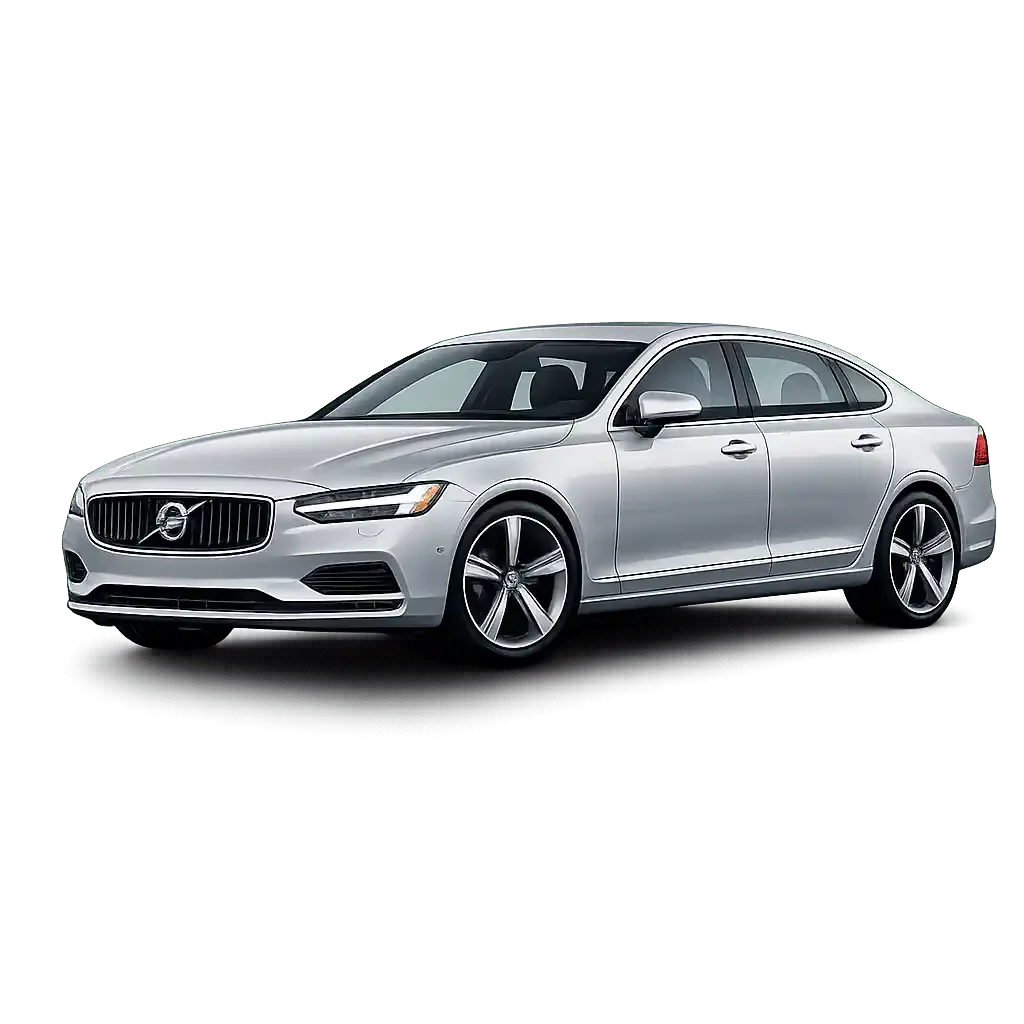
The Complete Fitment Guide
Returns destroy margins. The second-generation Volvo S90 (2017-present) is Volvo's flagship sedan, built on the Scalable Product Architecture (SPA) platform shared with the XC90, XC60, S60, V90, V60, and V90 Cross Country. It uses exclusively 2.0-liter four-cylinder VEA (Volvo Engine Architecture) engines in turbocharged, twincharged (turbo plus supercharger), mild hybrid, and plug-in hybrid configurations paired with an Aisin-Warner eight-speed automatic transmission. The S90 looks simple on the surface because every engine displaces 2.0 liters and every transmission is the same eight-speed automatic. That uniformity is deceptive. The S90 has undergone a wheelbase change (standard to long wheelbase in the US after the 2017 model year), a complete powertrain nomenclature transition (T-series to B-series), a major T8 plug-in hybrid battery and motor overhaul at MY2022, a production location shift from Sweden to China, a mid-cycle refresh around 2020, a trim level renaming at MY2023, and the addition of 48-volt mild hybrid systems as the baseline powertrain. Each of these changes creates parts fitment splits. This guide maps every one required to prevent returns on Volvo's most complex modern sedan.
Generation Overview
The second-generation S90 was unveiled in January 2016 at the North American International Auto Show in Detroit and went on sale as a 2017 model year vehicle. It replaced the S80 as Volvo's flagship sedan and was the second vehicle (after the XC90) to use the SPA platform and VEA engine family.
Key timeline:
2017 (MY2017): US launch. Standard wheelbase (SWB). Built at Torslanda, Sweden. Available as T5 (turbo, FWD, 250 hp), T6 (twincharged, AWD, 316 hp). No T8 PHEV for MY2017 S90 in US.
2018 (MY2018): US switches exclusively to long wheelbase (LWB), stretched 120mm (4.7 inches) behind the B-pillar. Production moves to Daqing, China. T8 plug-in hybrid (twincharged plus electric motor, AWD, 400 hp) debuts on S90 in US. T5 and T6 continue.
2019 (MY2019): Continuation. T5/T6/T8 lineup unchanged.
2020 (MY2020): Mid-cycle refresh. Sequential LED turn signals in taillights. Revised front bumper with chrome garnish on Inscription trim. Updated Sensus infotainment software. T8 battery increased from 10.4 kWh to 11.6 kWh.
2021 (MY2021): T8 rebranded as "Recharge T8" in marketing. Otherwise largely unchanged.
2022 (MY2022): Major powertrain transition. T5 and T6 replaced by B5 (turbo, FWD, 247 hp, 48V mild hybrid) and B6 (twincharged, AWD, 295 hp, 48V mild hybrid). T8 PHEV receives major overhaul: battery jumps from 11.6 kWh to 18.8 kWh, rear electric motor upgraded from 87 hp to 143 hp, ICE drops supercharger (now turbo-only), combined output rises to 455 hp. One-pedal drive capability added on T8.
2023 (MY2023): Pure gasoline engines discontinued for US market. All S90 models are now electrified (B5/B6 mild hybrid or T8 PHEV). Trim levels renamed: Momentum becomes Core/Plus, R-Design and Inscription become Plus/Ultimate with Dark/Bright theme options. "Recharge" branding on T8.
2024 (MY2024): Continuation. Minor updates.
2025 (MY2025): Last model year for US/Canada/Europe/Australia markets. Discontinued in these markets due to tariff exposure (Chinese production) and low sales volume. Continues in China, Middle East, South Korea, and select Asian markets. "Recharge" branding dropped; plug-in hybrid returns to "T8 AWD" designation. "Ultimate" replaces "Ultra" trim naming.
Platform facts:
Platform: SPA (Scalable Product Architecture). Sometimes referenced as P5 by aftermarket suppliers (e.g., IPD).
Assembly: Torslanda, Sweden (MY2017 only). Daqing, China (MY2018-present for US/global market). CKD assembly in Malaysia and India for local markets.
Body style: Four-door sedan. SWB (MY2017 US) and LWB (MY2018+ US). European markets received both SWB and LWB from MY2018.
Engine family: VEA (Volvo Engine Architecture), also marketed as Drive-E. All 2.0L inline four-cylinder. No six-cylinder, no V8, no diesel in US market.
Transmission: Aisin-Warner TG-81SC eight-speed torque converter automatic (non-hybrid and early T8). Aisin-Warner TG-81SD (updated T8 PHEV from MY2020).
Drive: FWD (T5, B5) or AWD (T6, B6, all T8). T8 AWD is "through-the-road" hybrid AWD: gasoline engine drives front wheels, electric motor drives rear wheels via an electric rear axle drive (ERAD) unit. Mechanical AWD (BorgWarner coupling, propeller shaft, rear differential) on T6/B6 models.
Sibling: V90 (estate/wagon), V90 Cross Country (raised wagon). Same SPA platform, same powertrains. S60 and V60 on SPA are shorter-wheelbase siblings with shared powertrain architecture but different body and many different components.
Why the SPA S90 Causes Catalog Errors
The S90 generates returns from seven distinct sources of catalog confusion:
1. Nameplate Collision: S90 (2017-Present, SPA) vs. S90 (1997-1998, P90)
The original S90 (1997-1998) is a rear-wheel-drive inline-six sedan on the P90 (900 Series) platform. The current S90 (2017-present) is a front/all-wheel-drive four-cylinder sedan on the SPA platform. These vehicles share zero components. A catalog search for "Volvo S90" without generation enforcement returns results for both.
2. Standard Wheelbase (MY2017) vs. Long Wheelbase (MY2018+)
The 2017 S90 in the US has a standard wheelbase (approximately 115.8 inches). The 2018 and later S90 in the US has a long wheelbase (approximately 120.5 inches), stretched 120mm behind the B-pillar. Body panels from the B-pillar rearward (rear doors, rear quarter panels, trunk lid), the floor pan, exhaust routing, fuel lines, brake lines, wiring harnesses, and driveshaft lengths all differ between SWB and LWB. Front-of-vehicle components (hood, fenders, front bumper, headlights, engine, transmission, front suspension) are shared.
3. T-Series (2017-2021) vs. B-Series (2022+) Powertrain Nomenclature
The T5 (turbo, 250 hp) was replaced by the B5 (turbo plus 48V mild hybrid, 247 hp). The T6 (twincharged, 316 hp) was replaced by the B6 (twincharged plus 48V mild hybrid, 295 hp). The B-series adds a 48-volt integrated starter-generator (ISG), a 48V battery, and associated wiring, cooling, and control modules. An air filter or oil filter cross-references between T5 and B5 because the core engine is the same. A starter motor, alternator/ISG, or 48V battery and wiring does not cross-reference because the electrical architecture is fundamentally different.
4. T8 PHEV Battery and Motor Split at MY2022
The T8 plug-in hybrid underwent a major hardware change for the 2022 model year:
Pre-2022 T8: Twincharged ICE (turbo plus supercharger), 87 hp rear electric motor (ERAD), 9.2-11.6 kWh battery (varied by year), combined approximately 400 hp.
2022+ T8: Turbo-only ICE (supercharger removed), 143 hp rear electric motor (ERAD), 18.8 kWh battery, combined 455 hp.
This is not a software update. The ICE loses its supercharger (different intake manifold, different belt drive, different engine accessories). The ERAD unit is physically larger and more powerful. The battery pack adds a third layer of cells. The high-voltage wiring, battery management system, cooling circuits, and power electronics all change. Pre-2022 T8 hybrid components do not fit 2022+ T8 models and vice versa.
5. FWD (T5/B5) vs. Mechanical AWD (T6/B6) vs. Hybrid AWD (T8)
Three completely different drivetrain architectures exist within the same S90 body:
FWD (T5, B5): No propeller shaft, no rear differential, no rear axle drive unit. Front axle shafts, front subframe, and front suspension are configured for FWD.
Mechanical AWD (T6, B6): BorgWarner coupling, propeller shaft, conventional rear differential, rear axle shafts. Different rear subframe than FWD. Different front axle shafts than FWD.
Hybrid AWD (T8): No propeller shaft, no conventional rear differential. Instead uses an electric rear axle drive (ERAD) unit that houses the electric motor and reduction gear, driving the rear wheels via electric-specific rear axle shafts. Different rear subframe than both FWD and mechanical AWD. High-voltage battery in central tunnel. High-voltage wiring throughout vehicle. Different fuel tank size (reduced to accommodate battery).
Suspension geometry is shared across all drivetrain variants (MacPherson strut front, integral-link multilink rear), but specific components (springs, dampers, stabilizer bars) are calibrated differently for FWD versus AWD weight distribution.
6. Trim Level and Option-Dependent Component Variation
The S90 was available with optional adaptive air suspension (Four-C Chassis with Rear Air Suspension on earlier models, or full four-corner air suspension on later/higher-trim models). Standard suspension uses conventional coil springs and passive dampers. Air suspension uses air springs and electronically controlled dampers. These are completely different systems: different springs, different dampers, different ride height sensors, different compressor/reservoir (air suspension), different control modules. Wheel sizes range from 18 to 20 inches depending on trim and year, affecting brake rotor/caliper fitment on some configurations.
7. 2020 Mid-Cycle Refresh and 2023 Trim Renaming
The 2020 refresh changed exterior lighting (sequential LED turn signals in taillights), front bumper design (Inscription trim), and interior software. The taillight assemblies are not interchangeable between pre-2020 and 2020+ models. The 2023 trim renaming (Momentum to Core/Plus, R-Design/Inscription to Dark/Bright theme) does not change hardware but does change option packaging and standard equipment, which can affect which components are present on a given vehicle.
Complete Powertrain Reference (US Market)
T5 (MY2017-2021): Turbocharged, FWD
Engine code: B4204T23 (MY2017-2018), B4204T26 (MY2019+)
Displacement: 2.0L (1,969cc) inline-four, transversely mounted
Aspiration: Single turbocharger
Output: 250 hp at 5,500 rpm, 258 lb-ft at 1,500-4,800 rpm
Drive: FWD
Transmission: Aisin-Warner TG-81SC eight-speed automatic
T6 (MY2017-2021): Twincharged, AWD
Engine code: B4204T27 (MY2017-2019), B4204T29 (MY2020+)
Displacement: 2.0L (1,969cc) inline-four, transversely mounted
Aspiration: Turbocharger plus Eaton-type Roots supercharger (compound/twincharged)
Output: 316 hp at 5,700 rpm, 295 lb-ft at 2,200-5,400 rpm (MY2017-2019). 310 hp at 5,700 rpm, 295 lb-ft (MY2020+).
Drive: AWD (BorgWarner coupling, propeller shaft, rear differential)
Transmission: Aisin-Warner TG-81SC eight-speed automatic
T8 (MY2018-2021): Twincharged PHEV, Hybrid AWD
Engine code: B4204T28 (and variants by year)
Displacement: 2.0L (1,969cc) inline-four, transversely mounted
Aspiration: Turbocharger plus Eaton-type Roots supercharger (compound/twincharged)
ICE output: Approximately 303-318 hp (varies by year and calibration)
Rear electric motor (ERAD): 87 hp, 177 lb-ft
Combined system output: Approximately 400 hp, 472 lb-ft
Battery: 10.4 kWh (MY2018-2019), 11.6 kWh (MY2020-2021)
Electric range (EPA): Approximately 21 miles (varied by year)
Drive: Hybrid AWD (ICE drives front, ERAD drives rear)
Transmission: Aisin-Warner TG-81SC (MY2018-2019), TG-81SD (MY2020+) eight-speed automatic
B5 (MY2022+): Turbocharged, 48V Mild Hybrid, FWD
Engine code: B4204T45 (and variants)
Displacement: 2.0L (1,969cc) inline-four, transversely mounted
Aspiration: Single turbocharger
Output: 247 hp, 258 lb-ft
Mild hybrid: 48V integrated starter-generator (ISG), 48V lithium-ion battery
Drive: FWD
Transmission: Aisin-Warner TG-81SC eight-speed automatic
Notes: Replaced T5. The 48V ISG replaces the conventional starter motor and alternator with a belt-driven motor-generator that provides engine start/stop, regenerative braking energy recovery, and electric boost assist at low rpm.
B6 (MY2022+): Twincharged, 48V Mild Hybrid, AWD
Engine code: B4204T47 (and variants)
Displacement: 2.0L (1,969cc) inline-four, transversely mounted
Aspiration: Turbocharger plus electric supercharger (replaces the mechanical Roots supercharger used on T6)
Output: 295 hp, 310 lb-ft
Mild hybrid: 48V integrated starter-generator (ISG), 48V lithium-ion battery
Drive: AWD (BorgWarner coupling, propeller shaft, rear differential)
Transmission: Aisin-Warner TG-81SC eight-speed automatic
Notes: Replaced T6. The mechanical Roots supercharger is replaced by an electrically driven supercharger powered from the 48V system. This changes the intake plumbing, supercharger unit, belt drive arrangement, and associated wiring and control modules compared to the T6.
T8 (MY2022+): Turbocharged PHEV, Hybrid AWD (Extended Range)
Engine code: Updated B4204T-series (specific code varies)
Displacement: 2.0L (1,969cc) inline-four, transversely mounted
Aspiration: Single turbocharger only (supercharger removed compared to pre-2022 T8)
ICE output: Approximately 310-312 hp
Rear electric motor (ERAD): 143 hp (upgraded from 87 hp)
Combined system output: 455 hp, 523 lb-ft
Battery: 18.8 kWh (up from 11.6 kWh)
Electric range (EPA): 35-41 miles (up from approximately 21 miles)
Drive: Hybrid AWD (ICE drives front, ERAD drives rear)
Transmission: Aisin-Warner TG-81SD eight-speed automatic
Notes: Major hardware revision. ICE loses supercharger (different intake, accessories, belt routing). ERAD physically different unit (higher power, different housing). Battery physically larger (third layer of cells added). High-voltage wiring, power electronics, and battery management system all revised. One-pedal drive capability added. Pre-2022 and 2022+ T8 hybrid-specific components are not interchangeable.
Critical Fitment Splits
Split 1: S90 (SPA, 2017-Present) vs. S90 (P90, 1997-1998)
Zero components interchange. Completely different vehicles, platforms, engines, drivetrains, and architectures. Enforce generation/platform filtering on all S90 catalog entries.
Split 2: Standard Wheelbase (MY2017) vs. Long Wheelbase (MY2018+)
Body panels from B-pillar rearward do not interchange. Rear doors, rear quarter panels, trunk lid, floor pan, and underbody routing all differ. Front-of-vehicle components (forward of B-pillar) are shared. Driveshaft/propeller shaft lengths differ on AWD models. Exhaust system routing may differ.
Split 3: T-Series (Non-Hybrid, MY2017-2021) vs. B-Series (48V Mild Hybrid, MY2022+)
Core engine architecture is shared (same 2.0L VEA block). Oil filters, air filters, many gaskets, and many mechanical engine internals cross-reference. Electrical accessories do not: the B-series uses a 48V ISG instead of a conventional starter and alternator, a 48V battery, and associated 48V wiring and DC-DC converter. The B6 replaces the mechanical Roots supercharger with an electric supercharger, changing intake hardware.
Split 4: Pre-2022 T8 vs. 2022+ T8 PHEV
This is the most return-prone split on the S90. These are substantially different hybrid systems:
Supercharger present (pre-2022) vs. absent (2022+): Intake manifold, supercharger unit, belt drive, engine accessories all differ.
ERAD 87 hp (pre-2022) vs. 143 hp (2022+): Different motor, different housing, different rear axle shafts potentially, different power electronics.
Battery 9.2-11.6 kWh (pre-2022) vs. 18.8 kWh (2022+): Different physical size (third cell layer), different battery management system, different high-voltage wiring.
Transmission variant may differ: TG-81SC (earlier) vs. TG-81SD (later).
Split 5: FWD vs. Mechanical AWD vs. Hybrid AWD
Three distinct drivetrain architectures. FWD has no rear drive components. Mechanical AWD (T6/B6) has propeller shaft, BorgWarner coupling, conventional rear differential. Hybrid AWD (T8) has ERAD unit, no propeller shaft, no conventional differential. Rear subframes differ across all three. Front axle shafts differ between FWD and AWD.
Split 6: Standard Suspension vs. Air Suspension
Different springs, dampers, ride height sensors, compressor/reservoir (air only), control modules. Standard and air suspension components are not interchangeable.
Split 7: Pre-2020 Refresh vs. 2020+ Refresh
Taillight assemblies differ (sequential LED turn signals on 2020+). Front bumper covers may differ (Inscription trim, chrome garnish). Interior trim details differ.
Split 8: Wheel Size and Brake Fitment
18, 19, and 20-inch wheel packages. Some brake rotor and caliper specifications differ with wheel package. Always confirm wheel size and brake package when shipping rotors, pads, and calipers.
Biggest Return Traps and How to Prevent Them
Trap 1: P90 S90 (1997-1998) Parts for SPA S90 (2017+)
What happens: A Whiteblock inline-six air filter, 960/S90 brake rotor, or P90 body panel ships to a 2020 S90 owner.
Prevention: Hard generation boundary. P90 S90 = 1997-1998, RWD, inline-six. SPA S90 = 2017-present, FWD/AWD, four-cylinder.
Trap 2: SWB (2017) Body Parts for LWB (2018+) or Vice Versa
What happens: A 2017 S90 rear door ships to a 2019 S90 owner. The 2017 SWB rear door is shorter and does not fit the LWB body.
Prevention: Always specify SWB (MY2017 US) or LWB (MY2018+ US). Note that European market cars may be either SWB or LWB from MY2018 onward.
Trap 3: Pre-2022 T8 Hybrid Components for 2022+ T8 (or Vice Versa)
What happens: A 2019 T8 ERAD unit, battery pack, or supercharger-equipped intake manifold ships to a 2023 T8 owner. Or a 2023 T8 turbo-only intake ships to a 2019 T8 owner who needs the twincharged version.
Prevention: Always confirm T8 model year. The MY2022 boundary is a hard split for all hybrid-specific components: ERAD motor, battery pack, high-voltage wiring, power electronics, intake manifold/supercharger assembly.
Trap 4: Conventional Starter/Alternator for B-Series Mild Hybrid (or Vice Versa)
What happens: A T5 conventional alternator ships to a B5 owner. The B5 uses a 48V ISG, not a conventional alternator. Or a B-series 48V battery ships to a T-series owner who has a conventional 12V electrical system.
Prevention: Always distinguish T-series (conventional 12V electrical, MY2017-2021) from B-series (48V mild hybrid, MY2022+) when shipping electrical components, starters, alternators, and batteries.
Trap 5: T6 Mechanical Supercharger Parts for B6 Electric Supercharger (or Vice Versa)
What happens: A T6 Roots-type mechanical supercharger or its associated belt drive ships to a B6 owner. The B6 uses an electrically driven supercharger with completely different mounting, plumbing, and control.
Prevention: Distinguish T6 (mechanical supercharger, MY2017-2021) from B6 (electric supercharger, MY2022+).
Trap 6: FWD Rear Subframe/Axle for AWD Vehicle (or Vice Versa)
What happens: A T5 FWD rear subframe ships to a T6 AWD owner. The AWD subframe accommodates the rear differential mounting. Or a T6 mechanical AWD propeller shaft ships to a T8 hybrid AWD owner who has an ERAD instead.
Prevention: Always confirm drivetrain: FWD (T5/B5), mechanical AWD (T6/B6), or hybrid AWD (T8). Rear subframes, axle shafts, and drivetrain components are unique to each configuration.
Trap 7: Standard Suspension for Air Suspension Vehicle (or Vice Versa)
What happens: Coil spring front struts ship to a vehicle equipped with air suspension.
Prevention: Always confirm suspension type. Air suspension was optional and is not identifiable from trim level alone (it was more common on Inscription/Ultimate trims but was an option, not standard, on most configurations).
Trap 8: Pre-2020 Taillights for 2020+ Vehicle
What happens: Pre-refresh taillights (without sequential turn signals) ship to a 2021 S90 owner.
Prevention: Distinguish pre-2020 from 2020+ for taillight assemblies and rear bumper covers (Inscription trim).
SPA Platform Cross-Reference Notes
The S90 shares the SPA platform with the XC90, XC60, S60, V60, V90, and V90 Cross Country. Many components cross-reference within the SPA family, but critical differences exist:
Engine and transmission: The 2.0L VEA engine and Aisin TG-81 eight-speed automatic are shared across SPA models. Many engine internals, oil filters, air filters, and transmission components cross-reference.
Front suspension: MacPherson strut front suspension geometry is shared across SPA models, but spring rates, damper valving, stabilizer bar diameters, and alignment specifications differ by model and weight class.
Rear suspension: Integral-link multilink rear is shared across SPA, but spring rates, damper valving, and subframe variants differ by model, drivetrain (FWD/AWD/PHEV), and suspension option (standard/air).
Brakes: Some brake rotor and caliper specifications are shared across SPA models with the same wheel size and weight class, but always verify by specific application.
Body panels: Not shared between SPA models (S90 body panels do not fit S60, V90, XC90, etc.).
Electrical: Sensus infotainment system and many electronic modules are shared across SPA. Android-based Google infotainment (introduced on later models) differs from Sensus.
T8 PHEV: The T8 hybrid system (ERAD, battery, high-voltage wiring) is shared in architecture across SPA T8 models (S90, XC90, XC60, S60, V60, V90), but battery pack physical dimensions, mounting, and sometimes ERAD gearing may differ by model. Do not assume cross-fitment between SPA T8 models without verifying by specific part number.
Data Quality Checklist for Catalog Managers
Required attributes for every S90 (2017-present) parts listing:
Model year(s)
Platform generation: SPA (2017-present) vs. P90 (1997-1998). This is the most critical split.
Wheelbase: SWB (MY2017 US) or LWB (MY2018+ US). Required for body panels B-pillar rearward, driveshaft, exhaust, and underbody components.
Powertrain: T5, T6, T8, B5, B6, or T8 (post-2022). This determines drivetrain (FWD/AWD/PHEV), electrical architecture (12V conventional vs. 48V mild hybrid vs. high-voltage PHEV), and supercharger configuration.
T8 generation: Pre-2022 (twincharged, 87 hp ERAD, up to 11.6 kWh battery) vs. 2022+ (turbo-only, 143 hp ERAD, 18.8 kWh battery). Required for all hybrid-specific components.
Drivetrain: FWD (T5/B5), mechanical AWD (T6/B6), or hybrid AWD (T8). Required for rear subframe, axle shafts, propeller shaft, differential/ERAD, and suspension calibration.
Suspension type: Standard (coil spring) or air suspension. Required for springs, dampers, ride height sensors, compressor, and control modules.
Pre-refresh (MY2017-2019) vs. post-refresh (MY2020+): Required for taillights, rear bumper covers, and some interior components.
Trim naming era: Momentum/R-Design/Inscription (MY2017-2022) vs. Core/Plus/Ultimate with Dark/Bright theme (MY2023+). Affects standard equipment and option packaging.
Wheel size: 18, 19, or 20 inches. May affect brake component fitment.
Buyer Confirmation Prompts
Before shipping any part for an S90 (2017-present), confirm:
"Is your S90 from 2017 or newer, or is it the older 1997-1998 S90?" The two generations share only a nameplate.
"What model year is your S90?" This determines wheelbase (2017 SWB vs. 2018+ LWB), powertrain generation (T-series vs. B-series), T8 PHEV generation (pre-2022 vs. 2022+), and refresh status (pre-2020 vs. 2020+).
"What powertrain does your S90 have: T5, T6, T8, B5, or B6?" This determines drivetrain (FWD/AWD/PHEV), electrical architecture, and component compatibility.
"Does your S90 have air suspension or standard suspension?" Visually confirmed by air springs at the rear (inflatable rubber bellows vs. conventional coil springs).
"What wheel size does your S90 have: 18, 19, or 20 inches?" May affect brake component fitment.
The Business Case: Why Fitment Data Pays for Itself
The S90's deceptive uniformity is its catalog management challenge. Every engine is 2.0 liters. Every transmission is an eight-speed automatic. The badge says "S90" across nine model years. Beneath that consistency lie five distinct powertrain configurations (T5, T6, T8 pre-2022, B5, B6, T8 post-2022), three drivetrain architectures (FWD, mechanical AWD, hybrid AWD), two wheelbase lengths, two suspension types, and a major mid-production T8 hybrid overhaul that changed the supercharger, battery, motor, and power electronics simultaneously.
The nameplate collision with the 1997-1998 P90 S90, the SWB/LWB body split at MY2018, the T-series to B-series electrical architecture transition at MY2022, the T8 battery/motor/supercharger overhaul at MY2022, the three-way drivetrain split, the air suspension option, and the 2020 taillight refresh are the minimum fitment attributes required. The S90 owner population is relatively small (US sales were consistently low), which means the per-return cost as a fraction of category revenue is higher than on a mass-market vehicle. Every return matters more. Catalog precision on the S90 protects margins not through volume but through accuracy on a low-volume, high-value vehicle where every order counts and every misfitment is visible.
Disclaimer: This guide is based on publicly available specifications, Volvo press materials, and independent research. Part interchangeability should always be confirmed via VINand OEM part number lookup. Specifications may change without notice. This document does not constitute official Volvo parts catalog data. Visuals and illustrations in this article were generated using AI for representative purposes and may not reflect exact technical schematics.