
Volvo EX90 (SPA2 Platform) 2025-2026 US Market Fitment Guide
The Complete Fitment Guide
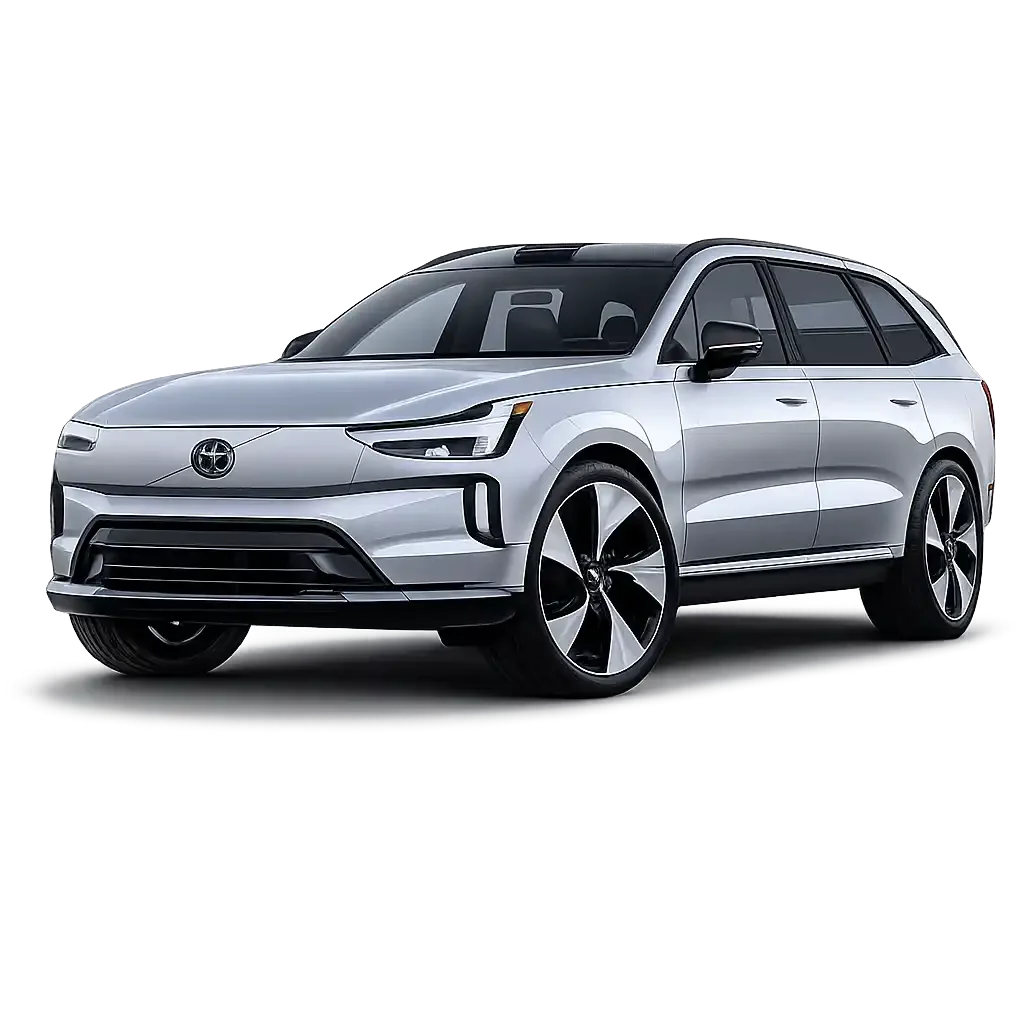
Returns destroy margins. The Volvo EX90 is Volvo's fully electric flagship three-row SUV, built on the new SPA2 (Scalable Product Architecture 2) platform shared with the Polestar 3. It launched for the 2025 model year, assembled at Volvo's Ridgeville, South Carolina plant. For 2025, two dual-motor AWD powertrains were offered: the standard Twin Motor (402 hp) and the Twin Motor Performance (510 hp), across two trim levels (Plus and Ultra). For 2026, a major hardware update introduced 800-volt electrical architecture replacing the 400-volt system, a new single-motor RWD base model, and a dramatically upgraded Twin Motor Performance with 670 hp. The EX90 shares its SPA2 platform and 111 kWh CATL battery pack with the Polestar 3 but has a completely different body, interior, and sensor suite including roof-mounted Luminar Iris LiDAR as standard. The EX90 is NOT a redesigned XC90. It is a ground-up electric vehicle that shares no powertrain, platform, or structural components with the ICE/PHEV XC90 (SPA1 platform). This guide maps every fitment split required to prevent returns on Volvo's most technologically advanced vehicle.
Generation Overview (2025-2026 US Market)
The EX90 was revealed in November 2022 and entered US production at Volvo's Ridgeville, South Carolina facility in 2024, with customer deliveries beginning in the second half of 2024 as 2025 model year vehicles. It is the first Volvo built on the SPA2 platform, a clean-sheet electric architecture co-developed with Geely and shared with the Polestar 3. The SPA2 is NOT an evolution of the SPA1 platform that underpins the current XC90, XC60, S60, S90, and V60. Despite the similar naming, SPA2 shares no structural components with SPA1.
The EX90 is approximately the same size as the XC90 and serves as its electric successor, though the XC90 continues in production alongside it. The EX90 features a 111 kWh battery pack (107 kWh usable) produced by CATL, consisting of 204 prismatic cells in 17 modules. All 2025 models were dual-motor AWD. The 2026 model year brings the most significant update to date: an 800-volt electrical architecture, a new single-motor RWD option, and a substantially more powerful Performance variant.
The EX90 includes a roof-mounted Luminar Iris LiDAR sensor as standard across all trims, along with 8 cameras, 5 radars, and 12 ultrasonic sensors. The infotainment system uses a 14.5-inch vertically mounted touchscreen running Android Automotive OS with Google built-in, powered by a Qualcomm Snapdragon Cockpit platform. The core computing is handled by Nvidia Drive AI. The EX90 supports bi-directional charging (vehicle-to-home and vehicle-to-grid) and is equipped with a standard heat pump across all configurations. The EX90 won the World Luxury Car Award in April 2025.
Key Platform Facts
• Platform: SPA2 (Scalable Product Architecture 2)
• US model years: 2025 to present (2026 brings major 800V update)
• Assembly: Ridgeville, South Carolina, USA (also Chengdu, China for non-US markets)
• Battery: 111 kWh total (107 kWh usable), CATL prismatic cells, 204 cells in 17 modules
• Voltage architecture: 400V (2025), 800V (2026+)
• Powertrain (2025): Twin Motor AWD (402 hp) or Twin Motor Performance AWD (510 hp)
• Powertrain (2026): Single Motor RWD (new), Twin Motor AWD (402 hp), Twin Motor Performance AWD (670 hp)
• Charging: 250 kW DC fast charging (2025 400V), up to 350 kW capable (2026 800V), 11 kW AC onboard charger, bi-directional
• Charging port: NACS (North American Charging Standard)
• Seating: 6-seat or 7-seat configuration
• SPA2 sibling: Polestar 3 (shared platform, battery, assembly plant)
• Towing: 4,850 lb maximum
Why the EX90 Causes Catalog Errors
• EX90 vs. XC90 nameplate confusion: The EX90 and XC90 are completely different vehicles on completely different platforms. The XC90 uses the SPA1 platform with ICE and PHEV powertrains. The EX90 uses the SPA2 platform with a BEV-only powertrain. They share zero structural, powertrain, or electrical components. A catalog listing "90-series" parts without specifying EX90 or XC90 is guaranteed to generate returns.
• 2025 vs. 2026 voltage architecture change: The 2025 EX90 uses a 400-volt electrical system. The 2026 EX90 uses an 800-volt system. This is a fundamental change to the high-voltage architecture that affects the battery management system, onboard charger, DC-DC converter, power electronics, wiring harness, and potentially the electric motors themselves. High-voltage components are NOT interchangeable between 400V and 800V systems.
• 2026 adds single-motor RWD: The 2025 EX90 was exclusively dual-motor AWD. The 2026 EX90 introduces a single-motor RWD configuration. Single-motor models lack the front electric motor, front drive unit, front half-shafts, and associated cooling lines. Drivetrain parts for AWD models will not apply to RWD models.
• Three powertrain tiers for 2026: The 2026 lineup has three distinct powertrain levels: Single Motor RWD (new base), Twin Motor AWD (402 hp), and Twin Motor Performance AWD (670 hp, up from 510 hp in 2025). The 2026 Performance variant uses a different, more powerful motor setup and reportedly a slightly smaller 102 kWh battery pack, with range estimated at 305 miles rather than 310.
• Polestar 3 cross-reference risk: The Polestar 3 shares the SPA2 platform, 111 kWh battery pack, and Ridgeville assembly plant with the EX90. Many structural, suspension, and high-voltage components may physically cross-reference. However, the Polestar 3 has a completely different body, interior, sensor suite (no Luminar LiDAR on base Polestar 3), software calibration, and branding. Body panels, bumpers, lights, interior trim, and vehicle-specific electronics do NOT interchange.
• Wheel size affects EPA range rating: The EX90's EPA-rated range varies by wheel size: 310 miles with 21-inch wheels vs. 300 miles with 20-inch or 22-inch wheels. Wheel and tire packages must be listed with the correct size for the trim level.
• Software-defined vehicle with OTA updates: The EX90 receives over-the-air software updates that can change vehicle behavior, add features, and alter performance characteristics after delivery. This creates a unique catalog challenge where the same hardware VIN may have different software capabilities depending on update status.
• Unique sensor hardware: The roof-mounted Luminar Iris LiDAR, interior-monitoring IR cameras, and 5G-connected infotainment hardware are unique to the EX90. These components are not shared with any other Volvo model and require EX90-specific part numbers.
Complete Powertrain Reference (US Market)
Twin Motor AWD (2025)
• Configuration: Dual permanent-magnet synchronous motors, one per axle
• Output: 402 hp (300 kW), 568 lb-ft of torque
• 0 to 60 mph: 5.7 seconds
• Drive: AWD (all-wheel drive, standard on all 2025 models)
• Battery: 111 kWh (107 kWh usable), 400V architecture
• EPA range: Up to 310 miles (21-inch wheels) or 300 miles (20/22-inch wheels)
• DC fast charging: 250 kW max, 10% to 80% in approximately 30 minutes
• Transmission: Single-speed reduction gear per motor
• Towing: 4,850 lb
• Trims: Plus and Ultra
Twin Motor Performance AWD (2025)
• Configuration: Dual permanent-magnet synchronous motors, upgraded rear motor
• Output: 510 hp (380 kW global / 370 kW North America designation E2), 671 lb-ft of torque
• 0 to 60 mph: 4.7 seconds
• Drive: AWD
• Battery: 111 kWh, 400V architecture
• EPA range: Up to 310 miles (21-inch wheels)
• Trims: Available as an upgrade on Plus and Ultra ($5,000 option)
• Notes: The Performance variant uses a more powerful rear motor than the standard Twin Motor. Motor-specific components (rear drive unit, cooling system calibration) differ from the base Twin Motor.
2026 Model Year Updates
The 2026 EX90 receives the most significant hardware update since launch:
• 800-volt architecture: Replaces the 2025 400-volt system. Enables faster DC charging (up to 350 kW capable), reduced heat generation during charging, and more efficient power delivery. Volvo states 250 km (approximately 155 miles) of range can be added in just 10 minutes. This is a fundamental change to the entire high-voltage electrical system.
• Single Motor RWD (new base model): New for 2026. Single rear motor, rear-wheel drive configuration. Starts under $80,000. No front electric motor, no front drive unit, no front half-shafts. This is the most affordable EX90 configuration.
• Twin Motor AWD: Carries over at 402 hp. Now the mid-range option. Updated to 800V architecture. Starting MSRP approximately $81,390.
• Twin Motor Performance AWD: Dramatically upgraded to 670 hp (up from 510 hp in 2025). Reports indicate a slightly smaller 102 kWh battery pack for this variant, with estimated range around 305 miles. Starting MSRP approximately $86,390.
• Electrochromatic panoramic roof: New option first introduced on the ES90 sedan. Allows the roof glass to turn opaque at the touch of a button.
• Improved battery management software: New in-house developed software works with the 800V system to optimize charging speeds and energy efficiency.
Powertrain Availability by Year (US Market)
• 2025: Twin Motor AWD (402 hp, 400V) + Twin Motor Performance AWD (510 hp, 400V). All models AWD only.
• 2026: Single Motor RWD (new, 800V) + Twin Motor AWD (402 hp, 800V) + Twin Motor Performance AWD (670 hp, 800V).
Body Style and Trim Levels
The EX90 is offered in a single body style: a three-row full-size SUV. Seating configuration is available in 6-seat (second-row captain's chairs) or 7-seat (second-row bench) layouts. The third row is power-folding. Maximum cargo capacity is 85.3 cubic feet with both rear rows folded, plus 2.5 cubic feet of under-floor storage and a small frunk.
Plus Trim
The entry-level trim. Standard features include a 14.5-inch touchscreen with Google built-in, 14-speaker Bose sound system, Luminar LiDAR, Volvo Pilot Assist with automatic lane change, wireless Android Auto and Apple CarPlay, wireless phone charger, heated front and rear seats, heat pump, air suspension, and NACS fast charging adapter. Available with 20-inch or 21-inch wheels.
Ultra Trim
The range-topping trim. Adds head-up display, upgraded 360-degree surround-view camera, advanced driver assistance features, and the option to upgrade to a 25-speaker Bowers and Wilkins premium sound system. Available with 21-inch or 22-inch wheels.
EX90 Excellence (Limited, Non-US Initially)
A four-seater flagship variant unveiled at Auto Shanghai 2023. Features a two-tone exterior, unique 22-inch wheels, and a completely redesigned rear cabin with two individual seats separated by a center console with a refrigerator. The second and third rows are replaced entirely. If this variant reaches the US market, it will require unique interior part numbers for everything behind the front seats.
Catalog Accuracy: The Fitment Splits That Matter
Split 1: EX90 (SPA2, BEV) vs. XC90 (SPA1, ICE/PHEV)
These are completely different vehicles. The EX90 is a ground-up battery electric vehicle on the SPA2 platform. The XC90 is an ICE/PHEV vehicle on the SPA1 platform. They share zero structural, powertrain, suspension, or electrical components. Body panels are not interchangeable. The XC90 has an engine bay; the EX90 has a frunk. Any catalog that cross-references "Volvo 90" without specifying EX90 or XC90 will generate returns.
Split 2: 2025 (400V) vs. 2026 (800V) Electrical Architecture
The 2025 EX90 uses a 400-volt high-voltage system. The 2026 EX90 uses an 800-volt system. All high-voltage components (battery management system, onboard charger, DC-DC converter, power distribution unit, high-voltage wiring harnesses, and potentially motor inverters) are different between the two model years. This is not a minor calibration change; it is a fundamental electrical architecture change. Low-voltage 12V accessories, body panels, interior trim, and suspension components may cross-reference between 2025 and 2026, but all high-voltage electrical components must be year-specific.
Split 3: Single Motor RWD vs. Twin Motor AWD (2026+)
The 2026 EX90 introduces a single-motor RWD base model. This variant has no front electric motor, no front drive unit, no front half-shafts, and no front motor cooling lines. AWD-specific components do not apply to RWD models. Suspension calibration may also differ between RWD and AWD due to weight distribution differences (the front motor adds significant weight to the front axle). Note: all 2025 EX90 models are Twin Motor AWD.
Split 4: Twin Motor (402 hp) vs. Twin Motor Performance (510/670 hp)
The Performance variant uses a more powerful rear motor and different power electronics than the standard Twin Motor. For 2025, the Performance made 510 hp. For 2026, it jumps to 670 hp with reports of a slightly different battery pack (102 kWh vs. 111 kWh). The rear drive unit, motor cooling system, and potentially the battery pack itself differ between standard and Performance variants. Brake specifications may also differ due to the higher performance capabilities.
Split 5: EX90 vs. Polestar 3 (SPA2 Sibling)
The EX90 and Polestar 3 share the SPA2 platform, 111 kWh CATL battery, and Ridgeville assembly plant. Structural components, suspension geometry, and some high-voltage components may physically cross-reference. However, the two vehicles have completely different exterior body panels, different lighting, different interior trim, different sensor packages (the EX90 has standard Luminar LiDAR; the base Polestar 3 does not), different software calibrations, and different branding. Never cross-reference body, lighting, interior, or sensor components between EX90 and Polestar 3.
Split 6: Wheel Size and Trim Compatibility
The EX90 is offered with 20-inch, 21-inch, and 22-inch wheels depending on trim. EPA range varies: 310 miles with 21-inch wheels, 300 miles with 20-inch or 22-inch wheels. The Plus trim offers 20-inch and 21-inch options. The Ultra trim offers 21-inch and 22-inch options. Wheel and tire packages, brake components, and TPMS sensors must be listed with the correct wheel size and trim compatibility.
Split 7: 6-Seat vs. 7-Seat Configuration
The EX90 is available in 6-seat (second-row captain's chairs with center console) and 7-seat (second-row bench seat) configurations. Second-row seat frames, seat tracks, center console hardware, and floor trim differ between the two layouts. Always specify seating configuration for interior components.
Biggest Return Traps and How to Prevent Them
Trap 1: XC90 Parts Shipped to EX90 Owner
What happens: Any component listed for the "Volvo 90" or "XC90" ships to an EX90 owner. Nothing fits. Different platform, different body, different powertrain, different everything.
Prevention: Always specify model: EX90 (BEV, SPA2) or XC90 (ICE/PHEV, SPA1). These are completely separate vehicles.
Trap 2: 2025 High-Voltage Parts for 2026 Vehicle
What happens: A 400V onboard charger, DC-DC converter, or HV wiring harness from a 2025 EX90 ships to a 2026 owner with 800V architecture. The voltage systems are fundamentally incompatible.
Prevention: Always specify model year for all high-voltage electrical components. 2025 = 400V. 2026+ = 800V.
Trap 3: AWD Drivetrain Parts Shipped to RWD Owner
What happens: Front drive unit, front half-shafts, or front motor cooling components from a Twin Motor AWD model ship to a 2026 Single Motor RWD owner. The RWD model has no front motor or front drive unit.
Prevention: Always specify drive configuration: Single Motor RWD (2026+ only) or Twin Motor AWD. Note: all 2025 models are AWD.
Trap 4: Standard Motor Parts for Performance Variant
What happens: A rear drive unit or motor assembly from the standard 402 hp Twin Motor ships to a Performance owner. The Performance uses a higher-output rear motor with different specifications. The 2026 Performance (670 hp) is dramatically different from both the standard Twin Motor and the 2025 Performance (510 hp).
Prevention: Always specify powertrain: Twin Motor (402 hp) or Twin Motor Performance (510 hp for 2025, 670 hp for 2026). The 2025 and 2026 Performance variants may also differ from each other.
Trap 5: Polestar 3 Body Parts Cross-Referenced to EX90
What happens: A bumper cover, headlight, taillight, or interior panel from a Polestar 3 ships to an EX90 owner because both are on the SPA2 platform. The bodies and interiors are completely different.
Prevention: Always specify model: EX90 or Polestar 3. Platform-sharing does not mean body or interior interchangeability.
Trap 6: Wrong Wheel/Tire Package for Trim
What happens: 22-inch wheels listed for a Plus trim owner (Plus offers 20-inch and 21-inch only) or 20-inch wheels for an Ultra owner (Ultra offers 21-inch and 22-inch only). Brake caliper clearance may also differ by wheel size.
Prevention: Always specify trim level and wheel size: Plus (20 or 21 inch), Ultra (21 or 22 inch).
Trap 7: LiDAR or Sensor Components Cross-Referenced
What happens: EX90-specific Luminar Iris LiDAR sensor or mounting hardware is cross-referenced to a Polestar 3 or other Volvo model. The EX90's roof-mounted LiDAR is unique to the EX90.
Prevention: LiDAR sensor, windshield wiper cleaning nozzles (which service the LiDAR screen), and roof-mounted sensor housing are EX90-specific parts. Do not cross-reference to any other Volvo or Polestar model.
SPA2 Platform Family: What Interchanges and What Does Not
Components That May Cross-Reference Between EX90 and Polestar 3
• Structural/chassis: Subframes, suspension control arms, wheel bearings, and hub assemblies may cross-reference for the same model year and drive configuration.
• Battery pack: The 111 kWh CATL battery pack is shared. Battery cells, modules, and pack housing may cross-reference (verify by part number; 2026 800V components differ from 2025 400V).
• Brakes: Brake calipers, rotors, and pads may cross-reference for the same wheel size configuration.
• Wheels and tires: Bolt pattern, hub bore, and offset specifications are shared on the SPA2 platform.
Components That Do NOT Interchange
• Body panels: All exterior panels (hood, fenders, doors, bumpers, tailgate, roof) are unique to each vehicle. The EX90 and Polestar 3 have completely different bodies.
• Lighting: Headlights, taillights, daytime running lights, and fog lights are unique to each vehicle.
• Interior: Dashboard, seats, door panels, center console, and all trim pieces are unique. The EX90 has a third row; the Polestar 3 does not.
• Sensor suite: The EX90 has standard Luminar Iris LiDAR on the roof. The base Polestar 3 does not. Camera positions, radar units, and sensor calibration differ.
• Software/calibration: ECU calibrations, infotainment software, ADAS algorithms, and OTA update packages are vehicle-specific.
Components That Do NOT Interchange with XC90 (SPA1)
Nothing. The EX90 (SPA2) and XC90 (SPA1) share zero interchangeable components. Different platform, different body, different powertrain architecture, different suspension geometry, different electrical systems, different everything. This is the single most important cross-reference firewall in the EX90 catalog.
Aftermarket Parts Cross-Reference Notes
Known service items: The EX90 is a new vehicle with limited aftermarket history. As a BEV, it has no engine oil, engine filters, spark plugs, transmission fluid, or exhaust system. Primary service items include cabin air filter, brake fluid, brake pads and rotors (reduced wear due to regenerative braking), tire rotation and replacement, windshield washer fluid, coolant (for battery thermal management and motor cooling loops), 12V auxiliary battery, and wiper blades (including the LiDAR cleaning system nozzles).
Battery supplier note: The CATL battery in the EX90 is subject to increased US import tariffs on Chinese-made batteries, which caused Volvo to raise the EX90's starting MSRP by approximately $3,300 before the vehicle even reached showrooms. Volvo has publicly stated it is seeking a US-based battery supplier. If the battery supplier changes in future model years, this could create a new fitment split for battery components (different cell chemistry, different module design, different pack dimensions).
Charging hardware: The EX90 uses the NACS (North American Charging Standard) connector. Charging cables, adapters, port hardware, and charge door assemblies are NACS-specific. A standard NACS Fast Charging Adapter is included for accessing DC fast chargers with CCS connectors.
Bi-directional charging: The 2025 EX90's 11 kW AC onboard charger supports bi-directional charging (vehicle-to-home, vehicle-to-grid). This charger hardware is 400V-specific for 2025 and 800V-specific for 2026. Do not cross-reference onboard chargers between model years.
Specialist sources: FCP Euro and IPD are expected to carry EX90 parts as the aftermarket develops. Volvo Parts Webstore (parts.volvocars.com) provides OE part number lookup by VIN. Due to the EX90's complexity and high-voltage systems, many components will remain dealer-only service items for the foreseeable future.
Data Quality Checklist for Catalog Managers
Required attributes for every EX90 parts listing:
• Model: EX90 (do not list as "90," "XC90," or generic "Volvo SUV")
• Model year: 2025 or 2026 (critical for 400V vs. 800V electrical architecture)
• Powertrain: Single Motor RWD (2026+ only), Twin Motor AWD (402 hp), or Twin Motor Performance AWD (510 hp for 2025, 670 hp for 2026)
• Drive type: RWD (2026 Single Motor only) or AWD (all 2025 models, 2026 Twin Motor and Performance)
• Trim: Plus or Ultra
• Wheel size: 20-inch, 21-inch, or 22-inch (affects range, brake compatibility, and trim fitment)
• Seating: 6-seat (captain's chairs) or 7-seat (bench) for interior components
Buyer Confirmation Prompts
Before shipping any part for an EX90, confirm:
• "Is your vehicle the EX90 (fully electric) or the XC90 (gas/hybrid)?"
• "What is your exact model year?" (Critical: 2025 = 400V system, 2026 = 800V system)
• "Is your EX90 the Single Motor RWD, Twin Motor AWD, or Twin Motor Performance?"
• "What wheel size is on your vehicle: 20-inch, 21-inch, or 22-inch?"
• "Is your vehicle a 6-seat or 7-seat configuration?"
The Business Case: Why Fitment Data Pays for Itself
The EX90 represents a new category for aftermarket catalogs: a fully electric luxury SUV with high-voltage systems, software-defined features, and a platform shared with a separate brand (Polestar 3). The traditional parts interchange assumptions do not apply. There is no engine oil, no transmission fluid, no exhaust system. The highest-volume early service items will be tires, brake pads, cabin air filters, coolant, wiper blades, and 12V batteries. As the vehicle ages, battery thermal management components, suspension bushings, and high-voltage contactors will enter the service pipeline.
The 2025-to-2026 voltage architecture change (400V to 800V) is the most important single-year fitment split on any current Volvo. This is not a minor refresh. Any high-voltage electrical component listed without a model year is an automatic return. The 2026 addition of a Single Motor RWD variant creates a second critical split: AWD vs. RWD. And the 2026 Performance's jump from 510 hp to 670 hp means the Performance powertrain is not the same between 2025 and 2026.
The EX90's SPA2/SPA1 platform firewall (EX90 vs. XC90), the 400V/800V model year split, the RWD/AWD drive configuration split, the three powertrain tiers (Single Motor, Twin Motor, Twin Motor Performance), the Polestar 3 cross-reference boundary, the wheel size and trim compatibility requirements, and the seating configuration are the minimum fitment attributes required. If your catalog does not capture model (EX90 vs. XC90), model year (400V vs. 800V), powertrain tier, drive type, trim level, wheel size, and seating configuration, you are shipping wrong parts to an early-adopter EV ownership community that will return them.
Disclaimer: This guide is based on publicly available specifications, Volvo press materials, and independent research. Part interchangeability should always be confirmed via VINand OEM part number lookup. Specifications may change without notice. This document does not constitute official Volvo parts catalog data. Visuals and illustrations in this article were generated using AI for representative purposes and may not reflect exact technical schematics.