
Volvo EX30 and EX30 Cross Country (SEA2 Platform) 2024-2026 US Market Fitment Guide
The Complete Fitment Guide
Returns destroy margins. The Volvo EX30 is Volvo's smallest and most affordable fully electric SUV, built on the Geely SEA2 (Sustainable Experience Architecture 2) platform shared with the Zeekr X and the Smart #1/#3. It debuted for the 2024 model year as a dual-motor AWD-only offering in the US. For 2026, the lineup expands significantly: a new Single Motor RWD base model arrives (making it the cheapest Volvo in the US lineup), and the EX30 Cross Country joins as Volvo's first-ever electric Cross Country model with raised ride height, body cladding, all-terrain tires, and Hill Descent Control. The EX30 is NOT related to the EX40. The EX30 uses the Geely SEA2 platform; the EX40 uses the CMA platform. They share no structural, electrical, or powertrain components. The EX30 also shares no components with the EX90 (SPA2 platform). Production initially began in China (Zhangjiakou, Geely factory) but has since moved to Volvo's Ghent, Belgium plant for US-market vehicles. This guide maps every fitment split required to prevent returns on Volvo's entry-level electric vehicle.
Generation Overview (2024-2026 US Market)
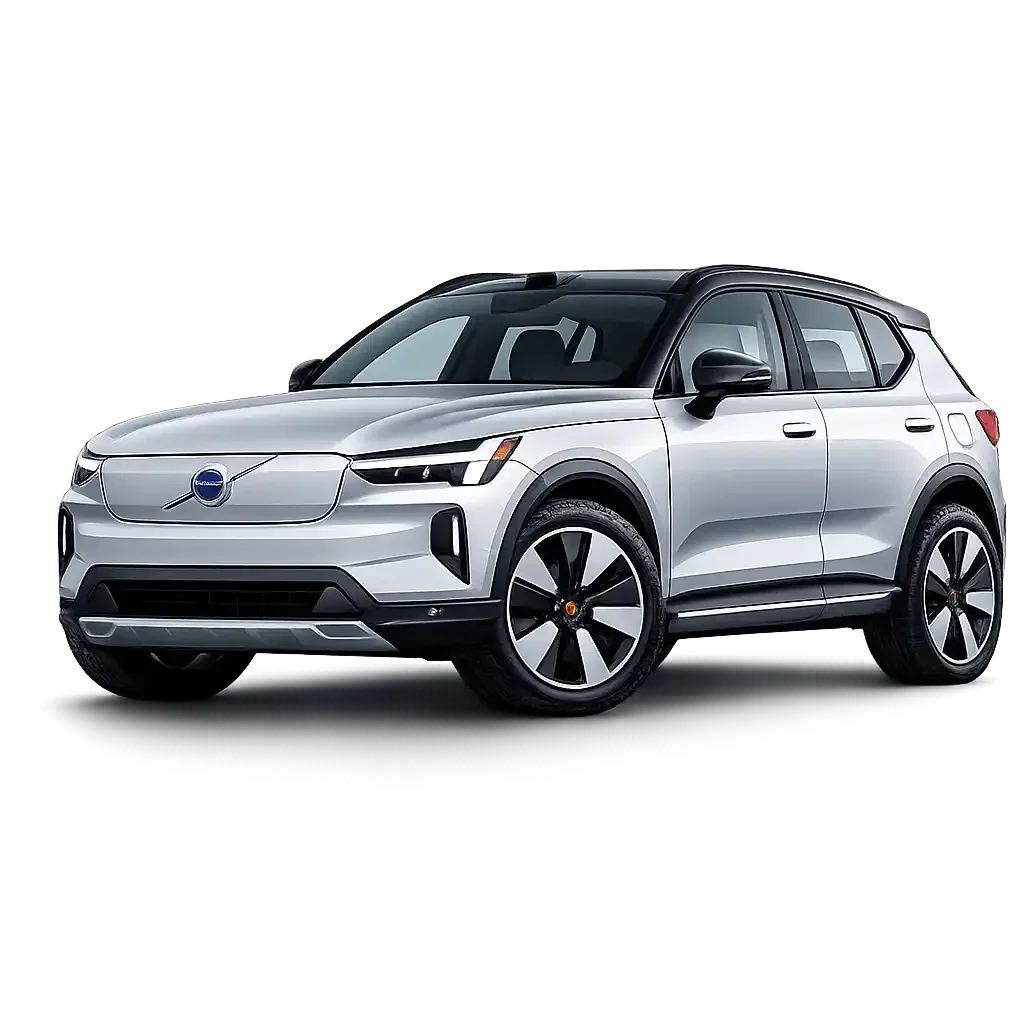
The EX30 was revealed in June 2023 and is Volvo's entry into the subcompact electric SUV segment. At just 166.7 inches long with a 104.3-inch wheelbase, it is significantly smaller than the EX40 and positioned as Volvo's most affordable vehicle. The EX30 is built on Geely's SEA2 platform, a dedicated electric architecture also used by the Zeekr X and the Smart #1 and #3. Unlike Volvo's other platforms (CMA for the EX40, SPA2 for the EX90), the SEA2 is a Geely-developed architecture that Volvo has adapted with its own body, interior, software, and safety features.
For the 2024 US model year, the EX30 launched exclusively as the Twin Motor Performance AWD (422 hp) in Plus and Ultra trims. A Core trim was announced but never actually went on sale in the US. Initial US deliveries were sourced from the Zhangjiakou, China factory (Geely-operated), but production shifted to Volvo’s Ghent, Belgium plant starting April 2025, coinciding with US tariff changes on Chinese-manufactured vehicles.
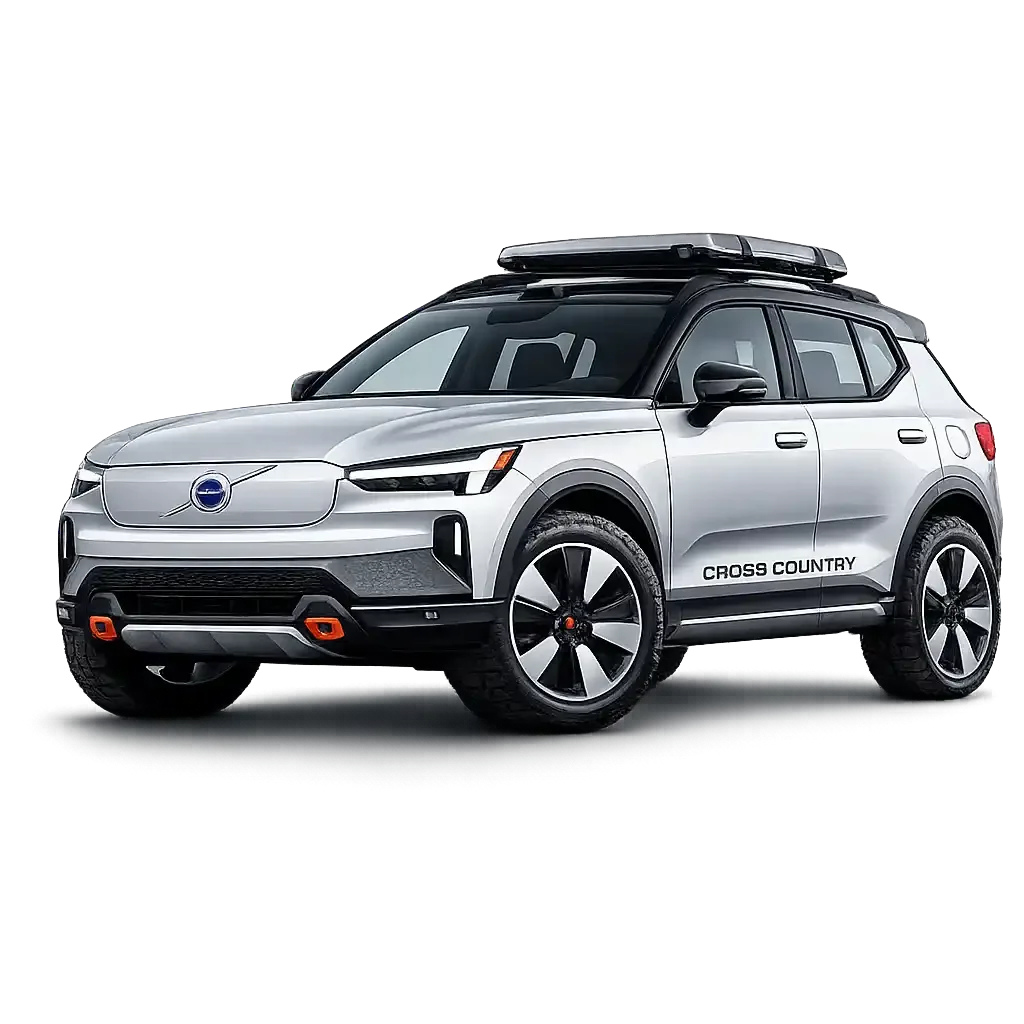
For 2026, the lineup expands dramatically. The Single Motor Extended Range RWD arrives as the new base model at $38,950 (plus destination), making it the least expensive Volvo sold in America. The Twin Motor Performance continues in Plus and Ultra trims. And the all-new EX30 Cross Country debuts as Volvo's first electric Cross Country model, offered exclusively as Twin Motor AWD Ultra with raised ground clearance (7.5 inches vs. 6.7 standard), body cladding, all-terrain tires, unique wheels, and Hill Descent Control. The Cross Country is also distinguished by a front bumper panel textured with a topographical map of Sweden's Kebnekaise mountain range.
Key Platform Facts
• Platform: SEA2 (Sustainable Experience Architecture 2), developed by Geely
• US model years: 2024 to present
• Assembly: Ghent, Belgium (2024 US models onward); earlier US deliveries from Zhangjiakou, China (Geely factory)
• Battery (US market): 69 kWh total (64-65 kWh usable), NMC lithium-ion. Note: a smaller 51 kWh LFP battery exists in Europe but is NOT sold in the US.
• Voltage: 400V architecture
• Powertrain (2024 US): Twin Motor Performance AWD only (422 hp)
• Powertrain (2026 US): Single Motor Extended Range RWD (268 hp) + Twin Motor Performance AWD (422 hp) + Cross Country Twin Motor AWD (422 hp)
• DC fast charging: 153 kW max, 10% to 80% in approximately 26.5 minutes
• Charging port: NACS (2026+), with CCS adapter included. Earlier 2024 models may have CCS1 port.
• Body style: 5-door subcompact SUV/hatchback, 5 seats
• Cargo: 12.4 cu ft (seats up), 27.8 cu ft (rear seats folded)
• Towing: Not rated for towing in US market
• SEA2 siblings: Zeekr X, Smart #1, Smart #3 (different bodies, different brands, shared platform)
• Ground clearance: 6.7 inches (standard EX30), 7.5 inches (Cross Country)
Why the EX30 Causes Catalog Errors
• Three completely different Volvo EV platforms: The EX30 (SEA2), EX40 (CMA), and EX90 (SPA2) are all fully electric Volvo SUVs on three completely different platforms from three different development sources. No structural, powertrain, or electrical components cross-reference between them. A catalog listing "Volvo EX" parts without specifying the model is guaranteed to generate returns.
• EX30 vs. EX30 Cross Country body and suspension differences: The 2026 Cross Country has unique wheels, unique all-terrain tires, raised suspension (7.5 vs. 6.7 inches ground clearance), unique body cladding on the wheel arches and lower body, unique front bumper trim with the Kebnekaise topographical texture, and a softer suspension tune. Standard EX30 body cladding, wheels, tires, and suspension components do NOT fit the Cross Country, and Cross Country components do NOT fit the standard EX30.
• Single Motor RWD vs. Twin Motor AWD (2026+): The 2024 US EX30 was Twin Motor AWD only. For 2026, a Single Motor RWD base model arrives. The Single Motor has one rear-mounted motor. The Twin Motor adds a front motor and front drive unit. All front drivetrain components (front motor, front drive unit, front half-shafts, front cooling lines) are exclusive to the Twin Motor. The Single Motor weighs approximately 238 pounds less.
• China-built vs. Belgium-built production split: Early 2024 US-market EX30s were built at the Geely factory in Zhangjiakou, China. Production shifted to Volvo’s Ghent, Belgium plant starting April 2025. While the vehicles should be mechanically identical, there may be minor supplier differences in components or assembly-specific part numbers. VIN encoding will indicate country of manufacture.
• SEA2 sibling cross-reference risk (Zeekr X, Smart #1/#3): The Zeekr X and Smart #1/#3 share the SEA2 platform with the EX30. Some structural and suspension components may physically cross-reference. However, these are different brands with different bodies, different interiors, different software, and different parts ecosystems. Body, lighting, interior, and electronics do NOT interchange. The Smart models also use a technically different 66 kWh battery, not the same 69 kWh pack as the EX30.
• US battery vs. European battery: US-market EX30s use the 69 kWh NMC battery exclusively. European markets also offer a 51 kWh LFP battery in the base Single Motor Standard Range. If a part is listed for "EX30" without specifying battery size, European-sourced 51 kWh components could be incorrectly cross-referenced to US vehicles. This only applies to battery-specific parts, not the vehicle as a whole.
• Charging port transition (CCS to NACS): The 2026 EX30 features NACS (Tesla-standard) charging port natively. The 2024 model may have shipped with CCS1 port and an included NACS adapter. Charge port door, charge port assembly, and charge cable hardware differ between CCS1 and NACS configurations.
• Trim level availability by powertrain: For 2026, the Single Motor is available only as Plus. The Twin Motor is available as Plus or Ultra. The Cross Country is available only as Ultra. Parts tied to specific trims (Harman Kardon soundbar, Pilot Assist hardware, 360-degree camera) must be listed with the correct trim and powertrain combination.
Complete Powertrain Reference (US Market)
Single Motor Extended Range RWD (2026+)
• Configuration: Single permanent-magnet synchronous motor, rear-mounted, rear-wheel drive
• Output: 268 hp, 253 lb-ft of torque
• 0 to 60 mph: 5.1 seconds
• Drive: RWD
• Battery: 69 kWh (64-65 kWh usable), NMC
• EPA range: 261 miles
• DC fast charging: 153 kW max, 10% to 80% in approximately 26.5 minutes
• Trim: Plus only
• Curb weight: Approximately 3,913 lb
• Notes: New for 2026 in US market. No front motor, no front drive unit. This is the least expensive Volvo sold in the United States.
Twin Motor Performance AWD (2024-2026)
• Configuration: Dual permanent-magnet synchronous motors, one per axle, AWD
• Output: 422 hp, 400 lb-ft of torque
• 0 to 60 mph: 3.4 seconds
• Drive: AWD
• Battery: 69 kWh (64-65 kWh usable), NMC
• EPA range: 253 miles
• DC fast charging: 153 kW max
• Trims: Plus and Ultra
• Curb weight: Approximately 4,151 lb
• Notes: The fastest-accelerating Volvo ever produced. This was the only US powertrain for 2024. The Twin Motor adds a front motor that is absent on the Single Motor.
Cross Country Twin Motor Performance AWD (2026)
• Configuration: Dual permanent-magnet synchronous motors, AWD (same as standard Twin Motor)
• Output: 422 hp, 400 lb-ft of torque
• 0 to 60 mph: 3.5 seconds (slightly slower than standard due to all-terrain tires and raised ride height)
• Drive: AWD
• Battery: 69 kWh (64-65 kWh usable), NMC
• EPA range: 227 miles (reduced from 253 due to all-terrain tires, raised ride height, and increased aerodynamic drag)
• Ground clearance: 7.5 inches (vs. 6.7 standard)
• Trim: Ultra only
• MSRP: $48,150 (plus $1,295 destination)
• Unique features: Raised suspension, body cladding on wheel arches and lower body, available all-terrain tires, unique wheels, Hill Descent Control, Kebnekaise topographic front bumper texture
• Notes: First-ever electric Volvo Cross Country. First Cross Country applied to an SUV body style. Shares powertrain with standard Twin Motor but has unique suspension tuning, wheels, tires, body cladding, and bumper elements. Body and suspension components do NOT interchange with standard EX30.
Powertrain Availability by Year (US Market)
• 2024: Twin Motor Performance AWD only (422 hp). Plus and Ultra trims.
• 2026: Single Motor Extended Range RWD (268 hp, Plus only) + Twin Motor Performance AWD (422 hp, Plus and Ultra) + Cross Country Twin Motor Performance AWD (422 hp, Ultra only).
Body Style and Trim Levels
The EX30 is offered in a single body style: a 5-door, 5-seat subcompact SUV/hatchback. The Cross Country is a variant of this body with raised ride height and rugged exterior trim, not a separate body style. The EX30 has no frunk (unlike the EX90). Maximum cargo is 12.4 cu ft with seats up and 27.8 cu ft with rear seats folded, including a 2.2 cu ft under-floor compartment. The interior uses a single 12.3-inch center touchscreen for all controls (no separate instrument cluster) and a Harman Kardon dashboard-spanning soundbar in place of traditional door speakers.
2024 US Trim Levels
Plus: 19-inch wheels, panoramic roof, Harman Kardon soundbar, adaptive cruise control, heated front seats, two-zone climate, 12.3-inch center touchscreen with Google built-in. Twin Motor AWD only.
Ultra: Adds 360-degree camera, Pilot Assist with lane-keeping, parking sensors, Park Pilot Assist. Twin Motor AWD only.
2026 US Trim Levels
Plus: Available with Single Motor RWD ($38,950) or Twin Motor AWD ($44,950). Same equipment as 2024 Plus.
Ultra: Twin Motor AWD only ($46,650). Adds 360-degree camera, Pilot Assist, parking aids.
Cross Country Ultra: Twin Motor AWD only ($48,150). Ultra equipment plus raised ride height (7.5 inches), body cladding, available all-terrain tires, unique wheels, Hill Descent Control, Kebnekaise front bumper texture.
Catalog Accuracy: The Fitment Splits That Matter
Split 1: EX30 (SEA2) vs. EX40 (CMA) vs. EX90 (SPA2)
Three different Volvo EVs on three different platforms. Zero components cross-reference between them. The EX30 uses Geely's SEA2 architecture. The EX40 uses the Geely/CEVT CMA platform. The EX90 uses Volvo's in-house SPA2 platform. Any catalog that lists "Volvo EX" parts without specifying which model is generating returns.
Split 2: Standard EX30 vs. EX30 Cross Country
The Cross Country has unique suspension tuning and raised ride height (7.5 vs. 6.7 inches), unique wheels, unique all-terrain tires, unique body cladding on wheel arches and lower bumpers, unique front bumper trim, and Hill Descent Control calibration. Standard EX30 suspension, wheels, tires, and body cladding do NOT fit the Cross Country, and Cross Country parts do NOT fit the standard EX30. Powertrain components (motors, battery, inverters) cross-reference between the standard Twin Motor and the Cross Country Twin Motor.
Split 3: Single Motor RWD vs. Twin Motor AWD
The Single Motor (2026+) has one rear-mounted motor. The Twin Motor has front and rear motors for AWD. Front motor, front drive unit, front half-shafts, and front cooling lines are exclusive to the Twin Motor. The Single Motor weighs approximately 238 pounds less. Suspension calibration may differ due to weight distribution. All 2024 US models are Twin Motor AWD.
Split 4: China-Built (Zhangjiakou) vs. Belgium-Built (Ghent)
Early 2024 US deliveries came from Geely’s factory in China. Production moved to Volvo's Ghent, Belgium plant by April 2025. The vehicles are intended to be mechanically identical, but VIN will indicate country of manufacture. This split may matter for warranty, tariff eligibility, and any assembly-specific supplier variations. For parts ordering purposes, always verify VIN.
Split 5: CCS1 Charge Port (2024) vs. NACS Charge Port (2026)
The 2026 EX30 has a native NACS charging port. The 2024 EX30 may have shipped with a CCS1 port and included NACS adapter. Charge port assembly, charge port door, and associated wiring differ between the two configurations.
Split 6: EX30 vs. SEA2 Siblings (Zeekr X, Smart #1/#3)
The Zeekr X and Smart #1/#3 share the SEA2 platform. Some structural and suspension components may physically cross-reference. However, bodies, interiors, lighting, software, and electronics are completely different. The Smart models use a different 66 kWh battery (not the EX30's 69 kWh). Never cross-reference body, interior, lighting, or battery components between the EX30 and its SEA2 siblings.
Split 7: US Battery (69 kWh NMC) vs. European Battery (51 kWh LFP)
All US-market EX30s use the 69 kWh NMC battery. The 51 kWh LFP battery available in Europe is NOT sold in the US. Battery modules, battery management systems, and pack dimensions differ between the two. Catalogs sourcing parts from European suppliers must verify battery type before listing components for US vehicles.
Biggest Return Traps and How to Prevent Them
Trap 1: EX40 or EX90 Parts Shipped to EX30 Owner
What happens: Any component from an EX40 (CMA platform) or EX90 (SPA2 platform) ships to an EX30 (SEA2 platform) owner. Different platform, different body, different everything. Nothing fits.
Prevention: Always specify model: EX30, EX40, or EX90. Never list under a generic "Volvo EX" designation.
Trap 2: Standard EX30 Suspension/Wheels for Cross Country
What happens: Standard EX30 springs, dampers, wheels, or tires ship to a Cross Country owner. The Cross Country has raised ride height, unique suspension tuning, unique wheels, and all-terrain tires.
Prevention: Always specify: EX30 or EX30 Cross Country for suspension, wheels, tires, and body cladding.
Trap 3: Twin Motor Front Drive Components for Single Motor Owner
What happens: Front motor, front drive unit, or front half-shafts from a Twin Motor AWD ship to a 2026 Single Motor RWD owner. The Single Motor has no front drivetrain.
Prevention: Always specify: Single Motor RWD or Twin Motor AWD. Note: all 2024 US models are Twin Motor.
Trap 4: European 51 kWh Battery Parts for US 69 kWh Vehicle
What happens: Battery module or BMS component for the European-market 51 kWh LFP pack ships to a US owner who has the 69 kWh NMC pack. Different chemistry, different dimensions, different management system.
Prevention: Always specify battery: 69 kWh NMC (all US models) vs. 51 kWh LFP (Europe only).
Trap 5: Wrong Charge Port (CCS1 vs. NACS)
What happens: A CCS1 charge port assembly ships to a 2026 owner with native NACS, or vice versa.
Prevention: Always specify model year for charge port components. 2024 = likely CCS1. 2026+ = NACS.
Trap 6: Zeekr X or Smart #1 Parts Cross-Referenced to EX30
What happens: A body panel, interior component, or battery module from a Zeekr X or Smart #1 ships to an EX30 owner. Different body, different interior, different battery specification.
Prevention: Always specify brand and model. SEA2 platform sharing does not mean parts interchangeability for body, interior, battery, or electronics.
Trap 7: Cross Country Body Cladding for Standard EX30
What happens: Cross Country-specific wheel arch cladding, lower body trim, or the Kebnekaise-textured front bumper trim ships to a standard EX30 owner. The standard EX30 has different, smaller body cladding and a smooth front bumper.
Prevention: Always specify: EX30 standard or EX30 Cross Country for all exterior body trim and cladding.
SEA2 Platform Family: What Interchanges and What Does Not
Components That May Cross-Reference (Standard EX30 and Cross Country)
• Powertrain: Motors, drive units, inverters, and battery pack cross-reference between the standard Twin Motor and the Cross Country Twin Motor. Single Motor components only apply to Single Motor vehicles.
• Interior: Dashboard, center touchscreen, front seats, door panels, soundbar, and climate system cross-reference between standard EX30 and Cross Country (same cabin).
• Electrical: High-voltage wiring, 12V system, lighting (headlights, taillights), mirrors, and sensors cross-reference between standard and Cross Country.
Components That Do NOT Interchange (Standard vs. Cross Country)
• Suspension: Springs, dampers, and ride-height-specific components differ. The Cross Country has unique calibration and approximately 0.75 inches more ground clearance.
• Wheels and tires: Cross Country has unique wheel designs and available all-terrain tires. Standard wheels and tires do not apply.
• Body cladding: Cross Country has unique, larger wheel arch cladding, lower body cladding, and unique front bumper trim.
Components That Do NOT Interchange with Other Volvo Models
No components cross-reference between the EX30 (SEA2) and the EX40 (CMA) or EX90 (SPA2). Different platforms, different bodies, different powertrains, different electrical systems. This is a hard cross-reference firewall.
Aftermarket Parts Cross-Reference Notes
Known service items: As a BEV, the EX30 has no engine oil, filters, spark plugs, transmission fluid, or exhaust. Primary service items include cabin air filter, brake fluid, brake pads and rotors (reduced wear from regenerative braking), tire rotation and replacement, windshield washer fluid, coolant (battery thermal management and motor cooling), 12V auxiliary battery, and wiper blades.
Tax credit and tariff note: Early US-market EX30s built in China did not qualify for the $7,500 federal EV tax credit when purchased. Belgium-built units may also face eligibility challenges depending on battery sourcing rules. Leasing may provide access to the incentive regardless of assembly location.
Unique interior architecture: The EX30 uses Volvo's most minimalist interior ever. The single 12.3-inch center touchscreen controls all vehicle functions, including mirror adjustment, drive modes, and lighting. There is no separate instrument cluster behind the steering wheel. The Harman Kardon soundbar spans the dashboard in place of traditional door speakers. These unique interior components are EX30-specific and do not appear on any other Volvo model.
Specialist sources: The aftermarket for the EX30 is still developing. Volvo Parts Webstore (parts.volvocars.com) provides OE part number lookup by VIN. Due to the SEA2 platform origin, some suppliers familiar with Zeekr or Smart vehicles may carry compatible structural parts, but always verify by Volvo part number. FCP Euro and IPD are expected to expand EX30 coverage as the model ages.
Data Quality Checklist for Catalog Managers
Required attributes for every EX30 parts listing:
• Model: EX30 or EX30 Cross Country (do not list as "EX40," "EX90," or generic "Volvo EV")
• Model year: 2024 or 2026 (determines available powertrains, charge port type, and assembly location)
• Variant: Standard EX30 or Cross Country (for suspension, wheels, tires, and body cladding)
• Powertrain: Single Motor Extended Range RWD (268 hp, 2026+ only) or Twin Motor Performance AWD (422 hp)
• Battery: 69 kWh NMC (all US models). Specify to prevent confusion with European 51 kWh LFP.
• Trim: Plus or Ultra (standard EX30); Ultra only (Cross Country)
• Charge port: CCS1 (early 2024) or NACS (2026+)
• Assembly: Zhangjiakou, China (early 2024) or Ghent, Belgium (April 2025+). VIN indicates origin.
Buyer Confirmation Prompts
Before shipping any part for an EX30, confirm:
• "Is your vehicle the EX30 or the EX30 Cross Country?"
• "What is the exact model year?" (2024 = Twin Motor only, CCS port likely. 2026 = Single Motor available, NACS port.)
• "Is your EX30 the Single Motor (rear-wheel drive) or Twin Motor (all-wheel drive)?"
• "What trim level: Plus, Ultra, or Cross Country Ultra?"
The Business Case: Why Fitment Data Pays for Itself
The EX30 is Volvo's most affordable vehicle and is likely to become one of its highest-volume sellers as EV adoption grows. The 2026 Cross Country expansion creates an immediate catalog complexity challenge: two visually similar but mechanically distinct vehicles (standard vs. Cross Country) with different suspensions, wheels, tires, and body cladding. The Single Motor vs. Twin Motor split adds a second layer. And the EX30's position on a third platform (SEA2) that is unrelated to both the EX40 (CMA) and EX90 (SPA2) creates the critical firewall that catalogs must enforce.
The highest-volume service items will be tires (different between standard and Cross Country), brake pads, cabin air filters, wiper blades, and 12V batteries. As the vehicle ages, suspension components and battery thermal management parts will enter the pipeline. The Cross Country's unique all-terrain tires and raised suspension will be the most common source of fitment errors.
The EX30's three-platform firewall (SEA2 vs. CMA vs. SPA2), the standard vs. Cross Country suspension and body split, the Single Motor RWD vs. Twin Motor AWD drivetrain split, the CCS1 vs. NACS charge port transition, the China vs. Belgium assembly split, the US 69 kWh NMC vs. European 51 kWh LFP battery distinction, the SEA2 sibling cross-reference boundary (Zeekr X, Smart #1), and the trim-by-powertrain availability matrix are the minimum fitment attributes required. If your catalog does not capture model (EX30 vs. EX30 Cross Country), model year, powertrain, trim, charge port type, battery specification, and assembly origin, you are shipping wrong parts to price-conscious EV buyers who will return them.
Disclaimer: This guide is based on publicly available specifications, Volvo press materials, and independent research. Part interchangeability should always be confirmed via VINand OEM part number lookup. Specifications may change without notice. This document does not constitute official Volvo parts catalog data. Visuals and illustrations in this article were generated using AI for representative purposes and may not reflect exact technical schematics.