
Volvo 960 (Facelift / Redesign) 1995 to 1997 Fitment Guide
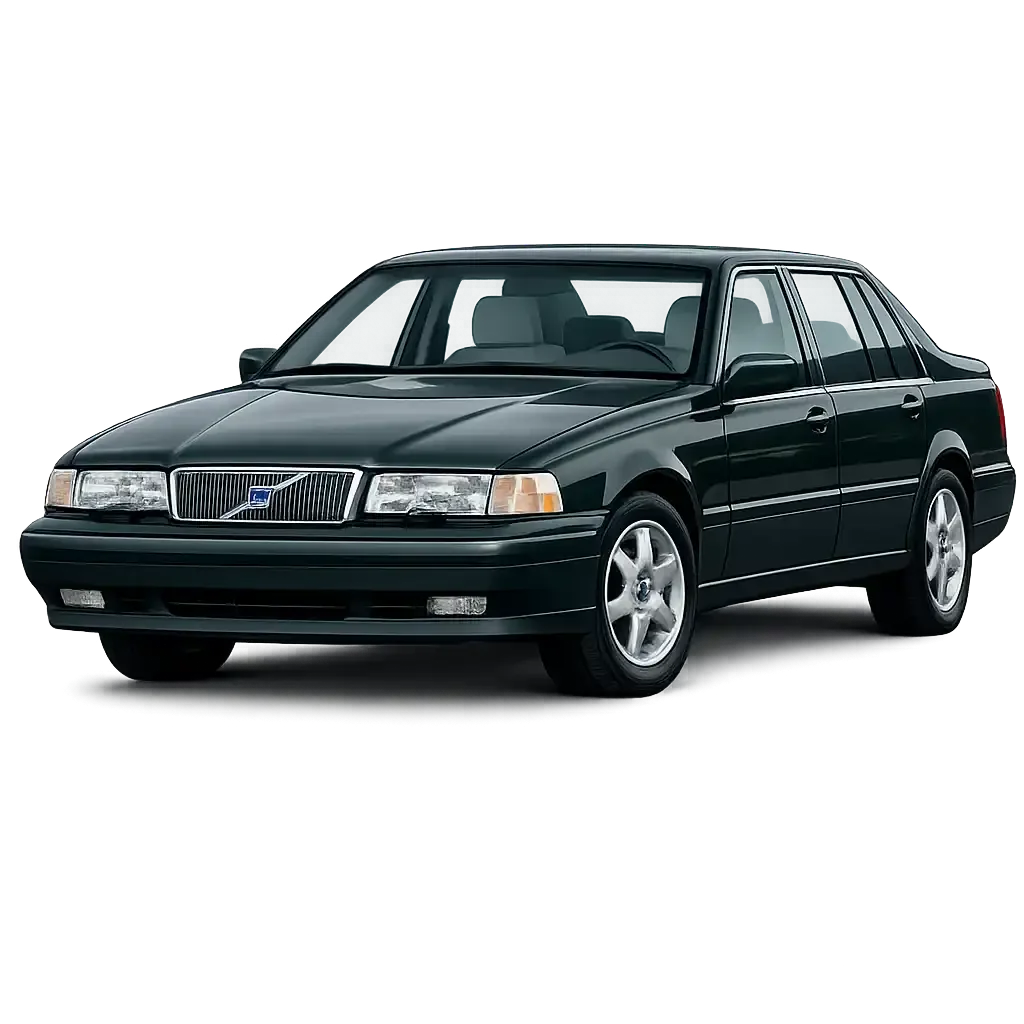
The Volvo 960 (1990 to 1998) is a 4-door rear-wheel-drive executive sedan and 5-door wagon that served as Volvo’s flagship model throughout the 1990s. Built on the P80/900 platform, the 960 was the launch vehicle for Volvo’s “Whiteblock” modular engine family and the last rear-wheel-drive Volvo until the electric era. This guide covers the facelift / redesign 960 for the 1995 to 1997 US model years. Volvo described this as a “comprehensive redesign” with reportedly 1,400 new components. The first 1995 model year facelift 960 was built on June 27, 1994, at Volvo’s Gothenburg (Torslanda) plant, replacing Kalmar as the production site. The facelift brought a dramatically revised front end, body-colored exterior trim, a completely redesigned front suspension (modeled on the 850), an entirely new multi-link rear suspension with a fiberglass transverse leaf spring for both sedans and wagons, a new 2.5L inline-6 engine option, standard daytime running lights (a North American first), standard side airbags from 1996, and numerous equipment upgrades. The 960 was renamed S90 (sedan) and V90 (wagon) for the 1997 model year in North America (late 1996 in some European markets), with only minor cosmetic changes accompanying the name change. Production ended in 1998. This guide maps every fitment split required to prevent returns on Volvo’s flagship RWD car in its redesigned, final form.
Generation Overview (Facelift / Redesign, 1995 to 1997)
The 1995 facelift was the most significant update in the 960’s production life, far beyond a typical mid-cycle refresh. The changes were so extensive that Volvo enthusiasts commonly refer to the 1992 to 1994 cars as “960 Mark I” (or 960-I) and the 1995 to 1997/98 cars as “960 Mark II” (or 960-II). The redesign was driven by the need to modernize the 960’s handling and safety to compete with the 850, which had become Volvo’s volume leader with its front-wheel-drive, transverse-engine layout.
The most visible change is the front end. New body-colored bumpers with redesigned air intakes, fog lights, and a smoother appearance replaced the black plastic pre-facelift bumpers. The grille became thinner with an all-chrome design, flanked by new large wraparound headlights that are slimmer and more angular than the pre-facelift units. Body-colored side moldings with thin chrome accent strips replaced the pre-facelift’s plainer trim. The front bumpers extended higher, allowing the thinner grille and headlight design. At the rear, changes were more restrained: a revised treatment between the taillights on the sedan, a new rear spoiler on the wagon, and minor trim updates. The overall silhouette remained unmistakably boxy Volvo.
Underneath, the changes were far more dramatic than the exterior suggested. The front suspension was completely redesigned to more closely match the geometry of the 850, with a new subframe arrangement, revised spring struts with lower wishbones, and a powerful anti-roll bar. The turning circle was reduced significantly. The rear suspension was entirely new: a redesigned multi-link independent system replaced the pre-facelift sedan’s coil-spring multi-link, now using a single transverse fiberglass (composite) leaf spring instead of coil springs. This leaf spring was dramatically lighter (Volvo stated it had the same mass as just one of the two coil springs it replaced) and intruded less into the cargo/floor area. Critically, the 1995 wagon also received independent rear suspension for the first time, replacing the pre-facelift wagon’s solid (live) rear axle. Both sedan and wagon now shared the same multi-link leaf-spring IRS design.
Year-by-Year Changes (1995 to 1997)
1995 Model Year
First facelift year. Complete exterior refresh with body-colored bumpers, new headlights, slimmer grille, and body-colored side moldings. Redesigned front suspension (850-influenced subframe geometry). All-new multi-link rear suspension with fiberglass transverse leaf spring for both sedan and wagon (wagon gains IRS for the first time). New 2.5L B6254S inline-6 option added alongside the 3.0L B6304FS2. Nivomat self-leveling rear shocks became optional rather than standard. Standard daytime running lights (first in North America). Dual front airbags standard. Assembly moved from Kalmar to Gothenburg (Torslanda). Wider front and rear track. The wider timing belt (TB252) was now standard across all engines. Production began June 27, 1994.
1996 Model Year
Side airbags became standard equipment across all Volvo models, including the 960. Volvo had pioneered side airbags as an option on the 1995 850 and now made them standard fleet-wide. An improved air conditioning system was introduced. In some European markets, the 960 began to be renamed S90/V90 during late 1996. Minor trim and color updates. The M90 5-speed manual transmission (based on the 850’s M56 gearbox) was available in European markets with the inline-6 engines; the US market continued as automatic-only.
1997 Model Year (Final Year as “960”)
In North America, the 960 was renamed S90 (sedan) and V90 (wagon) for the 1997 model year, aligning with Volvo’s new alphanumeric naming convention introduced with the S40/V40. The mechanical specifications were virtually unchanged from the 1996 960. New interior and exterior color options. The S90/V90 designation carried through the final 1998 model year. Production of the S90/V90 ended in 1998, replaced by the clean-sheet P2-based S80 sedan (1999) and V70 wagon (2001).
What Changed in the Facelift (Detailed)
Exterior Changes
The facelift exterior changes are concentrated at the front, sides, and lower body. The following components are NEW and SPECIFIC to the facelift (1995 to 1997) and do NOT interchange with the pre-facelift (1992 to 1994):
• Headlight assemblies: Completely new wraparound units, slimmer and more angular. Different housings, mounting points, and connector locations. Pre-facelift headlights cannot be installed on a facelift car and vice versa.
• Front grille: Thinner, all-chrome design. Different dimensions and mounting clips from the taller pre-facelift grille.
• Front bumper cover: Body-colored, extends higher on the front face. Different profile, mounting tabs, and air intake/fog light openings. Includes redesigned fog light housings.
• Front fenders: Revised to accommodate new headlight shape and body-colored molding integration.
• Side body moldings: New body-colored plastic moldings with chrome accent strips on doors and fenders. Pre-facelift used simpler, darker moldings.
• Rear bumper/valance (sedan): Revised treatment between taillights. Updated bumper trim.
• Wagon rear: New rear spoiler design on tailgate. Updated trim.
• New paint colors and wheel designs: Wheels retain the same 5x10⁸ bolt pattern, so wheels themselves interchange freely between pre-facelift and facelift.
Suspension Changes (Critical)
This is the most important change in the facelift and the primary source of fitment errors. The front and rear suspension systems were completely redesigned for 1995. No suspension components interchange between pre-facelift (1992 to 1994) and facelift (1995 to 1997).
• Front suspension: Redesigned to match the 850’s geometry. New subframe with lower wishbones attached by rubber bushings to a cross member. New MacPherson struts. New anti-roll bar. New rack-and-pinion steering with revised geometry (tighter turning circle). The entire front suspension subframe, control arms, strut assemblies, steering rack, and anti-roll bar are facelift-specific.
• Rear suspension (sedan and wagon): Entirely new multi-link independent system. Fiberglass (composite) transverse leaf spring replaces coil springs. New subframe. New upper and lower control arms, trailing arms, and track rods. New hub carriers. New differential mounting. New shock absorbers (Nivomat optional, standard shocks standard). The leaf spring comes in multiple part numbers depending on Nivomat vs. standard shocks and suspension code (stamped on VIN plate). Zero components interchange with the pre-facelift sedan’s coil-spring multi-link or the pre-facelift wagon’s solid axle.
• Wider track: Both front and rear track were widened compared to pre-facelift, affecting suspension geometry and potentially wheel/tire clearance with certain offset/spacer combinations.
Engine Changes
• B6304FS2 (3.0L): The 3.0L inline-6 continued but with a revised designation. Output was reduced to approximately 181 hp and 199 lb-ft in the US market through revised cam profiles (same camshafts as the 2.5L B6254S). The block, head casting, and bottom end remain from the B6304 family. Wider timing belt (TB252) standard.
• B6254S (2.5L) - NEW: A 2.5L version of the Whiteblock inline-6 was added for the facelift. Displacement is 2,473 cc from an 81 mm bore and 80 mm stroke. Output is approximately 170 hp at 5,700 rpm and 170 lb-ft at 4,400 rpm. Same aluminum block and head family as the 3.0L but with reduced bore and stroke. The 2.5L uses different pistons, connecting rods, and crankshaft from the 3.0L. Cylinder heads are specific to each displacement (2.5L and 3.0L heads are different). Intake manifold, exhaust manifold, and ECU calibration differ from the 3.0L. All engine ancillaries, mounts, and external accessories are generally shared.
• European engines: From 1995 onward, only modular inline-6 engines were available (the 4-cylinder and diesel options from the pre-facelift era were discontinued). European markets received the B6254S and B6254G (non-catalyst version for markets with limited unleaded fuel availability), and the B6304S/FS2 3.0L.
Transmission Changes
• AW30-43LE 4-speed automatic: Continues as the sole US-market transmission. Same basic unit as pre-facelift but TCM calibration may differ for the new engines and revised drivetrain. Dexron-IIE ATF specification unchanged.
• M90 5-speed manual (European markets): A manual transmission option became available from 1995 in European markets. The M90 is based on the 850’s M56 gearbox. NOT available in the US market. If a used 960 with a manual transmission appears in the US, it is a European import.
Interior and Equipment Changes
• Three interior design packages: Volvo offered three distinct interior trim levels for the facelift, allowing more customization.
• Side airbags: Standard from 1996 across all Volvo models.
• Improved A/C system: Updated for 1996/1997 model years.
• Daytime running lights: Standard from 1995. First offered in North America on the 960.
• Dashboard: Same basic architecture as pre-facelift. The dashboard itself may interchange between pre-facelift and facelift with modifications, but this should be confirmed by part number. Instrumentation and controls updated.
• Seats: Updated designs with improved ergonomic shaping. Anatomically correct design with extensive adjustment range. Electrical adjustment with 3-position memory function available.
• Rear seat: Split-fold (2/1) with load length of 182 cm (approximately 6 feet) when folded. Integrated child booster seat continued.
What Did NOT Change
Despite the extensive redesign, the facelift 960 remains on the same basic P80/900 rear-wheel-drive platform. The following are shared or unchanged:
• Basic platform architecture: Longitudinal engine, rear-wheel drive, body-on-subframe construction. Same wheelbase (109.1 inches / 2,770 mm). Same overall length (approximately 192 inches).
• Whiteblock engine family: Both the 2.5L and 3.0L are members of the same modular engine family. Block construction, head design philosophy, and many ancillaries are shared.
• AW30-43LE automatic transmission: Same transmission family. TCM calibration may differ.
• Body structure from A-pillar rearward: Doors, roof panel, rear quarter panels (largely), and basic body cage are shared between pre-facelift and facelift. Side body panels interchange within the same body style (sedan or wagon), though exterior moldings differ.
• Wheel bolt pattern: 5x10⁸, unchanged. Wheels interchange freely between pre-facelift and facelift.
• Brake system: 4-wheel disc with ABS. Component sizes may differ due to wider track and revised suspension geometry. Always confirm by part number.
Platform and Engineering
Key Platform Facts
• Platform: P80/900 series. Longitudinal engine, rear-wheel drive. Evolution of 760/700-series architecture, extensively revised for 1995.
• Assembly: Gothenburg, Sweden (Torslanda plant), 1995 to 1997/98. Pre-facelift (1992 to 1994) was built in Kalmar.
• Body styles: 4-door sedan, 5-door wagon (estate)
• US engine option 1: B6304FS2 2.9L (2,922 cc) DOHC 24-valve inline-6. Approximately 181 hp at 5,200 rpm, 199 lb-ft at 4,100 rpm. Revised cam profiles from pre-facelift B6304F. Bosch Motronic engine management. Naturally aspirated.
• US engine option 2: B6254S 2.5L (2,473 cc) DOHC 24-valve inline-6. Approximately 170 hp at 5,700 rpm, 170 lb-ft at 4,400 rpm. Smaller bore (81 mm) and stroke (80 mm) than the 3.0L. Naturally aspirated.
• US transmission: AW30-43LE (Aisin-Warner) 4-speed automatic with Eco/Sport/Winter programs. Automatic only in the US market.
• European transmission option: M90 5-speed manual (based on 850 M56). Not available in the US.
• Front suspension: Redesigned MacPherson struts with lower wishbones, 850-style subframe geometry, anti-roll bar, rack-and-pinion power steering. Reduced turning circle (9.7 meters).
• Rear suspension (sedan and wagon): Multi-link independent with fiberglass (composite) transverse leaf spring, subframe-mounted differential, CV-joint half-shafts. Optional Nivomat self-leveling shocks.
• Brakes: 4-wheel disc brakes with ABS. Ventilated front discs, solid rear discs.
• Wheelbase: 109.1 inches (2,770 mm) - unchanged from pre-facelift
• Overall length: Approximately 192 inches (4,870 mm)
• Width: Approximately 69.3 inches (1,760 mm) - slightly wider due to new bumpers/moldings
• Height: Approximately 55.6 inches (1,413 mm)
• Curb weight: Approximately 3,400 to 3,550 lbs depending on body style, engine, and equipment
• Wheel bolt pattern: 5x10⁸
• Successor: S90 (sedan) / V90 (wagon) from 1997 (name change only, same car). Replaced by P2-based S80 (1999) and V70 (2001).
Engine Reference (Detailed)
B6304FS2: 2.9L DOHC 24-Valve Inline-6 (3.0L)
The B6304FS2 is the facelift revision of the Whiteblock 3.0L inline-6. Displacement remains 2,922 cc (83 mm bore, 90 mm stroke). The key change from the pre-facelift B6304F/FS is the camshaft profile: the B6304FS2 uses the same camshafts as the B6254S 2.5L engine, resulting in reduced peak power but improved low-end and mid-range torque for a smoother driving character. US output is approximately 181 hp at 5,200 rpm and 199 lb-ft (270 Nm) at 4,100 rpm. Compression ratio, engine management (Bosch Motronic), and most ancillaries carry over. The wider timing belt (TB252, shared with the 850) is standard. Replacement interval is approximately 70,000 miles (always replace belt, tensioner, idler, damper, and water pump together). The porous block issue that affected 1992 to 1994 B6304F engines is believed to be less prevalent on later blocks, but coolant maintenance remains critical.
B6254S: 2.5L DOHC 24-Valve Inline-6
The B6254S is new for the 1995 facelift. It is a shorter-stroke version of the Whiteblock inline-6. Displacement is 2,473 cc from an 81 mm bore and 80 mm stroke (versus 83 mm bore and 90 mm stroke on the 3.0L). DOHC 24-valve, all-aluminum construction. Output is approximately 170 hp at 5,700 rpm and 170 lb-ft (230 Nm) at 4,400 rpm. Optimized for low-end and mid-range torque. The 2.5L shares the same engine family architecture as the 3.0L, but the following components are displacement-specific and do NOT interchange: crankshaft, connecting rods, pistons, cylinder head (different port sizing/combustion chamber volume), intake manifold, exhaust manifold, and ECU calibration. The timing belt, tensioner, idler, and water pump are the same specification as the 3.0L (both use TB252 wide belt). External ancillaries (alternator, power steering pump, A/C compressor, serpentine belt routing) are generally shared between 2.5L and 3.0L.
Engine Fitment: 2.5L vs. 3.0L
Both the 2.5L and 3.0L bolt into the same engine bay with the same mounts and mate to the same AW30-43LE transmission. However, internal engine components are NOT cross-compatible between displacements. When ordering parts, always confirm engine code (B6254S vs. B6304FS2) and displacement. The cylinder heads in particular are different between the two displacements: a 2.5L head will not produce correct results on a 3.0L block and vice versa. All six-cylinder heads are interchangeable within their own displacement family across model years (1995+ heads are compatible with each other).
Transmission Reference
AW30-43LE (Aisin-Warner) 4-Speed Automatic
The AW30-43LE continues as the sole US-market transmission for the facelift 960. It is functionally the same unit as the pre-facelift application: 4-speed automatic with electronic controls, lock-up torque converter, and Eco/Sport/Winter shift programs. TCM calibration is model- and engine-specific (2.5L vs. 3.0L calibrations differ). The transmission itself will physically interchange between pre-facelift and facelift applications, but TCM software must be matched to the engine and model year. Dexron-IIE ATF specification is unchanged. The valve body solenoid wear issue from the pre-facelift era continues.
M90 5-Speed Manual (European Markets Only)
The M90 manual gearbox became available for the 960 from 1995 in European markets. It is based on the Volvo 850’s M56 gearbox, adapted for the longitudinal/RWD layout. The M90 was not offered in the US market. If a facelift 960 with a manual transmission appears in the US used market, it is a European import. The M90 requires a clutch assembly, flywheel, hydraulic clutch master and slave cylinder, clutch pedal, manual shift linkage, and manual-specific console trim. Driveshafts, ECU calibration, and console components differ between manual and automatic configurations.
Catalog Accuracy: The Fitment Splits That Matter
Split 1: Facelift (1995 to 1997) vs. Pre-Facelift (1992 to 1994)
This is the most critical split. The facelift introduced approximately 1,400 new components. The following parts are NOT interchangeable between pre-facelift and facelift:
• Headlight assemblies: Completely different shape, size, and mounting.
• Front grille: Thinner design, different dimensions and clips.
• Front bumper cover and fog lights: Body-colored, different profile and mounting.
• Front fenders: Revised for new headlight and molding integration.
• Side body moldings: Body-colored with chrome accents vs. pre-facelift plain moldings.
• Entire front suspension: New subframe, struts, control arms, steering rack, anti-roll bar. 850-influenced geometry. Zero interchange with pre-facelift front suspension.
• Entire rear suspension: New multi-link with leaf spring vs. pre-facelift coil-spring multi-link (sedan) or solid axle (wagon). New subframe, control arms, leaf spring, shocks, hub carriers, differential mounting. Zero interchange.
• Engine (if 2.5L): The B6254S is facelift-only. Does not exist in pre-facelift cars.
• Engine calibration (3.0L): B6304FS2 has different cam profiles and ECU calibration from pre-facelift B6304F/FS.
Parts that DO interchange: Wheels (5x10⁸ bolt pattern), body panels from A-pillar rearward within same body style (doors, roof, rear quarters - though exterior moldings differ), basic dashboard architecture (with caveats), seat frames (largely), AW30-43LE transmission housing (TCM calibration differs), many engine ancillaries between 3.0L variants (confirm by part number), glass, and interior trim components.
Split 2: Sedan vs. Wagon
Unlike the pre-facelift era where the sedan had IRS and the wagon had a solid axle, the facelift sedan and wagon now BOTH have multi-link independent rear suspension with the fiberglass leaf spring. This eliminates the largest mechanical difference between the two body styles. However, important differences remain:
• Rear body: Wagon has a longer roof, unique rear quarter panels, liftgate/tailgate, different taillights, different rear bumper, and rear spoiler. Sedan has a trunk lid, C-pillar, and sedan-specific taillights and rear trim.
• Leaf spring specification: Sedan and wagon may use different leaf spring part numbers due to different weight distributions and load requirements. Always confirm by VIN and suspension code.
• Nivomat vs. standard shocks: The availability of Nivomat self-leveling shocks and the corresponding leaf spring part number may differ between sedan and wagon configurations.
• Third-row seat (wagon): Some wagons had a rear-facing third-row seat in the cargo area, affecting load requirements and potentially spring specification.
• Cargo area: Wagon has significantly more cargo volume. The leaf spring’s compact design was specifically chosen to minimize intrusion into the wagon’s cargo floor.
Parts that now interchange between sedan and wagon: Front suspension (all components), front brakes, engine, transmission, front sheetmetal, dashboard, interior, and the basic rear multi-link suspension architecture (though spring part numbers may differ).
Split 3: 2.5L (B6254S) vs. 3.0L (B6304FS2)
Both engines are Whiteblock inline-6 units sharing the same family architecture, but they are different displacements with different internal components:
• Crankshaft, connecting rods, pistons: Different between 2.5L and 3.0L. Zero interchange.
• Cylinder head: Different between 2.5L and 3.0L (different port sizing, combustion chamber volume). A 2.5L head will not produce correct results on a 3.0L block.
• Intake manifold and exhaust manifold: May differ between displacements.
• ECU calibration: Different between 2.5L and 3.0L. A 3.0L ECU installed on a 2.5L (or vice versa) will not provide correct fuel and ignition mapping.
• Timing belt system: SAME specification between 2.5L and 3.0L (both use TB252 wide belt, same tensioner, idler, damper, and water pump).
• External ancillaries: Alternator, power steering pump, A/C compressor, and serpentine belt routing are generally shared between 2.5L and 3.0L.
• Engine mounts: Same between 2.5L and 3.0L.
• Transmission: Same AW30-43LE fits both engines. TCM calibration is engine-specific.
Split 4: Nivomat vs. Standard Rear Shocks
The facelift 960 changed Nivomat self-leveling rear shocks from standard to optional equipment. This creates a critical parts split for the rear suspension:
• Leaf spring part numbers: The fiberglass transverse leaf spring comes in at least three part numbers depending on suspension configuration: one for Nivomat-equipped cars, one for standard shocks, and a heavier-duty variant. The specific part number is determined by the suspension code stamped on the VIN plate. Common part numbers include 6819300 (Nivomat, suspension code 1), 6819301 (standard, suspension code 2), and 9140471 (suspension code S).
• Shock absorbers: Nivomat units are self-leveling spring-and-shock combinations that are physically larger and heavier than standard shocks. Standard shocks are conventional monotube or twin-tube units. They are NOT interchangeable without also changing the corresponding leaf spring.
• Identification: Check the suspension code on the VIN plate (typically the 4th character on the 5th line of the sticker on top of the radiator). Visual inspection under the car will also distinguish Nivomat (integrated spring within shock body) from standard shocks.
Split 5: 960 (1995 to 1996) vs. S90/V90 (1997 to 1998)
The S90/V90 designation is primarily a name change. Mechanically, the 1997 S90/V90 is virtually identical to the 1996 960. Differences are limited to new interior and exterior color options and badging. Parts should interchange freely between the 960 facelift (1995 to 1996) and S90/V90 (1997 to 1998) for all mechanical, body, and electrical components. Always confirm by part number, as running production changes are possible, but the S90/V90 designation alone does not indicate a fitment difference.
Split 6: Facelift 960 vs. 940
The 940 continued alongside the facelift 960 through 1995 (US) and later in other markets. The 940 and facelift 960 remain fundamentally different vehicles:
• Engine: 940 uses Redblock inline-4 engines. 960 uses Whiteblock inline-6 engines. Zero engine parts interchange.
• Transmission: 940 uses different automatic transmissions (AW70/71/72 series or ZF 4HP22) or manual transmissions (M46/M47). Not interchangeable with the 960’s AW30-43LE or M90.
• Front sheetmetal: 960 has unique hood, fenders, grille, bumper, and headlights. Not shared with 940.
• Dashboard: 960 has a unique dashboard. Not shared with 940.
• Rear suspension: Facelift 960 has leaf-spring multi-link IRS. 940 has a solid rear axle. Completely different.
Split 7: US-Market vs. European Imports
US-market facelift 960s are exclusively equipped with the AW30-43LE 4-speed automatic. European imports may have the M90 5-speed manual transmission, which requires different console trim, pedal assembly, driveshaft, flywheel/clutch, and ECU calibration. European markets also received the B6254G engine variant (non-catalyst, for markets with limited unleaded fuel) which is mechanically similar to the B6254S but with different exhaust treatment. Body panels, suspension, brakes, and interior trim generally interchange regardless of market, but always confirm engine code and transmission type before ordering drivetrain components.
Split 8: Leaf Spring Part Numbers by Suspension Code
The fiberglass transverse leaf spring in the facelift 960’s rear suspension is available in multiple specifications, identified by suspension code on the VIN plate. Using the wrong spring will result in incorrect ride height, incorrect suspension geometry, and potential handling problems. When ordering a replacement leaf spring, ALWAYS confirm the suspension code and whether the car has Nivomat or standard shocks. The leaf spring is a single piece spanning the full width of the rear subframe; it cannot be repaired and must be replaced as a unit if cracked or broken. Leaf spring failures (cracking near the mounting points) have been reported, particularly on high-mileage cars or those exposed to road salt and debris damage.
Common Wear Items and Fitment Notes
• Timing belt and tensioner system: Both the 2.5L and 3.0L use the TB252 wide belt with approximately 70,000-mile replacement interval. Same tensioner, idler, damper, and water pump for both displacements. Always replace as a complete kit. The B6304/B6254 is an interference engine; belt failure destroys valves and possibly pistons.
• Fiberglass rear leaf spring: The composite leaf spring can crack or break, particularly near the end mounting points. Road debris impact and corrosion from road salt exposure can score the spring surface, creating stress risers. Replacement requires supporting or removing the rear subframe. Always match the correct part number to the suspension code.
• Multi-link rear suspension bushings: Upper carrier housing bushing (rubber with plastic housing) cracks over time. Lower control arm bushings, trailing arm bushings, and track rod bushings all wear and cause clunking. Volvo offers a special tool for the upper bushing. Multi-link suspension requires alignment whenever components are disassembled.
• Nivomat rear shocks (if equipped): Self-leveling units wear out over time, causing rear sag. Replacement Nivomats are expensive. Many owners convert to standard shocks with the corresponding standard leaf spring. This requires matching both shocks AND leaf spring to the non-Nivomat specification.
• Front suspension bushings: The redesigned 850-style front suspension uses rubber bushings in the lower wishbones and subframe mounts that wear over time, causing clunking, imprecise steering, and alignment drift.
• Valve cover gasket and spark plug well seals: Same issue as pre-facelift. Oil leaks around the Torx bolts securing the valve cover. Torque spec is only 13 ft-lbs. Consider replacing Torx bolts with hex bolts.
• PCV system: Flame guard, PCV valve, and hoses deteriorate, causing vacuum leaks and oil consumption. Replace as a system.
• Vacuum leaks: Intake manifold vacuum block and associated hoses crack with age.
• AW30-43LE valve body solenoids: Solenoid wear causes harsh or delayed shifting. TCM calibration is model- and engine-specific.
• Porous engine block (3.0L): Less prevalent on facelift blocks than 1992 to 1994, but still possible. Regular coolant maintenance is critical. The 2.5L B6254S block is not immune to porosity issues either.
• Ignition coils: Individual coil-on-plug units shared across Whiteblock 6-cylinder applications.
• Brake components: Confirm by part number due to wider track and revised suspension geometry. Do not assume pre-facelift brake rotors/calipers fit the facelift.
Ordering Quick-Reference Checklist
Before ordering any part for a 1995 to 1997 Volvo 960 (or 1997 to 1998 S90/V90), confirm all of the following:
• Facelift status: Facelift (1995 to 1997) or pre-facelift (1992 to 1994). Exterior, front suspension, rear suspension, and engine specifications all changed at the facelift. This is the single most common source of returns.
• Body style: Sedan or wagon. Rear body is completely different. Leaf spring part number may differ. Both now have IRS (unlike pre-facelift where only sedan had IRS).
• Engine displacement: 2.5L (B6254S) or 3.0L (B6304FS2). Internal engine components (crankshaft, pistons, rods, heads, intake, exhaust, ECU) differ by displacement. Timing belt system is shared.
• Suspension code: Check VIN plate for suspension code. Determines leaf spring part number and shock absorber type (Nivomat vs. standard).
• Nivomat or standard shocks: Rear leaf spring and shock absorbers must be matched to the same system. Do not mix Nivomat shocks with standard-spec leaf springs or vice versa.
• Transmission type: Automatic (AW30-43LE, US standard) or manual (M90, European import). Console, pedals, driveshaft, flywheel/clutch differ.
• 960 vs. S90/V90: Name change only (1997+). Parts interchange freely. Confirm by part number for running production changes.
• NOT a 940: 960 front sheetmetal, dashboard, engine, transmission, and rear suspension do not interchange with the 940.
• NOT a pre-facelift 960: Front suspension, rear suspension, front exterior components, and engine calibrations are all different from 1992 to 1994.
• VIN: Always verify by VIN. Running production changes are common.
Three Questions to Always Ask
• “Facelift or pre-facelift?” The 1995 facelift introduced approximately 1,400 new components. Front suspension, rear suspension, front exterior, and engine calibration all changed. The facelift 960 (1995 to 1997) and the pre-facelift 960 (1992 to 1994) are effectively different cars from a fitment perspective. The S90/V90 (1997 to 1998) is the same car as the facelift 960.
• “2.5L or 3.0L?” Both are Whiteblock inline-6 engines, but internal components (crankshaft, pistons, rods, heads, intake, exhaust, ECU) are displacement-specific. A head from a 2.5L will not work on a 3.0L and vice versa. The timing belt system is shared between both displacements.
• “What suspension code / Nivomat or standard?” The rear fiberglass leaf spring comes in multiple part numbers determined by the suspension code on the VIN plate. Nivomat self-leveling shocks and standard shocks require different leaf spring specifications. Getting this wrong means incorrect ride height and handling problems. Always check the code before ordering rear suspension components.
Disclaimer: This guide is based on publicly available specifications, Volvo press materials, and independent research. Part interchangeability should always be confirmed via VIN and OEM part number lookup. Specifications may change without notice. This document does not constitute official Volvo parts catalog data. Visuals and illustrations in this article were generated using AI for representative purposes and may not reflect exact technical schematics.