
Volvo 760 (Early Models) 1982 to 1987 US Market Fitment Guide
Returns Destroy Margins.
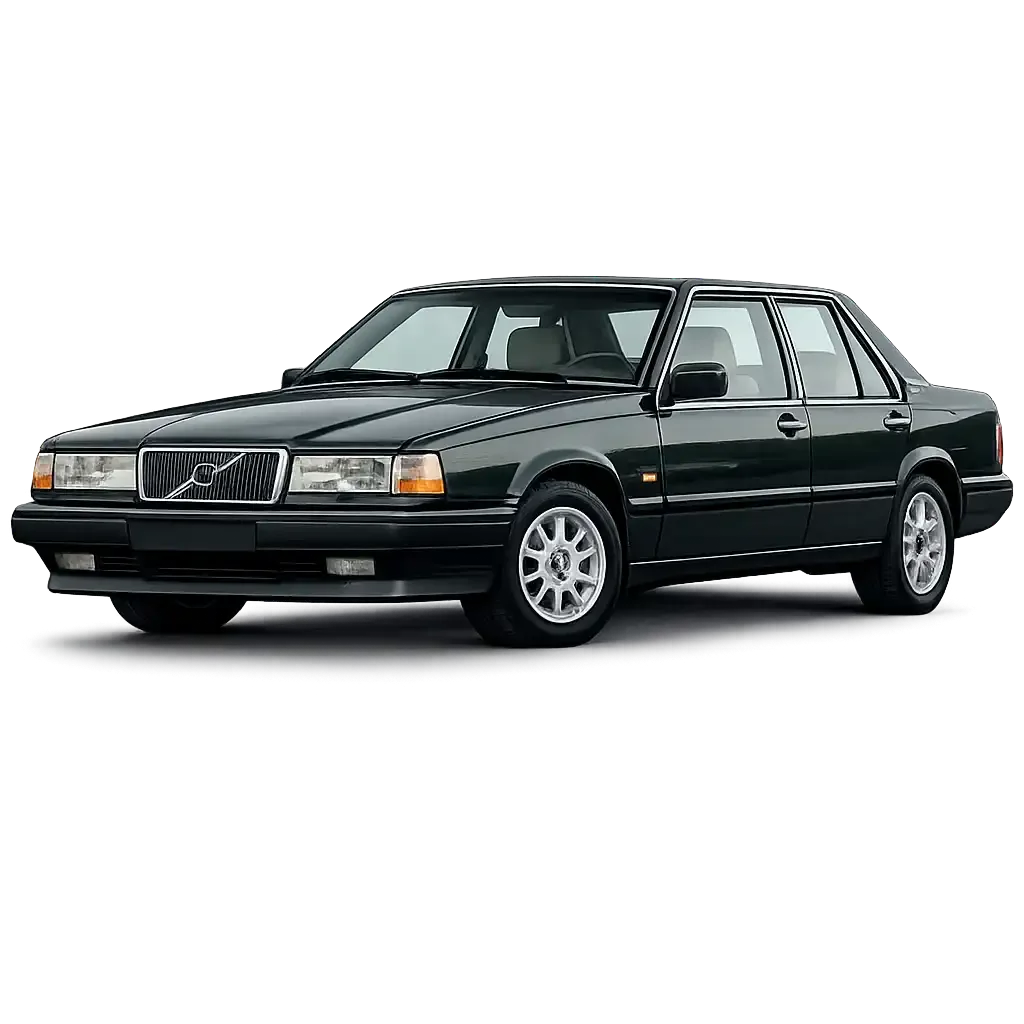
The Volvo 760 (1982 to 1990) is a 4-door rear-wheel-drive sedan and 5-door wagon (estate) that replaced the Volvo 260 as Volvo's flagship model. Launched in Sweden in February 1982, the 760 arrived in the US as a 1983 model year car. Designed by Jan Wilsgaard, the 760 represented the car that saved Volvo from financial crisis in the early 1980s, introducing a new angular "folded paper" design language that would define Volvo for a decade. The 760 was offered as a sedan from launch, with the wagon (765) added in February 1985 for the 1985 model year. This guide covers the early Volvo 760 for the 1983 to 1987 US model years, the period before the major 1988 facelift that introduced over 2,000 changes including the multilink independent rear suspension, revised front sheetmetal, recessed windshield wipers, the new electronic climate control (ECC), and the driver-angled dashboard. During this early period, all 760 models used a solid (live) rear axle, the original angular headlights and front sheetmetal, and the flat-faced dashboard with single-lever climate control. The 760 was built in Kalmar, Sweden; Ghent, Belgium; Halifax, Nova Scotia, Canada; and Clayton, Victoria, Australia. This guide maps every fitment split required to prevent returns on Volvo's flagship sedan and wagon during its foundational pre-facelift years.
Generation Overview (Early Models, 1983 to 1987 US Market)
The early 760 was positioned as Volvo's premium offering, slotting above the 240 series and later above the 740 (introduced for the 1985 model year as the 760's less expensive sibling). The early 760 is defined by the solid live rear axle that was standard across all body styles during this period. Volvo called it the "Constant Track Rear Suspension," mounting the axle entirely behind the passenger compartment in a subframe for improved ride comfort. The 760 was the first Volvo to offer ABS as standard equipment (on most models), and was available with an electronic traction control system from 1985. The 760's engine lineup during this early period included the PRV V-6 (in two versions), the turbocharged Redblock inline-4, and briefly the Volkswagen-sourced turbodiesel inline-6.
Year-by-Year Changes (US Market, 1983 to 1987)
1983 Model Year (US Debut)
The 760 GLE sedan arrives in the US with the B28F 2.8L PRV V-6 (approximately 145 hp) and AW71 4-speed automatic transmission. Sedan body only. Solid live rear axle with coil springs. The 760 Turbo Diesel follows shortly after with the Volkswagen-sourced D24T 2.4L turbodiesel inline-6 (109 hp), available only with the M46 4-speed manual transmission with electric overdrive (no automatic option for the diesel). Flat-faced dashboard with single-lever climate control. A/C and power windows become standard (in Sweden; already standard in US). Rectangular headlights.
1984 Model Year
Introduction of the 760 Turbo with the B23FT 2.3L turbocharged and intercooled Redblock inline-4 producing approximately 157 hp. Available with M46 manual or AW71 automatic. The 760 Turbo was positioned as a performance model, marketed by Volvo with acceleration comparisons to the Porsche 944. Standard equipment includes sunroof, cruise control, fog lights, dual heated seats, automatic climate control, power windows, locks, and mirrors. This is the only year for the B23FT designation; it becomes B230FT for 1985.
1985 Model Year
Introduction of the 760 wagon (765) in February 1985. The wagon uses the same solid live rear axle as the sedan. The B23FT turbo engine is replaced by the B230FT (revised Redblock 2.3L turbo) producing 160 hp. The 740 series is introduced alongside the 760 as a lower-specification alternative. Electronic traction control system introduced as an option. The PRV V-6 and turbodiesel continue alongside the turbo-4. The 82-liter (22 US gallon) fuel tank is phased in.
1986 Model Year
The PRV V-6 is significantly updated. The old B28F (with Bosch K-Jetronic mechanical fuel injection, prone to severe camshaft wear from oiling issues) begins transition to the new B280F (with Bosch LH-Jetronic electronic fuel injection, even-fire crankshaft, 145 hp). The B280F solved the chronic oiling and camshaft wear problems of the B28F. The turbodiesel D24T is discontinued in the US market after this year. The B230FT turbo continues. Large-scale changes to the B230 engine include a microprocessor-controlled ignition system for improved performance and fuel consumption.
1987 Model Year (Final Pre-Facelift Year)
The last year of the early 760 configuration before the major 1988 facelift. The B280F PRV V-6 (with LH-Jetronic, even-fire crank, 145 hp) is now fully phased in, replacing the B28F entirely. The B230FT turbo continues at 160 hp. All models retain the solid live rear axle, original angular headlights, flat dashboard, and single-lever climate control. ABS is standard on most 760 models. This is the final year before the 1988 update introduces the multilink IRS (sedan only), revised front sheetmetal with aluminum hood and recessed wipers, aerodynamic headlights, ECC, and the driver-angled dashboard.
Platform and Engineering
Key Platform Facts
• Platform: Volvo 700 series (shared with 740 from 1985, 780 from 1987)
• Architecture: Rear-wheel drive, longitudinal engine, front-mounted
• Body styles: 4-door sedan (764, 1983+); 5-door wagon/estate (765, 1985+)
• Assembly: Kalmar, Sweden; Ghent, Belgium; Halifax, Nova Scotia; Clayton, Australia
• Designer: Jan Wilsgaard
• Wheelbase: 109.1 inches (277.0 cm)
• Overall length (sedan): 188.2 inches (478.0 cm)
• Overall length (wagon): 188.4 inches (478.5 cm)
• Width: 68.9 inches (175.0 cm)
• Height (sedan): 55.5 inches (141.0 cm)
• Curb weight: Approximately 3,000 to 3,400 lbs depending on engine and body style
• Fuel tank: 80 liters (21.1 US gallons) standard; 82 liters (21.7 US gallons) phased in from 1985
• Wheel bolt pattern: 5x10⁸
• Tires: 195/60 HR-15 (standard)
Suspension (All Early 760 Models)
Front: MacPherson struts with coil springs and anti-roll bar.
Rear: Constant Track solid (live) rear axle mounted in a subframe, with coil springs and anti-roll bar. The axle is positioned entirely behind the passenger compartment. Nivomat self-leveling shock absorbers were available on some models (standard on wagons). This live axle was used on ALL early 760 models (1983 to 1987) for both sedan and wagon. The multilink independent rear suspension was not introduced until the 1988 facelift and was available on sedans only (wagons retained the live axle through the end of 760 production).
Brakes: Power-assisted four-wheel disc brakes. ABS standard on most 760 models. The 760 was one of the first cars in its class to offer ABS as standard equipment.
Engine Reference (Detailed)
B28F: 2.8L SOHC V-6 (PRV, Early Version, 1983 to 1986)
The original PRV (Peugeot-Renault-Volvo) V-6 as fitted to the early 760 GLE. This version uses Bosch K-Jetronic mechanical fuel injection and an odd-fire crankshaft. The B28F is notorious for severe camshaft wear caused by oiling system design deficiencies. The oil passages to the camshaft bearings are marginal, particularly when oil viscosity increases in cold weather or as the oil ages. This problem was endemic to the B28F and was a major warranty and reliability concern throughout its production. The B28F was replaced by the completely reengineered B280F starting in 1987.
• Type: SOHC V-6, all-aluminum, odd-fire crankshaft
• Displacement: 2,849 cc (2.8 liters)
• Bore x stroke: 91 mm x 73 mm
• Compression ratio: 8.8:1
• Fuel injection: Bosch K-Jetronic (mechanical CIS)
• Power: Approximately 145 hp
• Known issue: Chronic camshaft wear from inadequate oiling
B280F: 2.8L SOHC V-6 (PRV, Revised Version, 1987)
A completely reengineered version of the PRV V-6 that solved the oiling problems of the B28F. The B280F features an even-fire crankshaft (replacing the odd-fire design), Bosch LH-Jetronic electronic fuel injection (replacing the mechanical K-Jetronic), and revised oiling passages. The even-fire crank eliminated the distinctive "rough" idle of the B28F and dramatically improved smoothness. Despite sharing external dimensions with the B28F, the B280F is internally a significantly different engine.
• Type: SOHC V-6, all-aluminum, even-fire crankshaft
• Displacement: 2,849 cc (2.8 liters)
• Bore x stroke: 91 mm x 73 mm
• Compression ratio: 8.8:1
• Fuel injection: Bosch LH-Jetronic (electronic)
• Ignition: Bosch EZ-K electronic ignition
• Power: 145 hp at 5,100 rpm
• Torque: 173 lb-ft at 3,750 rpm
Critical B28F vs. B280F note: Despite both being 2.8L PRV V-6 engines, the B28F and B280F have different fuel injection systems (mechanical K-Jetronic vs. electronic LH-Jetronic), different crankshafts (odd-fire vs. even-fire), different ignition systems, and different engine wiring harnesses. They are NOT parts-interchangeable for anything related to fuel injection, ignition, or crankshaft components. Many external accessories (alternator, water pump, power steering pump) may interchange, but always verify by part number. The 1986 model year was a transitional year where both versions may have been in production simultaneously.
B23FT: 2.3L SOHC Inline-4 Turbo (Redblock, 1984 Only)
The original turbocharged Redblock inline-4 as fitted to the 1984 760 Turbo. This engine uses the B23 block (2.3 liters, cast-iron block, aluminum head, SOHC 8-valve) with a Garrett T3 turbocharger and intercooler. The B23FT designation was used only for the 1984 model year; it was replaced by the B230FT for 1985.
• Displacement: 2,316 cc (2.3 liters)
• Bore x stroke: 96 mm x 80 mm
• Turbocharger: Garrett T3
• Fuel injection: Bosch LH-Jetronic
• Power: Approximately 157 hp
B230FT: 2.3L SOHC Inline-4 Turbo (Redblock, 1985 to 1987)
The revised and improved Redblock turbo inline-4 that replaced the B23FT. The B230FT designation indicates the updated B230 block with revised internals including larger connecting rods (13 mm) and other improvements for durability. This engine was shared with the 740 Turbo and later the 940 Turbo and 780 Turbo.
• Displacement: 2,316 cc (2.3 liters)
• Bore x stroke: 96 mm x 80 mm
• Compression ratio: 8.7:1
• Turbocharger: Garrett T3
• Fuel injection: Bosch LH-Jetronic
• Power: 160 hp
• Torque: Approximately 187 lb-ft
D24T: 2.4L Turbodiesel Inline-6 (Volkswagen, 1983 to 1986)
A Volkswagen-sourced turbocharged diesel inline-6, shared with the Volkswagen LT35 commercial van. The D24T was offered in the 760 Turbo Diesel for a limited period in the US market. It was available only with the M46 4-speed manual transmission with electric overdrive; no automatic transmission was offered with the diesel. The heavy engine created a pronounced 57/43 front-to-rear weight distribution. The diesel 760 is relatively rare in the US but sought after for biodiesel conversion projects.
• Type: Inline-6, turbodiesel, cast-iron block
• Displacement: 2,383 cc (2.4 liters)
• Power: 109 hp at 4,800 rpm
• Torque: 151 lb-ft at 2,400 rpm
• Transmission: M46 4-speed manual with electric overdrive only
Transmission Reference
AW71 (Aisin-Warner) 4-Speed Automatic
The primary automatic transmission for the 760, used with both the PRV V-6 and the B23FT/B230FT turbo-4 engines. A heavy-duty 4-speed automatic with overdrive fourth gear.
• Type: 4-speed automatic with overdrive fourth, torque converter
• Fluid: Dexron II ATF
M46 4-Speed Manual with Electric Overdrive
A 4-speed manual gearbox with an electrically engaged overdrive on fourth gear, effectively creating a 5th gear. Used with the B23FT/B230FT turbo engines and mandatory with the D24T turbodiesel.
• Type: 4-speed manual with electric overdrive (engaged by dashboard switch or automatically)
• Overdrive: Laycock de Normanville J-type electric overdrive unit, engaged on 4th gear
ZF 4HP22 4-Speed Automatic
Some 760 models were equipped with the ZF 4HP22 automatic instead of the Aisin-Warner AW71. The ZF unit can be identified by looking at the shift pattern: the ZF has a "3" position on the shift gate, while the AW71 does not. The ZF 4HP22 has a known issue with the internal oil pump that can be damaged by aggressive use of the "kickdown" feature. The ZF and AW71 are completely different transmissions with different cases, valve bodies, and internal components. They are NOT interchangeable.
Catalog Accuracy: The Fitment Splits That Matter
Split 1: 760 vs. 740 (Related but Different)
The 740 was introduced for the 1985 model year as the 760's less expensive sibling. The 740 and 760 share the same basic platform, wheelbase, and drivetrain options, but differ in equipment levels, trim, and some body components. The 760 has a more upscale interior with different dashboard trim, different seats, and more standard equipment. Sheetmetal from the A-pillar forward is shared. The sedan rear treatment (C-pillar, taillights, trunk lid) differs between 740 and 760. Wagon bodies are more similar between 740 and 760.
• Shared (740 and 760): Hood, fenders, front bumper, headlights (same model year), doors, engines, transmissions, front suspension, rear axle, brakes, steering, wheels.
• 760-specific: Dashboard trim (more wood, different gauge cluster on some years), rear taillights (sedan), trunk lid (sedan), higher equipment levels, different grille insert on some years.
Split 2: PRV V-6 vs. Redblock Turbo-4 vs. Turbodiesel
Three completely different engine families with zero parts interchange. The PRV V-6 is a French-designed all-aluminum V-6. The Redblock is a Swedish-designed cast-iron-block inline-4. The D24T is a German-designed (Volkswagen) cast-iron turbodiesel inline-6. Each engine requires its own motor mounts, exhaust system, engine wiring harness, cooling system routing, and accessory drive layout.
• PRV V-6 (B28F/B280F): 1983 to 1987. Available with AW71 automatic only in most US configurations.
• Redblock Turbo-4 (B23FT/B230FT): 1984 to 1987. Available with AW71 automatic or M46 manual.
• Turbodiesel (D24T): 1983 to 1986. Available with M46 manual only.
Split 3: B28F (K-Jetronic) vs. B280F (LH-Jetronic)
Within the PRV V-6 family, there are two fundamentally different versions. The early B28F uses Bosch K-Jetronic mechanical fuel injection and an odd-fire crankshaft. The later B280F uses Bosch LH-Jetronic electronic fuel injection and an even-fire crankshaft. The fuel injection systems, ignition systems, crankshafts, and engine wiring harnesses are completely different. The B280F was phased in starting around 1986 to 1987. When ordering any fuel injection component, ignition component, or crankshaft-related part for a 760 V-6, always determine whether the car has a B28F or B280F.
• B28F identification: K-Jetronic fuel distributor (mechanical, warm-up regulator), odd-fire crankshaft (distinctive rough idle), older ignition system.
• B280F identification: LH-Jetronic (electronic, mass airflow sensor), even-fire crankshaft (smooth idle), EZ-K electronic ignition.
Split 4: B23FT (1984 Only) vs. B230FT (1985+)
The 1984 760 Turbo uses the B23FT, while 1985 and later use the B230FT. Both are 2.3L turbocharged Redblock inline-4 engines, but the B230FT has revised internals including larger 13 mm connecting rods, improved turbo plumbing, and revised engine management. Many external components interchange, but the internal differences mean that engine rebuild parts (pistons, rods, bearings) may differ between the two designations. Always specify B23FT or B230FT when ordering internal engine components.
Split 5: Sedan (764) vs. Wagon (765)
The wagon was introduced for the 1985 model year. From the B-pillar forward, sedan and wagon are largely identical. From the B-pillar back, they are different vehicles.
• Shared: Hood, fenders, front bumper, headlights, doors (front), engine, transmission, front suspension, rear axle assembly, brakes, steering, wheels, dashboard, front seats.
• Different: Roof, rear quarter panels, C-pillar, rear doors (wagon has none; sedan has none past B-pillar), tailgate (wagon) vs. trunk lid (sedan), taillights, rear bumper, rear glass, rear wiper (wagon), cargo area, rear seat configuration, rear body wiring harness.
• Rear suspension: Both sedan and wagon use the same solid live rear axle during this early period. Springs and Nivomat shocks may differ between sedan and wagon to account for the wagon's higher typical load capacity.
Split 6: AW71 vs. ZF 4HP22 vs. M46 Manual
Three different transmissions were available across the early 760 lineup. The AW71 and ZF 4HP22 are both 4-speed automatics but are completely different internally. The M46 is a 4-speed manual with electric overdrive. Each requires different shifter linkage, crossmember, transmission mounts, and driveshaft specifications.
• AW71: Aisin-Warner 4-speed automatic. Most common in US V-6 and turbo applications. No "3" position on shift gate.
• ZF 4HP22: ZF 4-speed automatic. Some V-6 and turbo applications. Has "3" position on shift gate. Known oil pump vulnerability.
• M46: Volvo/Laycock 4-speed manual with electric overdrive. Standard with turbodiesel. Optional with turbo gasoline.
• Identification: Check the shift gate pattern. "3" present = ZF. No "3" = AW71. Stick shift = M46.
Split 7: Pre-1988 (This Guide) vs. 1988+ Facelift
The 1988 model year facelift introduced over 2,000 changes to the 760. This is the most important split for the entire 760 production run. Pre-1988 and 1988+ 760s are effectively different cars from a parts perspective for many components. The 1988 facelift introduced: new front sheetmetal (aluminum hood, new fenders, new grille, aerodynamic headlights, recessed windshield wipers), multilink independent rear suspension on sedans (replacing the live axle), saddle-type fuel tank (required by the new IRS), new Electronic Climate Control (ECC, replacing single-lever system), driver-angled dashboard, new stereo system, and 3-position tilt steering. The wagon did NOT receive the multilink IRS in 1988; wagons retained the live rear axle.
• Front sheetmetal: Pre-1988 hood, fenders, grille, headlights do NOT fit 1988+ and vice versa.
• Dashboard: Pre-1988 flat dashboard is different from 1988+ angled dashboard.
• Climate control: Pre-1988 single-lever system is different from 1988+ ECC.
• Rear suspension (sedan): Pre-1988 live axle vs. 1988+ multilink IRS. No interchange.
Split 8: ABS vs. Non-ABS
While ABS was standard on most 760 GLE models, some base configurations and some market-specific variants may not have ABS. ABS-equipped and non-ABS cars have different brake master cylinders, different brake line routing (ABS lines route through the ABS hydraulic modulator), and potentially different wheel hubs (ABS hubs include tone rings). Always verify ABS presence before ordering brake hydraulic components.
Common Wear Items and Fitment Notes
• PRV V-6 camshaft (B28F): The B28F is infamous for premature camshaft wear caused by inadequate oiling. If the car has a B28F, the camshaft condition should be inspected. The B280F (1987+) solved this problem with revised oil passages.
• Timing belt (Redblock B23FT/B230FT): Interference engine. Replace belt, tensioner, and idler together. 50,000-mile interval recommended. Failure is catastrophic.
• PRV V-6 timing chain (B28F/B280F): Duplex chain, not a belt. Chain stretch at high mileage causes timing drift. Replacement is a major job.
• Turbocharger (B23FT/B230FT): Garrett T3. Oil feed and return lines are common failure items. Always check for shaft play and oil leaking from the turbo seals.
• Rear axle bushings: The live rear axle subframe bushings and trailing arm bushings wear over time, causing vague handling, clunking, and wheel hop under acceleration. Common on all early 760 models.
• Overdrive unit (M46): The Laycock electric overdrive can develop solenoid or electrical faults. The overdrive engages on 4th gear via an electrical solenoid. Failure symptoms include inability to engage overdrive or overdrive engaging/disengaging intermittently.
• Brake rotors and pads: 4-wheel disc brakes standard. Verify ABS vs. non-ABS when ordering master cylinder or brake lines. Rotors and pads are generally shared with the 740 of the same model year.
• Front struts: MacPherson strut design shared with the 740 of the same model year.
• K-Jetronic fuel injection (B28F): The mechanical K-Jetronic system uses a fuel distributor, warm-up regulator, and mechanical airflow sensor plate. These components are unique to the K-Jetronic system and have no relationship to the LH-Jetronic parts used on the B280F or B230FT.
• Heater core: Known failure item on 700-series cars. Replacement requires significant dashboard work.
• Power window regulators: Common failure due to aging cable-type mechanisms. Shared with 740 sedan of the same model year.
Ordering Quick-Reference Checklist
• Model year: 1983, 1984, 1985, 1986, or 1987?
• Body style: Sedan (764) or wagon (765)? Wagon available 1985+ only.
• Engine: B28F PRV V-6 (K-Jetronic, 1983 to 1986), B280F PRV V-6 (LH-Jetronic, 1987), B23FT turbo-4 (1984 only), B230FT turbo-4 (1985 to 1987), or D24T turbodiesel (1983 to 1986)?
• Fuel injection (V-6): Bosch K-Jetronic mechanical (B28F) or Bosch LH-Jetronic electronic (B280F)?
• Transmission: AW71 auto, ZF 4HP22 auto (check for "3" on shift gate), or M46 manual with overdrive?
• ABS: Equipped or not?
• Pre-facelift vs. facelift: This guide covers pre-facelift (1983 to 1987) only. Verify the car is NOT a 1988+ facelift model before ordering front sheetmetal, dashboard, or climate control components.
• 760 vs. 740: Verify the customer actually has a 760, not a 740. They look very similar. The 760 has a different grille insert, different rear treatment (sedan), and higher equipment levels.
• VIN: Always verify by VIN.
Three Questions to Always Ask
• "What engine?" The early 760 was offered with three completely different engine families in the US: the PRV V-6 (in two sub-versions with different fuel injection), the Redblock turbo-4 (in two designations), and the VW turbodiesel inline-6. Zero parts interchange between engine families. Within the V-6, the B28F (mechanical K-Jetronic) and B280F (electronic LH-Jetronic) have different fuel injection, ignition, crankshaft, and wiring. Getting the wrong V-6 version is one of the most common 760 parts errors.
• "Pre-1988 or 1988+?" The 1988 facelift changed the front sheetmetal, dashboard, climate control, and (sedan only) rear suspension. Pre-1988 and 1988+ parts do not cross for any of these systems. This guide covers pre-1988 only, but customers frequently do not know their exact model year. If in doubt, ask about the headlight shape: pre-1988 has rectangular sealed-beam or composite headlights in a flat grille; 1988+ has wrap-around aerodynamic headlights in a smoother front end.
• "Which transmission?" The AW71 automatic, ZF 4HP22 automatic, and M46 manual are three different units with no parts interchange. The quickest identification method: stick shift = M46; automatic with "3" on shift gate = ZF; automatic without "3" = AW71. The transmission type affects shifter linkage, crossmember, mounts, driveshaft, and torque converter/flywheel.
Disclaimer: This guide is based on publicly available specifications, Volvo press materials, and independent research. Part interchangeability should always be confirmed via VIN and OEM part number lookup. Specifications may change without notice. This document does not constitute official Volvo parts catalog data. Visuals and illustrations in this article were generated using AI for representative purposes and may not reflect exact technical schematics.