
Volvo 740 (1990 to 1992) US Market Fitment Guide
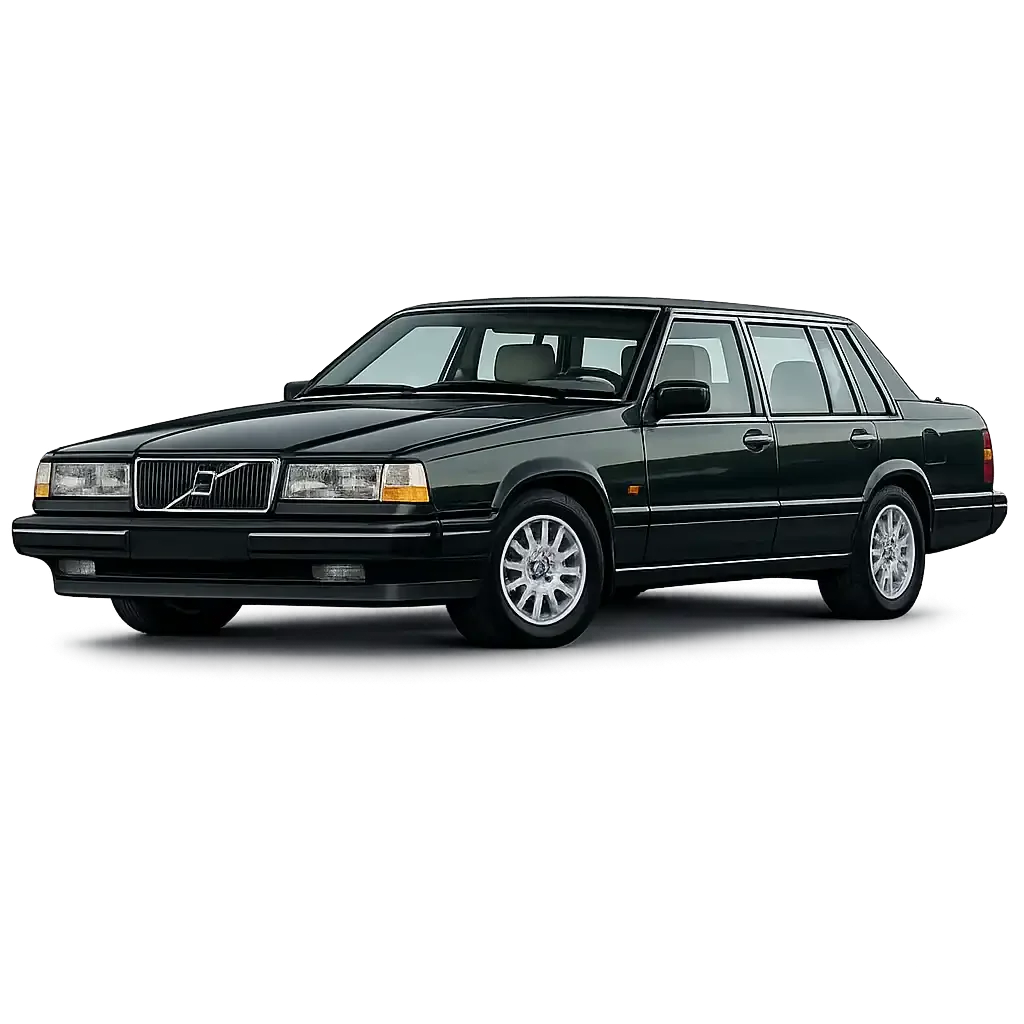
The Volvo 740 (1985 to 1992) entered its final phase with the 1990 model year facelift, receiving new composite headlamps, 780-style taillights on sedans, upgraded connecting rods (larger 13 mm), and the Mitsubishi TD04 turbocharger across all turbo models. The fuel injection system was upgraded from Bosch LH-Jetronic 2.2 to LH-Jetronic 2.4 (on turbo models for 1990, having already appeared on NA models in 1988), adding onboard diagnostics accessible from the engine compartment. The 740 continued alongside the newly introduced 940 (September 1990) and eventually the 960 (which replaced the 760). Production of the 740 ceased on October 2, 1992, with the 940 fully absorbing its market position. The 740's engine, transmission, chassis, and mechanical components carried directly into the 940, making the two cars effectively identical mechanically, differing primarily in rear greenhouse styling on sedans. This guide covers the final years of the Volvo 740: the 1990, 1991, and 1992 US model years. These final years represent the most refined and reliable iteration of the 740, with many of the mechanical shortcomings of the 1985 to 1989 models corrected. All 740 models retained the solid live rear axle through the end of production.
Generation Overview (1990 to 1992 US Market)
The 1990 to 1992 740 is widely regarded by Volvo enthusiasts as the best of the 740 production run. The larger 13 mm connecting rods improved bottom-end durability. The Mitsubishi TD04 turbocharger offered faster spool-up than the earlier Garrett T3. The upgraded LH-Jetronic 2.4 fuel system provided onboard diagnostics. The revised dashboard (1991) improved ergonomics. By 1992, the mechanical cooling fan was replaced with an electric fan. These running improvements, combined with the fundamentally proven Redblock architecture, created what many consider one of the most reliable four-door passenger sedans of the era.
Year-by-Year Changes (US Market, 1990 to 1992)
1990 Model Year (Second Facelift)
The 740 receives a second front-end facelift with new, smaller composite headlamps and 780-style taillights on sedans. The wagon retained its original rear-end styling and taillights for the remainder of its production life, creating a visible difference between sedan and wagon from the rear. Mechanical improvements: B230 engines receive larger 13 mm connecting rods (up from the earlier smaller rods, improving bottom-end strength). The 740 Turbo switches from the Garrett T3 to the Mitsubishi TD04 series turbocharger, offering quicker spool-up and better low-speed boost. The fuel injection system on turbo models is upgraded from Bosch LH-Jetronic 2.2 to 2.4, adding accessible onboard diagnostics. The B234F 16-valve DOHC engine (153 hp) continues on GLE/GLT models. Trim levels include 740 GL, 740 GLE, 740 GLT (16-valve), and 740 Turbo.
1991 Model Year
The 740 receives an updated dashboard, more rounded in design and similar in appearance to the dashboard found in the 760. The new dashboard is more ergonomic with easier-to-read instruments and controls. The 940 is introduced alongside the 740, creating a period where both models are sold simultaneously. The 940 is essentially a re-skinned 740 with a more sloped rear greenhouse on sedans. Late in 1991, Volvo offers the 740 SE (Special Equipment) sedan and wagon in three colors: red, black, and white. The 740 SE is mechanically identical to the 740 Turbo but bundles premium options as standard (power sunroof, leather seats) and includes a factory color-keyed body kit with front and rear bumpers, side skirts, and a spoiler for the sedan. Driver's side airbag becomes standard on many models.
1992 Model Year (Final Year)
The final model year for the 740. The mechanical engine cooling fan is replaced with an electric fan across the range. The 740 Turbo sedan and 740 SE are discontinued; for 1992, the turbo engine is primarily available in the 740 Turbo wagon (the 740 Turbo sedan buyer is directed to the 940 Turbo). The GLE and GLT 16-valve trims are discontinued, their market positions absorbed by 940 models. The remaining 740 lineup narrows to the base 740 and 740 GL (B230F NA, 114 hp) in sedan and wagon, and the 740 Turbo wagon (B230FT, 162 hp). Bendix/Regina fuel injection continues on some base models. Production ends October 2, 1992. The Redblock engine, transmission, chassis, and running gear carry directly into the 940 series, which continues until 1998.
Platform and Engineering
Key Platform Facts
• Platform: Volvo 700 series (shared with 760, 780, and mechanically identical to 940)
• Architecture: Rear-wheel drive, longitudinal engine, front-mounted
• Body styles: 4-door sedan (744); 5-door wagon/estate (745)
• Assembly: Kalmar, Sweden; Ghent, Belgium; Halifax, Nova Scotia, Canada
• Wheelbase: 109.1 inches (277.0 cm)
• Overall length (sedan): 188.2 inches (478.0 cm)
• Overall length (wagon): 188.4 inches (478.5 cm)
• Width: 68.9 inches (175.0 cm)
• Height: 55.5 inches (141.0 cm)
• Curb weight: Approximately 2,800 to 3,100 lbs depending on body style and engine
• Fuel tank: Approximately 80 liters (21.1 US gallons)
• Wheel bolt pattern: 5x10⁸
• Tires: 195/60 HR-15 (standard)
Suspension (All 740 Models, 1990 to 1992)
Front: MacPherson struts with coil springs and anti-roll bar.
Rear: Constant Track solid (live) rear axle mounted in subframe, coil springs, anti-roll bar. ALL 740 models retained the solid live rear axle through the end of production. Nivomat self-leveling rear shocks available, particularly on wagons. The 740 NEVER received the multilink IRS that was fitted to the 760 sedan (1988 to 1990) and 960 sedan.
Brakes: Power-assisted 4-wheel disc brakes. ABS available on some models.
Engine Reference (Detailed)
B230F: 2.3L SOHC 8-Valve Inline-4 NA (Redblock, 1990 to 1992)
The naturally aspirated base Redblock continues with the improved 13 mm connecting rods from 1990 onward. Bosch LH-Jetronic 2.4 on most models. Some base 740 models use Bendix/Regina fuel injection instead.
• Displacement: 2,316 cc (2.3 liters)
• Bore x stroke: 96 mm x 80 mm
• Compression ratio: 9.8:1
• Power: 114 hp
• Torque: 136 lb-ft
• Connecting rods (1990+): Larger 13 mm (improved durability over earlier smaller rods)
• Fuel injection: Bosch LH-Jetronic 2.4 (most models) or Bendix/Regina (some base models)
• Cooling fan (1992): Electric fan replaces mechanical fan
• Timing belt: 50,000-mile interval. Interference engine.
B230FT: 2.3L SOHC 8-Valve Inline-4 Turbo (Redblock, 1990 to 1992)
The turbocharged Redblock with Mitsubishi TD04 turbocharger (replacing Garrett T3 from 1990 onward) and upgraded LH-Jetronic 2.4 fuel injection for onboard diagnostics.
• Displacement: 2,316 cc (2.3 liters)
• Bore x stroke: 96 mm x 80 mm
• Compression ratio: 8.7:1
• Power: 162 hp
• Torque: 192 lb-ft at 3,400 rpm
• Turbocharger: Mitsubishi TD04 series (all 1990 to 1992)
• Fuel injection: Bosch LH-Jetronic 2.4 with onboard diagnostics
• Connecting rods: Larger 13 mm (1990+)
• Cooling fan (1992): Electric fan replaces mechanical fan
• Timing belt: 50,000-mile interval. Interference engine.
B230FT connecting rod note: The 1990+ B230FT with 13 mm connecting rods is considered the strongest of the B230 series. The 1989 revision with a beefier crankshaft and connecting rod design is further improved for 1990. These later B230FT engines are highly regarded for durability and are commonly sought for performance builds. The B230s used in the subsequent 900 series are considered stronger still.
B234F: 2.3L DOHC 16-Valve Inline-4 NA (Redblock, 1990 to 1991)
The 16-valve DOHC Redblock with twin overhead camshafts, hydraulic tappets, and twin balance shafts. Available on the 740 GLE/GLT through 1991 before being discontinued.
• Displacement: 2,316 cc (2.3 liters)
• Power: 153 hp
• Valvetrain: DOHC, 16 valves, hydraulic tappets, twin balance shafts
• Fuel injection: Bosch LH-Jetronic
• Availability: 740 GLE/GLT 1990 and 1991 only. Discontinued for 1992.
B234F discontinuation: The 16-valve engine was dropped from the 740 after 1991. Its market position in the lineup was absorbed by 940 models. When ordering parts for a 1990 or 1991 740 GLT, verify whether the car has the B234F 16-valve or the B230F 8-valve, as the cylinder heads are completely different.
Transmission Reference
AW70/AW71 (Aisin-Warner) 4-Speed Automatic
The primary automatic for the 740 through the end of production.
• Identification: No "3" on shift gate
• Fluid: Dexron II ATF
M46 4-Speed Manual with Electric Overdrive
Continued on some Turbo models. The 740 Turbo was the only turbocharged Volvo still available with a manual transmission by 1991.
• Identification: 4-speed stick with dashboard overdrive switch
M47 5-Speed Manual
Available on some NA models.
• Identification: 5-speed stick, no overdrive switch
Manual transmission rarity note: By the final years, the vast majority of 740s sold in the US were equipped with the AW70/AW71 automatic. Manual-equipped 740 Turbo sedans and wagons are uncommon and sought after by enthusiasts. The 740 Turbo wagon with manual transmission is particularly rare.
Catalog Accuracy: The Fitment Splits That Matter
The 1990 to 1992 740 sits in a complex position: it overlaps with the 940 (introduced 1990/1991) and succeeds the earlier 1985 to 1989 740 with several mechanical improvements. The primary fitment risks involve confusing the 740 with the 940, mixing pre-1990 and post-1990 components, and misidentifying the fuel injection system.
Split 1: 1990+ (Second Facelift) vs. 1988 to 1989 vs. Pre-1988
The 740 went through three distinct front-end eras. The 1990 facelift brought new composite headlamps and 780-style taillights (sedan only). These headlamps are different from both the 1988 to 1989 aerodynamic units and the original 1985 to 1987 rectangular units. When ordering headlights, always specify the exact year range.
• 1985 to 1987: Original rectangular headlights, exposed wipers, flat dashboard.
• 1988 to 1989: Aerodynamic headlights, recessed wipers, driver-angled dashboard.
• 1990 to 1992: New composite headlamps (smaller than 1988 to 1989 units), 780-style taillights on sedans, updated dashboard (1991+).
Split 2: Sedan Taillights (1990+ 780-Style) vs. Wagon Taillights (Original)
The 1990 facelift gave the sedan new 780-style taillights. However, the wagon retained its original rear-end styling and taillights through the end of production. This creates a split where the sedan and wagon have different taillight assemblies from 1990 onward. Pre-1990 sedans have different taillights from 1990+ sedans. Wagon taillights remained consistent from 1985 to 1992. Always specify sedan or wagon AND model year when ordering taillights.
Split 3: B230F NA vs. B230FT Turbo vs. B234F 16-Valve
Three engine options during 1990 to 1991 (narrowing to two for 1992 when the B234F is dropped). The three Redblock gasoline engines share the same basic block but differ in cylinder head (8V SOHC vs. 16V DOHC), turbo hardware, compression ratio, and ECU calibration. All 1990+ Redblocks benefit from the improved 13 mm connecting rods.
• B230F (NA, 8V, 114 hp): 1990 to 1992. Base/GL. LH-Jetronic 2.4 or Bendix/Regina.
• B230FT (Turbo, 8V, 162 hp): 1990 to 1992 (sedan turbo discontinued after 1991; wagon turbo continues 1992). Mitsubishi TD04. LH-Jetronic 2.4.
• B234F (NA, 16V DOHC, 153 hp): 1990 to 1991 only. GLE/GLT. Discontinued for 1992.
Split 4: Bosch LH-Jetronic 2.4 vs. Bendix/Regina
This remains one of the most dangerous fitment splits on late 740s. Some base-model 740s from 1990 to 1992 use the Bendix/Regina electronic fuel injection system instead of Bosch LH-Jetronic 2.4. These are completely different systems with incompatible ECUs, sensors, wiring harnesses, and throttle bodies. A mass airflow sensor for Bosch will not work on a Bendix/Regina car. All Turbo and GLT/GLE models use Bosch LH-Jetronic. The Bendix/Regina system is found only on lower-trim base and GL models. Always determine the fuel injection system before ordering any engine management component.
Split 5: 740 vs. 940
The 940 (introduced September 1990) is mechanically identical to the 740. The Redblock engines, transmissions, front suspension, rear axle, brakes, and steering components are the same. The primary differences are: the 940 sedan has a more sloped rear greenhouse (C-pillar) with more rounded styling; the 940 received specific interior trim levels; and the 940 Turbo SE was equipped with the 760's multilink IRS (while the 940 Turbo without the SE designation kept the live rear axle, same as the 740). Front sheetmetal, engines, transmissions, front suspension, live-axle rear suspension components, and brakes interchange freely between 740 and 940 of the same model year. Rear body panels from the B-pillar back are different between 740 sedan and 940 sedan due to the different C-pillar angle.
• Shared (740 and 940): Hood, fenders, headlights, front bumper, grille, doors, engines, transmissions, front suspension, live-axle rear suspension, brakes, steering, wheels, dashboard components (1991+ shared design).
• Different: Sedan rear greenhouse (C-pillar angle), rear quarter panels (sedan), trunk lid (sedan), rear bumper (sedan), taillights (sedan). Wagon bodies may be more closely shared.
• 940 SE caution: The 940 Turbo SE received the 760's multilink IRS. The standard 940 Turbo and all 740 models have the live rear axle. Do not interchange rear suspension components between multilink SE and live-axle models.
Split 6: Sedan vs. Wagon
Same split as earlier years: identical from the B-pillar forward, completely different from the B-pillar back. New for 1990: sedan gets 780-style taillights while wagon keeps original taillights. Rear springs may differ (wagon rated for higher loads). Nivomat self-leveling shocks more common on wagons.
Split 7: Mechanical Cooling Fan (1990 to 1991) vs. Electric Fan (1992)
For the 1992 model year, the mechanical engine cooling fan was replaced with an electric fan. This change affects the fan assembly, fan clutch (eliminated on 1992), fan shroud, wiring, and potentially the radiator. Components are not interchangeable between mechanical-fan (1990 to 1991) and electric-fan (1992) configurations.
Split 8: Dashboard Generation (Pre-1991 vs. 1991+)
The 740 received an updated dashboard for 1991, more rounded and similar in appearance to the 760's dashboard. The 1991+ dashboard shares its design with the 940. Instrument cluster, center console trim, dashboard padding, and some wiring differ between the pre-1991 dashboard (the driver-angled design introduced in 1988) and the 1991+ rounded design. When ordering dashboard components, specify pre-1991 or 1991+.
Common Wear Items and Fitment Notes
• Timing belt (all Redblock engines): Interference engine. Replace belt, tensioner, and idler pulleys at 50,000-mile intervals. The 1990+ engines with improved connecting rods are more durable, but timing belt failure is still catastrophic regardless of rod size.
• Turbocharger (B230FT, 1990+): All 1990 to 1992 models use the Mitsubishi TD04. Do NOT order Garrett T3 components for a 1990+ turbo 740. Oil feed/return lines, wastegate actuator, and mounting hardware are Mitsubishi-specific.
• Fuel injection system: Identify Bosch LH-Jetronic 2.4 vs. Bendix/Regina before ordering any engine management component on base/GL models. Turbo and GLT/GLE models are always Bosch.
• B234F cylinder head (1990 to 1991 GLT): 16-valve DOHC head with hydraulic tappets and balance shafts. Completely different from B230F/B230FT 8-valve head. Do not interchange.
• Electric fan conversion (1992): If replacing cooling system components on a 1992 model, verify it has the electric fan setup. Do not order mechanical fan components for a 1992.
• Rear axle bushings: Subframe and trailing arm bushings for the live rear axle. Common wear item causing vague handling. Shared with all 700/900-series live-axle models.
• Nivomat rear shocks: Self-leveling shocks for wagons. Non-rebuildable; replace as complete assemblies. Live-axle-specific; do not confuse with multilink Nivomat shocks from the 760/960/940 SE sedan.
• Brake rotors and pads: 4-wheel disc. Generally shared with the 940 of the same model year. Verify ABS vs. non-ABS.
• Dashboard components (1991+): The updated 1991 dashboard is shared with the 940. Pre-1991 dashboard components are different.
• Taillights (sedan): 1990 to 1992 sedan: 780-style taillights. Different from pre-1990 sedan taillights.
• Taillights (wagon): Consistent 1985 to 1992 design. No change with the 1990 facelift.
• 740 SE body kit (1991): Factory color-keyed bumpers, side skirts, and spoiler. SE-specific parts; not shared with standard 740.
• Driver airbag (1991+): Standard on many 1991+ models. The steering wheel and column differ between airbag-equipped and non-airbag models.
Ordering Quick-Reference Checklist
• Model year: 1990, 1991, or 1992?
• Body style: Sedan (744) or wagon (745)?
• Trim level: Base 740, GL, GLE, GLT (16-valve), Turbo, or SE? (SE and GLT/GLE discontinued after 1991; Turbo sedan discontinued after 1991.)
• Engine: B230F NA 8V (114 hp), B230FT Turbo 8V (162 hp), or B234F NA 16V DOHC (153 hp, 1990 to 1991 only)?
• Fuel injection: Bosch LH-Jetronic 2.4 or Bendix/Regina? (Bendix/Regina only on base/GL models.)
• Cooling fan: Mechanical (1990 to 1991) or electric (1992)?
• Dashboard: Pre-1991 (driver-angled, 1988 design) or 1991+ (updated rounded design)?
• Transmission: AW70/AW71 automatic, M46 manual (turbo), or M47 manual (NA)?
• 740 vs. 940: Verify which model. Mechanically identical, but sedan body panels from B-pillar back differ.
• VIN: Always verify by VIN.
Three Questions to Always Ask
• "What engine and fuel injection system?" Three engines were available (1990 to 1991), narrowing to two for 1992. For base and GL models, the Bosch LH-Jetronic 2.4 vs. Bendix/Regina split is the most common source of incorrect parts orders. These are completely different systems. Turbo and GLT/GLE models always use Bosch. For 1990 to 1991, also determine B230F (8V) vs. B234F (16V) for naturally aspirated models, as the cylinder heads are entirely different.
• "740 or 940?" The 740 and 940 sold alongside each other from 1991 to 1992. They are mechanically identical and share front sheetmetal, engines, transmissions, and suspension. The difference is the sedan rear body (940 has a more sloped C-pillar). Many mechanical parts interchange freely. However, the 940 Turbo SE received the multilink IRS from the 760, while all 740 models and the standard 940 Turbo use the live rear axle. Do not interchange rear suspension components between multilink and live-axle cars.
• "What model year for headlights and taillights?" The 740 went through three headlight eras (1985 to 1987, 1988 to 1989, 1990 to 1992). Sedan taillights changed in 1990 (780-style). Wagon taillights never changed. For headlights, always specify the exact year range. For taillights, specify sedan or wagon AND pre-1990 or 1990+.
Disclaimer: This guide is based on publicly available specifications, Volvo press materials, and independent research. Part interchangeability should always be confirmed via VIN and OEM part number lookup. Specifications may change without notice. This document does not constitute official Volvo parts catalog data. Visuals and illustrations in this article were generated using AI for representative purposes and may not reflect exact technical schematics.