
Volvo 740 (1985 to 1989) US Market Fitment Guide
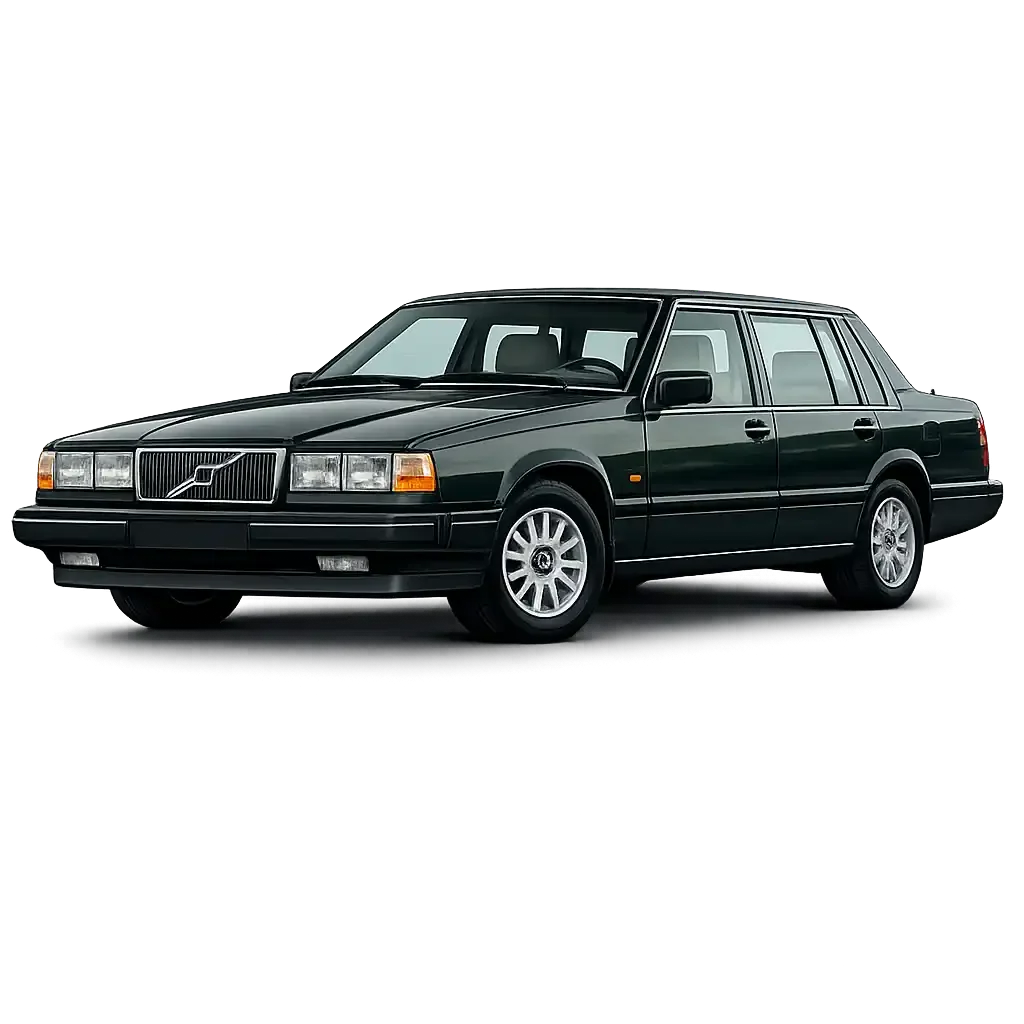
The Volvo 740 (1985 to 1992) is a 4-door sedan (744) and 5-door wagon (745) that served as the volume seller of the Volvo 700 series. Introduced for the 1985 US model year as the more affordable sibling to the 760, the 740 shared the same platform and wheelbase but was positioned with four-cylinder Redblock engines and lower trim levels. The sedan debuted first in early 1984, followed by the wagon in February 1985 at the Toronto and Chicago Auto Shows. The wagon quickly became the dominant body style, accounting for over 40% of 740 sales by 1989. Unlike the 760 sedan, the 740 retained the solid live rear axle for its entire production run; no 740 ever received the multilink independent rear suspension. This guide covers the Volvo 740 for the 1985 to 1989 US model years, spanning from the model's US debut through the 1989 front-end facelift. The 740 was built in Kalmar, Sweden; Ghent, Belgium; and Halifax, Nova Scotia, Canada. This guide maps every fitment split required to prevent returns across the 740's most diverse early production years.
Generation Overview (1985 to 1989 US Market)
The 740 was Volvo's mid-range workhorse, bridging the gap between the venerable 240 series and the premium 760. It used the same 109.1-inch wheelbase platform as the 760 and shared most of its mechanical components, but the 740 was exclusively a Redblock four-cylinder car in the US market (no V-6, no diesel). The 740's trim levels evolved across these five model years, and the engine lineup expanded to include a naturally aspirated base, a turbocharged performance option, and eventually a 16-valve DOHC variant.
Year-by-Year Changes (US Market, 1985 to 1989)
1985 Model Year (US Debut)
The 740 arrives in the US as a 1985 model. Available as 740 GLE sedan and wagon (B230F 2.3L NA, 114 hp) and 740 Turbo sedan and wagon (B230FT 2.3L turbo, 160 hp). Also available: 740 GLE Turbo Diesel sedan and wagon with the D24T 2.4L Volkswagen-sourced turbodiesel inline-6 (109 hp, M46 manual only). Transmissions: AW71 4-speed automatic or M46 4-speed manual with electric overdrive. Solid live rear axle on all models. Original angular headlights with exposed windshield wipers. Flat dashboard. Electronic traction control introduced as an option.
1986 Model Year
New badging font and hubcap designs. Interior revisions on Turbo models including revised seats. New 5-spoke alloy wheels on Turbo. Dual-speed seat warmers introduced. Leather interior option dropped from Turbo models (would return for 1989). Microprocessor-controlled ignition system introduced with large-scale changes to the B230 engine for improved performance and fuel consumption. The D24T turbodiesel may have been available for one final year on some 740 configurations. B230F and B230FT continue.
1987 Model Year
The 740 continues largely unchanged mechanically. The 760 receives its major facelift for 1988 (new front end, multilink IRS on sedan, new dashboard), but the 740 does NOT receive these updates for 1987. The 740 retains the original angular front-end styling, flat dashboard, single-lever climate control, and solid live rear axle. Minor trim updates and option changes.
1988 Model Year
The 740 receives the same revised front sheetmetal as the 760 facelift: aluminum hood, aerodynamic headlights, recessed windshield wipers, new grille. The 740 also receives the revised driver-angled dashboard and updated interior. However, unlike the 760 sedan, the 740 does NOT receive the multilink IRS; all 740 models (sedan and wagon) retain the solid live rear axle. New climate control system. The 740 GLT is introduced at the 1988 Geneva Motor Show with the B234F 2.3L DOHC 16-valve engine producing 153 hp (may not have reached US until 1989 model year). The B230F NA (114 hp) and B230FT turbo (160 hp) continue.
1989 Model Year
The 740 receives a front-end facelift with new front sheetmetal that further softens the angular styling, revised alloy wheels, and a black egg-crate grille on Turbo models. Full leather interior option returns on the 740 Turbo with power driver's seat. The B230FT turbo receives the new-generation turbocharger (now all Mitsubishi) with reduced turbo lag (approximately 40% improvement), revised exhaust manifold, improved low and mid-range torque. Power increases slightly to 162 hp with torque of 192 lb-ft. The 740 GLE / GLT with B234F 16-valve DOHC engine (153 hp) is available in the US market. This engine features twin overhead camshafts, 16 valves with hydraulic tappets, and twin balance shafts for reduced vibration. Bendix/Regina fuel injection begins appearing on some base 740 models (replacing Bosch LH-Jetronic on lower-trim configurations). The 1989 model year also marks the beginning of the 740's eventual transition into the 940 series.
Platform and Engineering
Key Platform Facts
• Platform: Volvo 700 series (shared with 760 and 780)
• Architecture: Rear-wheel drive, longitudinal engine, front-mounted
• Body styles: 4-door sedan (744); 5-door wagon/estate (745)
• Assembly: Kalmar, Sweden; Ghent, Belgium; Halifax, Nova Scotia, Canada
• Wheelbase: 109.1 inches (277.0 cm)
• Overall length (sedan): 188.2 inches (478.0 cm)
• Overall length (wagon): 188.4 inches (478.5 cm)
• Width: 68.9 inches (175.0 cm)
• Height: 55.5 inches (141.0 cm)
• Curb weight: Approximately 2,778 to 3,000 lbs (1,260 to 1,360 kg) depending on body style and engine
• Fuel tank: Approximately 80 liters (21.1 US gallons)
• Wheel bolt pattern: 5x10⁸
• Tires: 185/70 HR-14 or 195/60 HR-15 depending on model and wheel option
Suspension (All 740 Models, All Years)
Front: MacPherson struts with coil springs and anti-roll bar. Shared with the 760 of the same model year.
Rear: Constant Track solid (live) rear axle mounted in a subframe, with coil springs and anti-roll bar. ALL 740 models used the solid live rear axle for the entire production run (1985 to 1992). No 740 ever received the multilink independent rear suspension. This is the single most important distinction between the 740 and the 760 sedan (which received multilink IRS in 1988). Nivomat self-leveling rear shocks were available on some configurations, particularly wagons.
Brakes: Power-assisted disc brakes front (ventilated), solid disc rear. ABS optional on some models, not standard on most 740 configurations.
Engine Reference (Detailed)
B230F: 2.3L SOHC 8-Valve Inline-4 NA (Redblock, 1985 to 1989)
The naturally aspirated base engine for the 740 GLE (and later base 740). Cast-iron block, aluminum head, single overhead camshaft, 8 valves. Bosch LH-Jetronic 2.2 electronic fuel injection with catalytic converter and Lambda Sond oxygen sensor.
• Displacement: 2,316 cc (2.3 liters)
• Bore x stroke: 96 mm x 80 mm
• Compression ratio: 9.8:1
• Fuel injection: Bosch LH-Jetronic 2.2 (electronic)
• Power: 114 hp
• Torque: 136 lb-ft
• Timing belt: 50,000-mile interval. Interference engine.
B230FT: 2.3L SOHC 8-Valve Inline-4 Turbo (Redblock, 1985 to 1989)
The turbocharged Redblock for the 740 Turbo. Shares the same basic block as the B230F but with lower compression pistons, turbocharger, intercooler, and different ECU calibration.
• Displacement: 2,316 cc (2.3 liters)
• Bore x stroke: 96 mm x 80 mm
• Compression ratio: 8.7:1
• Fuel injection: Bosch LH-Jetronic (electronic)
• Power (1985 to 1988): 160 hp
• Power (1989): 162 hp (revised turbocharger, improved exhaust manifold)
• Torque (1985 to 1988): 187 lb-ft
• Torque (1989): 192 lb-ft at 3,400 rpm
• Turbocharger (1985 to 1988): Garrett T3
• Turbocharger (1989): Mitsubishi (all 1989 models)
• Timing belt: 50,000-mile interval. Interference engine.
1989 turbocharger switch: Starting with the 1989 model year, all B230FT turbo engines switched from Garrett to Mitsubishi turbochargers. The Mitsubishi unit offered faster spool-up and reduced turbo lag. Oil feed lines, return lines, and wastegate actuator configurations differ between Garrett and Mitsubishi turbochargers. Always verify the turbocharger brand before ordering replacement turbo components.
B234F: 2.3L DOHC 16-Valve Inline-4 NA (Redblock, 1989)
Volvo's first multi-valve engine, introduced on the 740 GLE/GLT. A significant departure from the SOHC 8-valve Redblock, the B234F features twin overhead camshafts operating 16 valves via maintenance-free hydraulic tappets, plus twin balance shafts rotating at twice crankshaft speed for dramatically reduced vibration.
• Displacement: 2,316 cc (2.3 liters)
• Bore x stroke: 96 mm x 80 mm
• Valvetrain: DOHC, 16 valves, hydraulic tappets
• Balance shafts: Twin balance shafts at 2x crankshaft speed
• Power: 153 hp
• Fuel injection: Bosch LH-Jetronic
• Timing belt: Interference engine. 50,000-mile interval.
B234F fitment warning: The B234F 16-valve has a completely different cylinder head from the B230F/B230FT 8-valve engines. Camshafts, valve cover, head gasket, intake manifold, and exhaust manifold are all different. The blocks share the same bore and stroke, and some bottom-end components (crankshaft, pistons, rods) may be similar, but the top end is entirely unique. Do not interchange cylinder head components between 8-valve and 16-valve Redblock engines.
D24T: 2.4L Turbodiesel Inline-6 (Volkswagen, 1985 to 1986)
A Volkswagen-sourced turbocharged diesel inline-6, available briefly on the 740 in the US market. Manual transmission only (M46).
• Displacement: 2,383 cc (2.4 liters)
• Power: 109 hp at 4,800 rpm
• Torque: 151 lb-ft at 2,400 rpm
• Transmission: M46 manual with electric overdrive only
• Availability: Very limited in 740; primarily a 760 engine. Rare in US 740 models.
Transmission Reference
AW71 (Aisin-Warner) 4-Speed Automatic
The primary automatic for the 740. Heavy-duty 4-speed with overdrive fourth.
• Fluid: Dexron II ATF
• Identification: No "3" on shift gate
ZF 4HP22 4-Speed Automatic
Some 740 models received the ZF automatic. Completely different from the AW71.
• Identification: "3" position on shift gate. Known oil pump vulnerability.
M46 4-Speed Manual with Electric Overdrive
4-speed manual with Laycock de Normanville J-type electric overdrive on 4th gear.
• Overdrive: Engaged by dashboard switch or automatically at highway speed
M47 5-Speed Manual
Some 740 models (particularly later years) received the M47 5-speed manual gearbox as an alternative to the M46.
• Type: 5-speed manual (no electric overdrive; fifth gear serves as overdrive)
Four transmissions, zero interchange: The AW71, ZF 4HP22, M46, and M47 are all different units. Shifter linkage, crossmember, mounts, driveshaft, and flywheel/flex plate specifications differ between each. Always verify the transmission in the car.
Catalog Accuracy: The Fitment Splits That Matter
Split 1: B230F NA vs. B230FT Turbo vs. B234F 16-Valve vs. D24T Diesel
Four different engines were available on the 740 during this period. The three Redblock gasoline engines (B230F, B230FT, B234F) share the same basic block dimensions and many external accessories, but differ in cylinder head configuration, turbo/no-turbo hardware, compression ratio, and ECU calibration. The D24T diesel is a completely different engine family (Volkswagen inline-6) with zero parts interchange to any Redblock engine.
• B230F (NA, 8V, 114 hp): 1985 to 1989. Base/GLE engine. Bosch LH-Jetronic.
• B230FT (Turbo, 8V, 160 to 162 hp): 1985 to 1989. Turbo engine. Bosch LH-Jetronic. Garrett turbo (1985 to 1988), Mitsubishi turbo (1989).
• B234F (NA, 16V DOHC, 153 hp): 1989. GLT engine. Different cylinder head, DOHC, balance shafts. Bosch LH-Jetronic.
• D24T (Turbodiesel, 109 hp): 1985 to 1986. Volkswagen inline-6. M46 manual only. Rare in 740.
Split 2: Bosch LH-Jetronic vs. Bendix/Regina Fuel Injection
Starting in 1989, some base-model 740s received the Bendix/Regina electronic fuel injection system instead of the Bosch LH-Jetronic. These are completely different fuel injection systems with different ECUs, different sensors, different wiring harnesses, and different throttle bodies. A mass airflow sensor for Bosch LH-Jetronic will NOT work on a Bendix/Regina car and vice versa. The Bendix/Regina system was used on lower-trim base 740 models from 1989 through the end of production in 1992. Turbo models and GLT/GLE models continued to use Bosch LH-Jetronic. When ordering any fuel injection component for a 1989 740, always determine whether the car has Bosch or Bendix/Regina.
Split 3: Pre-Facelift (1985 to 1988) vs. 1989 Facelift
The 740 received a front-end facelift for the 1989 model year (some sources cite autumn 1988 production). The facelift brought new front sheetmetal that softened the angular styling, new alloy wheels, a black egg-crate grille on Turbo models, and revised exterior trim. The 1988 model year had already received the aerodynamic headlights and recessed wipers (shared with the 760 facelift), so the 1989 update was a further refinement. Front bumper, grille insert, and some trim pieces differ between 1985 to 1988 and 1989 models.
• 1985 to 1987: Original angular front end, rectangular headlights, exposed windshield wipers, flat dashboard.
• 1988: Aerodynamic headlights, recessed wipers, driver-angled dashboard (shared with 760 facelift). Aluminum hood.
• 1989: Further front-end refinement, revised grille and alloy wheels, leather interior returns on Turbo.
Split 4: Sedan (744) vs. Wagon (745)
Identical from the B-pillar forward. From the B-pillar back, completely different: roof, rear quarter panels, C-pillar, tailgate (wagon) vs. trunk lid (sedan), taillights, rear bumper, rear glass, rear wiper (wagon), cargo area. The rear suspension (live rear axle) is shared but spring rates may differ to accommodate the wagon's higher typical loads. Nivomat self-leveling rear shocks were more commonly fitted to wagons.
Split 5: 740 vs. 760
The 740 and 760 share the same platform, wheelbase, and front sheetmetal (same model year). The critical distinction: no 740 ever had the multilink IRS. The 760 sedan received multilink IRS in 1988; the 740 sedan retained the live rear axle. Additionally, the 760 could be equipped with the PRV V-6 or turbodiesel (engines never offered on the 740 in the US). Interior trim differs (760 has more wood, different gauge cluster, higher equipment). Rear taillights differ on sedans between 740 and 760.
Split 6: Turbocharger Brand (Garrett vs. Mitsubishi)
The B230FT used Garrett T3 turbochargers from 1985 to 1988. For 1989, all B230FT engines switched to Mitsubishi turbochargers. Oil feed lines, return lines, wastegate actuators, and mounting hardware differ between Garrett and Mitsubishi. Not direct replacements without changing associated lines and fittings.
Split 7: Wiring Harness Generation (Pre-1987 vs. 1987+)
Early 700-series cars (1985 to 1986) are known for wiring harness insulation that deteriorates in the engine compartment due to heat exposure. The insulation becomes brittle and crumbles, causing intermittent electrical faults, sensor failures, and difficult-to-diagnose driveability issues. From approximately 1987 onward, improved wiring harness materials reduced this problem. When diagnosing electrical issues on a 1985 to 1986 740, inspect the wiring harness condition before replacing individual sensors or electrical components.
Split 8: AW71 vs. ZF 4HP22 vs. M46 vs. M47
Four completely different transmissions with no parts interchange between them. Identification: automatic with no "3" on gate = AW71; automatic with "3" = ZF 4HP22; 4-speed stick with overdrive switch = M46; 5-speed stick with no overdrive switch = M47. Each requires different shifter linkage, crossmember, transmission mounts, driveshaft, and flywheel/flex plate (manual) or torque converter (automatic).
Common Wear Items and Fitment Notes
• Timing belt (all Redblock engines): ALL B230F, B230FT, and B234F engines are interference designs. Replace belt, tensioner, and idler pulleys together at 50,000-mile intervals. Failure causes catastrophic valve damage. The timing belt system is shared between B230F and B230FT. The B234F 16-valve uses a different head but the same timing belt system for the lower end.
• Turbocharger (B230FT): Verify Garrett (1985 to 1988) vs. Mitsubishi (1989). Oil feed/return lines differ. Oil seals and shaft play are common failure modes.
• Fuel injection system identification: For 1989 models, determine Bosch LH-Jetronic vs. Bendix/Regina before ordering any fuel injection component. Completely different systems.
• B234F cylinder head: The 16-valve DOHC head is unique. Do not order B230F 8-valve head components for a B234F application.
• Rear axle bushings: Live axle subframe and trailing arm bushings wear over time. Common on all 740 models. Shared with all 700-series live-axle applications.
• Front struts: MacPherson strut design shared with the 760 of the same model year.
• Brake rotors and pads: 4-wheel disc brakes. Generally shared with 760 front brakes. Verify ABS vs. non-ABS.
• Overdrive solenoid (M46): Common failure. Symptoms: overdrive does not engage or engages/disengages intermittently.
• Wiring harness (1985 to 1986): Inspect for deteriorated insulation before replacing individual sensors.
• Heater core: Known failure item. Significant dashboard work required for replacement.
• Power window regulators: Cable-type mechanisms that fail with age. Shared with 760 sedan of same year.
• Tailgate struts (wagon): Gas struts that weaken with age. 745-specific.
• Distributor cap and rotor: Common maintenance item. Shared across B230F and B230FT applications.
Ordering Quick-Reference Checklist
• Model year: 1985, 1986, 1987, 1988, or 1989?
• Body style: Sedan (744) or wagon (745)?
• Engine: B230F NA 8V (114 hp), B230FT Turbo 8V (160 to 162 hp), B234F NA 16V DOHC (153 hp, 1989), or D24T diesel (1985 to 1986)?
• Fuel injection (1989): Bosch LH-Jetronic or Bendix/Regina?
• Turbocharger brand (if turbo): Garrett (1985 to 1988) or Mitsubishi (1989)?
• Transmission: AW71, ZF 4HP22, M46 manual, or M47 manual?
• Front-end era: 1985 to 1987 (original angular), 1988 (aero headlights/new dash), or 1989 (further refinement)?
• 740 vs. 760: Verify the car is a 740, not a 760. All 740s have live rear axle; 760 sedans (1988+) have multilink IRS.
• ABS: Equipped or not?
• VIN: Always verify by VIN.
Three Questions to Always Ask
• "What engine?" The 740 was offered with up to four engines during this period: B230F NA 8-valve (114 hp), B230FT turbo 8-valve (160 to 162 hp), B234F NA 16-valve DOHC (153 hp, 1989 only), and the rare D24T turbodiesel (1985 to 1986). The three Redblock gasoline engines share many external accessories but differ in cylinder head, turbo hardware, compression, and ECU. Getting the wrong head type (8V vs. 16V) or wrong aspiration (NA vs. turbo) causes returns. For 1989 NA models, also determine whether the fuel injection is Bosch LH-Jetronic or Bendix/Regina.
• "Which transmission?" Four possible transmissions: AW71 auto (no "3" on gate), ZF 4HP22 auto ("3" on gate), M46 manual (4-speed with overdrive switch), M47 manual (5-speed, no overdrive switch). Each is a different unit with different parts. The quickest identification: look at the shift gate or count the manual gears.
• "What year and which front end?" The 740's front end changed across three phases: 1985 to 1987 (original angular headlights, exposed wipers), 1988 (aero headlights, recessed wipers, new dashboard), and 1989 (further refined front sheetmetal). Front bumpers, headlights, grille inserts, and some trim pieces differ between these phases. For body parts from the B-pillar back, the primary question is sedan vs. wagon.
Disclaimer: This guide is based on publicly available specifications, Volvo press materials, and independent research. Part interchangeability should always be confirmed via VIN and OEM part number lookup. Specifications may change without notice. This document does not constitute official Volvo parts catalog data. Visuals and illustrations in this article were generated using AI for representative purposes and may not reflect exact technical schematics.