
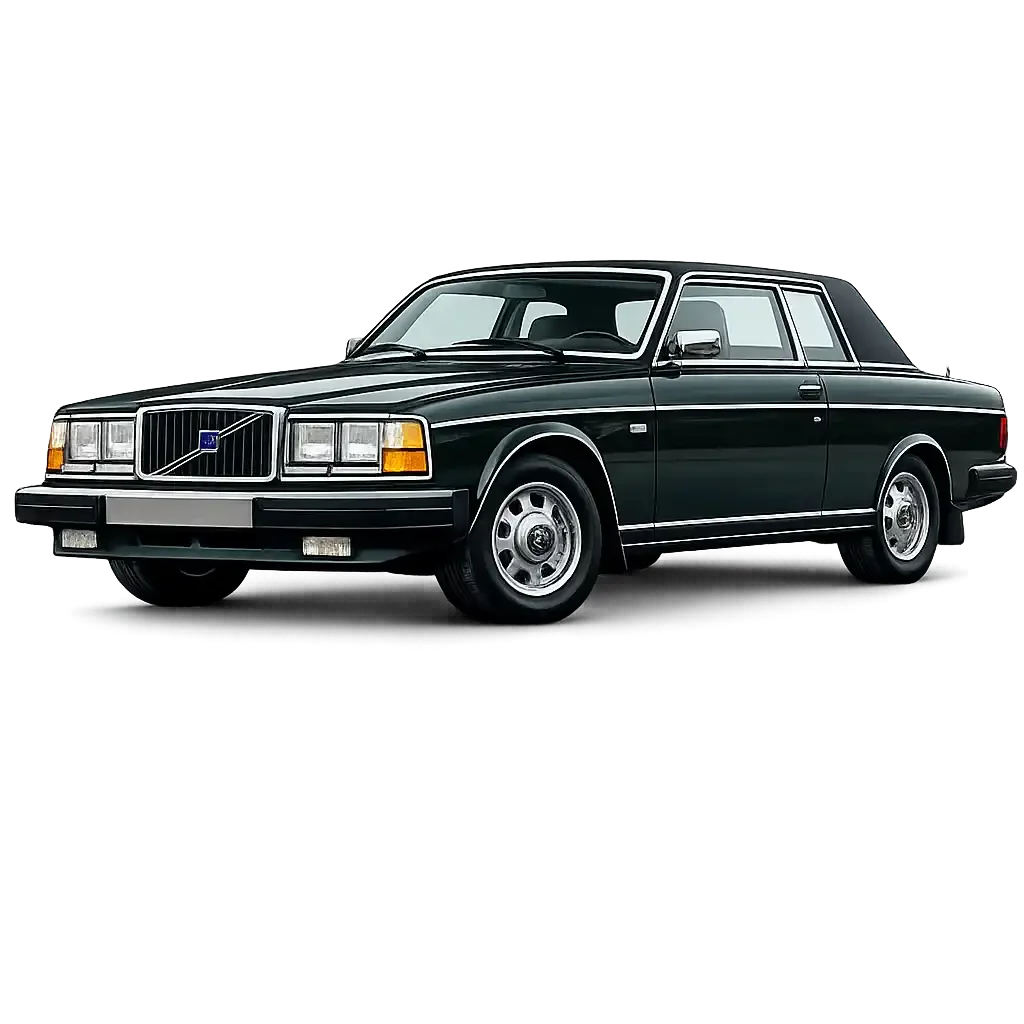
The Volvo 262 badge covers two fundamentally different cars that share a name but differ dramatically in body construction. The first is the Volvo 262 sedan (1976 to 1977 US model years), a two-door sedan with a standard 200-series roofline, produced entirely in Sweden with only 3,329 units built. The second is the Volvo 262C (1978 to 1981 US model years), a luxury coupe designed by Jan Wilsgaard at Volvo and built by Bertone in Turin, Italy, with a chopped roof approximately 100 mm (4 inches) lower than the sedan, a more steeply raked windshield, unique wide C-pillars, and custom upper body panels. Only 6,622 units of the 262C were produced, with approximately 75% destined for the US market. The 262 and 262C are NOT the same car. They share the 200-series platform, PRV V-6 engine, suspension, floor pan, and many lower body panels, but from the beltline up, they are completely different vehicles. This guide covers both models and emphasizes the critical differences between them.
Critical Identification: 262 Sedan vs. 262C Coupe
The single most important question for any Volvo 262 parts order is: "Is this a 262 sedan or a 262C coupe?"These are different cars with different body panels, glass, interior trim, and roof structures. The 262 sedan uses the same body shell as the Volvo 242 (two-door 240-series) with 260-series front sheetmetal and V-6 engine. The 262C coupe has a Bertone-modified body with a lowered roof, custom windshield surround, custom cowl, custom roof pillars, custom roof pan, and custom upper door sections. No upper body component interchanges between the 262 sedan and the 262C coupe.
262 Sedan (1976 to 1977): Swedish-Built Two-Door
• Production: 3,329 total units (1975 to 1977 production)
• Assembly: Torslanda, Gothenburg, Sweden (entirely Swedish-built)
• Body: 2-door sedan with standard 200-series roofline (identical to 242)
• Roofline: Same height as 242/244 sedan
• Market: Produced specifically for North America
• Trim levels: 262 DL and 262 GL
• Engine: B27F 2.7L PRV V-6 only (B27A carbureted outside North America)
• Transmission: 4-speed manual, 4-speed manual with electric overdrive, or 3-speed automatic
262C Coupe (1978 to 1981): Bertone-Built Luxury Coupe
• Production: 6,622 total units: 1,670 (1978), 2,120 (1979), 1,920 (1980), 912 (1981)
• Assembly: Bertone, Grugliasco (Turin), Italy. Drivetrain, suspension, floor pan, and lower body panels from Volvo Sweden; Bertone built the roof pillars, roof pan, windshield surround, cowl, and upper doors.
• Body: 2-door coupe with chopped roof (100 mm / 4 inches lower than sedan)
• Roofline: Substantially lower than any other 200-series model. More raked windshield. Wide C-pillars with small rear side windows.
• Market: Approximately 75% to US. Competed against Cadillac Eldorado and Mercedes 280 CE/300 CD.
• Standard equipment: Power windows and mirrors, central locking, cruise control, air conditioning, heated front seats, leather interior, alloy wheels, electric radio antenna.
• Options: Limited-slip differential, stereo choice, no-cost Borg-Warner 3-speed automatic instead of standard 4-speed manual with overdrive.
• Engine: B27F 2.7L (1978 to 1979), B28F 2.8L (1980 to 1981)
Year-by-Year Changes
1976 Model Year: 262 Sedan Debut
262 DL and 262 GL two-door sedans debut for North America alongside the 264 sedan and 265 wagon. B27F 2.7L PRV V-6 with Bosch K-Jetronic fuel injection. Standard 200-series two-door body (same roofline as 242). 260-series front sheetmetal (different fenders, hood, grille, headlights from 242). DL: cloth upholstery, manual windows. GL: leather seats, power windows, upgraded trim.
1977 Model Year: 262 Sedan Final Year
Lambda Sond oxygen sensor introduced. Final year for the 262 sedan. Production ends after only 3,329 total units. The 262C coupe is shown at the Geneva Motor Show in March 1977 as its replacement in the two-door V-6 segment.
1978 Model Year: 262C Coupe Debut
The Bertone-built 262C coupe replaces the 262 sedan. First year: only available in Mystic Silver with black vinyl roof and black leather interior. MSRP: $14,700 (extremely expensive for 1978). B27F 2.7L PRV V-6. Standard 4-speed manual with electric overdrive; Borg-Warner 3-speed automatic as no-cost option (most buyers chose automatic; only approximately 10% opted for the manual). 1,670 units produced.
1979 Model Year: 262C Rear-End Update
Deeper trunk lid and wrap-around taillights replace the earlier flat-face design. Thermostatic heater controls added. Manual-transmission cars receive the shift linkage from the 242 GT. Gold and black paint now offered alongside silver. Black or tan leather interior available. MSRP: $15,995. B27F 2.7L continues. 2,120 units produced (peak year).
1980 Model Year: Engine Displacement Increase
B27F (2.7L) replaced by B28F (2.8L). Bore increased from 88 to 91 mm. Main bearings from 4 to 7. Compression from 8.2:1 to 8.8:1. US power: 130 hp, 153 lb-ft. The B28 retains the PRV's top-end oiling and camshaft wear issues. 242 GT front air dam added to the 262C. Light metallic blue paint offered; gold roof over bronze metallic available. MSRP: $17,345. 1,920 units produced.
1981 Model Year: 262C Final Year
Vinyl roof cover deleted (painted roof only). Badged "Coupe" rather than "262C" on 1980 and 1981 models. Manual transmission discontinued for the US market (automatic only). MSRP: $19,550 (comparable to BMW 528i). B28F continues. 912 units produced (lowest year). Production ends. Bertone Volvo badges on front fenders.
Platform and Engineering
Shared Platform (262 Sedan and 262C Coupe)
• Platform: Volvo 200 series
• Architecture: Rear-wheel drive, longitudinal engine, front-mounted
• Front suspension: MacPherson struts
• Rear suspension: Live (solid) rear axle, coil springs, trailing arms, Panhard rod
• Steering: Rack-and-pinion
• Brakes: Power-assisted disc brakes all four wheels (ventilated front, solid rear)
• Wheelbase: 104.3 inches (2,650 mm) - same as 264 sedan
• Overall length: 193 inches (490 cm)
• Wheel bolt pattern: 5x10⁸
262C-Specific Construction (Bertone)
Bertone received partially completed 260-series bodies from Sweden and modified the upper structure. Bertone-specific components include: roof pan, roof pillars (A, B, and C), windshield surround and cowl, upper door skins, rear quarter window frames, C-pillar panels, and headliner. The 262C's roof is approximately 100 mm (4 inches) lower than the standard 260 sedan, creating a dramatically different greenhouse. The windshield is more steeply raked. The C-pillars are much wider, resulting in small rear side windows. These Bertone-specific body panels are unique to the 262C and do not interchange with any other 200-series model.
Engine Reference (Detailed)
B27F: 2.7L SOHC V-6 PRV (262 Sedan 1976 to 1977; 262C 1978 to 1979)
• Displacement: 2,664 cc (2.7 liters)
• Bore x stroke: 88 mm x 73 mm
• Compression ratio: 8.2:1
• Main bearings: 4
• Fuel injection: Bosch K-Jetronic (CIS)
• Power (US): 125 hp (262 sedan) / 127 hp (some 262C sources), 150 lb-ft torque
• Block: Aluminum alloy, wet cylinder liners
• Known issues: Weak oiling system, cam wear vulnerability at low oil levels
B28F: 2.8L SOHC V-6 PRV (262C 1980 to 1981 Only)
• Displacement: 2,849 cc (2.8 liters)
• Bore x stroke: 91 mm x 73 mm
• Compression ratio: 8.8:1
• Main bearings: 7
• Fuel injection: Bosch K-Jetronic (CIS)
• Power (US): 130 hp, 153 lb-ft torque
• Block: Aluminum alloy, wet cylinder liners
• Known issues: Top-end oiling troubles, premature camshaft wear (same family of issues as B27)
B27 vs. B28: Critical fitment boundary. Different bore (88 vs. 91 mm), different main bearing count (4 vs. 7), different crankshaft, pistons, cylinder liners, and head gaskets. Zero internal interchange. The 262 sedan ONLY ever had the B27. The 262C had B27 (1978 to 1979) or B28 (1980 to 1981). External accessories are generally shared between B27 and B28 but must be verified by part number.
Transmission Reference
4-Speed Manual with Electric Overdrive (M46)
Standard on the 262C (1978 to 1980). Available on the 262 sedan. Overdrive engaged electrically on 4th gear. Extremely rare on 262Cs as only approximately 10% of buyers chose the manual. 1979 262C manual cars received the improved shift linkage from the 242 GT. Discontinued for US-market 262C in 1981 (automatic only for the final year).
4-Speed Manual (Without Overdrive)
Available on the 262 sedan (1976 to 1977). Less common than the overdrive or automatic options.
Borg-Warner 3-Speed Automatic (BW35/BW55)
No-cost option on the 262C; the transmission chosen by the vast majority of US buyers. Also available on the 262 sedan. The BW55 replaced the BW35 during the production run with different internal components.
Catalog Accuracy: The Fitment Splits That Matter
Split 1: 262 Sedan (1976 to 1977) vs. 262C Coupe (1978 to 1981)
The most critical fitment split in this guide. These are fundamentally different cars from the beltline up. The 262 sedan uses the standard 242 two-door body shell with 260-series front sheetmetal. The 262C coupe has a Bertone-modified upper body with a lowered roof, custom windshield, custom doors (upper sections), custom roof pillars, custom C-pillars, and unique glass. Components that do NOT interchange between the 262 sedan and 262C: windshield, all side glass, rear glass, roof panel, headliner, all roof pillars, upper door skins and frames, C-pillar panels, rear quarter window frames, door seal weatherstripping (different roof profile), and sun visors. Components that DO interchange: everything below the beltline (floor pan, suspension, drivetrain, lower body panels, trunk lid on comparable years), plus engine, transmission, brakes, steering, and most mechanical components.
Split 2: B27 (2.7L) vs. B28 (2.8L)
The 262 sedan ONLY ever had the B27. The 262C had B27 (1978 to 1979) or B28 (1980 to 1981). Different bore, main bearing count, crankshaft, pistons, liners, and head gaskets. Zero engine-internal interchange. When a customer says "262," always determine which engine is installed.
Split 3: 262C Pre-1979 vs. 1979+ Rear End
The 262C received a deeper trunk lid and wrap-around taillights for 1979, replacing the earlier flat trunk and flat-face taillights from 1978. Trunk lid, taillights, and associated wiring differ between 1978 and 1979+ 262C models.
Split 4: 262C Vinyl Roof (1978 to 1980) vs. Painted Roof (1981)
The 262C had a black vinyl roof covering from 1978 through 1980. The 1981 model deleted the vinyl roof in favor of a painted roof. This affects roof trim, drip rail moldings, and potentially the underlying roof panel finish. Vinyl roof restoration parts are specific to 1978 to 1980 cars.
Split 5: 262C Color Availability by Year
1978: Mystic Silver with black vinyl roof only. Black leather interior only. 1979: Silver, gold, or black paint. Black or tan leather. 1980: Light metallic blue added; gold roof over bronze metallic available. 1981: Painted roof (no vinyl). Additional colors. When ordering paint-matched panels, trim, or interior components, the color/year combination matters.
Split 6: 262C Manual (Rare) vs. Automatic (Common)
Only approximately 10% of 262C buyers chose the manual transmission. The manual was the M46 4-speed with electric overdrive. The automatic was the Borg-Warner 3-speed. Different flywheel/flex plate, pedal assembly, crossmember, shift linkage, and driveshaft. The 1979 manual received the 242 GT shift linkage. No manual was available for 1981 (automatic only). Manual-transmission 262Cs are extremely rare and desirable to collectors.
Split 7: 262/262C (V-6) vs. 242 (Inline-4)
The 262 sedan and 262C share the two-door body platform with the 242 four-cylinder model. From the firewall back, body panels and interior are shared between the 262 sedan and 242 (the 262C has its unique upper body). From the firewall forward: different engine, fenders, hood, grille, headlights, radiator, motor mounts, and exhaust. A listing for "Volvo 242" will work for lower body panels on the 262 sedan but fail for anything engine-related or forward of the firewall, and will fail for upper body on the 262C.
Split 8: 262C Bertone-Specific vs. Standard 260 Body Parts
Bertone-specific components on the 262C are extremely scarce due to the low production volume (6,622 total). Parts unique to Bertone construction include: roof panel, all roof pillars, windshield surround, cowl panel, upper door skins, rear quarter window frames, C-pillar panels, headliner, unique weatherstripping, and some interior trim. These parts are not available from Volvo standard parts catalogs and must be sourced from Bertone-specific suppliers, salvage, or specialty reproduction. Standard 260-series parts listings will NOT include Bertone-unique components.
Common Wear Items and Fitment Notes
• Camshaft and cam followers (PRV V-6): Both B27 and B28 are prone to premature camshaft wear. This is the most common major repair on any 262/262C. Specify B27 or B28.
• Wet cylinder liners: PRV wet liners can leak coolant. B27 (88 mm) and B28 (91 mm) liners do not interchange.
• Fuel injection (Bosch K-Jetronic): Fuel distributor, warm-up regulator, cold-start valve. PRV-specific; do not order Redblock inline-4 K-Jetronic components.
• Vinyl roof covering (262C 1978 to 1980): The vinyl degrades, cracks, and traps moisture causing roof panel rust. Replacement vinyl and adhesive must be sourced from specialty suppliers.
• 262C weatherstripping: Unique to the 262C's lowered roofline. Standard 242/244 weatherstripping will NOT fit. Extremely scarce. Check Bertone-specific suppliers.
• 262C windshield: More steeply raked than any other 200-series. Unique to the 262C. Does not interchange with 242, 244, or 264.
• 262C glass (all): Side glass, rear glass, and quarter windows are all unique to the 262C. No interchange with any other model.
• Headlights: Changed across facelift eras. The 262 sedan (1976 to 1977) used period 260-series headlamps. The 262C had its own headlamp configuration matching 260-series style of its model year.
• Trunk lid: 262C 1978 has different trunk lid from 262C 1979+ (deeper lid with wrap-around taillights).
• Alloy wheels (262C): Standard equipment on the 262C. Multi-spoke alloy wheels specific to the model.
• Exhaust manifolds: V-6-specific, two per engine. Not shared with inline-4 240 models.
• Water pump: PRV V-6-specific. Different from inline-4.
Ordering Quick-Reference Checklist
• Which 262: 262 sedan (1976 to 1977, Swedish-built, standard roofline) or 262C coupe (1978 to 1981, Bertone-built, chopped roof)?
• Engine: B27F 2.7L (262 sedan all years; 262C 1978 to 1979) or B28F 2.8L (262C 1980 to 1981 only)?
• Model year: Critical for 262C: 1978 (silver only, original trunk), 1979 (new trunk/taillights), 1980 (B28 engine, GT air dam), 1981 (no vinyl roof, automatic only)?
• Transmission: Manual with overdrive (rare on 262C, unavailable 1981), manual without overdrive (262 sedan), or automatic (BW35/BW55)?
• 262 sedan trim: DL or GL? (262C had one luxury trim level.)
• Vinyl roof (262C): Present (1978 to 1980) or deleted (1981)?
• Body component location: Above beltline (Bertone-specific on 262C; standard 242 on 262 sedan) or below beltline (shared 200-series)?
• VIN: Always verify by VIN.
Three Questions to Always Ask
• "262 sedan or 262C coupe?" This is the first and most important question. The 262 sedan (1976 to 1977, 3,329 units, Swedish-built, standard 242 roofline) and the 262C coupe (1978 to 1981, 6,622 units, Bertone-built, chopped roof) are fundamentally different cars from the beltline up. Every piece of glass, the entire roof structure, door upper sections, weatherstripping, and headliner are unique to each. A windshield for a 262 sedan will NOT fit a 262C. A roof panel from a 262C does not exist on any other Volvo model. If the customer just says "262," you must determine which car they have before ordering any body or glass component.
• "B27 (2.7L) or B28 (2.8L)?" The 262 sedan only ever had the B27. The 262C had B27 (1978 to 1979) or B28 (1980 to 1981). Different bore, main bearings, crankshaft, pistons, and liners. Zero internal interchange. The quickest identification: 262 sedan = always B27. 262C 1978 to 1979 = B27. 262C 1980 to 1981 = B28.
• "What model year 262C for body components?" The 262C changed every year: 1978 (silver only, original trunk, vinyl roof), 1979 (new trunk/taillights, new colors, vinyl roof), 1980 (B28 engine, GT air dam, vinyl roof), 1981 (no vinyl roof, automatic only, lowest production). Trunk lids, taillights, roof treatment, and available colors are all year-specific. For Bertone-unique components (roof, glass, upper doors, weatherstripping), the 262C's extremely low production means parts are scarce regardless of year.
Production Summary
262 Sedan
• Total production: 3,329 units (1975 to 1977)
• US model years: 1976 to 1977
• Engine: B27F 2.7L only
262C Coupe (Bertone)
• Total production: 6,622 units
• 1978: 1,670 units
• 1979: 2,120 units (peak)
• 1980: 1,920 units
• 1981: 912 units
• US allocation: Approximately 75% of total production
• 262C Solaire convertible: 5 units converted by Newport Conversions of Santa Ana, California for Volvo's 25th US anniversary. Vetoed by Volvo Sweden on safety grounds. Extremely rare.
Disclaimer: This guide is based on publicly available specifications, Volvo press materials, and independent research. Part interchangeability should always be confirmed via VIN and OEM part number lookup. Specifications may change without notice. This document does not constitute official Volvo parts catalog data. Visuals and illustrations in this article were generated using AI for representative purposes and may not reflect exact technical schematics.