
Written by Arthur Simitian | PartsAdvisory
The Volvo 164 occupies a specific and often misunderstood position in the Volvo catalog. It is not a 140 series car with a different engine. It is not a 200 series predecessor. It is its own model - a flagship four-door sedan built on the 140 series platform, stretched at the front to accommodate a six-cylinder engine that Volvo had never offered in a production car before. It sold alongside the 144 and 145, shared a body with them from the firewall back, and diverged from them in ways that create consistent catalog errors when sellers treat the three cars as a single fitment window.
The 164 ran from 1969 to 1975, a production window that spans two meaningful mechanical evolutions: the introduction of Bosch D-Jetronic fuel injection in 1971 and a facelift in 1973 that updated the front end, interior, and some mechanical specifications. For aftermarket parts sellers, those two transitions - carburetor to injection, and pre-facelift to post-facelift - are the primary splits that determine whether a part fits or not.
This post covers the full 1969 to 1975 production run of the Volvo 164 and the fitment variables that matter for catalog accuracy.
What the 164 Is and Is Not
The platform relationship with the 140 series
The 164 was built on a lengthened version of the 140 series platform. The wheelbase was extended by approximately 90mm (about 3.5 inches) compared to the 144 sedan, with the additional length ahead of the firewall to accommodate the longer six-cylinder engine. The firewall itself, the passenger compartment, the doors, the roof, the floor pan from the firewall back, and the rear body structure are all shared with the 144.
This shared architecture is the source of the most common 164 catalog error: sellers list 144 parts as fitting the 164 (or vice versa) based on the shared body, without accounting for the fact that the front end - hood, front fenders, front bumper, grille, header panel, and all front-end sheetmetal - is unique to the 164 and does not interchange with the 144.
The rule for sellers is: everything behind the firewall may cross-reference between 164 and 144 with appropriate year and specification qualifiers. Everything in front of the firewall is 164-specific and should not be listed as a 144 fit without explicit verification.
The B30 engine
The defining feature of the 164 is the B30 engine - a 3.0L inline six-cylinder derived from the B20 four-cylinder by adding two cylinders. The B30 shares the same bore dimensions and basic architecture as the B20 but is a fundamentally different engine in terms of length, weight distribution, accessory layout, and component specifications.
The B30 does not cross-reference with the B20 for engine-specific parts. Cylinder head gaskets, head bolts, valve cover gaskets, camshaft, intake manifold, exhaust manifold, and timing components are all B30-specific. The water pump, oil pump, and some accessory brackets may cross-reference with the B20 in specific applications, but this should be verified individually rather than assumed.
The B30 also does not cross-reference with the PRV V6 used in the 260 series (264/265) that followed the 164. These are completely different engine families.
Production Overview: Three Distinct Periods
1969 to 1971: Original specification, carbureted
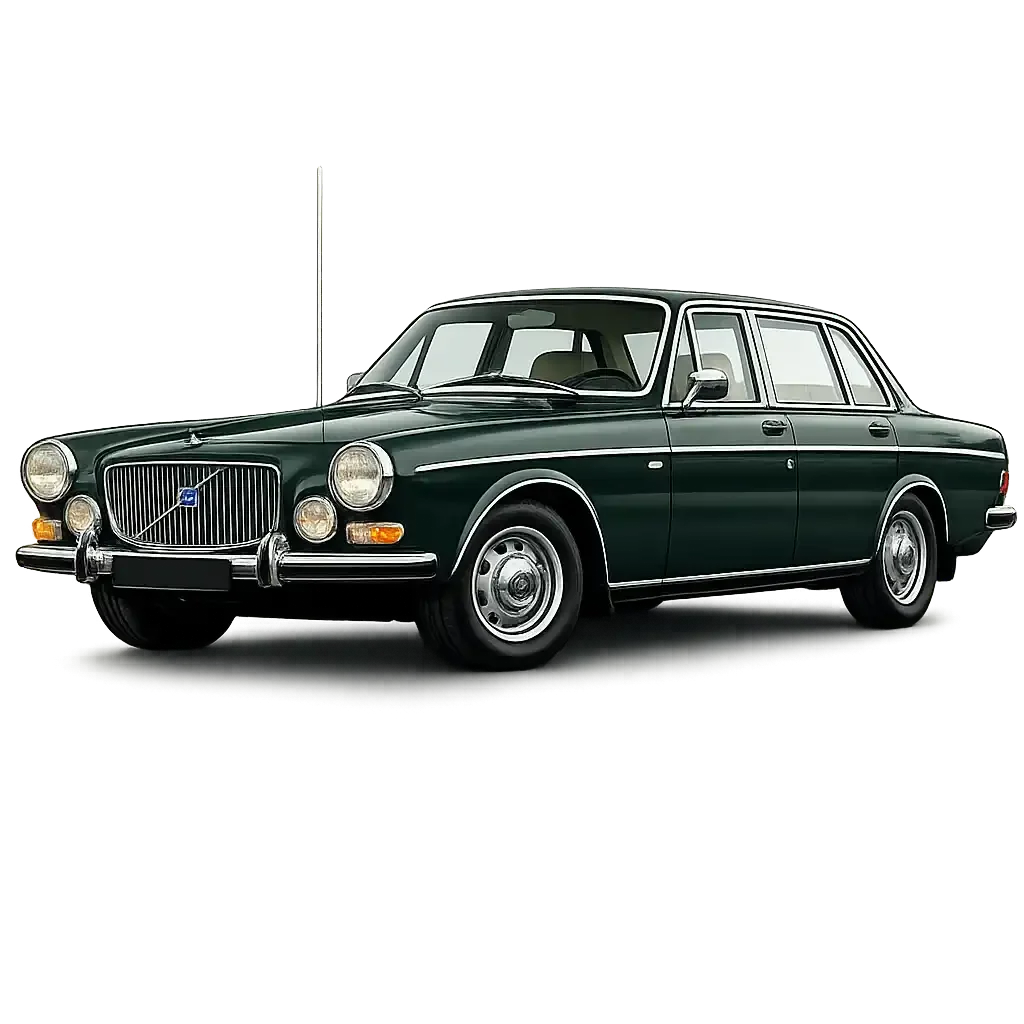
The original 164 used the B30A engine with twin SU or Zenith-Stromberg carburetors depending on the market. The front end design was clean and distinctive, with a longer hood than the 144 to cover the six-cylinder engine, a unique grille, and quad round headlights in a layout specific to the 164.
The carburetor specification for the original 164 is market-dependent. European-specification cars typically received twin SU carburetors. North American specification cars increasingly received Zenith-Stromberg carburetors to meet tightening emission requirements. The carburetor type determines the jets, needles, float specification, and rebuild kit required. A fuel system listing that does not specify carburetor type will cross-match parts from two different systems.
The braking system on the original 164 used front disc brakes and rear drum brakes, with a servo-assisted dual-circuit hydraulic system. The brake booster and master cylinder specifications are specific to the 164 and differ from the 144 due to the different weight distribution of the six-cylinder engine.
1971 to 1972: D-Jetronic fuel injection introduced
For the 1971 model year, Volvo introduced Bosch D-Jetronic electronic fuel injection on the 164 in most markets, designating the injected variant the 164E (the E referencing Einspritzung, as on the 1800E introduced the same year). The carbureted B30A continued in some markets alongside the injected B30E.
The D-Jetronic system on the 164E uses the same operating principle as the system on the 1800E - manifold pressure sensing rather than airflow measurement - but the specific calibration, injector flow rate, and some component specifications may differ between the 1800E and 164E applications. Sellers should not assume that a D-Jetronic component listed for the 1800E will fit the 164E without verification of the specific part number.
D-Jetronic components on the 164E include:
ECU specific to the 164E D-Jetronic calibration
Manifold pressure sensor
Coolant temperature sensor and intake air temperature sensor
Trigger points on the distributor
Fuel injectors with connectors and flow rates specific to D-Jetronic
Fuel pressure regulator and fuel rail
Intake manifold specific to the injected B30E
None of these interchange with the carbureted B30A fuel system. None interchange with the K-Jetronic or LH-Jetronic systems used on the 200 series cars. The fuel injection system type is a mandatory attribute for all 164 fuel system listings.
1973 to 1975: The facelift
For the 1973 model year, the 164 received its most significant update - a front end facelift that changed the grille, the front bumper design, the hood profile, and the headlight arrangement, moving from the quad round headlight setup of the original cars to a rectangular headlight design. The interior also received updates, including a revised dashboard and improved instrumentation.
The 1973 facelift creates a hard split in the 164 catalog at the 1972/1973 boundary for all front-end components. The following parts are not interchangeable between pre-facelift (1969 to 1972) and post-facelift (1973 to 1975) 164s:
Hood
Front fenders (the headlight opening geometry changed)
Grille
Header panel
Headlights (round to rectangular)
Headlight bezels and buckets
Front bumper and associated hardware
Front turn signal and parking light assemblies
Sellers listing any front-end component for the 164 must specify pre-facelift or post-facelift. A single "Volvo 164, 1969 to 1975" application record for a headlight, grille, or bumper is wrong for at least one half of the production run.
The 1973 facelift also brought refinements to the B30 engine and fuel injection system. The post-facelift 164E received an updated injection calibration, and some fuel system components may differ between early D-Jetronic (1971 to 1972) and late D-Jetronic (1973 to 1975) applications. Sellers listing D-Jetronic ECU units, injectors, or pressure regulators should verify whether the part spans both injection generations or is specific to one.
Exterior: Fitment by Era
Pre-facelift (1969 to 1972)
The original 164 front end used quad round headlights - two per side - in fender-integrated nacelles. This is the same basic headlight format as the 140 series and the original 200 series, but the 164's front fenders are longer than the 144's to cover the extended engine bay, and the headlight nacelle geometry is specific to the 164. A 144 headlight bezel will not fit a 164 headlight opening.
The pre-facelift grille is a horizontal bar design with a Volvo emblem centered in the opening. The grille width and mounting interface are specific to the 164's wider front end.
The front bumper is a chrome unit with a profile specific to the 164 body. The mounting hardware, bumper shocks (on U.S. market cars), and end caps are 164-specific.
The taillights on the pre-facelift 164 are shared with the 144 sedan - this is one of the genuine cross-fit opportunities between the two models, since the rear body is the same. Taillight lenses, housings, and gaskets for the 164 rear body can be cross-referenced with the equivalent 144 parts, subject to year-match verification.
Post-facelift (1973 to 1975)
The 1973 facelift moved the 164 to rectangular headlights, aligning its front end aesthetics with the direction Volvo would take across the lineup with the 200 series. The rectangular headlights, new grille, and revised bumper are specific to the post-facelift 164 and do not interchange with either the pre-facelift 164 or the 144/145.
The post-facelift front bumper received updated energy-absorbing hardware on U.S. market cars to meet the evolving federal 5 mph impact standard. The bumper mounting brackets, impact absorbers, and reinforcement beams on post-facelift U.S. spec cars are different from both the pre-facelift 164 bumper hardware and the equivalent 144 components.
The taillights carried over from the pre-facelift car and continue to cross-reference with the 144 sedan on the post-facelift 164.
Engine and Fuel System
B30A (carbureted, 1969 to early 1970s)
The B30A used twin carburetors throughout its production life in the 164. Market specification determined whether those carburetors were SU units (most European markets) or Zenith-Stromberg units (North American markets, increasingly from the early 1970s onward). This distinction matters for every fuel system component:
Carburetor rebuild kits are specific to SU or Stromberg - they are different parts
Fuel jets, needles, and float valves differ between the two carburetor families
Air cleaner housing and intake ducting may differ between SU and Stromberg installations
Throttle linkage and choke cable routing may differ
Market designation is a required attribute for all B30A fuel system listings. European spec and North American spec 164s may have different carburetor types even within the same model year.
B30E (D-Jetronic injected, 1971 to 1975)
The B30E introduced D-Jetronic injection on the 164 and carried it through to the end of production with refinements. As noted above, the D-Jetronic system is a self-contained fuel management architecture that does not interchange with carbureted or LH-Jetronic components.
One important point for sellers: the D-Jetronic system on the 164E is calibrated for the B30 six-cylinder application. The ECU calibration, injector count (six injectors vs. four on the 1800E), fuel rail length, and intake manifold are all specific to the six-cylinder installation. A D-Jetronic component listed for the 1800E four-cylinder application will not necessarily fit the 164E six-cylinder application, even though both use D-Jetronic. The injector count alone makes the fuel rail and some harness components non-interchangeable.
The specific D-Jetronic attributes that must be verified for 164E listings:
ECU (B30E calibration vs. B20E calibration - different part numbers)
Fuel rail (six-injector vs. four-injector - completely different part)
Injectors (verify compatibility with B30E application specifically)
Intake manifold (six-cylinder specific)
Trigger distributor (verify compatibility with 164E ignition timing requirements)
Emission systems
U.S. market 164s faced tightening emission standards throughout the early 1970s. The transition to Stromberg carburetors on carbureted cars was one response. On injected cars, the D-Jetronic calibration was revised for U.S. emission requirements. Air injection systems (belt-driven air pumps or pulsed air systems) were added on some U.S. market cars from the early 1970s onward.
U.S. vs. European market designation is a required attribute for emission-related components: air injection pump, EGR valve (where fitted), and catalytic converter (on very late production U.S. cars). California emission specification cars may have further differences from 49-state U.S. cars on the final model years.
Transmissions
The 164 was available with the following transmissions:
M40: 4-speed manual gearbox, carried over from the 140 series. The M40 in the 164 application uses the same basic unit as in the 144, but the shifter location, tunnel geometry, and driveshaft length differ due to the extended wheelbase. Internal transmission components may cross-reference with the 144 M40 application; external drivetrain components (driveshaft, crossmember, shift linkage) should be treated as 164-specific.
M41: 4-speed manual with electric overdrive, also shared with the 140 series at the internal component level but with 164-specific external drivetrain requirements.
BW35: 3-speed Borg-Warner automatic, available on the 164 as on the 144. The BW35 unit itself is the same, but the selector linkage, shift cable, and some mounting hardware may differ due to the 164 body dimensions.
BW55: 3-speed Borg-Warner automatic that replaced the BW35 in later production. Same cross-reference logic as the BW35 - internal components may overlap with 144 applications, external linkage and mounting may not.
Transmission code is required for all drivetrain parts. The critical point for 164 drivetrain listings is that the driveshaft length differs from the 144 due to the extended wheelbase. A driveshaft listed for a 144 will not fit a 164 regardless of transmission code match.
Suspension and Brakes
Suspension
The 164 used the same basic front MacPherson strut and rear live axle geometry as the 144. However, the front suspension geometry was revised to accommodate the heavier B30 engine, with different spring rates, different shock absorber valving, and different front subframe components compared to the four-cylinder cars. The front crossmember may differ due to the engine bay extension.
Sellers listing front strut assemblies, springs, and front subframe components for the 164 should verify fitment against the 164-specific application rather than assuming transfer from 144 specifications.
Rear suspension components - trailing arms, Panhard rod, rear springs, and rear shocks - are more likely to cross-reference with the 144, but spring rates should be verified for the heavier vehicle weight of the 164.
Brakes
The original 164 used front disc and rear drum brakes. The brake booster and master cylinder are specific to the 164 due to the different front axle weight from the B30 engine. These components should not be listed as direct fits for the 144 without verification.
The caliper, rotor, and front brake hose may cross-reference with the 144, but the booster and master cylinder are 164-specific parts in this era.
Some later 164 production (particularly post-facelift 1973 to 1975 cars) may have received rear disc brakes on certain market specifications and option packages. Rear brake type (disc or drum) should be treated as a variable requiring verification on the 164, as it is on the 140 and 200 series cars.
Interior
The 164 interior was positioned as a premium offering above the 144, with richer upholstery, wood trim on the dashboard, and more complete equipment levels. The dashboard design was shared with the 144 in the pre-facelift era but with different trim panels, instrument cluster face, and center console configuration.
The 1973 facelift brought a revised dashboard that diverged from the 144 interior design more substantially. Post-facelift 164 dashboard components - the dashboard pad, instrument cluster surround, and HVAC controls - are specific to the post-facelift 164 and do not interchange with either the pre-facelift 164 or the contemporary 144.
Interior components that do cross-reference between 164 and 144 include seat mounting hardware (same floor pan from the firewall back), door panel mounting clips (same door shell), and some HVAC ducting in the footwell area.
Common ACES/PIES Mistakes for 1969 to 1975 Volvo 164
Listing front-end components (hood, fenders, grille, headlights, bumper) as fitting both 164 and 144. The 164 front end is unique to the model. Nothing forward of the firewall cross-references with the 144.
Spanning the 1972/1973 facelift boundary with a single application record for front lighting, grille, hood, or bumper components. The headlight changed from round to rectangular at the facelift, and the associated front-end components changed with it.
Listing fuel system parts as "Volvo 164, B30" without specifying carbureted vs. D-Jetronic. The B30A and B30E have completely different fuel systems with zero component interchangeability.
Cross-referencing D-Jetronic components from the 1800E four-cylinder application to the 164E six-cylinder application. The injector count, fuel rail, and ECU calibration differ between the two applications.
Listing a driveshaft from the 144 as fitting the 164. The extended wheelbase of the 164 requires a different driveshaft length.
Listing the brake booster and master cylinder as cross-fits with the 144. The heavier B30 engine changes the front axle weight and the brake booster specification.
Listing carburetor components without specifying SU vs. Zenith-Stromberg. U.S. and European spec carbureted 164s may have different carburetor families.
Treating the entire 1969 to 1975 window as a single fitment window for front suspension components. The B30's weight distribution required 164-specific front suspension specifications that differ from the 144.
Catalog Checklist for 1969 to 1975 Volvo 164
Enforce the 1972/1973 facelift boundary as a hard split for all front-end components: hood, front fenders, grille, headlights, bumper, header panel, front turn signals
Require engine code (B30A, B30E) for all engine, fuel, and exhaust listings
Require fuel delivery type (twin SU carburetors, twin Zenith-Stromberg carburetors, D-Jetronic) for all fuel system components
Require market designation (U.S./North America vs. Europe) for carburetor type, emission equipment, and bumper hardware
Require transmission code (M40, M41, BW35, BW55) for all drivetrain parts
Require rear brake type (disc or drum) for all rear brake listings on post-facelift cars
Do not list front-end sheetmetal (hood, fenders, grille, bumper) as cross-fits with the 144
Verify driveshaft length independently - the 164 wheelbase extension makes 144 driveshafts non-fitting
Verify brake booster and master cylinder as 164-specific - do not assume 144 fitment
Note six-injector vs. four-injector D-Jetronic distinction when cross-referencing with 1800E fuel system components
Cross-Reference Logic
Volvo 144/145 (same year): Rear body, rear lighting, doors, interior floor pan, and rear suspension components may cross-reference with appropriate year qualifiers. Front-end components, driveshaft, front suspension specifications, brake booster, and master cylinder do not cross-reference.
Volvo 1800E/1800ES (same year): Both use D-Jetronic fuel injection, but the 164E has six injectors vs. four on the 1800E. Fuel rail, ECU calibration, and injector count differ. Some D-Jetronic sensors (pressure sensor, temperature sensors) may cross-reference if part numbers match - verify before listing.
Volvo 264/265 (1975 and later): Shares the 164's general market position as a six-cylinder flagship but uses the completely different PRV V6 engine. No engine cross-reference. Some body and interior components from the 164 may cross-reference with the early 264 given the shared 140/200 series platform heritage - verify individually.
Frame all cross-references as "may also fit" with year, engine code, and specification qualifiers.
The Collector Market
The 164 is an underappreciated classic that has been gaining collector recognition as the supply of well-preserved examples shrinks. It was Volvo's first six-cylinder production car and its first serious attempt at a premium flagship. The injected 164E in particular - with the D-Jetronic system that connects it to the contemporary 1800E - attracts buyers interested in Volvo's early fuel injection history.
The buyer searching for 164 parts is almost always an owner-restorer or a specialist shop. They know the car well. They know whether their car is pre- or post-facelift. They know whether they have the B30A or B30E. They know the carburetor type on their carbureted car. A listing that does not reflect this level of specificity will not earn their trust.
The 164 also benefits from the broader collector market trend toward undervalued European classics from the 1960s and early 1970s. As values rise and more restoration projects get started, the demand for correctly cataloged 164 parts will grow. Sellers who build accurate fitment data now are positioning ahead of that demand.
Final Take
The Volvo 164 is a 144 from the firewall back and its own car from the firewall forward. That single sentence defines most of what sellers need to know about cross-referencing the 164 against the rest of the 140 series catalog.
Within the 164's own production run, the facelift at 1972/1973 is the hard boundary for front-end components, and the carbureted vs. D-Jetronic split is the hard boundary for all fuel system parts. Those two boundaries, combined with the six-cylinder-specific front end and drivetrain, produce a catalog that requires seven attributes for most listings: model (164), year era (pre- or post-facelift), engine code (B30A or B30E), fuel delivery type, carburetor type where applicable, transmission code, and market designation.
Get those attributes into every 164 listing, and the knowledgeable, motivated buyers who search for these parts find what they need and do not send it back.
Disclaimer: This guide is based on publicly available specifications, Volvo press materials, and independent research. Part interchangeability should always be confirmed via VIN and OEM part number lookup. Specifications may change without notice. This document does not constitute official Volvo parts catalog data.