
Written by Arthur Simitian | PartsAdvisory
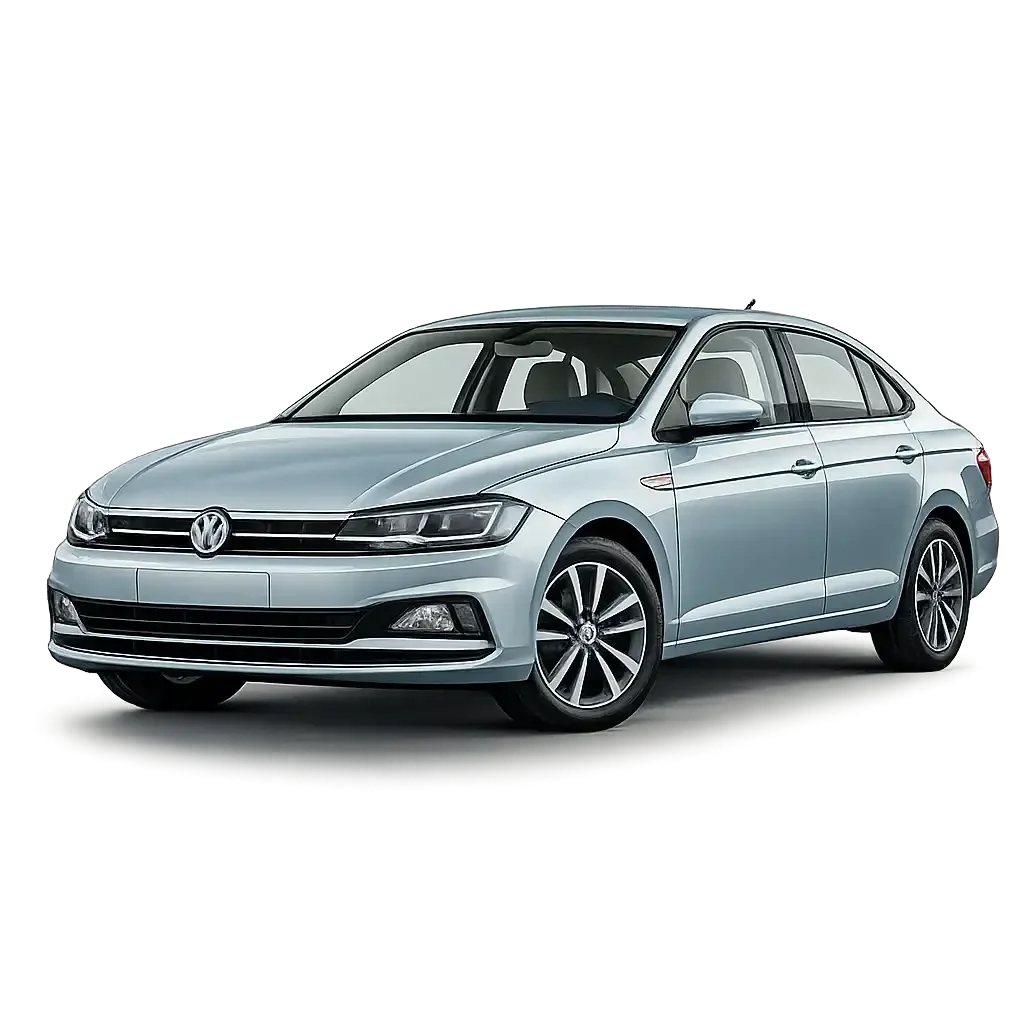
The Volkswagen Virtus is not a single car. It is a nameplate applied to two mechanically distinct vehicles sold across four primary markets - Brazil, India, Mexico, and South Africa - on different platforms, with different engines, different fuel system types, different assembly origins, and different trim and safety specifications. A seller who lists Virtus parts without accounting for generation, market, engine, and production year is cross-matching components from vehicles that share a name and a silhouette but very little else underneath.
This post covers the Virtus from its first meaningful aftermarket window - roughly 2020 onward for the first-generation Latin American cars - through the current second-generation production running into 2026. It maps the two generations, the market splits, the engine variants, and the fitment variables that determine whether a part fits or generates a return.
Two Generations: Not the Same Car
Generation 1 (2018 to approximately 2022/2023 in Latin America)
The first-generation Virtus was introduced in Brazil in November 2017 for the 2018 model year. It was built on the MQB A0 platform derived from the Polo Mk6 with an extended wheelbase of 2,651 mm. Production was based at Volkswagen's Anchieta plant in Sao Bernardo do Campo, Brazil, and the car was exported throughout Latin America from that hub.
Key first-generation markets: Brazil, Argentina, Uruguay, Chile, Peru, Colombia, Ecuador, and Mexico (from 2019, imported from Brazil until the India-sourced second generation arrived in 2022).
The first-generation car used the following powertrains across its market window:
1.6-litre MSI (MPI) four-cylinder naturally aspirated: The base engine for Brazil, Argentina, and Mexico across most of the first-generation run. 110 PS output on petrol, with flex-fuel (petrol/ethanol) capability on Brazilian market cars.
1.0-litre MPI three-cylinder naturally aspirated: Available in certain early market configurations.
1.0-litre TSI turbocharged three-cylinder (200 TSI): Introduced for the higher-output Brazilian market variants. 116 PS on petrol, 128 PS on ethanol in flex-fuel specification.
1.4-litre TSI turbocharged four-cylinder (GTS and later Exclusive variants in Brazil): 150 PS output. Used in the range-topping GTS model (discontinued at the 2023 facelift) and subsequently in the Exclusive variant.
Brazilian market first-generation cars are all flex-fuel vehicles capable of running on petrol, ethanol, or any blend including E100. This flex-fuel capability is a fundamental fuel system specification that affects injector calibration, fuel rail, O2 sensor calibration, and ECU mapping. A fuel system component from a petrol-only Virtus (such as a Mexican market first-generation car) is not interchangeable with the flex-fuel specification of the Brazilian market car, even if the engine displacement and architecture are nominally the same.
Generation 2 (2022 onward - India and export markets)
The second-generation Virtus was introduced in India on 8 March 2022, going on sale in June 2022. It is built at Volkswagen's Chakan plant in Pune on the MQB A0 IN platform - a localized adaptation of the MQB A0 developed by Skoda Auto Volkswagen India (SAVWIPL) for emerging markets under the India 2.0 strategy. The MQB A0 IN is shared with the Skoda Slavia sedan, the Volkswagen Taigun, and the Skoda Kushaq.
The second-generation car is meaningfully different from the first generation at the platform level. The MQB A0 IN features localized suspension tuning, different front subframe geometry, revised brake specifications, and different body panel stampings compared to the MQB A0 used in the first-generation Brazilian production. The two generations share the same wheelbase (2,651 mm) and overall length (4,561 mm) but are not mechanically interchangeable at the platform component level.
From 2023, India-produced second-generation Virtus cars replaced first-generation Brazilian-sourced production in Mexico. Brazil also began receiving India-sourced second-generation production alongside or replacing its own first-generation production depending on variant. The assembly origin shift matters for parts fitment because the two platforms - MQB A0 (Brazil) and MQB A0 IN (India) - are not the same.
Key second-generation markets: India (primary production hub), Mexico (from 2023 model year, India-sourced), South Africa (as Volkswagen Polo Sedan, from September 2022), China (as Volkswagen Lavida XR, from June 2023).
Market Splits: The Most Critical Catalog Variable
Brazil: flex-fuel, two platform generations
Brazil is the most complex Virtus market for parts sellers because it received both the first-generation MQB A0 car (2018 to approximately 2023) and, from 2023 onward, the India-sourced second-generation MQB A0 IN car. The 2023 facelift for the Brazilian market marked this transition.
Critically, all Brazilian market Virtus cars - first and second generation - are flex-fuel vehicles. The flex-fuel specification affects:
Fuel injectors (higher flow rate and ethanol-compatible materials)
Fuel pressure regulator
Fuel rail material and specification
O2 sensor calibration (different sensor characteristics for ethanol vs. petrol combustion)
ECU calibration (separate maps for petrol and ethanol)
Fuel tank sensor (ethanol content sensing)
No Brazilian market fuel system component should be listed as interchangeable with a petrol-only market car without explicit flex-fuel designation. This applies regardless of whether the engine is the 1.6 MSI, the 1.0 TSI, or the 1.4 TSI.
The 2023 Brazil facelift also changed cosmetic components: the front fascia, grille design, bumper trim, and some interior elements were updated. Pre-facelift (2018 to 2022) and post-facelift (2023 onward) Brazilian Virtus cars are in different fitment windows for these exterior components.
India: MQB A0 IN, petrol only, BS6 Phase 2
The India market Virtus uses the MQB A0 IN platform with two turbocharged petrol engines only. There is no diesel option, no flex-fuel capability, and no naturally aspirated variant. Emission compliance is to BS6 Phase 2 (OBD2B) standards, which affects ECU, catalyst, and O2 sensor specifications.
Indian market engine variants:
1.0-litre TSI three-cylinder turbocharged (EA211 EVO): 115 PS, 178 Nm. Available with 6-speed manual or 6-speed torque converter automatic. This engine is the Dynamic Line powertrain across Comfortline, Highline, Highline Plus, and Topline variants.
1.5-litre TSI four-cylinder turbocharged (EA211 EVO with ACT cylinder deactivation): 150 PS, 250 Nm. Available with 6-speed manual (discontinued January 2026) or 7-speed DSG dual-clutch automatic. This engine is the Performance Line powertrain in GT, GT Plus, and GT Plus Sport variants.
The 1.5 TSI with ACT (Active Cylinder Technology) cylinder deactivation is a specific engine specification with a different valve train, different ECU strategy, and different oil system compared to non-ACT 1.5 TSI applications. Parts for the ACT system - valve timing components, oil pressure solenoids, and ECU - must be listed as ACT-specific and not assumed to fit a non-ACT 1.5 TSI from another VW Group application.
The 6-speed manual option for the 1.5 TSI was discontinued in January 2026 following a variant lineup revision. Sellers listing 1.5 TSI manual transmission components should be aware this transmission combination existed from approximately 2023 to 2025 on the Indian market Virtus before being discontinued.
Mexico: two sourcing origins, two engine options
The Mexican market Virtus received two distinct sourcing configurations across the window covered in this post:
2019 to 2022 (approximately): First-generation, Brazil-sourced, MQB A0 platform, 1.6-litre MSI naturally aspirated engine. Petrol only in Mexico (no flex-fuel).
2023 onward: Second-generation, India-sourced, MQB A0 IN platform. The 1.6-litre engine continued alongside the newly introduced 1.0-litre TSI.
The platform change at the 2023 model year is a hard parts boundary for all platform-derived components: front subframe, suspension arms, steering rack, brake calipers and rotors, and body mounting hardware. A suspension component from a 2021 Mexican market Virtus (MQB A0, Brazil) will not fit a 2023 Mexican market Virtus (MQB A0 IN, India) even though both cars carry the same nameplate in the same market.
South Africa: Polo Sedan identity, India-sourced
The South African market Virtus has been sold as the Volkswagen Polo Sedan since September 2022. It is mechanically identical to the India-market second-generation Virtus - same MQB A0 IN platform, same engine options, same assembly origin. Parts for the South African Polo Sedan cross-reference with the India-market Virtus at the platform and powertrain level, with the caveat that market-specific safety equipment and trim specification may differ.
Engine and Powertrain Fitment Variables
1.6-litre MSI (naturally aspirated, first generation Latin America)
The 1.6 MSI is a four-cylinder naturally aspirated engine used in first-generation Latin American cars. It is a conventional port fuel injection engine without turbocharging. In Brazil it was always supplied in flex-fuel specification; in Mexico and Argentina it was petrol-only.
The 1.6 MSI was phased out in Brazil with the 2023 facelift. It continued in Mexico alongside the newly introduced 1.0 TSI in the 2023 model year transition. Parts sellers listing 1.6 MSI components should specify: market (Brazil/Mexico/Argentina), fuel system type (flex-fuel or petrol-only), and production year window. The flex-fuel specification affects injectors, O2 sensors, and ECU - these are not interchangeable with petrol-only versions.
1.0-litre TSI (three-cylinder turbocharged)
The 1.0 TSI appears in both generations but in different calibrations and with different supporting components depending on market:
Brazil first-generation (200 TSI): Flex-fuel specification. 116 PS petrol / 128 PS ethanol. Different ECU calibration and fuel system specification from petrol-only markets.
Brazil second-generation (170 TSI): Introduced with the 2023 facelift as the entry-level replacement for the 1.6 MSI. 109 PS petrol / 116 PS ethanol. Flex-fuel.
India second-generation: Petrol only. 115 PS / 178 Nm. BS6 Phase 2 compliant. Different catalyst and O2 sensor specification from Latin American market cars.
Mexico second-generation: Petrol only. Sourced from India.
The 1.0 TSI across these applications shares the basic EA211 three-cylinder architecture but differs on ECU calibration, fuel system specification (flex-fuel vs. petrol-only), emission control hardware, and in some cases output calibration. A fuel injector or ECU listed for the India-market 1.0 TSI is not a confirmed fit for the Brazil-market flex-fuel 1.0 TSI without part number verification.
1.4-litre TSI (four-cylinder turbocharged, Brazil market)
The 1.4 TSI powered the GTS variant (discontinued at the 2023 facelift) and the subsequent Exclusive variant in the Brazilian market. It is a four-cylinder turbocharged unit producing 150 PS in both petrol and ethanol specifications. The 1.4 TSI is a Brazil-specific powertrain in the Virtus lineup - it does not appear in the India or Mexico market cars. Parts listings for the 1.4 TSI should be qualified as Brazil market and flex-fuel specification.
1.5-litre TSI with ACT (four-cylinder turbocharged, India and export)
The 1.5 TSI EVO with Active Cylinder Technology is the Performance Line engine for India and export markets using the second-generation MQB A0 IN platform. It is distinct from 1.5 TSI applications without ACT in other VW Group vehicles. The cylinder deactivation system affects valve train components, the oil control solenoid, and ECU calibration. These ACT-specific components must not be cross-referenced with non-ACT 1.5 TSI applications without verification.
Transmissions
The Virtus across its full production window uses the following transmissions:
6-speed manual (MQ200/MQ250 family): Used with the 1.0 TSI and early 1.5 TSI in India. Also used in Brazil and Latin America. The specific ratio set and clutch specification may differ by engine pairing.
6-speed torque converter automatic (AQ250): Used with the 1.0 TSI in India and some Latin American applications. Different from the DSG - uses a conventional torque converter, not a dual-clutch mechanism.
7-speed DSG (DQ200 dual-clutch): Used with the 1.5 TSI in India (GT, GT Plus, GT Plus Sport). The DQ200 is a dry-clutch dual-clutch transmission requiring specific DSG fluid and different service intervals from the torque converter automatic.
6-speed automatic (AQ250 or similar): Used in some Latin American market applications with the 1.6 MSI.
Transmission code is a required qualifier for all drivetrain parts. The 6-speed torque converter automatic and the 7-speed DSG are mechanically different transmissions - filter kits, fluid specifications, and internal components are not interchangeable. The DSG requires DSG-specific fluid (G052182A2 or equivalent); using standard ATF in a DQ200 is a service error that damages the transmission.
Platform Components: The Generation Boundary
The MQB A0 (first-generation Brazil) and MQB A0 IN (second-generation India and export) are related but distinct platforms. The following categories require generation verification before listing:
Suspension: Front MacPherson strut geometry, spring rates, and strut bearing specifications differ between MQB A0 and MQB A0 IN. A front strut or spring listed for a first-generation Brazilian Virtus is not a confirmed fit for a second-generation India-sourced Virtus.
Steering: Steering rack, steering column, and electric power steering (EPS) motor specifications may differ between platforms and markets.
Brakes: Caliper type, rotor diameter, and ABS/ESC integration specifications differ between first and second generation and between markets. Indian market cars have ESC as standard across all variants. Latin American market cars have ESC on higher trims. The brake system configuration affects ABS module, caliper, and hard line fitment.
Subframe and mounts: Engine mount and subframe specifications are platform-specific. Do not cross-reference first-generation Latin American subframe components with second-generation India-platform cars.
Body panels: The body shell dimensions are nominally identical (4,561 mm length, 2,651 mm wheelbase) across generations and markets, but panel stampings, mounting points for trim, and shut line geometry may differ between Brazil-built and India-built cars. Verify before listing fenders, hood, or bumper fascia as cross-fits between generations.
Safety Equipment and Market Specification
Airbag configuration: a required qualifier
The Virtus has been sold with different airbag configurations depending on market and production year, and airbag components are safety-critical parts that must be matched exactly to the vehicle specification:
First-generation Latin America (2018 to 2019 initial spec): Four airbags standard (two frontal, two seat-mounted side combination torso-head).
First-generation Latin America (from 2020 Latin NCAP update): Six airbags standard (two frontal, two side torso, two curtain), replacing the older seat-mounted combination units.
Second-generation India: Two frontal airbags standard on base Comfortline; six airbags (frontal, side torso, curtain) on higher variants.
Airbag module, curtain airbag, and side airbag listings must specify the airbag count configuration and the production year window. An airbag module from a four-airbag first-generation car is not interchangeable with a six-airbag second-generation car. The SRS control module ECU is specific to the airbag configuration installed in the vehicle.
ESC and ADAS systems
Electronic Stability Control (ESC) is standard on Indian market Virtus cars across all variants. On Latin American first-generation cars, ESC was a higher-trim feature. ADAS (Autonomous Emergency Braking, blind-spot monitoring on some variants) was introduced progressively and varies by market and trim. These systems affect the ABS/ESC hydraulic unit, radar sensors (front and rear), and associated wiring harness. Market and trim specification are required qualifiers for any of these components.
Infotainment and Electrical
The Virtus infotainment system evolved across the production window and differs by market:
Early India 2022 cars used an 8-inch touchscreen with Volkswagen's MIB3 software
Higher India variants from later production received a 10-inch touchscreen and a digital instrument cluster (Virtual Cockpit) option
Brazilian market cars received market-specific infotainment units with different software calibration and connectivity specifications from Indian market cars
Infotainment head unit, display screen, and instrument cluster listings must specify market and production year. Brazilian and Indian market head units are not interchangeable despite sharing a similar appearance - the software architecture, connectivity protocols, and regulatory certifications differ by region.
Common ACES/PIES Mistakes for the Volkswagen Virtus (2020 to 2026)
Listing parts as "Volkswagen Virtus" without specifying generation (first-generation MQB A0 or second-generation MQB A0 IN). The two platforms are not mechanically interchangeable at the suspension, subframe, or brake system level.
Listing fuel system components (injectors, O2 sensors, ECU) without specifying flex-fuel vs. petrol-only. Brazilian market cars are always flex-fuel; Indian and Mexican market cars are petrol-only. These specifications are not interchangeable.
Listing 1.0 TSI components across all markets as a single application. The Brazilian flex-fuel 1.0 TSI and the Indian petrol-only 1.0 TSI have different ECU calibrations, fuel system specifications, and emission control hardware.
Listing 1.5 TSI components without specifying ACT (Active Cylinder Technology). The ACT valve train and oil control components are specific to the ACT version and do not cross-reference with non-ACT 1.5 TSI applications.
Listing the 7-speed DSG and 6-speed torque converter automatic as a single "automatic transmission" application. These are mechanically different transmissions with different fluid specifications, filter kits, and service procedures.
Ignoring the 2023 production year boundary in Mexico where the sourcing origin shifted from Brazil (MQB A0) to India (MQB A0 IN). Suspension, brake, and platform components differ across this boundary.
Listing airbag components without specifying the airbag configuration (four-airbag vs. six-airbag) and production year window. Airbag modules are safety-critical and must match the vehicle's specific SRS configuration.
Listing the 2023 Brazil facelift front fascia, grille, and bumper components as fitting all Virtus years. The 2023 facelift changed these components on the Brazilian market car, creating a hard fitment boundary.
Cross-referencing brake components between first-generation Latin American and second-generation India-platform cars without generation verification.
Listing the South African Polo Sedan as a distinct application requiring separate parts from the India-market Virtus. The two are mechanically identical - the name difference is market branding, not platform differentiation.
Catalog Checklist for Volkswagen Virtus (2020 to 2026)
Require generation designation (first-generation MQB A0 or second-generation MQB A0 IN) for all platform-derived parts: suspension, subframe, brakes, steering
Require market designation (Brazil, India, Mexico, South Africa) for all parts - market determines platform, fuel system type, emission specification, and safety equipment
Require engine code (1.6 MSI, 1.0 TSI 170/200, 1.4 TSI, 1.5 TSI ACT) for all engine, fuel, and exhaust parts
Require fuel system type (flex-fuel or petrol-only) for all fuel system components including injectors, O2 sensors, fuel rail, and ECU
Require transmission code (6MT, 6AT torque converter, 7-speed DSG DQ200) for all drivetrain parts
Require production year window for exterior trim, infotainment, and safety-related components that changed at the 2023 Brazil facelift
Require airbag configuration (four-airbag or six-airbag) for all SRS components
Require ACT designation for 1.5 TSI valve train and cylinder deactivation components
Note South African Polo Sedan as a market name variant of the India-market second-generation Virtus - cross-reference at part number level
Cross-Reference Logic
Skoda Slavia (India, 2022 onward): Shares MQB A0 IN platform, same wheelbase, and same 1.0 TSI and 1.5 TSI ACT engines. Mechanical and drivetrain components cross-reference at the part number level. Front and rear fascia, grille, and some interior trim differ between the two models.
Volkswagen Taigun (India): Shares MQB A0 IN platform and same engine family. Suspension geometry differs for the SUV body. Engine and transmission internal components may cross-reference.
Skoda Kushaq (India): Same cross-reference logic as Taigun - shared platform and engine, different body geometry.
Volkswagen Polo Mk6 (global): First-generation Virtus shares MQB A0 platform heritage with the Polo Mk6. Some engine and drivetrain components may cross-reference but wheelbase extension and body-specific parts do not.
Volkswagen Vento/Jetta (outgoing): Predecessor models in some markets. No platform interchangeability. Some service consumables (filters, spark plugs by engine type) may cross-reference.
Frame all cross-references as "may also fit" with generation, market, engine code, and fuel system type qualifiers.
Final Take
The Volkswagen Virtus is among the most catalog-complex vehicles in the emerging markets aftermarket precisely because it looks like a single model when it is actually two platforms, four markets, five engine variants, and multiple fuel system specifications under one nameplate. The temptation to list "Volkswagen Virtus 2020 to 2026" as a single application window for most parts is the direct path to consistent fitment errors.
The five attributes that determine correct Virtus fitment: generation (MQB A0 or MQB A0 IN), market (Brazil, India, Mexico, South Africa), engine code, fuel system type (flex-fuel or petrol-only), and transmission code. Apply those five to every listing, and the Virtus catalog becomes accurate. Leave any one of them out, and the mismatch combinations are numerous enough to generate returns on a high proportion of orders.
Disclaimer: This guide is based on publicly available specifications, manufacturer press materials, and independent research. Part interchangeability should always be confirmed via VIN and OEM part number lookup. Specifications may change without notice. This document does not constitute official Volkswagen parts catalog data.