
Written by Arthur Simitian | PartsAdvisory
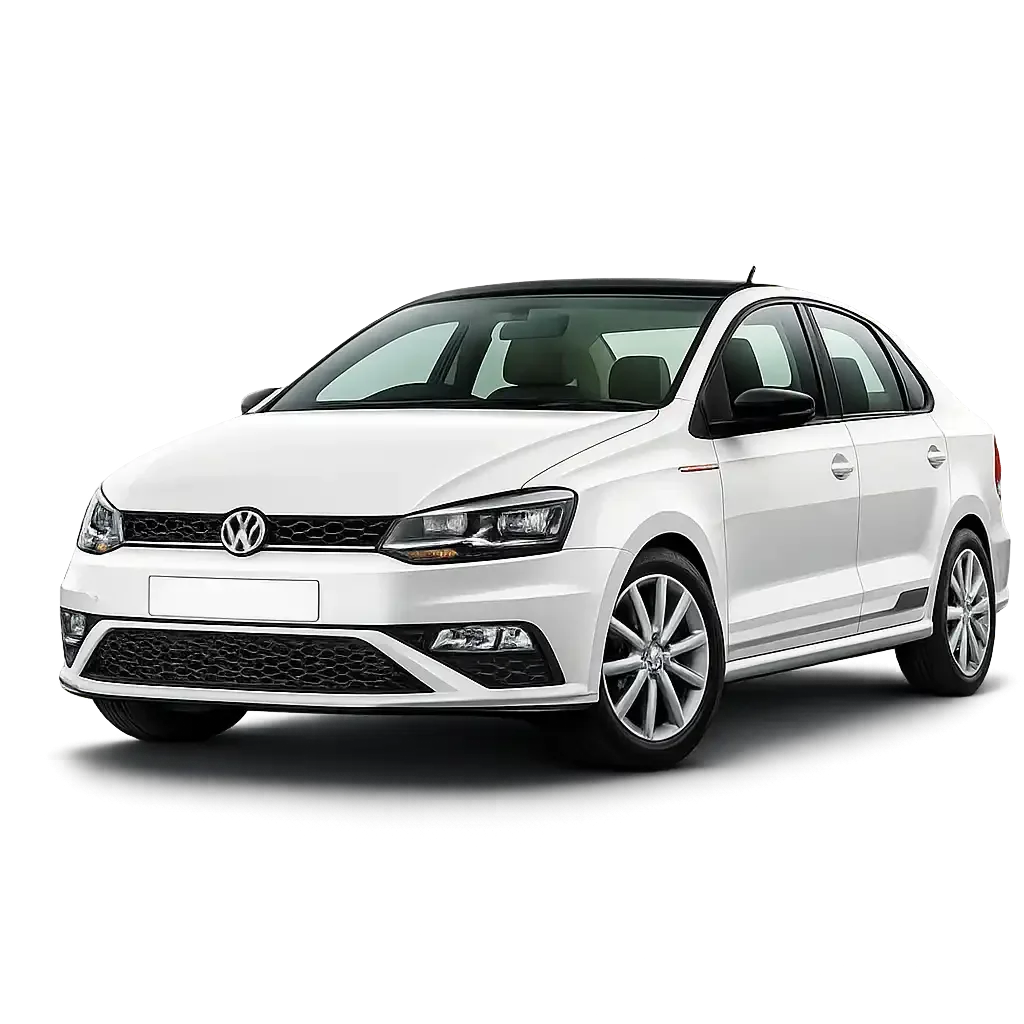
The Volkswagen Vento is a Polo-based subcompact sedan built at Volkswagen's Chakan plant in Pune, India, and sold primarily in India and Mexico from 2010 to 2022. The 2014 to 2022 window that forms the focus of this guide covers the car's most commercially significant aftermarket years - the period after the facelift brought the Vento to Mexico, through two major powertrain transitions, to the model's final year before being replaced by the Virtus.
For aftermarket parts sellers, the Vento is a deceptively simple-looking catalog entry that hides a series of hard parts boundaries. The car sat on the same PQ25 (A05) platform throughout its entire India-market production run from 2010 to 2022, which creates a temptation to treat it as a single fitment window. It is not. The 2015 facelift changed exterior components. The BS6 powertrain transition in 2020 eliminated three of the four engine variants and replaced them with a single new unit. The 1.2 TSI with 7-speed DSG and the 1.5 TDI diesel are completely different fuel and powertrain systems from the 1.0 TSI that replaced them. And the Mexican market variant, while sharing the same platform and assembly origin, had a different engine lineup.
This post maps the Vento's production window from 2014 to 2022 across the India and Mexico markets, the engine variants active in each period, and the fitment variables that determine whether a part is correct.
Platform Overview: One Architecture, Two Markets, Eight Years
The Vento was built on the PQ25 (A05) platform - a stretched version of the Polo Mk5 platform with a 2,552 mm wheelbase (50 mm longer than the Polo) and a 494-litre boot. The platform was unchanged throughout the India-market production run. This is the same platform as the Skoda Rapid (India), which was essentially a re-badged Vento with Skoda design elements and minor specification differences.
The Mexico market Vento was introduced as a 2014 model and was imported from the Chakan plant in India. The Mexican Vento and Indian Vento are the same vehicle from a platform and production origin perspective. Engine lineup and market-specific specifications differ as covered below.
The PQ25 platform is not related to the MQB A0 IN platform used by the Virtus that replaced the Vento. Platform components - front subframe, suspension geometry, brake specifications, and body mounting hardware - from the Vento do not transfer to the Virtus.
Three Production Periods: The Fitment Map
Period 1: 2014 to 2015 (pre-facelift, full engine range)
For the purposes of this guide, the 2014 to 2015 period covers the pre-facelift Vento with the full pre-BS6 engine lineup. India-market cars in this window were available with:
1.6-litre MPI naturally aspirated petrol: Single carburetor-adjacent port injection, 105 PS, 5-speed manual only
1.2-litre TSI turbocharged petrol: 105 PS, 7-speed DSG automatic only (no manual option)
1.5-litre TDI diesel: 105 PS, 5-speed manual or 7-speed DSG automatic depending on trim
Mexico market cars in this window had the 1.6-litre MPI petrol and the 1.6-litre TDI diesel as their engine options, with a 5-speed manual or 6-speed automatic on the petrol and a 5-speed manual only on the diesel.
Period 2: 2015 to 2019 (post-facelift, same engine range)
The 2015 facelift updated the Vento's front fascia with a new three-slat chrome grille, revised front bumper, new character lines, and new tail lamps. The interior received updates including a new 6.5-inch touchscreen infotainment system on higher trims.
Critically, the facelift did not change the engine lineup or the platform. The same four engine options available on the pre-facelift car continued through to 2019. However, the exterior components - grille, front bumper, front fascia panels, rear tail lamps, and associated trim - changed at the facelift boundary.
This creates the most commonly missed split in the Vento catalog: a "Volkswagen Vento" grille listing without facelift year specification will cross-match a pre-2015 part with a post-2015 car or vice versa. These are different parts. The 2015 facelift is a hard boundary for all front and rear lighting, grille, bumper, and associated exterior trim components.
The India 2019 facelift brought a further front-end refresh with updated LED headlamps with LED DRLs, new bumper under-skirts, and reshaped alloy wheels on higher trims. This creates a third exterior generation within the pre-BS6 production window, meaning Vento exterior trim components fall into three distinct design eras: pre-2015, 2015 to 2019, and 2019 to 2022.
Period 3: 2020 to 2022 (BS6 transition, single engine)
The introduction of Bharat Stage VI (BS6) emission norms in India in April 2020 was the most significant mechanical event in the Vento's production history. With the BS6 transition, Volkswagen India eliminated three of the four engine options entirely:
1.6-litre MPI petrol: discontinued
1.2-litre TSI petrol with 7-speed DSG: discontinued
1.5-litre TDI diesel: discontinued
All three were replaced by a single powertrain:
1.0-litre TSI three-cylinder turbocharged petrol (EA211 EVO): 110 PS, 175 Nm. Available with 6-speed manual or 6-speed torque converter automatic (replacing the 7-speed DSG on automatic variants).
The BS6 transition is the hardest parts boundary in the entire Vento catalog. The 1.0 TSI is a different engine family from the 1.2 TSI, the 1.6 MPI, and the 1.5 TDI. The three-cylinder 1.0 TSI has a different block, head, fuel delivery system, ignition system, exhaust system, and emissions control hardware from all three discontinued units. The new 6-speed torque converter automatic is a different transmission from the discontinued 7-speed DSG. The BS6 emission system - catalyst, O2 sensors, and ECU calibration - is a different specification from the BS4 emission system on all pre-2020 engines.
The April 2020 production date is the hard boundary for all engine, fuel system, exhaust, emission control, and transmission parts. A part listed for "Volkswagen Vento, 1.0 TSI" that is actually a BS4-era 1.0 TSI from a different VW Group application may not be correctly specified for the BS6-calibrated unit in the Vento. Engine code and emission standard must both be specified.
Engine Variants: The Full Fitment Matrix
1.6-litre MPI naturally aspirated petrol (2014 to 2020)
The 1.6 MPI is a four-cylinder port fuel injection engine producing 105 PS. It was available only with a 5-speed manual transmission in the India market. In the Mexico market it was also available with a 6-speed automatic.
The 1.6 MPI shares basic architecture with the 1.6 MPI used in other VW Group PQ-platform vehicles, but the specific calibration, emission equipment, and some accessory specifications are India-market (and Mexico-market) specific. Parts for the 1.6 MPI should be verified against the Vento-specific application rather than assumed to transfer from European-market 1.6 MPI applications.
The 1.6 MPI was discontinued at the BS6 transition in April 2020. All 1.6 MPI fuel system components, exhaust manifold, catalytic converter, and O2 sensors are BS4 (or earlier) specification. They do not apply to the post-2020 Vento.
1.2-litre TSI turbocharged petrol with 7-speed DSG (2014 to 2020)
The 1.2 TSI was the performance petrol option for the Vento in the India market, producing 105 PS and paired exclusively with the 7-speed DSG dual-clutch automatic. There was no manual option for the 1.2 TSI.
The 7-speed DSG (DQ200) on the Vento is a dry-clutch dual-clutch transmission. Its service requirements - DSG-specific fluid, clutch pack inspection intervals, and mechatronic unit sensitivity - differ fundamentally from a conventional automatic or manual transmission. Parts for the DQ200 DSG must be specified as DSG-specific, not listed generically as "automatic transmission" components.
The 1.2 TSI and 7-speed DSG combination was discontinued at the BS6 transition. After April 2020, no Vento carries the 1.2 TSI or the DQ200 DSG.
1.5-litre TDI diesel (2014 to 2020)
The 1.5 TDI was the diesel option for the India market Vento, producing 105 PS with either a 5-speed manual or a 7-speed DSG automatic. The diesel 7-speed DSG is the same DQ200 dry-clutch dual-clutch unit as on the 1.2 TSI petrol, but the engine-side components (fuel injectors, high-pressure fuel pump, diesel particulate filter, EGR valve, DPF regeneration system, glow plugs) are diesel-specific and do not cross-reference with any petrol application.
Mexico market cars had the 1.6-litre TDI diesel (a different displacement from the 1.5 TDI in India) paired with a 5-speed manual only. The 1.6 TDI and 1.5 TDI are different engines. Fuel injectors, high-pressure pump specifications, and turbocharger specifications differ between the two. Sellers listing TDI components for the Vento must specify the displacement (1.5 TDI for India market or 1.6 TDI for Mexico market) and the market.
The 1.5 TDI was discontinued at the BS6 transition. After April 2020, no India-market Vento carries a diesel engine.
1.0-litre TSI three-cylinder turbocharged petrol (2020 to 2022)
The 1.0 TSI (EA211 EVO) was the sole powertrain for the BS6 Vento from 2020 to the model's discontinuation in 2022. It produces 110 PS and 175 Nm, and is available with a 6-speed manual or a 6-speed torque converter automatic.
The 6-speed torque converter automatic on the BS6 Vento is a different transmission from the 7-speed DSG that it effectively replaced for the automatic buyer. The torque converter unit uses conventional ATF and has different service intervals, different filter and gasket kit specifications, and different internal components from the DQ200 DSG.
The 1.0 TSI in the Vento is BS6-compliant. Its catalytic converter, O2 sensor specification, ECU calibration, and evaporative emission system are all BS6-specific. Parts for the India-market BS6 1.0 TSI Vento should not be assumed to interchange with 1.0 TSI applications from BS4-era cars or from European market EA211 applications without part number verification.
Market Splits: India vs. Mexico
India market
India-market Ventos were produced at the Chakan plant throughout the 2014 to 2022 window. Emission compliance progressed from BS3 on some early cars through BS4 and finally BS6 from April 2020. The emission standard is a required qualifier for exhaust, catalyst, O2 sensor, and ECU listings on the India-market Vento.
The BS4/BS6 boundary at April 2020 is not simply an engine change - it affected the entire emission control architecture:
Catalytic converter: Different substrate specification, different dimensions on some variants, different mounting hardware
O2 sensors: Different sensor type and calibration for BS6 three-way catalyst monitoring vs. BS4
EGR system: Present on the 1.5 TDI diesel in BS4 era; calibration and hardware specific to BS4 standard
ECU: Different calibration map for BS6 fuel delivery and ignition strategy on the 1.0 TSI vs. BS4-era engines
Emission standard (BS4 or BS6) is a mandatory qualifier for all exhaust and emission-related component listings on the India-market Vento, in addition to engine code.
Mexico market
Mexico-market Ventos were imported from the Chakan plant in India but with a different engine lineup than the India-market cars throughout the 2014 to 2022 window:
Petrol: 1.6-litre MPI naturally aspirated, with 5-speed manual or 6-speed automatic
Diesel: 1.6-litre TDI with 5-speed manual only
The Mexico market did not receive the 1.2 TSI with DSG, the 1.5 TDI, or the BS6-era 1.0 TSI during the Vento's lifetime. When Volkswagen replaced the India-sourced first-generation Virtus in Mexico with the second-generation India-built Virtus in 2023, the Vento nameplate was discontinued in Mexico.
Mexico emission compliance was to PROCONVE / NOM standards rather than BS4/BS6. The catalytic converter, O2 sensor, and ECU calibration on Mexico-market cars are to a different emission standard than the India-market cars. A catalytic converter listed for an India BS4 Vento is not a confirmed fit for a Mexico-market Vento without part number verification, even if the engine displacement is the same.
Market designation is a mandatory qualifier for all exhaust, emission, and fuel system component listings on the Vento.
Exterior: Three Design Eras
The Vento's exterior changed meaningfully three times during the 2014 to 2022 window, creating hard fitment splits for all front-end lighting, grille, bumper, and some rear lighting components.
Pre-2015 (original front end)
The original front end had a narrower, more upright grille with a different bar pattern from the 2015 facelift unit. The front bumper profile, fog lamp housing, and front valance are specific to the pre-facelift design.
2015 to 2019 facelift
The 2015 facelift introduced a new three-slat chrome grille, revised front bumper with more aggressive lower valance profile, sharper character lines on the front fenders, and new tail lamps at the rear. The head lamps on the 2015 to 2019 cars retained a halogen projector design. The new tail lamp design differed from the pre-facelift units in both lens pattern and housing shape.
The 2015 facelift front grille, front bumper, front bumper lower trim, tail lamps, and related trim are not interchangeable with the pre-2015 equivalents in either direction.
2019 to 2022 facelift
The 2019 refresh introduced LED head lamps with LED DRLs on higher trim levels (Highline and Highline Plus), updated front and rear bumper under-skirts, and redesigned alloy wheels on higher trims. The LED head lamp unit is a different assembly from the halogen unit used on 2015 to 2018 cars. Sellers listing head lamp assemblies must specify halogen (2015 to 2018) vs. LED (2019 to 2022) and the trim level where LED was optional rather than standard.
The 2019 to 2022 front bumper lower trim and under-skirt are different from the 2015 to 2018 units. All other 2015 facelift exterior components - grille pattern, tail lamp housing shape - continued through to 2022 without further change.
Transmissions
The Vento used the following transmissions across its production window, and each is mechanically distinct:
5-speed manual (MQ200): Paired with the 1.6 MPI petrol and 1.5 TDI diesel in manual variants. Internal components and clutch specification differ by engine pairing.
6-speed manual (MQ200 variant): Paired with the BS6-era 1.0 TSI. Different gear ratios from the 5-speed unit. A clutch kit for the 5-speed MQ200 may not fit the 6-speed variant - specify the transmission code, not just "manual."
7-speed DSG dry-clutch (DQ200): Paired with the 1.2 TSI petrol and 1.5 TDI diesel in automatic variants. Requires DSG-specific fluid (G052182A2 or equivalent). Internal components, mechatronic unit, and clutch pack are DSG-specific.
6-speed automatic torque converter: Paired with the BS6-era 1.0 TSI. Different unit from the DSG - uses conventional ATF, different filter and gasket kit, different service interval.
6-speed automatic (Mexico-market 1.6 MPI): Available in the Mexico market on the petrol variant. Verify whether this is the same unit as the India-market 6-speed torque converter before listing as a cross-fit.
Transmission type is a mandatory qualifier for all drivetrain parts. The DSG and the torque converter automatic are not the same transmission. Clutch kits, filter kits, fluid specifications, and internal components differ. A seller who lists "Volkswagen Vento automatic transmission filter" without specifying DSG vs. torque converter will ship the wrong part to a significant proportion of buyers.
Suspension and Brakes
The PQ25 platform suspension - front MacPherson struts, rear torsion beam - was unchanged throughout the 2010 to 2022 India-market production run. Suspension components are among the more reliable cross-fit categories on the Vento, provided the specification level (standard vs. sport-tuned variants on higher trims) is verified.
Front and rear brake specifications were consistent across the production run for the same engine and trim level combination. The front brakes are ventilated discs throughout; rear brakes are solid discs on higher trims and drums on lower trims.
Rear brake type (disc or drum) is a required qualifier for all rear brake component listings. This split is trim-level-dependent on the Vento, not simply a market or year variable.
The Skoda Rapid (India market) shares the PQ25 platform and suspension geometry with the Vento. Suspension components cross-reference at the part number level between the Vento and Rapid for the same specification level. This is a commercially useful cross-reference that expands the parts pool for both models.
Common ACES/PIES Mistakes for 2014 to 2022 Volkswagen Vento
Treating "Volkswagen Vento 2014 to 2022" as a single fitment window for engine parts. The 1.6 MPI, 1.2 TSI, 1.5 TDI, and 1.0 TSI are four distinct engines with no component interchangeability across engine families.
Listing exhaust, catalyst, or O2 sensor parts without specifying emission standard (BS4 or BS6). The BS6 transition in April 2020 changed the entire emission control architecture. Pre-2020 and post-2020 exhaust components are not interchangeable.
Spanning the 2015 facelift boundary with a single application record for grille, front bumper, or tail lamp components. The facelift changed these parts and they are not interchangeable across the boundary.
Spanning the 2019 refresh boundary for head lamp listings. LED head lamps (2019 to 2022, higher trims) and halogen units (2015 to 2018) are different assemblies.
Listing the 7-speed DSG and 6-speed torque converter automatic as equivalent "automatic transmission" applications. These are different transmissions with different fluid specifications, filter kits, and internal components.
Listing TDI diesel components without specifying the displacement (1.5 TDI for India or 1.6 TDI for Mexico). These are different engines with different injectors, high-pressure pump specifications, and turbocharger hardware.
Cross-referencing Mexico-market emission system components (catalyst, O2 sensors) with India-market BS4 components based on shared engine displacement. Mexico emission standards differ from BS4, and the components may differ.
Listing rear brake components without specifying disc or drum. The split is trim-level-dependent on the Vento and not determinable from the year or engine alone.
Cross-referencing 1.0 TSI components from BS4-era or European-market EA211 applications to the India BS6 Vento 1.0 TSI without part number verification.
Listing the Skoda Rapid (India) as a direct parts fit without noting that the cross-reference applies to shared PQ25 platform and powertrain components only - not to body panels, exterior trim, or Skoda-specific interior components.
Catalog Checklist for 2014 to 2022 Volkswagen Vento
Require engine code (1.6 MPI, 1.2 TSI, 1.5 TDI, 1.6 TDI Mexico, 1.0 TSI BS6) for all engine, fuel, and exhaust parts
Require emission standard (BS3, BS4, or BS6) for all exhaust, catalyst, O2 sensor, and ECU listings on India-market cars
Require market designation (India or Mexico) for all engine, emission, and powertrain listings
Require production year window (pre-2015, 2015 to 2019, 2019 to 2022) for all exterior trim, grille, bumper, and lighting components
Require transmission code (5MT, 6MT, 7-speed DSG DQ200, 6AT torque converter) for all drivetrain parts and fluids
Require rear brake type (disc or drum) for all rear brake component listings
Note that the 1.2 TSI + 7-speed DSG combination was discontinued at BS6 (April 2020) - do not apply post-2020 transmission listings to DSG applications
Note that the 1.5 TDI diesel was discontinued at BS6 - all diesel components apply to pre-April 2020 production only
Cross-reference Skoda Rapid (India) for PQ25 platform and powertrain components - not body or trim
Cross-Reference Logic
Skoda Rapid (India, same years): Same PQ25 platform, same engine family, same wheelbase. Suspension, drivetrain, and many engine components cross-reference at part number level. Front and rear fascia, grille, interior trim, and Skoda-branded components do not interchange.
Volkswagen Polo Mk5 (India, same years): Shares PQ25 platform architecture (the Vento is a stretched Polo). Some suspension geometry cross-reference possible - verify spring rates for wheelbase difference. Engine components cross-reference where the same engine was used in both.
Volkswagen Virtus (India, 2022 onward): Direct successor in India and Mexico. Different platform (MQB A0 IN vs. PQ25). No platform, body, or major mechanical interchangeability. Some service consumables may cross-reference by engine type.
Volkswagen Polo Notchback / Polo Sedan (other markets): The Vento was sold under these names in Malaysia, Taiwan, and some other markets. Parts cross-reference where the same platform and engine apply.
Frame all cross-references as "may also fit" with platform, engine code, emission standard, and market qualifiers.
Final Take
The Volkswagen Vento's eight-year production window from 2014 to 2022 covers three exterior design eras, four engine families, five transmission variants, two market specifications, and one wholesale powertrain transition driven by BS6 emission norms. The platform was unchanged throughout, which is the source of the primary catalog error - treating the shared platform as permission to list the entire production window as a single application for parts that changed repeatedly across it.
The five attributes that determine correct Vento fitment: engine code, emission standard (BS4 or BS6), production year window for exterior trim, transmission code, and market (India or Mexico). Apply those consistently and the Vento becomes a well-cataloged used car with a large and growing parts buyer base. Leave them out and the combination of engine changes, facelift boundaries, and DSG vs. torque converter splits will generate returns on a high proportion of fuel system, drivetrain, and exterior component orders.
Disclaimer: This guide is based on publicly available specifications, manufacturer press materials, and independent research. Part interchangeability should always be confirmed via VIN and OEM part number lookup. Specifications may change without notice. This document does not constitute official Volkswagen parts catalog data.