
Written by Arthur Simitian | PartsAdvisory
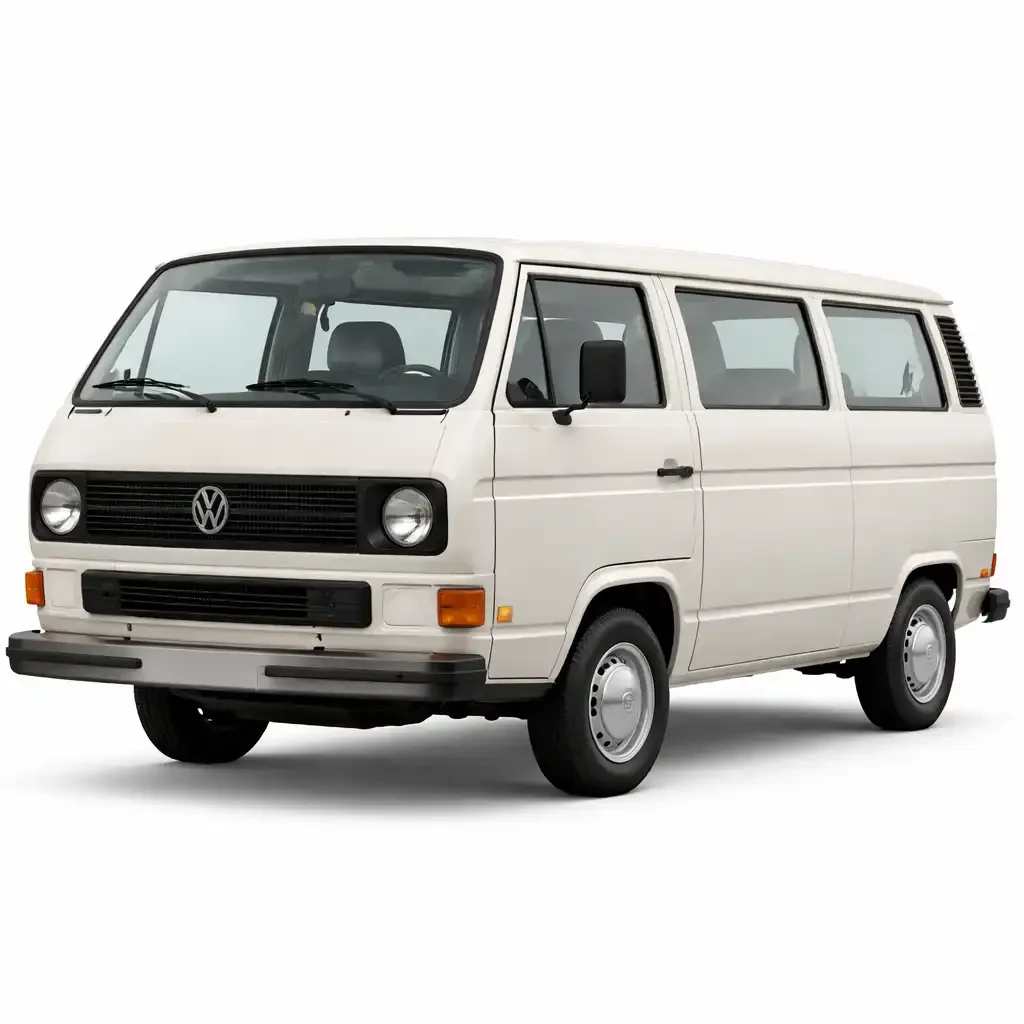
The Volkswagen Vanagon is the North American name for the T3 (Type 25), the third generation of the Volkswagen Transporter. Manufactured in Hannover, Germany, from 1979 to 1991, the Vanagon arrived in the U.S. market for the 1980 model year as a replacement for the T2 Bay Window. The 1980 to 1985 window covered in this guide is the most technically complex segment of the entire Vanagon production run - it begins with air-cooled engines inherited from Volkswagen's classical rear-engine era and ends with a water-cooled boxer architecture that was new to the world, debuting mid-production-year in a transition that many catalog entries still fail to handle correctly.
For aftermarket parts sellers, the Vanagon's first six model years are a catalog hazard that looks deceptively simple. The body shell was largely unchanged throughout. The rear-engine, rear-wheel-drive layout was consistent. The overall dimensions were stable. But the powertrain underwent two fundamental transitions - from air-cooled to water-cooled petrol, and from no diesel to diesel - and those transitions did not land at clean model year boundaries. The single most disruptive event is the mid-year 1983 engine change, which created a "1983.5" production split that is unique in the North American aftermarket catalog universe and must be treated as a hard parts boundary for every engine, fuel system, cooling system, and exhaust component.
This post maps the Vanagon's 1980 to 1985 production window across its engine families, transmission variants, body configurations, and the fitment boundaries that determine whether a part is correct.
Platform Overview: One Body, Fundamentally Different Powertrains
The T3 Vanagon was built on a purpose-designed platform with a 2,460 mm wheelbase (97 inches), cab-over layout, rear-mounted engine, rear-wheel drive via a transaxle, and double-wishbone front suspension with semi-trailing arm rear suspension. These fundamental platform characteristics did not change between 1980 and 1985.
What did change - dramatically - was everything behind the rear axle. The 1980 to 1983 (early) Vanagons used air-cooled, horizontally opposed (flat-four) engines derived from VW's Type 4 architecture. These engines are air-cooled with no radiator, no coolant circuit, no water pump, and no thermostat. From mid-1983 onward, the Vanagon switched to the Wasserboxer - a water-cooled horizontally opposed four-cylinder with a full liquid cooling circuit, radiator mounted in the nose of the van (not at the engine), and an entirely new fuel delivery and emissions system.
This is not a minor engine swap. The air-cooled and water-cooled Vanagons share a body shell, a platform, and a transaxle family - and very little else in the engine bay. Cooling system, intake, exhaust, fuel system, and engine-specific ancillaries do not cross between the two.
The diesel engine, available in the U.S. from 1982 through 1983 only (in this production window), is a water-cooled inline four-cylinder - a completely different engine architecture from both the air-cooled petrol and the Wasserboxer petrol. Diesel-specific fuel, injection, and glow plug components have no application to any petrol Vanagon.
Three Production Periods: The Fitment Map
Period 1: 1980 to Early 1983 (Air-Cooled Petrol, 2.0L)
The 1980 to early 1983 Vanagon used the Type 4-derived 2.0-litre air-cooled flat-four engine. This engine was carried over from the late T2 Bay Window era and was available in two configurations for the U.S. market:
2.0-litre air-cooled, carbureted (engine code CU): Dual Solex 34 PDSIT-2/3 carburetors, approximately 67 hp. The dominant configuration for 1980-1982 U.S. models.
2.0-litre air-cooled, fuel injected (engine code CV): Bosch L-Jetronic mechanical fuel injection, same displacement, marginally different power and driveability characteristics. Market availability of the CV code varied by model year and trim.
The 2.0-litre air-cooled engine is a rear-mounted, fan-cooled unit. It has no radiator. Cooling is provided entirely by a belt-driven fan and finned cylinder heads. There is no coolant, no water pump, no thermostat, and no radiator hose. The oil cooler is integral to the engine and air-cooled. All cooling system parts for the air-cooled Vanagon are specific to this architecture and have no application to any water-cooled variant.
The CU carbureted engine uses twin Solex carburetors with their own specific jets, float bowls, and choke mechanisms. The CV fuel-injected variant uses L-Jetronic components - fuel distributor, airflow meter, injectors, fuel pump, and fuel pressure regulator - that are specific to the L-Jetronic system. A carb rebuild kit for the CU engine does not apply to the CV, and injector seals for the CV do not apply to the CU.
Engine code (CU vs. CV) is a mandatory qualifier for all fuel system, induction, and ignition parts on 1980 to 1983 air-cooled Vanagons.
Period 2: 1982 to 1983 (Diesel, US Market Only)
The 1.6-litre naturally aspirated diesel was available in the U.S. market on 1982 and 1983 Vanagons only. Engine code CS. This engine is a water-cooled inline four-cylinder - the same basic architecture as the diesel engine used in the contemporary Golf/Rabbit - and is completely unrelated to either the air-cooled petrol or the Wasserboxer petrol.
The CS diesel uses mechanical injection with a Bosch rotary injection pump, glow plugs for cold starting, and no spark ignition system. It has a full liquid cooling circuit with a radiator located in the nose of the van, making the diesel Vanagon the first Vanagon body style to use nose-mounted cooling. The cooling circuit and radiator used on the diesel Vanagon of this era do not interchange with the later Wasserboxer cooling system.
The CS diesel was discontinued from the U.S. market after 1983. No diesel Vanagon was sold new in the U.S. for 1984 or 1985. Parts for the CS diesel apply exclusively to 1982 and 1983 U.S. models and must be qualified by engine code, not just model year.
Period 3: Mid-1983 to 1985 (Wasserboxer 1.9L, Water-Cooled Petrol)
The Wasserboxer (Wasserboxer = "water boxer") debuted mid-year for the 1983 model year, creating the widely documented "1983.5" production split. This transition is the hardest parts boundary in the entire 1980-1985 Vanagon catalog. VW introduced the water-cooled 1.9-litre flat-four at roughly the mid-point of the 1983 production year; early 1983 models are air-cooled 2.0-litre, while late 1983 models are water-cooled 1.9-litre. Both are called "1983 Vanagon." They are not the same vehicle for parts purposes.
The Wasserboxer engine code for the U.S. market in 1983.5 through 1985 is DH - 1.9 litres (1,913 cc), approximately 83 hp, with Bosch Digijet (Digital Jetronic) electronic fuel injection. The DH engine code and Digijet system are the defining qualifiers for this period.
Key points for the Wasserboxer era:
The DH engine is water-cooled. It has a full liquid cooling circuit with a radiator mounted in the nose of the van, a water pump, thermostat, coolant reservoir, and radiator hoses. None of these components apply to the air-cooled 2.0-litre engine.
The Digijet fuel injection system is distinct from the L-Jetronic system used on the air-cooled CV engine. Digijet uses a digital control unit, a different throttle body, different injectors, and a different fuel pressure specification. Parts for Digijet do not cross-reference to L-Jetronic without part number verification.
The 1.9-litre Wasserboxer has known vulnerabilities specific to its design: the engine's water jackets are cast aluminum with a reputation for coolant leak and head gasket failures when incorrect coolant or deferred maintenance allowed corrosion. Cylinder heads, head gaskets, cooling jacket seals, and water pump components for the DH Wasserboxer are high-volume aftermarket items. All of these are DH/Wasserboxer-specific.
The 1983.5 boundary is determined by the production date encoded in the VIN, not by the calendar model year. A seller who lists "1983 Vanagon" as a single application for cooling system components will generate returns on a significant proportion of orders from early 1983 (air-cooled) owners.
Engine Variants: The Full Fitment Matrix
2.0-Litre Air-Cooled, Carbureted (Engine Code CU) - 1980 to 1983
The CU engine is a four-cylinder horizontally opposed, air-cooled unit producing approximately 67 hp at 4,200 rpm and 101 lb-ft of torque. It uses dual Solex 34 PDSIT-2/3 carburetors and a conventional breaker-less transistorized ignition system.
Aftermarket fitment notes:
Carb rebuild kits, float valves, jets, and choke components are CU/Solex-specific
The air-cooled fan shroud, oil cooler, and thermostat (oil temperature-controlled) are engine-specific
Ignition components (distributor, points-equivalent transistorized module, ignition leads) differ from the water-cooled Wasserboxer
Oil seals and gaskets are air-cooled flat-four specific - they differ from the DH Wasserboxer which has liquid cooling passages in the block
2.0-Litre Air-Cooled, Fuel Injected (Engine Code CV) - 1980 to 1983
The CV engine shares the same block, heads, and cooling architecture as the CU but uses Bosch L-Jetronic continuous fuel injection instead of carburetors. The fuel system - fuel pump, fuel distributor, injectors, airflow meter, and associated vacuum and electrical components - is L-Jetronic-specific.
Aftermarket fitment notes:
Fuel pump specifications differ from both the CU and the DH Wasserboxer
Injector seal kits are specific to L-Jetronic injector type
The fuel distributor is a mechanical unit unique to L-Jetronic; it does not appear on any Wasserboxer application
Ignition is shared architecture with the CU engine at the distributor and leads level
1.6-Litre Diesel, Naturally Aspirated (Engine Code CS) - 1982 to 1983 (U.S. Only)
The CS diesel is a water-cooled inline four-cylinder producing 50 hp at 4,200 rpm. It uses a Bosch rotary injection pump with mechanical injection and glow plugs. It shares basic architecture with the Golf/Rabbit 1.6 diesel of the same era.
Aftermarket fitment notes:
Injection pump rebuild kits and injectors are diesel-specific - no petrol crossover
Glow plugs are CS-specific; they do not apply to any petrol Vanagon
The diesel cooling system (radiator, water pump, thermostat) is an early nose-mounted circuit that does not interchange with the later Wasserboxer cooling system, despite both using liquid cooling
Timing belt (the CS diesel uses a belt-driven camshaft unlike the OHV petrol engines) is diesel-specific
The CS diesel was paired with a 5-speed manual transmission only in the U.S. market
1.9-Litre Wasserboxer, Fuel Injected (Engine Code DH) - 1983.5 to 1985
The DH Wasserboxer is a water-cooled horizontally opposed four-cylinder producing 83 hp at 4,800 rpm and 100 lb-ft of torque. It uses Bosch Digijet electronic fuel injection and a full liquid cooling circuit with a front-mounted radiator.
Aftermarket fitment notes:
Cooling system components (radiator, water pump, thermostat, coolant reservoir, hoses) are Wasserboxer-specific. The water pump is particularly critical: the DH water pump is an internal component driven by the timing belt, and failure of the water pump or timing belt causes immediate engine damage. Water pump and timing belt are linked service items.
Head gaskets and cylinder head sealing components are DH-specific. The Wasserboxer's aluminum water jackets and horizontal cylinder orientation create a distinct failure mode not seen in conventional inline engines. High-quality head gasket sets are among the highest-demand aftermarket items for this engine.
Digijet fuel injection components - throttle body, fuel rail, injectors, ECU, coolant temperature sensor for injection - differ from L-Jetronic components on the CV engine
The DH ECU is calibrated for the 1983.5-1985 emission standards and fuel delivery map. A replacement ECU must match the DH engine code and production year
Emission equipment (catalytic converter, O2 sensor on California-spec vehicles) differs between the air-cooled 2.0 and the Wasserboxer DH
Transmissions
The Vanagon used transaxles throughout - a combined transmission and final drive assembly mounted at the rear of the vehicle alongside the engine. Three transaxle families were used across the 1980 to 1985 window, and each is mechanically distinct.
4-Speed Manual (091 / 091-1)
The primary manual transmission for the 1980 to 1985 Vanagon. Two sub-variants existed:
091: The early air-cooled Vanagon manual transaxle. Used with the 2.0-litre air-cooled CU and CV engines.
091-1: A revised version introduced with the Wasserboxer. The 091-1 shares external dimensions with the 091 but has internal differences including revised bearing specifications and sealing. Parts for the 091 and 091-1 are not fully interchangeable.
Transaxle code, not just "4-speed manual," is required for internal components including bearings, seals, shift forks, and synchronizer rings.
5-Speed Manual (094)
A 5-speed manual became available beginning in 1983 on diesel-equipped and certain other configurations. The 094 is a different transaxle from the 091/091-1 - different gear ratios across all five gears, a different final drive ratio, and a different bell housing configuration. It was also the basis for the Syncro 4WD transaxle, where 1st gear served as a "Gelände" (terrain) low range.
Important fitment note: the 5-speed 094 is not simply a "5-speed version" of the 4-speed 091. Internal components do not cross-reference. Clutch specifications may differ depending on engine pairing. A seller who lists "Vanagon manual transmission rebuild kit 1983-1985" without specifying 4-speed (091-1) vs. 5-speed (094) will send incorrect parts to a meaningful share of buyers.
3-Speed Automatic
The 3-speed automatic was the only automatic transmission offered in the U.S. market Vanagon during this production window. It is a hydraulic torque converter automatic borrowed from the VW/Audi parts bin (used across multiple Audi models of the same era), praised for its durability. In the U.S., the automatic was available with the 2.0-litre air-cooled petrol and the Wasserboxer 1.9-litre petrol, but not with the diesel.
The 3-speed automatic uses its own ATF specification and its own filter and gasket kit. Its internal components do not cross-reference with manual transaxle parts. At 75 mph, the 3-speed automatic runs the engine approximately 400 rpm higher than the 4-speed manual - a characteristic of its three-ratio design that does not affect parts fitment but is relevant context for service parts like transmission fluid recommendations.
Transmission type (4MT / 5MT / 3AT) is a mandatory qualifier for all drivetrain parts. Clutch kits apply only to manual transaxles. The AT filter and gasket kit applies only to the automatic.
The 1983 / 1983.5 Production Split: The Most Important Boundary in This Catalog
This split deserves special emphasis because it is unlike any other production year boundary in the domestic aftermarket catalog system. ACES/PIES application records are structured around calendar model years. The Wasserboxer transition occurred mid-production-year, not between model years. This means a year-only filter of "1983 Volkswagen Vanagon" covers two fundamentally different vehicles.
The practical consequence: every part that touches the cooling system, the engine block, the cylinder heads, the fuel injection system, the ignition system, the exhaust system, or the emission system has a hard split within the 1983 model year. Any of the following components listed as "fits 1980-1985 Vanagon" without a sub-year qualifier is incorrectly cataloged for a significant share of the applicable vehicle population:
Radiator (air-cooled 1980-1983 early: none; Wasserboxer 1983.5-1985: front-mounted)
Water pump (air-cooled: none; Wasserboxer: required, internal, belt-driven)
Head gasket / cylinder head sealing kits
Thermostat (air-cooled: oil thermostat only; Wasserboxer: coolant thermostat)
Fuel pump (CU: mechanical; CV: L-Jetronic; DH: Digijet electric)
Injectors and fuel delivery components
Exhaust manifold and catalytic converter
Ignition components
The correct approach is to split all engine, cooling, fuel, and exhaust listings into at minimum: "1980-1983 early (air-cooled, 2.0L)" and "1983.5-1985 (Wasserboxer, 1.9L DH)." VIN decoding to determine production date is the most reliable method for a buyer to determine which half of 1983 their vehicle falls into.
Body Configurations and Their Parts Implications
The Vanagon was sold in the U.S. market across four primary configurations during the 1980 to 1985 window:
Vanagon (base): Vinyl seats, minimal trim
Vanagon L: Upgraded interior, optional cloth seats, blower option
Vanagon GL: Additional content including padded steering wheel, front armrests, additional standard features
Westfalia Camper: Pop-up roof, interior cabinetry, sink, stove, and refrigerator conversion performed by the Westfalia factory in Germany
All four configurations share the same body shell, platform, and powertrain. The Westfalia conversion adds roof-specific components - the pop-top mechanism, roof canvas, roof hinges, and associated seals - that are specific to the Westfalia body configuration and do not apply to non-Westfalia Vanagons.
Exterior: Model years 1980 through 1985 used round sealed beam headlights. This is a useful positive identifier: if a Vanagon has round sealed beam headlights, it is a 1985 or earlier model. The square headlight design was introduced on later model years. Headlight assemblies for 1980-1985 Vanagons must be specified as round sealed beam units.
Bumpers: Early Vanagons (1980-1981) used chrome metal bumpers with plastic end caps. Later production used fiberglass bumpers with optional alloy wheel and rocker panel trim. Bumper hardware and mounting points differ between chrome-bumper and fiberglass-bumper configurations.
Body configuration (standard vs. Westfalia) is a required qualifier for all roof, pop-top, and camper-specific interior components. It is not required for platform, powertrain, or suspension parts.
Suspension and Brakes
The T3 Vanagon suspension architecture was double-wishbone front and semi-trailing arm rear throughout the entire 1980-1985 production window. These geometry specifications were unchanged across the production run, making suspension components relatively reliable cross-fits within the window - with one important exception.
Brakes: The Vanagon uses front disc brakes and rear drum brakes throughout 1980 to 1985. Front discs are ventilated. The front/rear split is consistent across the U.S. production window for standard 2WD models. Brake disc diameter on the standard 14-inch wheel Vanagon is 254 mm front.
An important note for sellers tracking the broader Vanagon catalog: the Syncro 4WD version (introduced in 1984, first appearing in the U.S. for 1985) uses different brake specifications. The 14-inch wheel Syncro uses the same 254 mm front disc as the 2WD, but the 16-inch wheel Syncro uses 280 mm front discs sourced from larger VW commercial vehicle applications. Syncro fitment is not within the main 1980-1985 2WD catalog but creates a cross-reference hazard if a "1985 Vanagon" listing does not specify 2WD vs. Syncro and wheel size.
For the 2WD Vanagon in this production window: front brake (disc) specifications are consistent year-over-year. Rear brake (drum) specifications are consistent year-over-year. The split that generates returns is not front vs. rear - it is sellers applying Syncro-spec brake components to 2WD applications or vice versa without specifying the drivetrain.
The T3 platform also cross-references to the Volkswagen LT (light truck) for certain brake components on the 16-inch Syncro variant, but that cross-reference does not apply to the 2WD Vanagon.
Emission Splits: California vs. Federal
During the 1980 to 1985 window, California-market Vanagons were built to more stringent emission specifications than federal-market vehicles. California-specification Vanagons required:
A catalytic converter (some federal-spec early Vanagons were non-catalyst)
An oxygen sensor for closed-loop feedback on catalyst-equipped models
California-calibrated carburetors or injection mapping on air-cooled models
California vs. federal (49-state) emission specification is a mandatory qualifier for catalytic converter, O2 sensor, and carburetor/injection system listings on 1980 to 1983 air-cooled Vanagons. For the Wasserboxer DH engine (1983.5-1985), all U.S. market vehicles were catalyst-equipped, but California and federal ECU calibrations may differ. Emission specification should be verified by VIN where possible.
Common ACES/PIES Mistakes for 1980 to 1985 Volkswagen Vanagon
Treating the entire 1980-1985 production window as a single engine application. The 2.0-litre air-cooled, 1.6-litre diesel, and 1.9-litre Wasserboxer are three different engine families with no component interchangeability across families.
Not splitting the 1983 model year at the Wasserboxer transition. A "1983 Volkswagen Vanagon" listing that covers a single application record for cooling system, engine, fuel system, or exhaust parts is incorrectly cataloged. Early 1983 is air-cooled; late 1983 (1983.5) is Wasserboxer. The production date encoded in the VIN is the determinant.
Listing the 2.0-litre fuel-injected (CV, L-Jetronic) and carbureted (CU, Solex) engines as equivalent applications for fuel system parts. They are different fuel delivery systems. Injector seals, fuel pump specifications, and induction components differ.
Applying Wasserboxer cooling system components (radiator, water pump, coolant hoses, thermostat) to air-cooled models. Air-cooled Vanagons have no liquid cooling circuit. Any cooling system component listing must specify air-cooled vs. Wasserboxer.
Listing the 4-speed manual (091/091-1) and 5-speed manual (094) as equivalent applications for internal transmission parts. These are different transaxles with different internals, different gear ratios, and different synchronizer specifications.
Applying CS diesel injection, fuel, and glow plug components to petrol models. The diesel is a fundamentally different engine family. All diesel-specific components - injection pump, glow plugs, timing belt - are diesel-only.
Not qualifying California vs. federal emission specification for 1980-1983 catalyst and O2 sensor listings. California-spec cars require components that were not standard on federal-spec vehicles in this production period.
Using "1985 Vanagon" as a single application for brake components without specifying 2WD vs. Syncro. The Syncro variant, introduced in 1984/1985, uses different front brake disc specifications on the 16-inch wheel variant.
Applying the post-1985 Wasserboxer 2.1-litre (engine code MV, Digifant) components to the 1983.5-1985 1.9-litre (DH, Digijet). These are different displacements, different injection systems, and different ECU calibrations. The 2.1-litre engine arrived for 1986; it does not apply to this production window.
Listing the Westfalia pop-top roof hardware as applying to all Vanagon configurations. Pop-top components (roof mechanism, canvas, hinges, seals) apply only to Westfalia-converted vehicles. Standard Vanagon, L, and GL trims have a fixed roof.
Catalog Checklist for 1980 to 1985 Volkswagen Vanagon
Require engine code (CU, CV, CS, DH) for all engine, fuel system, exhaust, and cooling system parts
Require production period qualifier (1980-1983 early air-cooled / 1982-1983 diesel / 1983.5-1985 Wasserboxer) - the 1983 model year must be split
Require transmission code (4MT 091, 4MT 091-1, 5MT 094, 3AT) for all drivetrain parts and fluids
Require fuel delivery type (carbureted Solex / L-Jetronic / Digijet / Diesel mechanical injection) for all fuel system components
Require California vs. federal emission specification for catalyst, O2 sensor, and carburetor/injection listings on 1980-1983 models
Require drivetrain (2WD vs. Syncro) for 1985 brake component listings
Require body configuration (standard vs. Westfalia) for all roof, pop-top, and camper interior components
Note that the CS diesel (1.6-litre) applies only to U.S. 1982 and 1983 models - do not apply diesel parts to any petrol application or to 1984-1985 production
Note that the 1.9-litre DH Wasserboxer uses a timing belt-driven internal water pump - water pump and timing belt are linked service items that must be listed together
Note that headlight style (round sealed beam) applies to 1980-1985 only - square headlights belong to 1986+ production
Cross-Reference Logic
Volkswagen Golf / Rabbit (same era, diesel): The CS diesel in the Vanagon shares basic architecture with the 1.6 diesel used in the contemporary Golf/Rabbit. Injection pump components, glow plugs, and timing belt specifications cross-reference at the part number level - verify engine code first. Cooling system and engine mounts do not transfer.
Volkswagen T2 Bay Window (1968-1979): The air-cooled 2.0-litre Vanagon engine is architecturally related to the Type 4 engine used in late T2 models and the VW 411/412. Some internal engine components cross-reference. Fan belt, fan housing, and engine lid components do not - the T3 body is substantially different from the T2.
Volkswagen T3 Vanagon 1986-1991 (Wasserboxer 2.1L, Digifant): The 2.1-litre Wasserboxer (engine code MV, Digifant injection) introduced for 1986 is the successor to the DH in this window. Some engine architecture is shared, but the displacement, fuel injection system (Digifant vs. Digijet), and ECU are different. Cooling system component interchangeability between 1.9 DH and 2.1 MV must be verified by part number - do not assume universal crossover.
Volkswagen Vanagon Syncro (1985+): The Syncro 4WD variant was introduced for the 1985 model year in the U.S. It shares the same body shell and engine options as the 2WD Vanagon but has different final drive components, front axle hardware, and (on 16-inch variants) different brake specifications. Cross-referencing Syncro drivetrain parts to 2WD applications requires explicit part number verification.
Frame all cross-references as "may also fit" with engine code, production period, and drivetrain qualifiers.
Final Take
The Volkswagen Vanagon's 1980 to 1985 production window covers three engine families, three fuel delivery systems, three transaxle variants, a diesel that appeared and disappeared within two model years, a cooling architecture that switched from air to water mid-year, and a production split within a single calendar model year that the standard ACES model year structure does not naturally accommodate. The body was stable. The platform was stable. The engine bay was not.
The four attributes that determine correct Vanagon fitment in this window: engine code (CU, CV, CS, or DH), production period with the 1983 split explicitly honored, transmission code (091, 091-1, 094, or 3AT), and for 1980-1983 air-cooled models, emission specification (California vs. federal). Apply those consistently, and the Vanagon becomes a well-cataloged collector and enthusiast vehicle with a deeply engaged owner community and a genuine demand for quality replacement parts. Leave them out, and the combination of the air-to-water transition, the mid-year 1983 split, and the diesel's brief U.S. appearance will generate returns on a high proportion of engine, cooling, and fuel system orders.
Disclaimer: This guide is based on publicly available specifications, manufacturer documentation, and independent research. Part interchangeability should always be confirmed via VIN and OEM part number lookup. Specifications may change without notice. This document does not constitute official Volkswagen parts catalog data.