
Written by Arthur Simitian | PartsAdvisory
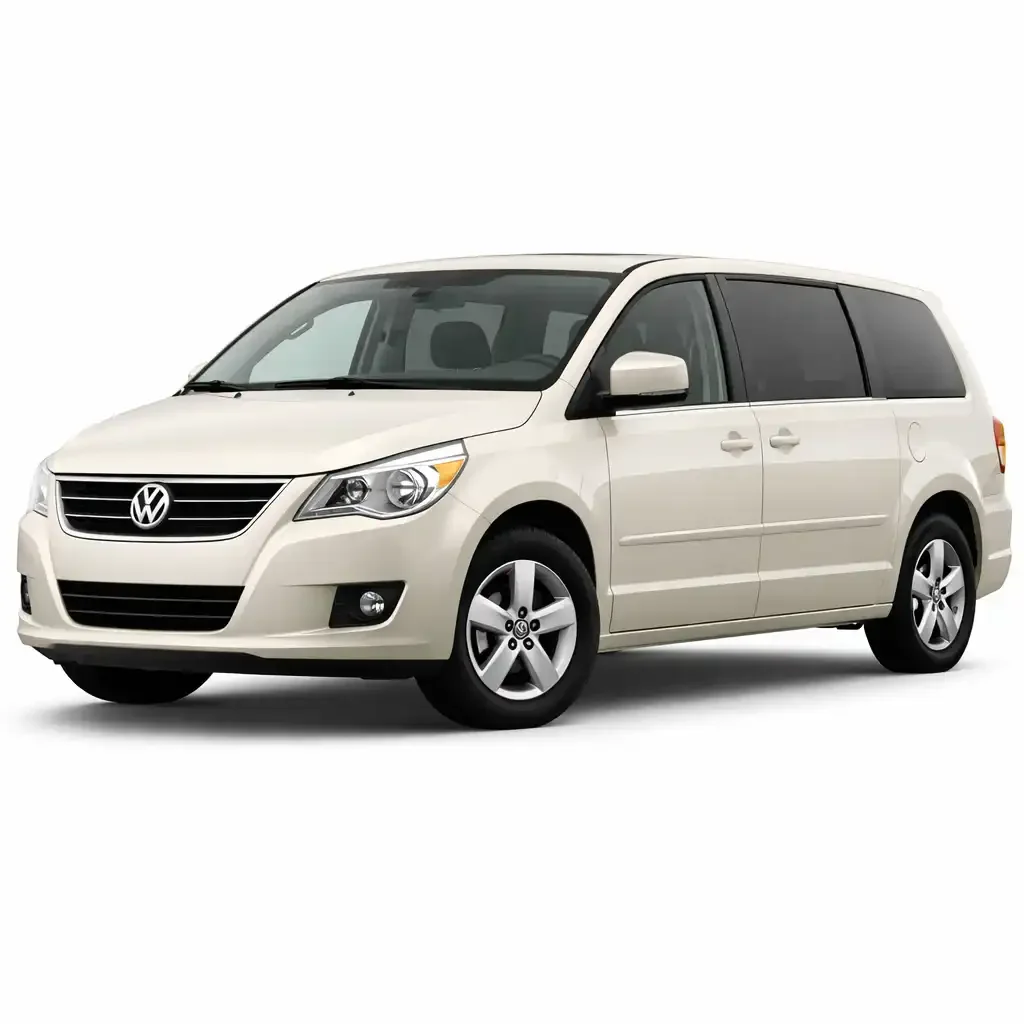
The 2003 to 2009 Volkswagen Van with a 1.8-litre four-cylinder engine and manual transmission is one of the most contextually unusual entries in the North American aftermarket catalog. The vehicle in question is the Volkswagen Type 2 T2c -- the final evolution of the second-generation Transporter, built in Puebla, Mexico and later sourced from the Volkswagen plant in Sao Bernardo do Campo, Brazil, and sold in Mexico and Latin American markets. It was never imported new to the United States. It was never sold at an American Volkswagen dealer. It shares its basic body architecture with a van designed in the 1960s and refined into the 1990s, and it uses a water-cooled inline-four engine that is physically front-mounted for cooling purposes yet drives the rear wheels through a rear-mounted transaxle.
For aftermarket parts sellers, this ACES application requires a different kind of context than most VW catalog entries. The vehicle identification, the engine architecture, the body variants, and the relationship between this T2c and earlier Type 2 generations all require clear qualification. A seller who catalogs this application without understanding what the T2c is -- and is not -- will generate persistent fitment errors, because the body-side and drivetrain-side parts relationships are unusual and not intuitive from the year range alone.
This post maps the T2c production context for the 2003 to 2009 window, its engine and transmission, the body variants that determine exterior and interior parts fitment, and the cross-reference boundaries that separate this vehicle from earlier Type 2 generations and from other contemporary Volkswagen products.
What the T2c Is: Production Context for the 2003-2009 Window
The Volkswagen Type 2 is the second-generation Transporter, informally known in Mexico and Latin America as the Combi or Kombi, introduced in 1967 as a successor to the split-windshield T1. German production ended in 1979. Production continued in Mexico through 1994, and in Brazil through 2013.
The T2c designation refers to the raised-roof variant of the second-generation Type 2 that emerged in the early 1990s for the Mexican and Latin American markets, with a roof raised approximately 10 cm over the T2b to increase interior headroom. For the 2003 to 2009 period covered by the ACES application, the vehicles in service in Mexico were sourced from the Brazilian plant, which built the T2c with the water-cooled 1.8-litre inline-four and Digifant fuel injection for the Mexican market. The Brazilian plant simultaneously built a separate air-cooled version for its domestic market until 2005, at which point Brazil also switched to a water-cooled engine. These are different vehicles for parts purposes -- the 1.8-litre water-cooled Digifant engine is specific to the Mexico-destined (and later export) T2c.
The key facts that define this ACES application:
The T2c uses the Bay Window body -- the same basic cab-over, rear-engine van body introduced in 1967 -- with the T2c's raised roofline. The engine is a water-cooled 1.8-litre inline-four mounted in the rear of the vehicle, with the radiator and cooling circuit located at the front. This creates a unique cooling architecture: coolant travels the full length of the vehicle through pipes running beneath the floor, from the front-mounted radiator to the rear-mounted engine. The drivetrain is rear-wheel drive through a rear-mounted transaxle. The manual transmission is the standard offering for this market and production window.
The 1.8-Litre Water-Cooled Engine: Architecture and Fitment Boundaries
The 1.8-litre water-cooled inline-four in the Mexico-market T2c is an EA827-derived engine with Bosch Digifant fuel injection. In the 2003-2009 production window it produces approximately 90 hp. It is a front-to-rear cooling circuit engine in a rear-engine vehicle -- the single most important architectural fact for any cooling system part listing.
Key points for the 1.8-litre Digifant engine:
This engine is an inline-four mounted transversely in the rear engine bay. Its basic architecture is shared with the EA827 engine family used across many Volkswagen and Audi products from the 1970s onward, but the specific configuration -- rear-mounted in a van body, with the cooling circuit running the full length of the vehicle to a front radiator -- is unique to the T2c. Cooling hoses, coolant pipes, and radiator specifications are T2c-specific and do not cross-reference to any front-engine VW application.
The Digifant fuel injection system on the T2c is the same management architecture used on the 1986-1991 T3 Vanagon 2.1-litre Wasserboxer, but the engine itself is completely different. The Vanagon uses a horizontally opposed boxer engine; the T2c uses an upright inline-four. ECU, airflow sensor, injector specifications, and fuel delivery components are specific to the T2c 1.8-litre application. A Digifant ECU from the T3 Vanagon does not fit the T2c and vice versa. Sellers who note the shared Digifant system name and assume cross-reference will catalog incorrect parts.
The timing belt is a critical service item on this engine. The EA827-family inline-four uses a rubber timing belt to drive the overhead camshaft. Belt replacement is a required service interval. Timing belt, tensioner, and water pump (which is typically replaced at the same time as the belt on this engine family) must be specified for the T2c 1.8-litre application. Timing belt components from the EA827 engine in front-engine Golf, Jetta, or Passat applications may share architecture but require part number verification before cross-referencing, because the belt routing and accessory drive layout in the rear-mounted T2c configuration may differ from front-engine installations.
The exhaust system -- manifold, catalytic converter, and muffler -- is rear-mounted with a short tailpipe exit at the rear of the vehicle. This is not comparable to any front-engine VW exhaust layout. The catalytic converter is present on the Mexico-market T2c to meet Mexican emission standards, and is specific to this application.
Cooling System: The Most Important Parts Split on This Vehicle
Because the engine is mounted at the rear and the radiator is mounted at the front, the T2c cooling circuit is unlike any front-engine Volkswagen application in the catalog. This creates the single most consequential fitment boundary on the vehicle for parts sellers.
The front-mounted radiator is connected to the rear engine by long coolant pipes or hoses running beneath the floor pan. These are T2c-specific. The radiator itself -- mounted at the front of the vehicle, behind a grille visible on the lower nose -- is a T2c-specific unit. It is not the same as the Vanagon T3 radiator (which is also front-mounted on the Wasserboxer T3, but on a completely different vehicle body with different mounting geometry). It is not related to any front-engine VW radiator.
The water pump is driven by the timing belt on the 1.8-litre inline-four. It is an integral part of the engine's internal components and is specific to the EA827 family as installed in this application. Water pump failure or timing belt failure in this engine typically results in immediate loss of coolant pressure and engine overheating -- a well-known failure mode on this engine family.
Thermostat, coolant reservoir, and associated hoses are all T2c-specific for the long-run cooling circuit. Do not cross-reference cooling components from the T3 Vanagon, the T4 Eurovan, or any front-engine VW product without part number verification.
Transmission
The standard transmission on the Mexico-market T2c in the 2003-2009 window is a 4-speed manual. This is the same basic transaxle family carried over from the earlier T2 generations -- a rear-mounted unit combined with the final drive -- but the specific variant used with the water-cooled 1.8-litre engine has updated seals, bearings, and shift mechanism components compared to the units used with the earlier air-cooled engines.
The transaxle is rear-mounted alongside the engine. Because both the engine and transaxle are at the rear, the clutch assembly connects directly between the engine and the transaxle without a driveshaft running the length of the vehicle. Clutch kit specifications are for the 1.8-litre water-cooled engine pairing, not for earlier air-cooled T2 applications. A clutch kit listed for a 1970s T2 with an air-cooled engine is not a confirmed fit for the water-cooled T2c.
Transmission code verification is required for internal components, synchronizer rings, and seals. The basic T2 transaxle family was used across decades of production with internal updates that are not always visible from the exterior. Transaxle code, not just "4-speed manual Volkswagen Van," is the correct qualifier for internal drivetrain parts.
Body Variants
The T2c was produced in two primary body configurations for the Mexican market during the 2003-2009 window:
The Combi (Kombinationskraftwagen) -- the passenger van configuration seating up to 9 passengers across three rows. This is the dominant configuration in the aftermarket parts population for this window. All glass areas, seat hardware, and interior trim are Combi-specific.
The Panel Van (Furgoneta) -- the cargo van configuration with solid rear quarter panels and no rear side windows. Panel van-specific body components -- rear quarter panels, sliding door hardware -- differ from Combi components where windows are involved.
Both configurations share the same Bay Window body structure, the same raised T2c roofline, the same front clip, and the same drivetrain and engine bay. Engine, cooling, suspension, brake, and chassis parts apply equally to both body variants unless otherwise specified.
The raised T2c roofline -- approximately 10 cm higher than the T2b -- means that roof panels, roof seals, and upper door seals for the T2c are not interchangeable with the standard-height T2a or T2b body. Sellers listing roof-related body components must specify T2c (raised roof) vs. earlier T2 variants.
The front clip -- hood, front bumper, front grille, headlights -- is the Bay Window T2 design. The most distinctive external identifier of the T2c vs. all earlier T2 generations is the front-mounted radiator grille opening. All T2a and T2b models have plain sheet metal or a spare tire carrier where the T2c has a radiator grille. This grille and the associated lower front panel are T2c-specific parts. They do not apply to any earlier T2 body. Sellers who catalog by "Type 2 / Bay Window" without specifying T2c for front grille and lower panel components will cross-match T2c buyers with incorrect pre-water-cooled body parts.
Suspension and Brakes
The T2c uses torsion bar front suspension and swing-axle or IRS (independent rear suspension) rear suspension, consistent with the T2 platform. Front disc brakes and rear drum brakes are the standard configuration. These specifications are consistent with the T2 family across its production run, making suspension and brake components a relatively stable cross-reference category within the T2 family -- but only within confirmed T2c production years.
Because the T2c shares suspension geometry with earlier T2b production, suspension components including front torsion bars, ball joints, tie rods, and wheel bearings cross-reference at the part number level between T2b and T2c variants in many cases. Brake disc and drum specifications are consistent with the T2 family for the same wheel configuration.
Wheel size is the required qualifier for brake component listings. The standard wheel on the Mexico-market T2c is 14 inches. Brake rotor and drum dimensions are keyed to wheel size and must be verified by wheel size, not just by model.
Critical Catalog Context: What the T2c Is Not
Because the T2c shares the "Volkswagen Van" name in ACES with the T3 Vanagon and the T4 Eurovan, catalog errors that conflate these three vehicles are common and consequential. They are entirely different vehicles.
The T3 Vanagon (1980-1991) is the third-generation Transporter with a cab-over body, rear engine, and a horizontally opposed Wasserboxer or air-cooled engine. It shares no body panels, no cooling system components, and no engine parts with the T2c. The T3 is larger than the T2c overall and has different suspension geometry.
The T4 Eurovan (1993-2003) is the fourth-generation Transporter with a front-engine, front-wheel-drive layout, an inline-four or inline-five cylinder engine, and a completely different platform and body. It does not share any drivetrain, engine, or body components with the T2c.
A parts listing for "Volkswagen Van" that spans all three generations without a body style, engine, or platform qualifier is not a correctly cataloged application. The T2c, T3, and T4 are three fundamentally different vehicles sharing a nameplate.
Common ACES/PIES Mistakes for 2003 to 2009 Volkswagen Van T2c 1.8L
Cross-referencing cooling system components from T3 Vanagon or T4 Eurovan applications. The T2c has a front-mounted radiator on a rear-engine vehicle with long-run coolant pipes. No other production VW shares this specific cooling layout in this production window. All cooling parts are T2c-specific.
Cross-referencing Digifant ECU or fuel injection components from the T3 Vanagon 2.1-litre application. The T3 Vanagon uses a Wasserboxer flat-four with Digifant. The T2c uses an inline-four with Digifant. Same system name, completely different engines and applications.
Listing timing belt and water pump components from front-engine EA827 Golf, Jetta, or Passat applications without part number verification. The EA827 engine family is shared, but rear-mounting in the T2c may require different accessory drive routing. Verify by part number, not by engine family name alone.
Applying T2a or T2b front body components (hood, grille, lower front panel) to the T2c. The T2c has a radiator grille opening at the front. Pre-T2c Bay Window vans do not. These are different front-end body parts.
Applying T2b roofline seals, roof panels, or upper door seals to the T2c. The T2c has a raised roofline approximately 10 cm taller than T2b. Roof-related body components are not interchangeable.
Listing clutch kits from earlier air-cooled T2 applications for the T2c. The water-cooled 1.8-litre engine has different clutch specifications from the air-cooled engines used in T2a and T2b production.
Spanning the T2c, T3, and T4 in a single "Volkswagen Van" application record for any engine, drivetrain, cooling, or body component. These three vehicles share nothing of consequence and must be cataloged as separate applications in every part category.
Listing exhaust components from front-engine VW applications for the T2c. The T2c exhaust is rear-mounted and exits at the rear of the vehicle. No front-engine VW exhaust component applies.
Applying T2c parts to the Brazil-domestic-market T2c built with the 1.4-litre flex-fuel engine (post-2005). That engine -- sourced from the VW Fox -- is a different displacement and different engine family from the 1.8-litre Digifant unit in the Mexico-market T2c. Engine code verification is required.
Listing Panel Van rear body components as applying to the Combi. Rear quarter panels with windows (Combi) and without windows (Panel Van) are different parts. Body configuration must be specified for all rear quarter panel, glass, and sliding door window components.
Catalog Checklist for 2003 to 2009 Volkswagen Van T2c 1.8L
Confirm body generation is T2c (Bay Window with raised roof and front radiator grille) before applying any part -- do not apply to T2a, T2b, T3, or T4
Require engine code confirmation (1.8-litre Digifant inline-four, EA827 family, rear-mounted) for all engine, fuel system, and emission parts
Require T2c-specific cooling system parts for all radiator, hose, coolant pipe, thermostat, and water pump listings -- do not cross-reference from any front-engine VW application
Require timing belt and water pump pairing -- these are linked service items on the EA827 inline-four
Require body configuration (Combi passenger van vs. Panel Van) for all rear quarter panel, rear glass, and sliding door window components
Require wheel size for brake rotor and drum specifications
Require T2c roofline (raised, 10 cm taller than T2b) for all roof panel, roof seal, and upper door seal listings
Note that the Digifant ECU on the T2c is not interchangeable with the T3 Vanagon Digifant ECU -- different engine architecture despite same management system name
Do not apply any T3 Vanagon or T4 Eurovan part numbers to the T2c under a shared "Volkswagen Van" application
Cross-Reference Logic
Volkswagen Type 2 T2b (Bay Window, pre-T2c): Same basic body structure and suspension geometry. Suspension components cross-reference with verification. Front body panels (hood, grille) do not -- the T2c has a radiator grille opening the T2b does not. Engine and cooling components do not cross-reference (T2b is air-cooled).
Volkswagen Golf / Jetta (EA827 1.8-litre engine family, same era): The 1.8-litre inline-four shares EA827 architecture with front-engine Golf and Jetta applications. Internal engine components -- pistons, connecting rods, camshaft -- may cross-reference at the part number level. Cooling system, exhaust, and accessory drive components do not -- the rear-mounting in the T2c creates a different configuration. Verify all cross-references by part number.
Volkswagen T3 Vanagon (1980-1991): Different generation, different body, different engine. No drivetrain, engine, or body component interchangeability. Do not cross-reference.
Volkswagen T4 Eurovan (1993-2003): Different generation, front-engine front-wheel-drive platform. No interchangeability with T2c. Do not cross-reference.
Brazil-market T2c (1.4-litre EA111 Total Flex, 2006-2013): Same body generation, different engine family entirely. Engine and fuel system components are not interchangeable between the 1.8-litre Digifant Mexico-market unit and the 1.4-litre flex-fuel Brazil-market unit.
Frame all cross-references as "may also fit" with engine code, body generation, and production market qualifiers.
Final Take
The 2003 to 2009 Volkswagen Van T2c is one of the most context-dependent applications in the VW aftermarket catalog. Its presence in ACES reflects an active parts population in the Mexican and Latin American aftermarket for a vehicle that has no US retail history and sits in a product generation that predates most of the contemporary VW catalog by decades. The body is a Bay Window van. The engine is a modern-era inline-four with fuel injection and a timing belt. The cooling circuit runs front-to-rear on a rear-engine vehicle. None of those three facts can be assumed from the "Volkswagen Van 2003-2009" label alone.
The three attributes that determine correct fitment: body generation confirmation (T2c, not T3 or T4), engine code (1.8-litre Digifant inline-four, rear-mounted), and body configuration (Combi vs. Panel Van) for rear body and glass components. Apply those consistently and the T2c becomes a cleanly cataloged, clearly bounded application. Leave them out, and the combination of generational naming overlap, shared Digifant nomenclature with the T3, and shared EA827 engine family naming with front-engine VW products will produce a high rate of incorrect fitment across every major parts category.
Disclaimer: This guide is based on publicly available specifications, manufacturer documentation, and independent research. Part interchangeability should always be confirmed via VIN and OEM part number lookup. Specifications may change without notice. This document does not constitute official Volkswagen parts catalog data.