
Written by Arthur Simitian | PartsAdvisory
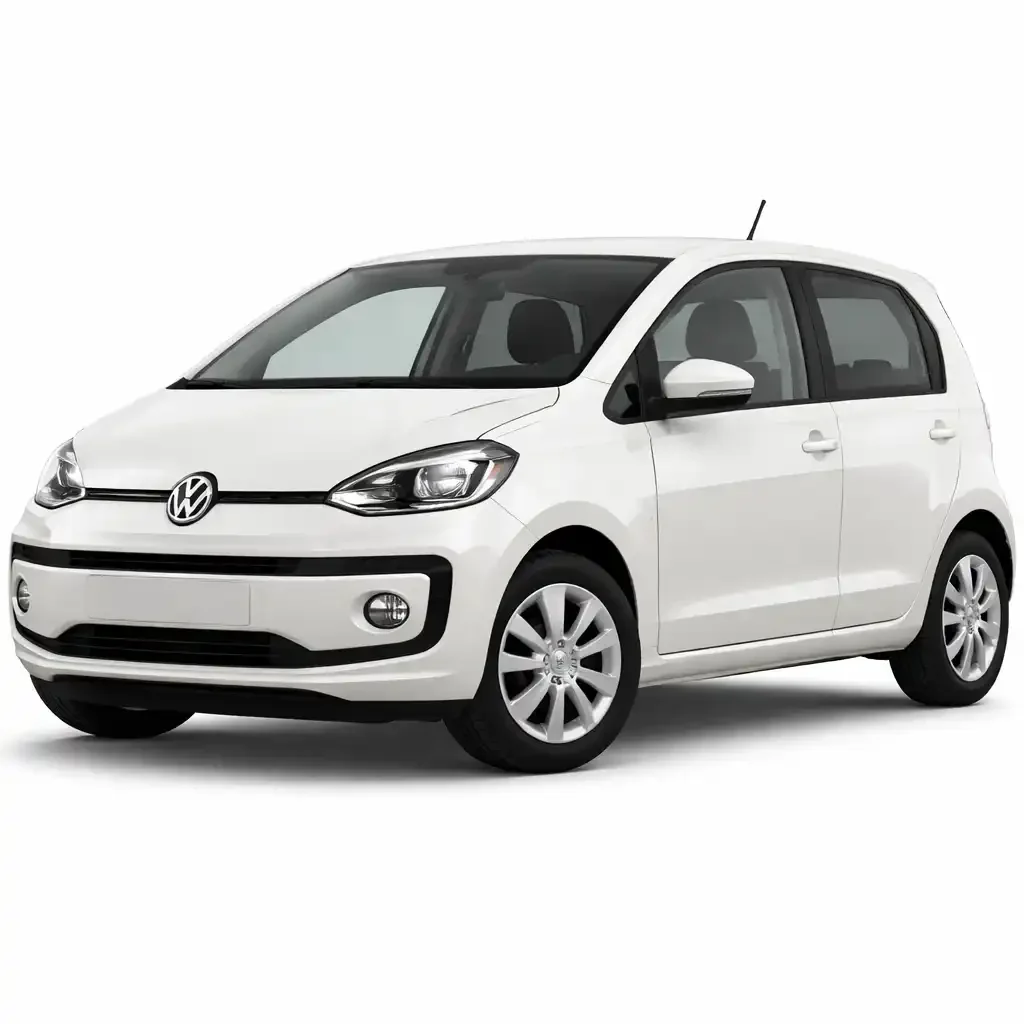
The 2016 Volkswagen Up! facelift marks the start of the second and final production phase of the first-generation Up!, running from the 2016 Geneva Motor Show introduction through the model's discontinuation in October 2023. The facelift is not a cosmetic refresh only -- it introduced a new turbocharged engine variant that did not exist on the pre-facelift car, updated bumpers, LED lighting options, a new touchscreen infotainment system, and driver assistance features not present before. For aftermarket parts sellers, 2016 is the production boundary between two meaningfully different vehicles that share the same nameplate, the same platform, and much of the same body.
The Up! is sold in Europe, South Africa, Japan, and Latin America (as a longer-wheelbase variant built in Brazil), but never in North America, China, the Middle East, India, or Southeast Asia. This market scope matters for parts cataloging because the Latin American Up! -- sold in Brazil, Argentina, and other markets -- is a different length and has a different floorpan rear section from the European model. Parts that differ between the European and Latin American variants include the rear floor, fuel tank, and associated components. Sellers listing parts for the Up! without a market qualifier are cataloging for two physically different vehicles as if they were one.
This post maps the 2016 facelift Up! across its engine variants, transmission options, body styles, market differences, and the fitment variables that determine whether a part is correct.
Platform Overview: NSF Architecture, Stable Through the Facelift
The Up! is built on the Volkswagen Group NSF (New Small Family) platform, shared with the SEAT Mii and Skoda Citigo. The body code is AAI for the three-door variant and AAJ for the five-door. Both body codes share the same wheelbase and the same fundamental underbody architecture.
The NSF platform uses MacPherson strut front suspension and a semi-independent torsion beam rear axle. Front brakes are ventilated discs. Rear brakes are drums on all standard models. The platform is front-engine, front-wheel-drive throughout -- there is no 4WD or AWD option on any Up! variant.
The facelift did not change the platform geometry, suspension specifications, or brake architecture. This means suspension and brake components that are correct for a 2012 to 2015 pre-facelift Up! with the same body style and wheel size are generally correct for the 2016 onward facelift as well -- platform and suspension parts are among the most reliable cross-fits across the facelift boundary.
The exception is where the 2016 facelift introduced components tied to new engine variants or new electronic systems. Front engine mount and subframe specifications may vary between the 1.0 MPI naturally aspirated and the 1.0 TSI turbocharged engine, since the TSI adds a turbocharger and intercooler with different underbonnet packaging. Engine mount and subframe bracket parts must be verified by engine code, not just by model year.
Two Production Periods: Pre-Facelift and Facelift
The facelift boundary at 2016 creates a hard split for the following component categories:
Front bumper, front grille, and associated front lower trim changed at the facelift. The 2016 facelift introduced a revised front bumper with a wider lower air intake and updated daytime running light integration. Pre-2016 front bumper assemblies and grille trims are not interchangeable with 2016 onward parts.
Headlight assemblies changed at the facelift with the introduction of LED daytime running light options on higher trim levels. Halogen headlights and LED-equipped headlight assemblies are different units and are not interchangeable with each other or with pre-facelift headlight housings.
Rear bumper and tail lamp assemblies were also updated at the facelift. The tail lamp housing and lens pattern differ between pre-2016 and 2016 onward production.
Infotainment and dashboard trim changed substantially. The 2016 facelift introduced a 6.5-inch touchscreen with Apple CarPlay and Android Auto as standard on higher trims. This is a different unit from the pre-facelift system. Dashboard-associated trim panels around the infotainment unit differ between pre-facelift and facelift production.
Any listing that spans "Volkswagen Up! 2012 to 2023" as a single application for front or rear exterior trim, lighting, or infotainment components is not correctly cataloged.
Engine Variants on the 2016 Facelift
The 2016 facelift Up! was offered with three engine options in the European market. All are 1.0-litre three-cylinder units but they differ in fuel delivery, induction, fuel type, and power output in ways that make them distinct applications for all fuel system, induction, exhaust, and emission components.
1.0 MPI Naturally Aspirated Petrol (60 PS and 75 PS)
The 1.0 MPI is a naturally aspirated three-cylinder with multi-point indirect fuel injection. It is available in two power outputs -- 60 PS and 75 PS -- achieved through different engine calibrations of the same basic unit. Both outputs use the same fuel system architecture: multi-point injection with a conventional fuel rail and injectors, no turbocharger, and no intercooler.
The 60 PS and 75 PS MPI variants share the same block, head, and injection hardware. Power difference is calibration-based. For most aftermarket parts -- air filter, fuel filter, injectors, spark plugs, ignition coils, timing belt, water pump -- the 60 PS and 75 PS MPI are the same application. The engine code must still be confirmed for electronic components such as the ECU and sensors, where calibration differences may result in different part numbers.
The 1.0 MPI is the only engine on the European facelift Up! available with the five-speed automated sequential gearbox (ASG), also known as the automated manual transmission (AMT). This is an automated version of the five-speed manual that uses the same gear ratios and internal components as the manual but adds an electro-hydraulic actuator system for clutch and gear engagement. The ASG is not a torque converter automatic. Clutch components and internal gear components for the ASG are the same as for the manual -- the critical distinction is that ASG vehicles have a clutch actuator and gear actuator assembly that purely manual vehicles do not.
Transmission type (5-speed manual vs. 5-speed ASG) is a mandatory qualifier for clutch kits and actuator components on 1.0 MPI applications.
1.0 TSI Turbocharged Petrol (90 PS)
The 1.0 TSI is a turbocharged three-cylinder introduced with the 2016 facelift. It did not exist on the pre-facelift Up!. This is the most significant parts split created by the 2016 facelift: any component related to forced induction, charge cooling, boost control, or associated fuel system calibration applies only to the 2016 onward TSI variant and has no application on any pre-facelift Up! or on the facelift 1.0 MPI.
The 1.0 TSI uses direct injection, a turbocharger, and a charge air cooler (intercooler). It produces 90 PS with a 5-speed manual gearbox only -- the ASG was not offered with the TSI on the European market Up! in this production window. The TSI engine bay has different underbonnet packaging from the MPI, with the turbocharger, intercooler piping, and charge air cooler taking space that is open on the MPI. Engine mounts and front subframe bracket positions may differ.
Parts that apply only to the 1.0 TSI and not to the 1.0 MPI: turbocharger assembly, intercooler/charge air cooler and associated piping, boost pressure sensor, wastegate components, and TSI-specific fuel rail and direct injection injectors. Parts that apply only to the 1.0 MPI and not to the 1.0 TSI: MPI fuel rail, multi-point injectors, and throttle body of different specification.
Engine code is a mandatory qualifier for all fuel system, induction, turbocharger, exhaust, and emission component listings. The 1.0 MPI and 1.0 TSI are different engines that require separate application records for these parts.
1.0 EcoFuel / TGI (68 PS, CNG)
The 1.0 EcoFuel (also referred to as TGI in some markets) is a compressed natural gas variant of the 1.0-litre three-cylinder. It runs primarily on CNG stored in two underfloor tanks (one located ahead of the rear axle, one in the spare wheel recess), with a small 10-litre reserve petrol tank for when CNG is unavailable. It produces 68 PS.
The EcoFuel engine has a higher compression ratio than the petrol MPI variants, reinforced valves and valve seat rings for CNG combustion, and a supplemental CNG distributor integrated into the induction manifold. The fuel system -- CNG pressure regulators, CNG injectors, CNG tank hardware, and the high-pressure gas plumbing -- is entirely specific to the EcoFuel application. No petrol fuel system component from the MPI or TSI applies to the EcoFuel gas delivery circuit.
The EcoFuel variant uses the spare wheel recess for its second CNG tank. This means the EcoFuel Up! has no spare wheel in the standard location. Spare wheel carrier and jack storage components are different on EcoFuel models. The underfloor CNG tank also means that underfloor components near the rear axle differ between EcoFuel and petrol models.
EcoFuel / CNG designation is a mandatory qualifier for all fuel system, tank, and underfloor rear section components.
Transmissions
The facelift Up! uses two transmission types, and the distinction matters for drivetrain parts:
The five-speed manual gearbox is the standard offering across all three engine variants in the European market. It is a cable-operated unit with a conventional dry clutch. Clutch kit specifications vary by engine pairing -- the clutch for the 1.0 TSI is a different specification from the 1.0 MPI clutch due to the higher torque output of the turbocharged engine.
The five-speed ASG automated sequential gearbox is available only on the 1.0 MPI (both 60 PS and 75 PS) in the European market. It uses the same internal gearset as the manual but adds an electro-hydraulic actuator for clutch and gear selection. The actuator system, its control unit, and associated hydraulic components are ASG-specific. Internal gear components for the ASG are the same as the manual and cross-reference at the part number level for the same engine application.
Engine code combined with transmission type is the mandatory qualifier for clutch kits. 1.0 MPI manual clutch, 1.0 TSI manual clutch, and ASG clutch actuator are three distinct product applications.
Body Styles: Three-Door and Five-Door
The Up! was produced in three-door (AAI) and five-door (AAJ) body styles throughout the production run, including the 2016 facelift. Both body styles share the same wheelbase, the same front clip, the same engine bay, and the same platform.
The rear door and associated body hardware differ between three-door and five-door configurations. The three-door has longer front doors and rear quarter windows that do not open. The five-door has shorter front doors and opening rear doors with their own glass, seals, and hinges. Rear door glass, rear door weatherstrips, rear door hinges, and associated trim are body style-specific.
Body style (three-door AAI vs. five-door AAJ) is a required qualifier for all rear door glass, rear door weatherstrip, rear door hinge, and rear quarter panel component listings.
Market Variants: Europe vs. Latin America
The Latin American Up! -- sold in Brazil, Argentina, and other markets, built at Taubaté in Brazil -- differs from the European model in a critical dimension: it is 65 mm longer, due to a revised rear floorpan section that accommodates a larger 50-litre fuel tank (vs. the European car's 35-litre tank), a full-size spare wheel, and increased cargo space. This length difference is entirely in the rear overhang.
Parts that differ between European and Latin American Up! as a result of this body difference include the rear floor panel, the fuel tank, the spare wheel carrier, and any rear body components tied to the extended rear section. Front clip, doors, glass, engine, and running gear components are shared.
The Latin American Up! also has different engine options from the European market -- the Brazilian version uses a flex-fuel 1.0 MPI capable of running on petrol or ethanol (E100), and the turbocharged 1.0 TSI with flex-fuel capability. These are different engine calibrations from the European petrol-only versions. ECU, fuel system sensor calibration, and catalytic converter specifications may differ between the European and Latin American engine variants.
Market designation (Europe vs. Latin America) is a required qualifier for fuel tank, rear floor, spare wheel carrier, and ECU/sensor listings.
Cross-Reference Logic: SEAT Mii and Skoda Citigo
The SEAT Mii and Skoda Citigo are rebadged versions of the Up! built on the same NSF platform at the same Bratislava plant. They share the same engine options, the same platform dimensions, and much of the same underbody and drivetrain hardware.
Platform, suspension, brake, and drivetrain components cross-reference between the Up!, Mii, and Citigo at the part number level for the same engine and body style. This is a commercially useful cross-reference that expands the parts pool for all three models.
Front and rear bumpers, grilles, headlight assemblies, tail lamp assemblies, and all exterior fascia components do not interchange -- each brand has distinct styling that is specific to its own front and rear design. Interior brand-specific trim components also do not interchange.
Frame all Mii and Citigo cross-references as "may also fit" with engine code, body style, and production year qualifiers. The Skoda Citigo received its own facelift in 2017, one year after the Up!, which means the Citigo facelift boundary is at a different year from the Up! facelift boundary and must be tracked separately.
Common ACES/PIES Mistakes for the 2016 Volkswagen Up! Facelift
Treating "Volkswagen Up! 2012 to 2023" as a single application for exterior trim, lighting, bumper, or infotainment components. The 2016 facelift changed front and rear bumpers, headlights, tail lamps, and the infotainment system. These are hard boundaries.
Listing 1.0 MPI fuel system or induction components as applying to the 1.0 TSI. The TSI uses direct injection and forced induction. The MPI uses multi-point injection with no turbocharger. Injectors, fuel rail, turbocharger, intercooler, and boost system parts are engine-specific.
Listing the 1.0 TSI as available on pre-2016 Up! production. The TSI was introduced with the 2016 facelift. It does not apply to 2011 to 2015 cars.
Not distinguishing EcoFuel/TGI CNG fuel system components from petrol fuel system components. The CNG gas delivery circuit is a completely different system from either petrol fuel system. CNG injectors, pressure regulators, and tank components have no application to petrol variants.
Listing clutch kits without specifying engine code. The 1.0 TSI clutch is a different specification from the 1.0 MPI clutch due to different torque output. Applying the MPI clutch specification to a TSI application will produce a fitment error.
Listing clutch kits or actuator components without specifying manual vs. ASG transmission. The ASG uses the same gears as the manual but has a different clutch actuation system. The actuator assembly is ASG-specific.
Applying European fuel tank, rear floor, or spare wheel components to the Latin American Up!. The Latin American body is 65 mm longer with a different rear floorpan and a 50-litre vs. 35-litre fuel tank. These are different parts.
Cross-referencing SEAT Mii or Skoda Citigo exterior fascia components to the Up!. All three share the NSF platform but have different front and rear styling. Bumpers, grilles, headlights, and tail lamps are brand-specific.
Spanning the three-door and five-door body styles for rear door glass, weatherstrips, and rear door hinges. These components are body style-specific.
Applying a single ECU or sensor application across European and Latin American markets. The flex-fuel Latin American engine calibration differs from the European petrol-only calibration in ECU mapping and potentially in sensor specifications.
Catalog Checklist for the 2016 Volkswagen Up! Facelift
Require production period (pre-2016 vs. 2016 facelift onward) for all exterior trim, lighting, bumper, and infotainment components
Require engine code for all fuel system, induction, turbocharger, ignition, exhaust, and emission parts -- the 1.0 MPI, 1.0 TSI, and 1.0 EcoFuel are three distinct applications
Require transmission type (5-speed manual vs. 5-speed ASG) for clutch kits and actuator components
Require engine code combined with transmission type for clutch specification -- 1.0 TSI and 1.0 MPI use different clutch specifications
Require body style (3-door AAI vs. 5-door AAJ) for rear door glass, rear door weatherstrips, rear door hinges, and rear quarter panel components
Require market designation (Europe vs. Latin America) for fuel tank, rear floor panel, spare wheel carrier, and ECU/sensor listings
Note that the 1.0 TSI did not exist before the 2016 facelift -- do not apply TSI turbocharger or direct injection listings to pre-2016 production
Note that EcoFuel/TGI CNG fuel system components do not apply to any petrol variant
Cross-reference SEAT Mii and Skoda Citigo for NSF platform and drivetrain components only -- not for exterior fascia, lighting, or brand-specific interior trim
Note that the Skoda Citigo facelift boundary is 2017, not 2016 -- track separately from the Up! facelift year
Final Take
The 2016 Volkswagen Up! facelift production window is a compact but fitment-rich application. A single nameplate covers three different engine architectures that share a displacement figure but differ in induction, fuel delivery, and fuel type. Two body styles share a wheelbase but split on rear door geometry. Two markets share a model name but differ in body length, fuel tank size, and engine calibration. And the 2016 facelift boundary itself creates a hard split in exterior trim and lighting from the earlier five years of pre-facelift production.
The five attributes that determine correct fitment on the 2016 Up!: production period (pre-facelift vs. facelift), engine code (1.0 MPI, 1.0 TSI, or 1.0 EcoFuel), transmission type (manual vs. ASG), body style (three-door vs. five-door), and market (Europe vs. Latin America) for rear body and fuel system parts. The NSF platform is consistent and well-shared with the Mii and Citigo, which expands the parts pool for running gear. Everything above the platform surface requires qualification.
Disclaimer: This guide is based on publicly available specifications, manufacturer documentation, and independent research. Part interchangeability should always be confirmed via VIN and OEM part number lookup. Specifications may change without notice. This document does not constitute official Volkswagen parts catalog data.