
Written by Arthur Simitian | PartsAdvisory
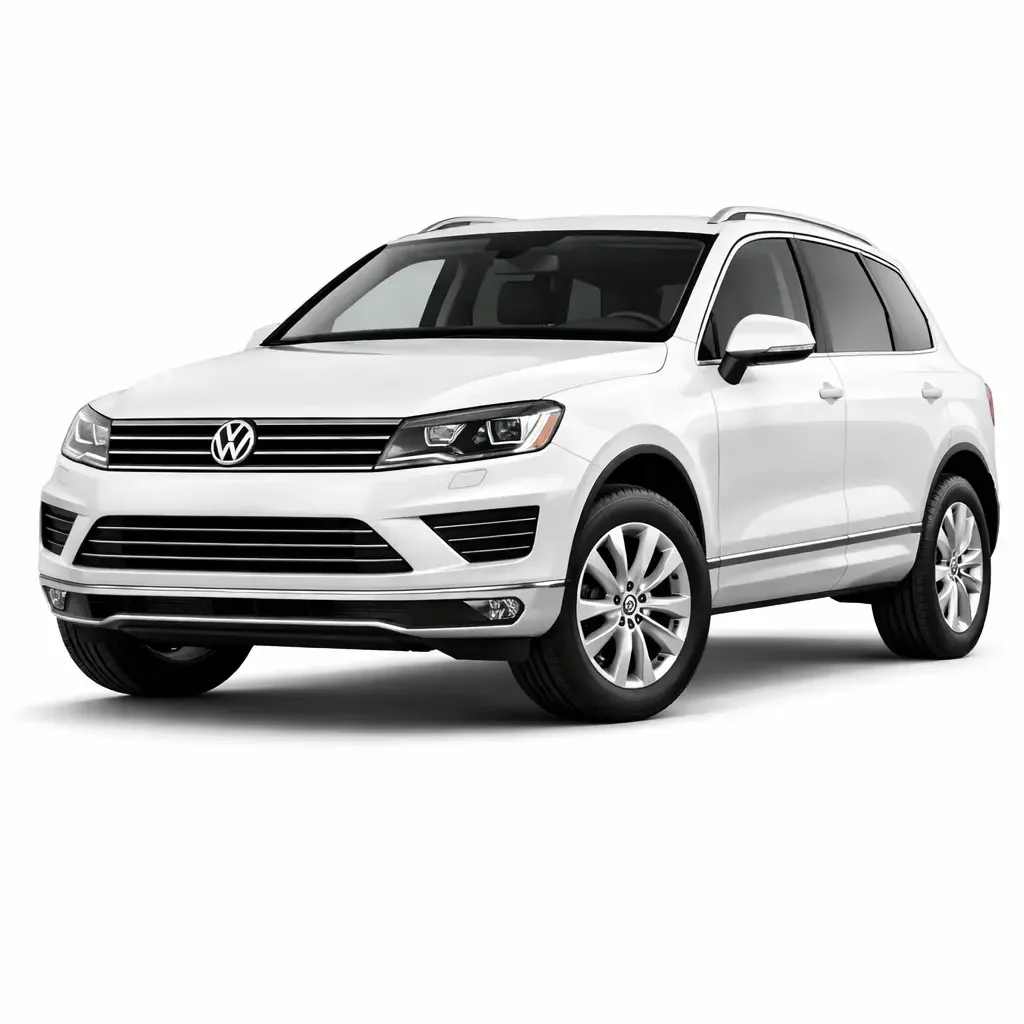
The second-generation Volkswagen Touareg, internal designation 7P, ran from the 2011 model year through the 2018 model year. Production began in 2010 and concluded in 2018. The 7P represented a complete architectural departure from its predecessor: where the first-generation 7L shared the PL71 platform with the Porsche Cayenne and Audi Q7, the 7P moved to Volkswagen Group's MLB (Modular Longitudinal Matrix) platform, sharing underbody architecture with the second-generation Audi Q7 (4M) and Porsche Cayenne (92A). This platform transition is the most commercially significant structural fact in the 7P parts story and is the primary reason first-generation and second-generation Touareg components do not cross.
The 7P is a technically refined vehicle for aftermarket catalog management. Its engine range was rationalized compared to the 7L: the V10 TDI and W12 were discontinued, and the lineup consolidated around a V6 TDI, a V6 petrol, a V8 TDI, and a petrol-electric hybrid system. Air suspension remained a standard feature on higher trim levels and a factory option on base grades, making suspension type a mandatory catalog qualifier for every suspension application. A facelift introduced for the 2015 model year (mid-2014 production onward) changed exterior panels, lighting units, and interior hardware in ways that split the catalog for body and trim components.
This guide maps the engine codes, transmission codes, suspension configurations, facelift boundaries, and platform relationships that govern correct parts application for the Touareg 7P.
Platform Overview
The MLB platform is a front-engine, longitudinal layout architecture with fully independent suspension at all four corners. All Touareg 7P variants are four-wheel drive; no two-wheel-drive configuration was offered. The permanent all-wheel-drive system uses a Torsen-type center differential, available with rear axle locking differential on selected markets and trim levels.
The platform relationship with the Audi Q7 4M and Porsche Cayenne 92A means that many underbody components cross among these three vehicles. Front and rear control arms, wheel bearings, subframe mounting hardware, and brake components carry meaningful cross-application potential. All cross-references must be validated against production year, engine application, and suspension type. The Q7 4M and Cayenne 92A each received their own mid-cycle revisions independent of the Touareg 7P facelift, and production period alignment must be confirmed before applying any cross-reference.
The Touareg 7P wheelbase is 2893 mm. The Q7 4M is longer with a third-row seat option; body, floor, and wheelbase-dependent components do not cross between the two vehicles despite the shared platform.
Production Periods and the 2014 Facelift
The Touareg 7P has two distinct production phases divided by a mid-cycle facelift introduced for the 2015 model year, with production transitioning approximately mid-2014.
Pre-facelift (2011 to 2014 model years): Characterized by a broader front grille with horizontal chrome slats, projector headlight housings with distinctive LED daytime running light arcs, and a front bumper design with larger integrated fog lamp bezels. Pre-facelift bumper covers, headlight assemblies, grille surrounds, and front fascia trim are specific to this production phase.
Post-facelift (2015 to 2018 model years): The revised front end introduced a new grille with a wider upper bar integrating the VW badge more prominently, restyled LED headlight units with revised DRL signatures, updated lower intake trim, and revised front and rear bumper cover profiles. Rear lamp clusters were also revised with updated LED graphics on higher specifications. Post-facelift exterior and lighting components are not interchangeable with pre-facelift items.
The facelift also introduced updates to the infotainment system (Composition Media and Discover Pro head units replaced earlier units on most markets), revised instrument cluster graphics, and updated steering wheel designs. These interior components are model-year specific and carry their own fitment boundaries.
Facelift period is a mandatory qualifier for all exterior body components, headlight and tail light assemblies, bumper covers, grille assemblies, daytime running light modules, and any trim-level interior components tied to the 2015 update.
Engine Variants and Codes
Engine code is mandatory for all engine-specific components including oil filters, air filters, gaskets, timing components, fuel system hardware, sensors, injectors, turbochargers, and ancillary assemblies.
Petrol Engines
3.6-litre V6 FSI (BHK revised, CDAB, CGRA): The base petrol engine in the 7P lineup, a naturally aspirated 3.6-litre V6 with direct fuel injection producing 280 PS. The CGRA code is the primary application in 7P production; earlier BHK-family designations carried over at launch but CGRA is the dominant code. The 3.6 V6 uses a timing chain (not belt). Spark plug specification, ignition coil pack, fuel injector type, and oil filter housing are V6 petrol specific and do not apply to V6 TDI applications despite the same displacement descriptor appearing in catalog titles.
3.0-litre V6 TFSI (CGEA, CGEB): A supercharged 3.0-litre V6 producing 333 PS and 440 Nm, offered in selected markets as a performance petrol variant. The Roots-type supercharger is engine-code specific. CGEA and CGEB cover distinct calibration variants. Supercharger belt, tensioner, and intercooler applications differ from the naturally aspirated 3.6. This engine is relatively low volume in the 7P range and sellers should note limited fitment frequency when setting stock levels.
Hybrid (CGEA petrol base with hybrid module): See hybrid section below.
Diesel Engines
3.0-litre V6 TDI (CASA, CRCA, CJMA, CVWA, CKDA): The primary diesel offering and the highest-volume engine variant across the 7P range in European markets. Multiple engine codes span the production run: CASA bridges from 7L-era production; CRCA, CJMA, and CVWA cover progressive emissions and calibration updates through the 7P's life. CKDA covers specific post-facelift applications. The V6 TDI produces 204 PS to 262 PS depending on calibration. Timing belt (not chain); service interval and belt kit specifications vary across codes. Injector type, high-pressure fuel pump specification, EGR system hardware, and diesel particulate filter configuration differ across CASA, CRCA, CJMA, CVWA, and CKDA. Cross-referencing any V6 TDI fuel or emission system component requires engine code confirmation. The V6 TDI is the dominant variant for European aftermarket volume on the 7P.
4.2-litre V8 TDI (CDSB, CCFA): A 340 PS to 385 PS twin-turbocharged V8 TDI, producing up to 800 Nm of torque. CDSB covers the primary application; CCFA is an alternate code encountered in some market-specific variants. The V8 TDI uses a timing chain. Turbocharger specification is engine-code specific; the twin-turbo arrangement on the V8 TDI differs from the V6 TDI in hardware, mounting, and oil feed/return routing. Injector size and fuel system pressure specification differ from V6 TDI. The V8 TDI also shares engine architecture with the Audi Q7 4M V8 TDI application; cross-references apply for some internal components but must be validated against production year. V8 TDI production volume is lower than V6 TDI and sellers should plan inventory accordingly.
Engine code confirmation is mandatory for all fuel system, timing system, turbocharger, emission system, EGR system, DPF system, and lubrication system components. Engine displacement and fuel type alone are insufficient. The 3.0-litre V6 TDI designation spans five engine codes with meaningfully different specifications across injectors, fuel pumps, and emission systems.
Transmission Codes
All Touareg 7P variants use an eight-speed automatic transmission. There is no manual gearbox option in this generation. The 7P was among the earlier Volkswagen Group vehicles to adopt the ZF 8HP family as standard equipment across the range.
0C8 (ZF 8HP70): Used with the V6 petrol and V6 TDI applications producing up to approximately 600 Nm. This is the lighter-duty variant of the ZF 8HP family fitted to the 7P. ATF specification is ZF LifeGuard Fluid 8 (or equivalent meeting ZF 8HP approval). The 0C8 cross-references to several other Volkswagen Group vehicles using the same transmission unit, including Audi A8, Porsche Panamera, and other MLB-platform derivatives, providing meaningful cross-platform parts availability for solenoids, conductor plates, and filter kits.
0C8 (ZF 8HP75): A higher-torque variant of the same family used with the V6 TFSI supercharged application and some V6 TDI high-output variants. Internal hardware differs from the standard 8HP70 application; torque converter specification and valve body programming differ. Confirm the specific 8HP variant before listing any internal or valve body component.
0CK (ZF 8HP90): The heavy-duty ZF 8HP variant used with the V8 TDI application, rated for the higher torque output of the 4.2-litre diesel. ATF specification is the same ZF LifeGuard Fluid 8 family, but internal hardware including torque converter, clutch pack specifications, and pump assembly differs from the 8HP70/75. The 0CK also cross-references to Audi Q7 V8 TDI and Porsche Cayenne V8 TDI applications. ATF, filter kits, solenoids, and conductor plates must be confirmed against transmission code, not engine type alone.
Transmission code is mandatory for all ATF, filter kit, conductor plate, solenoid, torque converter, valve body, and mechatronics unit listings. Specifying only eight-speed automatic is insufficient. The 0C8 and 0CK differ in ATF quantity, torque converter specification, and internal hardware tolerances.
Suspension Variants
The Touareg 7P suspension remains one of the most consequential fitment variables in the catalog, continuing the pattern established in the first generation.
Coil Spring Suspension: Standard equipment on entry and mid-grade trim levels (Touareg base and Touareg SE in most market nomenclatures). Front double wishbone configuration, rear multi-link. Standard steel coil spring applications apply. Shock absorber, spring, and related hardware are coil-spring specific.
Air Suspension (Adaptive Air Suspension): Standard equipment on Touareg Sport, Touareg R-Line, and Touareg Executive grades in most markets, and available as a factory option on mid-grade trims. The 7P air suspension uses air struts at all four corners, a revised compressor unit compared to the 7L, air reservoir, corner height sensors, valve block, and a dedicated control module. The 7P air suspension also offers selectable ride height adjustment through the driver interface. Air struts, compressor assembly, air lines, valve block, height sensors, and the control module are all air-suspension specific and have zero application on coil spring vehicles.
Suspension type cannot be inferred from engine code, model year, or trim name alone. A customer ordering for a V6 TDI may have either suspension type depending on specification at purchase or subsequent conversion. Suspension type (coil spring versus air suspension) is a mandatory qualifier for every suspension component listing on the Touareg 7P without exception.
Air suspension failure rates on the 7P are elevated relative to the broader market, consistent with the pattern on the 7L predecessor. Compressor failure, air strut bladder and seal failure, and valve block solenoid failure are the most common modes. These failure patterns make air suspension service components high-velocity items for the 7P. Sellers should maintain separate and clearly differentiated catalog entries for air suspension and coil spring variants.
Hybrid Variant
The Touareg Hybrid was available from the 2011 model year launch, primarily in North American and select Asian markets. It uses a 3.0-litre V6 supercharged petrol engine (related to the CGEA code family but with hybrid-specific calibration) combined with an electric motor integrated into the transmission housing. The combined system output is approximately 380 PS and 580 Nm.
The high-voltage hybrid battery, electric motor-generator unit, power electronics module, and hybrid-specific transmission hardware are unique to the hybrid variant. The combustion side of the engine shares service components with the V6 TFSI petrol application (spark plugs, ignition coils, supercharger belt), but the transmission fluid specification, transmission internal hardware, and all electrical system components differ from any non-hybrid application. The hybrid battery is a nickel-metal hydride unit mounted in a specific location under the load floor; it is not shared with any other Volkswagen Group vehicle in the 7P era.
Hybrid variant identification is mandatory before listing any transmission, electrical system, or battery-related component. Catalog listings that do not separate hybrid from non-hybrid transmission applications will generate incorrect parts orders.
Drivetrain and Transfer Case
All Touareg 7P variants use the 4MOTION permanent all-wheel-drive system. The 7P uses a Torsen center differential as standard with an electronic locking rear differential available as an option on most markets and standard on some configurations.
The transfer case hardware differs between the V6 and V8 applications due to torque rating requirements. Transfer case service components, including seals, bearings, and oil specifications, must be confirmed against both engine code and drivetrain variant. Transfer case oil specification for the 7P is typically a specific gear oil meeting Volkswagen TL 521 46 or equivalent; verify against current VW service documentation rather than relying on general ATF specifications.
Common ACES/PIES Mistakes for the Touareg 7P
1. Not specifying suspension type (coil spring versus air suspension) for any suspension component. This is the single highest-volume source of incorrect orders on the 7P and applies equally to front struts, rear shock absorbers, spring components, and all air suspension hardware.
2. Listing V6 TDI components without specifying engine code across CASA, CRCA, CJMA, CVWA, and CKDA variants. Injector, fuel pump, EGR, and DPF specifications differ across these codes.
3. Not distinguishing pre-facelift (2011 to 2014 model year) from post-facelift (2015 to 2018 model year) for exterior body components. Bumper covers, headlight assemblies, DRL modules, and grille components are facelift-specific.
4. Applying 0C8 transmission service components to 0CK applications or vice versa. Torque converter specifications, internal hardware, and ATF quantities differ between these units.
5. Assuming the 7P shares underbody components with the first-generation 7L Touareg. The platforms are entirely different; no running gear, suspension, or drivetrain components cross between 7L and 7P.
6. Treating all Audi Q7 4M and Porsche Cayenne 92A cross-references as universally applicable. Confirm production year and engine application alignment for every cross-reference before listing.
7. Listing air suspension components without specifying air suspension fitment, or listing coil spring shock absorbers without excluding air suspension fitment. Combining both into a single listing generates a high return rate.
8. Applying V6 TDI timing belt kits across all V6 TDI codes without confirming belt specification. Service interval length and belt kit hardware differ across CASA, CRCA, CJMA, CVWA, and CKDA.
9. Listing V8 TDI turbocharger applications without specifying CDSB versus CCFA engine code.
10. Listing hybrid transmission service components without separating hybrid from non-hybrid applications. The hybrid transmission uses different fluid specifications and different internal hardware from the standard 0C8.
Catalog Checklist for Touareg 7P (2011 to 2018)
• Require model year or production date for facelift distinction (pre versus post mid-2014 production) for all exterior and lighting components
• Require engine code for all engine, fuel system, emission system, EGR system, DPF system, timing system, and turbocharger component listings
• Require suspension type (coil spring versus air suspension) for all suspension component listings; treat this as the primary qualifier for the entire suspension category
• Require transmission code (0C8 versus 0CK) for all transmission service component listings including ATF, filter kits, solenoids, conductor plates, and valve body components
• Confirm hybrid designation before listing any transmission, electrical system, high-voltage battery, or power electronics component
• Frame Audi Q7 4M and Porsche Cayenne 92A cross-references as may also fit with production year and engine application qualifiers
• Exclude 7L Touareg as a cross-reference for any mechanical, suspension, drivetrain, or electrical component; platforms are not related
• Note that air suspension is standard equipment on Touareg Sport and higher grades in most markets; coil spring should not be assumed as the default on higher-trim vehicles
• Maintain separate catalog entries for air suspension and coil spring variants; combined listings are not viable on this application
• Verify timing belt versus timing chain distinction by engine code; the V6 TDI uses a belt while the 3.6 V6 petrol uses a chain
Final Take
The Touareg 7P is a commercially important and parts-intensive application with above-average fitment complexity. Its rationalized engine range relative to the 7L makes engine-code management slightly more tractable, but the V6 TDI spanning five engine codes across the production run remains a significant catalog challenge. The 2014 facelift boundary creates a hard split for all exterior and lighting components, and the air suspension remains as consequential a fitment variable as it was in the 7L generation.
The highest-value discipline for sellers covering the 7P is the suspension type qualifier. Air suspension is prevalent on the specification levels most likely to reach the aftermarket, failure rates are high, and the parts volume is substantial. The second-highest-value discipline is engine code for all V6 TDI applications, where five codes spanning different injector, fuel pump, and emission system specifications represent meaningfully different hardware requirements.
Sellers who also cross-reference correctly to the Audi Q7 4M and Porsche Cayenne 92A for validated underbody running gear applications will access a substantially larger potential customer base. The MLB platform cross-reference pool is one of the commercially meaningful advantages of covering the 7P versus the 7L, given the higher combined production volumes of the Q7 4M and Cayenne 92A relative to the older Cayenne 955/957.
Disclaimer: This guide is based on publicly available specifications, manufacturer documentation, and independent research. Part interchangeability should always be confirmed via VIN and OEM part number lookup. Specifications may change without notice. This document does not constitute official Volkswagen parts catalog data.