
Written by Arthur Simitian | PartsAdvisory
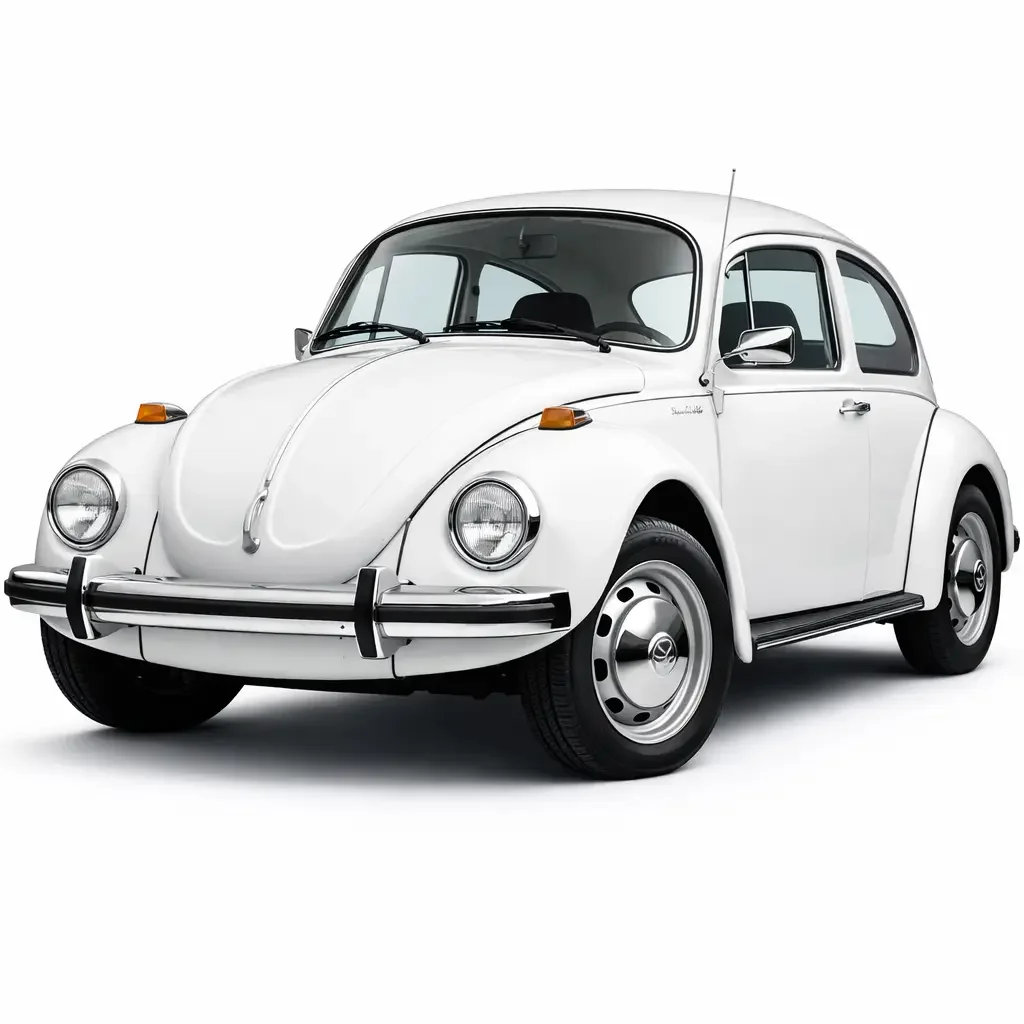
The Volkswagen 1303, sold in North America as the Super Beetle, represents the final evolution of the Type 1 platform and the most comprehensively developed version of the Beetle ever produced. It entered production for the 1973 model year, superseding the 1302 which had only a two-year production run, and remained in production as a sedan through July 1975 in European markets and October 1975 in North America. The convertible variant continued far longer, with the final unit rolling off the Karmann coachbuilding line in Osnabruck on 10 January 1980, making it the last body style of the original Beetle family to be produced in Germany.
The 1303 carries forward every mechanical feature introduced on the 1302, including the MacPherson strut front suspension, the enlarged front trunk, and the IRS rear suspension, while adding two major new characteristics of its own: the large curved panoramic windshield and the redesigned full-width padded dashboard. These two features are the most commercially significant differences between the 1302 and 1303 from a parts catalog perspective. The 1303 windshield, roof structure, dashboard, and associated A-pillar and windshield frame components are specific to the 1303 and do not cross to the 1302 or any other Beetle variant.
A further production change within the 1303 range adds a second catalog boundary: the introduction of rack-and-pinion steering for the 1975 model year, replacing the recirculating ball steering box used on earlier 1303 and all prior Beetles. This steering system change creates a hard split for all steering column, steering gear, and associated linkage component listings within the 1303 production run.
This guide maps the 1303 sub-variants, the unique body components introduced at this model, the production changes within the 1303 run, engine codes, gearbox codes, the sedan and convertible body distinction, and the complete catalog accuracy requirements for the 1973 to 1980 Super Beetle.
Development Context and the Curved Windshield
The 1303 was developed in response to anticipated US federal safety regulations that would have required a minimum distance between the driver's head and the windshield. The flat windshield of the 1302 did not meet this projected standard, and since North America was the most important export market for the Beetle, Volkswagen invested in a complete redesign of the front greenhouse just two years after the expensive 1302 front-end overhaul. The anticipated US law was ultimately never passed, meaning Volkswagen created the 1303 for a regulatory requirement that did not materialize, at significant development cost that was never fully recovered.
The result was a panoramic curved windshield that is 42 percent larger in area than the 1302 windshield, combined with a new roof panel that accommodates the curvature, new A-pillars of different geometry, a new front dashboard spanning the full interior width, and larger rear lights often called elephant feet by collectors due to their distinctive wide shape. The 1303 sold in larger numbers in North America than in Europe, with 115,177 US units sold in 1974 compared to 56,612 in Europe, vindicating the safety-driven design choice despite the regulatory rationale having evaporated.
Sub-Variants: 1303, 1303A, 1303S, 1303L, 1303LS
The 1303 was offered in multiple sub-variants across its production run, and the sub-variant determines brake configuration, clutch size, and engine specification in a pattern directly analogous to the 1302 sub-variant structure.
1303: The base 1303 with the 1285cc dual-port engine producing 44 PS, drum brakes at all four corners, and standard equipment. Uses 180mm clutch.
1303 A: An economy version introduced for 1974 only, fitted with the even more basic 1200cc 34 PS engine from the entry-level standard Beetle, black bumpers instead of chrome, and a stripped-down interior. This is the least-equipped 1303 sub-variant and targeted public authorities and commercial fleet buyers. Uses 180mm clutch.
1303 L: The luxury-equipped version of the 1285cc base 1303, with higher-specification interior trim and additional convenience features. Drum front brakes. Uses 180mm clutch.
1303 S: The high-performance 1303 with the 1584cc dual-port engine producing 50 PS in European specification. Fitted with front disc brakes, which require different master cylinder, brake caliper, brake disc, and brake line specifications compared to the drum-front 1303. The 1303S gearbox carries a higher final drive ratio than the standard 1303, with the AT code (3.875:1 ratio) versus the AM code (4.375:1 ratio) used on 1300cc variants. Uses 200mm clutch.
1303 LS: The luxury-equipped 1584cc 1303 combining the 1303S specification with the higher-trim interior of the L variants. Front disc brakes. Uses 200mm clutch.
In North America the sub-variant nomenclature was not used; all 1303-based Super Beetles sold in the US were the equivalent of the 1303S specification with the 1584cc engine, front disc brakes, and 200mm clutch. The engine code for the North American market was AK through most of the production run, producing 48 horsepower DIN with full US emission equipment, superseding the AE code used on the 1302. The sub-variant distinction primarily affects European market catalog entries, but sellers covering the air-cooled market broadly must be aware of it to avoid incorrect brake and clutch component cross-references.
Components Shared with the 1302
The 1303 carries forward the complete MacPherson strut front suspension from the 1302 unchanged. Strut inserts, coil springs, strut outer housings, strut top mounts, control arms, ball joints, front anti-roll bar, wheel bearings, and front steering knuckles are shared between the 1302 and 1303. This is commercially important: the 1303's longer production run through 1980 in convertible form means that the strut suspension parts pool associated with the 1303 is the primary source for these components across the entire Super Beetle family. Sellers listing front suspension parts for the 1302 should include the 1303 as a cross-reference and vice versa.
The IRS rear suspension, rear gearbox architecture, and rear CV joint axle shafts are also carried forward from the 1302. The AH gearbox code transitions to the AT and AU codes within the 1303 production: the AT code covers the 1303S and convertible applications with a 3.875:1 final drive ratio from approximately March 1972, while the standard 1303 with 1300cc engines uses AM-coded gearboxes. As with the 1302, the IRS rear drum specification is specific to the Super Beetle IRS stub axle and must not be cross-referenced to swing axle rear drums.
The front fenders, front hood, front valance, front inner fenders with strut towers, front apron, front trunk floor, and reshaped fuel tank are also shared between the 1302 and 1303. These components are Super Beetle specific and do not cross to the standard Beetle, but they do cross between the 1302 and 1303 for the basic sheet metal and structural shapes, noting any detail differences in trim mounting holes and signal light apertures.
Components Unique to the 1303
The components that are specific to the 1303 and do not cross to the 1302 represent the most important catalog boundary within the Super Beetle family. These components are defined primarily by the curved windshield and the redesigned roof and dashboard.
Curved panoramic windshield: The 1303 windshield is a compound-curved glass unit with a convex profile that wraps around the front of the cabin. This glass is 42 percent larger in area than the 1302 flat windshield. It does not fit the 1302's A-pillar geometry and is not interchangeable with any flat-windshield Beetle. Windshield seals, chrome windshield surround trim, and the windshield itself are 1303 specific.
A-pillars and roof panel: The A-pillars on the 1303 are redesigned to accommodate the curvature of the panoramic windshield. The roof panel is also revised to maintain the correct body geometry with the new windshield geometry. A-pillar rust repair panels and roof sections for the 1303 are model-specific and must not be cross-referenced to 1302 or standard Beetle body panels.
Full-width padded dashboard: The 1303 dashboard spans the full width of the cabin and is substantially larger than the 1302 and standard Beetle instrument panel. It incorporates a padded vinyl surface, revised instrument placement, and toggle switches in place of the pull switches used on earlier Beetles. This dashboard was designed with provisions for future airbag installation, which Volkswagen anticipated would be required by US law. Dashboard padding, instrument cluster bezels, switch gear, and dashboard panels are 1303 specific and have no cross-reference to 1302 or standard Beetle dashboard items.
Elephant foot rear lights: The 1303 introduces large rear light clusters with a distinctive shape that extends further outward and is visible from the side of the vehicle, giving them the elephant foot nickname. These rear lights are larger than any previous Beetle rear light and are 1303 specific. Rear light seals, bulb holders within the 1303 cluster, and any body panel work around the 1303 rear light aperture are 1303 specific.
The 1975 Rack-and-Pinion Steering Change
A production change within the 1303 run creates a mandatory catalog boundary for steering components. For the 1975 model year, Volkswagen replaced the recirculating ball steering gear used on all prior 1303 and 1302 production with a rack-and-pinion steering system. This rack-and-pinion system was shared with the Golf Mk1 (sold in North America as the Rabbit), which was introduced in 1974 as the Beetle's intended successor.
The recirculating ball steering gear was mounted at the base of the steering column and used a drop arm and steering links to convert the rotational input from the steering wheel into lateral movement at the front wheels. The rack-and-pinion system uses a completely different steering gear housing, different tie rods, different tie rod ends, and a different steering column interface. No steering gear, steering links, tie rod, or tie rod end component crosses between the pre-1975 steering box system and the post-1975 rack-and-pinion system.
For catalog purposes this means: all 1303 steering gear and linkage listings must specify pre-1975 (steering box) or 1975 and later (rack-and-pinion). The change took effect at the beginning of the 1975 model year production, which in VW's production calendar means approximately August 1974. Sellers must apply model year as a qualifier for all 1303 steering component listings and must never present a single steering gear listing as applicable across the full 1973 to 1980 production run.
Sellers should also note that the US market 1303 Super Beetle sedan was discontinued after the 1975 model year (final sedan production in Emden was July 1975, with final North American market sedans clearing in late 1975). The rack-and-pinion steering therefore applies to only the final year of 1303 sedan production in North America, while it remains applicable to all 1303 convertibles produced from approximately August 1974 through January 1980.
Sedan and Convertible Body Variants
The 1303 was produced in both sedan and convertible body styles throughout its run, with different production timelines for each.
Sedan: The 1303 sedan was produced from August 1972 (for the 1973 model year) through July 1975 in European production at Wolfsburg and then Emden. North American sedan production continued slightly longer, with the last US-market sedans reaching dealers in late 1975. The sedan uses a conventional fixed steel roof with a rear window consistent with the 1302 sedan. Sedan-specific body components include the fixed roof panel, the rear window glass and seal, and the full sedan headliner and interior roof structure.
Convertible (Cabriolet): The 1303 convertible was produced by Karmann in Osnabruck under contract from Volkswagen, a continuation of the arrangement that produced all prior Beetle convertibles. The convertible production ran from 1973 through January 1980, making it the last 1303 body style in production and the last German-built Beetle. The convertible uses a folding soft top, reinforced body sills, a steel roll hoop (introduced in 1972 for the convertible), modified door frames, and specific weatherstrip and top hardware that are convertible-specific. No convertible top mechanism, convertible sill reinforcement, or convertible-specific door seal crosses to the sedan. Sellers covering the convertible must list these as body-style specific items and must not apply sedan interior, headliner, or fixed-glass roof components to the convertible.
The convertible received the same 1975 rack-and-pinion steering change as the sedan and continued with it through the end of production. Convertible body-style qualification must be combined with the pre-1975 versus 1975-and-later steering qualifier for all convertible steering component listings from 1975 through 1980.
Engine Codes Across the 1303 Production Run
The 1303 uses the same air-cooled flat-four engine families as the 1302, with engine codes evolving through the production run to reflect emissions calibration changes, particularly for the North American market.
North American market 1303 (1973 to 1975 sedan; 1973 to 1979 convertible final US year): Engine code AK covering the 1584cc dual-port engine producing 48 horsepower DIN with full US emission equipment, representing the primary US market engine for the 1303. The AK was used from approximately August 1972 onward for US production. An AJ code covers a fuel-injected 1600cc variant producing 50 PS; this is a relatively rare application found primarily in certain markets with early fuel injection requirements. All North American 1303 applications use the 200mm clutch and the IRS gearbox.
European market 1303S (1973 to 1975): Engine code AD covering the 1584cc producing 50 PS DIN in European specification, as on the 1302S. The AD transitions to later codes as emissions revisions were made. European 1303 base variants use engine code AB for the 44 PS 1285cc application.
1303 A economy variant (1974 only): Engine code D for the 1200cc 34 PS engine from the standard economy Beetle, representing the smallest and lowest-output engine fitted to any 1303. The D-coded engine uses the 180mm clutch and is the only 1303 application that does not use the dual-port head configuration.
As with all air-cooled Volkswagen applications, engine code is the operative reference for all engine service components including spark plugs, ignition components, carburetor specification, oil filter, valve cover gaskets, and pushrod tube seals. The 1600cc engine pool across AK, AD, and related codes shares the same broad cross-reference with the Type 2 Bus, Karmann Ghia, Thing, and standard Beetle 1600cc dual-port engines of the same era, making the consumable service part pool for the 1303 exceptionally well-stocked in the air-cooled aftermarket.
Common ACES/PIES Mistakes for the 1303 Super Beetle (1973 to 1980)
1. Cross-referencing the 1303 curved windshield to any 1302 or standard Beetle windshield. The 1303 panoramic windshield is a compound-curved unit with no application on any flat-windshield Beetle and is not interchangeable with any prior or concurrent Beetle glass.
2. Listing the 1303 dashboard components as applicable to the 1302. The 1303 full-width padded dashboard is specific to this model and does not cross to the narrower flat dashboard of the 1302 or any standard Beetle variant.
3. Not specifying pre-1975 steering box versus 1975 and later rack-and-pinion for all steering gear, tie rod, and tie rod end listings. These are fundamentally different steering architectures with no common components. A single 1303 steering component listing that does not apply this qualifier will produce incorrect parts on every steering order across the production boundary.
4. Not distinguishing the 1303 sedan (discontinued 1975) from the 1303 convertible (continued to 1980) for body, interior, and year-range component listings. Sellers who list sedan-specific components with a 1303 through-1980 date range will confuse customers with convertibles, and vice versa.
5. Applying swing axle rear brake drums to the 1303 IRS application. The IRS stub axle of the 1303 requires the IRS-specific rear drum with the 181-series analogous part number specific to this rear axle geometry, consistent with the IRS drum distinction covered in both the 1302 and Type 181 Thing guides.
6. Not distinguishing the 1303 drum-front (1303, 1303A, 1303L) from the disc-front (1303S, 1303LS) for brake master cylinder, front caliper, front rotor, and brake line listings.
7. Applying 180mm clutch components to North American AK-engined 1303 Super Beetles. All North American 1303 applications use the 1600cc engine and 200mm clutch. The 180mm clutch applies only to European 1303 and 1303L variants with 1285cc engines, and to the rare 1303A with the 1200cc engine.
8. Cross-referencing 1303 A-pillar repair sections or roof panels to the 1302. The 1303 A-pillar geometry is different from the 1302 because it accommodates the curved windshield, and roof panels differ accordingly. These structural body repair items are 1303 specific.
9. Not noting the rear elephant foot light clusters as 1303 specific. These larger light units do not cross to the 1302 or standard Beetle rear light applications; the 1303 rear light aperture in the body is different from prior Beetles.
10. Applying standard Beetle strut tower inner fender panels to the 1303. The inner fenders with integrated strut towers are shared between the 1302 and 1303 Super Beetle, but they are not shared with the standard Beetle. A listing that applies standard Beetle inner fenders to the 1303 is incorrect.
Catalog Checklist for 1303 Super Beetle (1973 to 1980)
• Establish the 1303 as distinct from the 1302 for all windshield, dashboard, A-pillar, rear light, and roof component listings; these are 1303-specific items and do not cross to the 1302
• Apply the 1975 steering change as a mandatory qualifier for all steering gear, tie rod, and tie rod end listings; pre-1975 steering box and 1975-and-later rack-and-pinion are different systems requiring different parts
• Require body style (sedan versus convertible) for all interior, roof, and top-mechanism component listings; note that the sedan was discontinued in 1975 while the convertible continued to 1980
• Require sub-variant (1303 drum-front versus 1303S disc-front) for all brake system component listings including master cylinder, front brake hardware, and brake lines
• Confirm clutch diameter (180mm for 1285cc and 1200cc European variants versus 200mm for all 1600cc applications including all North American 1303s) before serving any clutch component listing
• Apply 1302 cross-references for all MacPherson strut front suspension components including strut inserts, coil springs, control arms, and ball joints; the strut front suspension is shared between 1302 and 1303
• Apply 1302 cross-references for all front body sheet metal including front fenders, hood, and front valance; these are shared between 1302 and 1303
• Confirm IRS gearbox code (AH for early transition, AT for 1303S and convertible with 3.875 ratio, AM for 1300cc standard variants) before serving any rear axle or differential component listing
• Apply the broad 1600cc dual-port air-cooled engine cross-reference pool for AK-engined North American 1303 consumable service parts, spanning Type 2 Bus, Karmann Ghia, Type 181 Thing, and contemporary standard Beetle 1600cc applications
• Note the 1303 convertible as the final German-produced Beetle, ending January 1980, and maintain separate production year ranges for sedan and convertible body styles in all date-sensitive catalog entries
Final Take
The 1303 is the most sophisticated and the longest-running body style in the final phase of the German Beetle production story. Its catalog complexity comes from three layered variables: the 1303-specific body components that do not exist in any other Beetle, the 1975 steering system change within the 1303 production run, and the sedan-versus-convertible body split that creates divergent production timelines running four years apart at their end dates.
The steering change is the variable most likely to be underestimated by sellers who approach the 1303 as a simple evolutionary step from the 1302. A single steering component listing spanning the full 1303 production will be wrong for either the pre-1975 or post-1975 vehicles on every steering order. The 1975 boundary is a hard technical split with no grace period or parts overlap.
The 1303-specific body items including the curved windshield, A-pillar structure, padded dashboard, and elephant foot rear lights represent the commercial premium in this application. These components are unique to the 1303, their production ended in 1975 for sedans and 1980 for convertibles, and the supply of new-old-stock and reproduction parts is finite. Sellers who catalog them accurately and separately from both the 1302 and the standard Beetle will serve the collector and restoration market for this vehicle without generating the returns that imprecise cross-references inevitably produce.
The 1302 and 1303 together form a coherent Super Beetle parts family for mechanical underbody, front suspension, and powertrain applications. A seller who covers both generations accurately, applying the 1303-specific boundary where it exists and the shared Super Beetle pool where it applies, will serve the widest possible buyer population for the most mechanically evolved Beetles ever produced in Germany.
Disclaimer: This guide is based on publicly available specifications, manufacturer documentation, and independent research. Part interchangeability should always be confirmed via chassis number, data sticker, and OEM part number lookup. Specifications may vary by production date within a model year. This document does not constitute official Volkswagen parts catalog data.