
Written by Arthur Simitian | PartsAdvisory
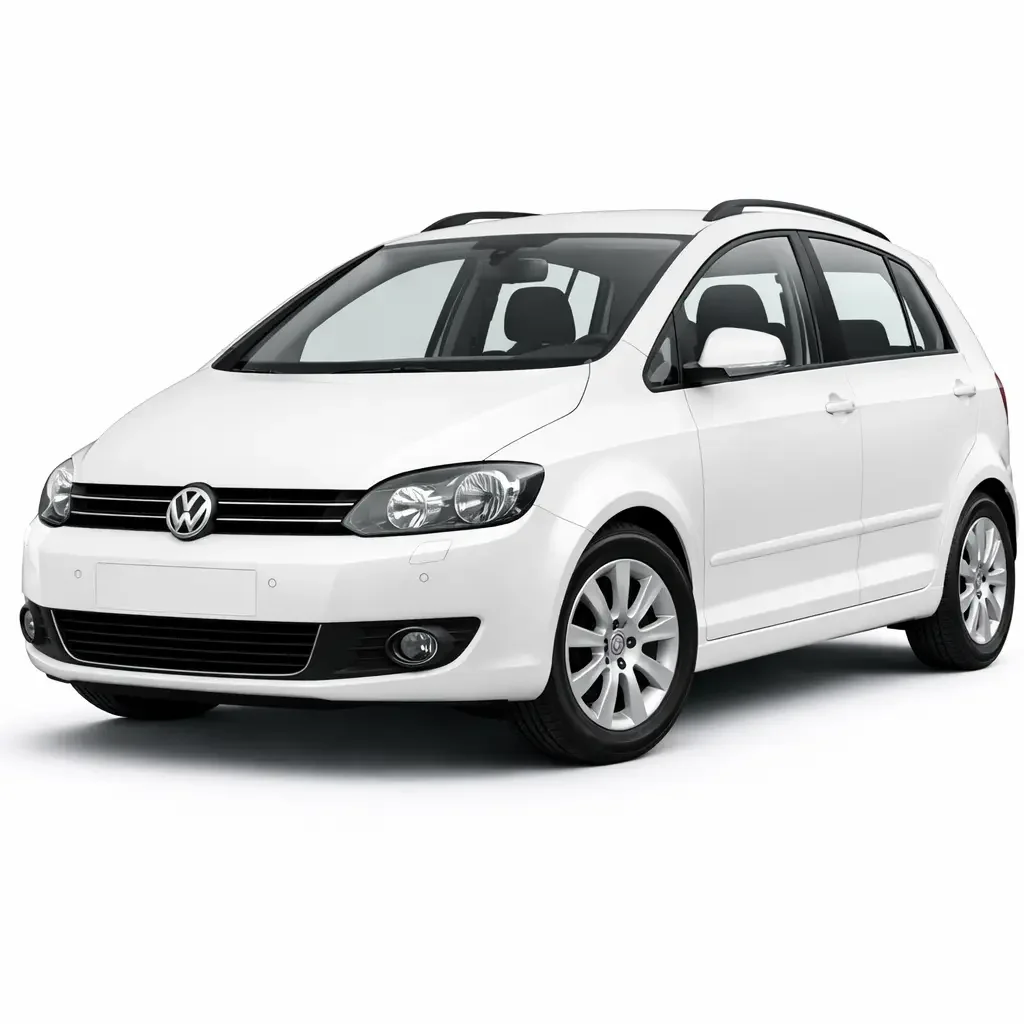
The Volkswagen SportVan is one of the most catalog-misidentified vehicles in the modern VW aftermarket, and the misidentification begins before the first part is ever looked up. The name SportVan implies a commercial van or people mover. It suggests size, payload capacity, and the kind of parts inventory associated with the T4 EuroVan, T5 Transporter, or Routan. None of that is correct. The SportVan is a subcompact station wagon derivative of the Volkswagen Fox hatchback, measuring 4,165 millimeters in overall length, riding on a 2,645-millimeter wheelbase, powered by a naturally aspirated 1.6-liter four-cylinder engine, and sold exclusively in Mexico from 2007 until its discontinuation in February 2010. It is, in every mechanical and dimensional sense, a compact wagon variant of a Brazil-designed, Argentina-assembled entry-level hatchback.
The same vehicle is sold as the SpaceFox in Brazil and Peru, the Suran in Argentina, Chile, Uruguay, and Egypt, and the Fox Plus in Algeria. The SportVan name is unique to Mexico. All variants share the same PQ24 platform, the same General Pacheco, Argentina assembly facility, the same 1.6-liter engine family, and the same body structure. For a parts seller, the SpaceFox, Suran, and SportVan are the same mechanical application wearing different market badges. This cross-reference is the single most commercially important fact about the SportVan from a catalog accuracy standpoint.
This guide covers the PQ24 platform architecture as it applies to the SportVan, the wagon body and its distinctions from the Fox hatchback, the 1.6-liter engine and its position within the Fox parts pool, the Mexico market context including the vehicle's short production window and poor sales outcome, and the complete ACES/PIES catalog error set for this application.
Platform Identity: PQ24, Fox Family, and the Wagon Extension
The Volkswagen Fox and its derivatives are built on the PQ24 platform, the same architecture used by the contemporary Volkswagen Polo of the same generation. PQ24 is a front-wheel-drive transverse-engine layout with a longitudinally oriented engine in some early North American Fox configurations, but the Latin American Fox family that underpins the SportVan uses the standard front-wheel-drive transverse layout consistent with the PQ24 design intent. The internal chassis code for the Fox family is 5Z, and this code applies to the Fox hatchback, CrossFox, SpaceFox/Suran/SportVan, and associated derivatives. Parts catalogs that reference the 5Z chassis code are referencing the entire Fox family including the SportVan.
The SportVan wagon body is created by extending the Fox hatchback rearward by 360 millimeters, producing an overall length of 4,165 millimeters versus the hatchback's 3,805 millimeters. The wheelbase is unchanged at 2,645 millimeters: the entire length extension is in the rear overhang and cargo area. Width is 1,655 millimeters and height is 1,545 millimeters on the initial specification. The extended rear section accommodates a larger boot and increased rear passenger legroom. The rear seat features an optional sliding bench with 150-millimeter adjustment range and a 50/50 split fold, providing a cargo volume range of approximately 260 to 1,016 liters depending on seat position and fold configuration.
The body extension means that every component associated with the rear section of the car is wagon-specific and does not cross to the Fox hatchback. The rear body panels from the B-pillar rearward, the rear side glass, the rear hatch glass, the rear hatch itself and its hinges, the rear hatch seal, the rear bumper cover, the rear lights, and all rear cargo area interior trim are SportVan and wagon-variant specific items. A seller who cross-references Fox hatchback rear body components to the SportVan will generate incorrect parts on every order in those categories. The Fox hatchback's short rear end and hatchback glass geometry have nothing in common with the SportVan's extended wagon tail.
What the SportVan does share with the Fox hatchback is everything forward of the B-pillar: the front subframe, front suspension geometry, front brake system, engine, transmission, front body panels, front doors, front glass, dashboard, instrument cluster, HVAC system, and all underbody mechanical components. The shared front half is where the Fox hatchback cross-reference is valid and commercially useful for a seller.
Engine: 1.6-Liter Four-Cylinder, Mexico Gasoline Specification
The SportVan uses the 1.6-liter four-cylinder engine that is standard across the Fox wagon family in Latin American markets. Output in the Mexico gasoline specification is approximately 98 to 101 horsepower, consistent with the petrol-only calibration for a market that does not require flex-fuel capability. Brazil and Argentina receive flex-fuel versions of this engine calibrated for E20 to E100 ethanol blends, producing slightly different output figures depending on fuel blend. The Mexico SportVan is a gasoline-only application. This fuel specification distinction matters for fuel system components: oxygen sensor calibration, fuel injector flow rates, and fuel pump pressure specifications on the flex-fuel SpaceFox and Suran may differ from the straight-gasoline Mexico application. Sellers covering all markets must apply a gasoline-only qualifier to Mexico SportVan fuel system component listings.
The 1.6-liter engine in the Fox family is a conventional naturally aspirated unit with a timing belt rather than a chain. Timing belt service is therefore a scheduled maintenance item on the SportVan, and the timing belt, tensioner, and water pump are maintenance parts that require the 1.6-liter Fox family specification. These components cross directly between the SportVan, SpaceFox, and Suran applications in their gasoline configurations. The engine also shares basic architecture with other contemporary VW Group 1.6-liter applications in the Latin American market, including some Polo and Gol variants of the same era, though part number confirmation is required before applying cross-references across these different model lines.
The Fox family engine uses a conventional distributor-based ignition system on earlier production, with a coil-on-plug arrangement on later variants. The Mexico SportVan production window of 2007 to early 2010 falls within the later period of the Fox family's Latin American production, and the specific ignition architecture must be confirmed by chassis number and engine code before serving ignition component listings. Spark plugs, air filter, oil filter, and valve cover gasket are straightforward maintenance items that apply uniformly across the 1.6-liter Fox family gasoline pool.
Transmission: Five-Speed Manual and Automatic Option
The SportVan was offered in Mexico with a five-speed manual transmission as the primary gearbox. An automatic transmission option was also available in the Mexican market for higher trim levels, unlike some other Fox wagon markets where only the manual was offered. This transmission split is the most consequential within-application parts qualifier for the SportVan catalog. Any clutch kit, clutch hydraulic component, or transmission-internal service part must be qualified by transmission type before serving. The manual application uses a conventional dry clutch with a hydraulic release bearing; the automatic uses a torque converter and has no clutch pedal or clutch kit requirement.
The five-speed manual in the Fox family uses a cable gear shift linkage. The gear shift cables, shift mechanism, and shift knob are manual-transmission-specific components. The automatic transmission requires its own fluid specification, filter, and service gasket set. Transmission fluid listings must specify manual versus automatic: the manual takes a conventional gear oil while the automatic requires ATF specification fluid. These are not interchangeable, and a single transmission fluid listing applied across both configurations will produce incorrect service parts on automatic orders.
Suspension and Brakes
The SportVan uses MacPherson strut front suspension and a torsion beam rear axle, consistent with the PQ24 platform architecture shared with the Fox hatchback. Front strut inserts, front coil springs, front strut top mounts, front lower control arms, front ball joints, and front anti-roll bar links apply from the Fox hatchback cross-reference pool and are among the most freely interchangeable mechanical components between the hatchback and wagon variants. The rear torsion beam is common to both body styles and requires no body-style qualification for rear suspension service components.
Brakes are front disc and rear drum throughout the production run. The front disc specification is consistent with the Fox hatchback, making front brake pads, front rotors, and front calipers part of the unified Fox family front brake pool. Rear drum shoes and rear wheel cylinders are likewise shared with the Fox hatchback rear brake application. No brake system components require a body-style qualifier: the SportVan wagon and Fox hatchback use the same complete brake system.
The wheel bolt pattern is 4x100 millimeters, consistent with the PQ24 platform standard. Steel and alloy wheel fitment data shows 14-inch and 15-inch wheel options across trim levels within the 2007 to 2010 production window. Any wheel, center cap, or wheel hardware listing must specify the 4x100 bolt pattern and confirm offset compatibility for the PQ24 platform. This bolt pattern is shared with many contemporary VW Group small cars on PQ24 and adjacent platforms, making the wheel compatibility pool relatively wide, but offset and center bore must be confirmed at the part level.
Mexico Market Context: Short Run, Poor Sales, and Discontinuation
The SportVan arrived in the Mexico market for the 2007 model year as part of Volkswagen de Mexico's effort to broaden the Fox family presence in the domestic compact segment. Mexico was already selling the Fox hatchback and CrossFox at the time. The SportVan was positioned as the wagon option for buyers wanting more cargo space than the hatchback without the raised ride height of the CrossFox. It was produced in Argentina at the General Pacheco plant in Buenos Aires Province and imported to Mexico, rather than being assembled domestically.
Sales in Mexico were poor from the outset. The vehicle competed in a segment where Mexican buyers showed limited appetite for wagon body styles at the entry level, preferring either the hatchback or increasingly the CrossFox's SUV-adjacent styling. Volkswagen de Mexico quietly discontinued the SportVan in February 2010, making it a genuinely short-run application with fewer than four full model years on sale. The CrossFox continued in the Mexican market after the SportVan's exit.
The production window and low sales volume mean that the total number of SportVan units in the Mexican aftermarket is small. Parts buyers for this application are predominantly independent repair shops and individual owners in Mexico maintaining aging examples, plus the specialist cross-border market in the US and Canada where Mexican-market VWs occasionally appear through personal import or relocation. The buyer community is knowledgeable about the vehicle's rarity and its relationship to the Fox family, and they will immediately identify any parts listing that confuses the SportVan with a T5-based van or any other large Volkswagen product.
Cross-Reference Logic: Fox Family, SpaceFox, Suran
The SportVan, SpaceFox, and Suran are the same vehicle for mechanical parts purposes, assembled at the same facility on the same platform with the same engine and transmission options. All mechanical underbody components, engine service parts, transmission components, front suspension parts, brake system components, and HVAC components that apply to the SpaceFox in Brazil or the Suran in Argentina apply equally to the SportVan in Mexico, subject to the gasoline-only qualifier for fuel system components on the Mexico application.
The Fox hatchback cross-reference is valid for all components forward of the B-pillar and all underbody mechanical components. Front body panels, front doors, front glass, dashboard, front suspension, engine, transmission, brakes, and electrical system components shared with the hatchback can be cross-referenced from the Fox 5Z hatchback application. The cross-reference is not valid for any rear body, rear glass, rear hatch, or rear cargo interior component.
The CrossFox shares the same front mechanical architecture and engine family but differs in suspension calibration due to its raised ride height and in exterior body panels throughout. CrossFox suspension components must not be cross-referenced to the SportVan without confirming that the specific component is unaffected by the ride height difference. Strut inserts, coil springs, and ride height spacers are CrossFox-specific where they reflect the raised suspension. Lower control arms, ball joints, and anti-roll bar components that are geometry-based rather than ride-height-specific may cross, but must be confirmed by part number.
Contemporary VW Group Latin American applications sharing PQ24 architecture, including some Polo and Gol variants, provide a further cross-reference pool for engine consumables and maintenance items. These cross-references are best treated as may also fit with part number confirmation required rather than confirmed interchangeable, because platform sharing does not guarantee part number identity across different model lines.
Common ACES/PIES Catalog Mistakes for the SportVan (2007 to 2010)
1. Categorizing the SportVan as a commercial van, minivan, or T5-based vehicle. The SportVan is a subcompact wagon on the PQ24 Fox platform. It shares no components with the T5 Transporter, T4 EuroVan, Routan, or any VW commercial van product. Any listing that cross-references SportVan parts to a commercial van application is wrong for every component in that category.
2. Applying Fox hatchback rear body panels, rear glass, rear hatch, rear hatch seal, or rear tail light assemblies to the SportVan. The SportVan wagon rear body is extended by 360 millimeters relative to the hatchback and uses entirely different rear bodywork. No Fox hatchback rear body components apply aft of the B-pillar.
3. Not applying a gasoline-only qualifier to Mexico SportVan fuel system component listings. The Brazil SpaceFox and Argentina Suran are flex-fuel vehicles with different oxygen sensor calibration and fuel injector specifications. The Mexico SportVan is gasoline only. Flex-fuel fuel system components from SpaceFox or Suran listings may not be identical to the Mexico gasoline specification.
4. Not applying a manual versus automatic transmission qualifier to clutch, transmission fluid, and transmission service component listings. The SportVan was offered with both a five-speed manual and an automatic in Mexico. These require completely different service parts in every clutch and transmission category.
5. Cross-referencing CrossFox suspension components to the SportVan without confirming ride height compatibility. The CrossFox has a raised suspension compared to the SportVan. Strut inserts and coil springs calibrated for the CrossFox ride height are not interchangeable with SportVan units.
6. Failing to cross-reference the SpaceFox and Suran as the same mechanical application. The SportVan, SpaceFox, and Suran are market-name variants of the same vehicle. A seller who maintains separate parts pools for each without establishing cross-references is fragmenting a unified application and making parts harder to locate for buyers.
7. Treating the SportVan as a Mexico-assembled vehicle. The SportVan was assembled in General Pacheco, Argentina, and imported to Mexico. It is not produced at Volkswagen de Mexico's Puebla plant. Assembly origin affects the applicable regional certification and the emissions equipment specification, which may differ from Puebla-produced VW products in the Mexican market.
8. Applying Fox hatchback timing belt kits without confirming applicability to the wagon 1.6-liter specification. The 1.6-liter engine in the Fox family uses a timing belt requiring scheduled replacement. While the hatchback and wagon share the same engine, the kit specification must be confirmed by engine code rather than assumed identical across all Fox family applications in the 1.6-liter displacement range.
9. Listing a production end date of 2010 without noting that the SportVan was discontinued in February 2010, not at the end of the model year. Parts listings that show 2010 as a full model year may misrepresent the available inventory and create expectations of a 2010 full-year production run that did not exist.
10. Not distinguishing the SportVan from the Volkswagen Golf Sportsvan, which is an entirely different vehicle on the Golf MQB platform introduced in 2014. The similar name creates catalog confusion, particularly in parts lookup systems that do not differentiate between the Fox-based SportVan and the Golf-based Golf Sportsvan. These share no parts and no platform.
Catalog Checklist for the VW SportVan (2007 to 2010)
• Classify the SportVan under the Fox PQ24 platform family, internal code 5Z, alongside the SpaceFox and Suran; never classify it alongside commercial van or T5-based products
• Apply body-style qualifier (wagon versus Fox hatchback) to all rear body, rear glass, rear hatch, and rear cargo area trim listings; Fox hatchback rear components do not apply aft of the B-pillar
• Apply gasoline-only qualifier to all fuel system component listings for the Mexico market; flex-fuel SpaceFox and Suran fuel system specifications may differ
• Apply manual versus automatic transmission qualifier to all clutch, transmission fluid, and transmission service component listings
• Cross-reference SpaceFox (Brazil) and Suran (Argentina) as the same mechanical application for all non-fuel-system components, noting gasoline-only qualifier for Mexico fuel system listings
• Confirm CrossFox suspension components by part number before cross-referencing to the SportVan; ride height differences affect strut and spring specifications
• Apply Fox hatchback cross-reference for all components forward of the B-pillar and all underbody mechanical components: front suspension, brakes, engine, transmission, front body, front glass, and HVAC
• Note assembly origin as General Pacheco, Argentina, not Puebla, Mexico; this affects applicable emissions certification and regional equipment standards
• Set production end date as February 2010 rather than a full 2010 model year; the SportVan was discontinued mid-year
• Maintain clear separation from the Volkswagen Golf Sportsvan in all catalog structures; these are different vehicles on different platforms with no shared parts
Final Take
The Volkswagen SportVan is a catalog problem that begins with its name and compounds from there. A seller who reads SportVan and reaches for T5 Transporter parts data has already failed the application before opening a single parts listing. The correction is simple once the vehicle is correctly identified: the SportVan is the Fox wagon, built in Argentina, sold in Mexico for three years, mechanically identical to the SpaceFox and Suran that are better documented and more widely sold across the rest of Latin America.
The practical catalog structure for the SportVan requires two cross-reference pools working together. The Fox hatchback 5Z pool covers everything mechanical and everything forward of the B-pillar. The SpaceFox and Suran pool covers the wagon-specific rear body components and confirms that those market-name variants are the same application. Any seller who builds their SportVan catalog by anchoring to those two pools, applying the gasoline-only and transmission-type qualifiers where needed, will have accurate and commercially useful listings for an application that most of the aftermarket gets wrong by a wide margin simply because the name sounds like something it is not.
The buyer who comes to a seller with a SportVan inquiry is almost certainly a Mexican market participant, and they know exactly what their vehicle is. They are not confused about whether they have a van or a wagon. They arrive informed and they will detect a misclassified parts catalog immediately. The seller who correctly identifies the SportVan as a Fox family application and maintains the SpaceFox and Suran cross-references earns that buyer's confidence from the first interaction.
Disclaimer: This guide is based on publicly available specifications, manufacturer documentation, and independent research. Part interchangeability should always be confirmed via VIN, engine code, and OEM part number lookup. Fuel system specifications may vary between gasoline-only and flex-fuel market variants of the Fox wagon family. This document does not constitute official Volkswagen parts catalog data.