
Volkswagen Saveiro (2010 to 2013): Platform and Fitment Guide
Written by Arthur Simitian | PartsAdvisory
Identity: Brazil's Compact Pickup on the Gol G5 Platform
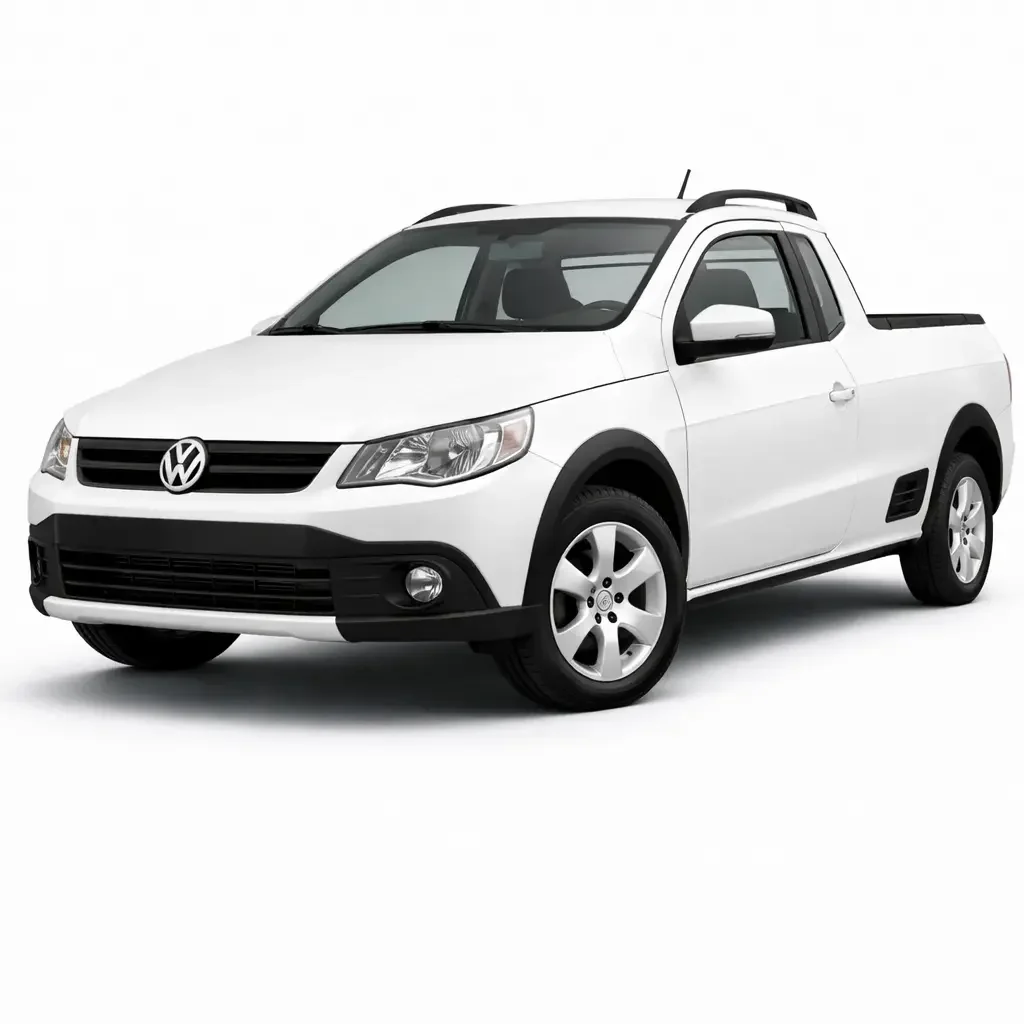
The Volkswagen Saveiro is a compact pickup truck produced by Volkswagen do Brasil and sold exclusively in Latin American markets. It has been a derivative of the Gol hatchback since its introduction in 1982, with each successive Gol generation producing a corresponding Saveiro pickup generation. The 2010 to 2013 ACES window covers the fifth-generation Saveiro, designated G5, which was revealed in August 2009 and entered production for the 2010 model year. It is built on the same PQ24 platform used by the contemporary Gol G5 hatchback and the Volkswagen Voyage sedan, and it carries the same EA-111 1.6-litre VHT flex-fuel engine that powers those vehicles.
The Saveiro is not sold in the United States, Canada, or Europe. It is a Brazil-designed, Brazil-assembled vehicle produced at Volkswagen do Brasil's Sao Jose dos Pinhais plant in Parana state and sold primarily in Brazil with some export to other Latin American markets. Any example appearing in a US or European parts lookup has arrived through personal import or gray-market channels, and its parts specification reflects the Brazilian market build rather than any US or European certification standard. The buyer community for the Saveiro in the North American aftermarket is small, specialist, and highly knowledgeable about the vehicle's identity and its position within the Gol family.
The Saveiro's relationship to the Gol G5 hatchback and the Voyage sedan is the defining catalog principle for this application. The three vehicles share the same PQ24 platform, the same EA-111 engine family, the same front suspension architecture, and the same front brake specification. Where the Saveiro departs from the hatchback and sedan is in its rear suspension and rear braking, which use a solid rear axle configuration rather than the independent rear suspension of the Gol hatchback, and in its body structure forward of the cab, which is pickup-specific with no cross-reference to the closed-body Gol or Voyage.
Platform: PQ24 and the Departure from the BX Architecture
The Gol G5 generation, introduced in 2008 and forming the base for the 2010 to 2013 Saveiro, marked the Gol's first departure from the BX platform that had underpinned every prior Gol generation since 1980. The new Gol G5 moved to the PQ24 platform shared with the Volkswagen Fox and the Volkswagen Polo, bringing a transversely mounted water-cooled engine layout that represents a fundamental architectural difference from the longitudinal engine orientation of the earlier BX-platform Gol generations. The PQ24 platform is not unique to Brazil: it is the same platform used by the European Fox and Polo of the same era, creating a cross-reference opportunity for engine and some mechanical components between the Brazilian Saveiro G5 and the European Fox and Polo families.
However, the PQ24 cross-reference to the European Fox and Polo requires caution. Market-specific calibrations for the flex-fuel engine, market-specific emissions equipment, and potentially different component specifications between the Brazilian and European production streams mean that part number confirmation is required before applying European Fox or Polo component references to the Saveiro. The cross-reference is most reliable for fundamental internal engine components such as pistons, bearings, gaskets, and timing components where the basic EA-111 engine architecture is shared. It is less reliable for fuel system components, emissions hardware, and any market-specific electronic control modules where calibration may differ.
The Saveiro G5 uses the same basic PQ24 front subframe geometry as the Gol G5 hatchback, with MacPherson strut front suspension and a front anti-roll bar. This means that front strut inserts, front coil springs, front lower control arms, front ball joints, and front anti-roll bar components cross-reference between the Saveiro G5, the Gol G5 hatchback, and the Voyage sedan. These are confirmed cross-references for the mechanical underbody forward of the firewall. Sellers covering the Gol G5 hatchback market are already positioned to serve the Saveiro G5 front suspension market without additional sourcing investment.
Rear Suspension: Solid Axle Specific to the Saveiro
The most commercially significant mechanical distinction between the Saveiro G5 and the Gol G5 hatchback is the rear suspension architecture. The Gol G5 hatchback uses an independent rear suspension consistent with its passenger car mission. The Saveiro G5 uses a solid rear axle, sometimes described as a rigid axle or beam axle, consistent with its load-carrying pickup truck role. The solid rear axle provides greater load capacity and simpler rear suspension geometry suitable for a vehicle rated at 700 to 720 kilograms payload depending on cab configuration.
This rear suspension difference creates a complete incompatibility between the Saveiro G5 and the Gol G5 hatchback for all rear suspension components. Rear trailing arms, rear axle beam, rear wheel bearings, rear axle shafts, rear hub assemblies, and rear shock absorbers are all specific to one or the other suspension architecture with no cross-reference between the pickup solid axle and the hatchback independent rear. A seller who applies Gol G5 hatchback rear suspension components to the Saveiro G5 will produce incorrect parts on every rear suspension order. The solid rear axle specification must be applied as an absolute qualifier to all rear suspension listings for the Saveiro.
The solid rear axle also carries the rear drum brakes. Rear brake shoes, rear wheel cylinders, and rear drums are all solid-axle-specific components that cross within the Saveiro G5 rear brake pool but have no cross-reference to the Gol G5 hatchback independent rear brake specification. The front brakes are discs shared with the Gol G5 hatchback, but the rear brake system is Saveiro-specific throughout the 2010 to 2013 production window.
Engine: EA-111 1.6-Litre VHT Flex-Fuel
The Saveiro G5 uses the EA-111 1.6-litre VHT (Variable Heat Treatment) engine in flex-fuel configuration, shared directly with the Gol G5 hatchback and the Voyage sedan. VHT is the Volkswagen do Brasil designation for the engine's heat treatment process applied to the cylinder block, which improves durability. The flex-fuel configuration allows the engine to run on any mixture of gasoline and ethanol from pure gasoline through E100 pure ethanol, a requirement of the Brazilian market where sugar cane ethanol is widely available and priced below gasoline.
The flex-fuel calibration of the EA-111 in the Saveiro produces different output depending on fuel: approximately 101 horsepower on gasoline and 104 horsepower on ethanol, with torque output of approximately 154 Newton-meters on gasoline and 156 Newton-meters on ethanol at 2,500 rpm. This output difference between fuel types is inherent to the flex-fuel calibration and is not a fault condition. Sellers covering this application should be aware that performance specifications cited from Brazilian market materials may reference either the gasoline or ethanol output, and both are correct for the respective fuel type.
The flex-fuel fuel system requires fuel delivery components rated for ethanol compatibility. Fuel injectors, fuel pump, fuel pressure regulator, and fuel lines must all be compatible with E100 ethanol exposure. Brazilian-market flex-fuel components are specified for ethanol resistance and must not be cross-referenced to non-flex-fuel gasoline-only components from other markets. The oxygen sensors and engine management calibration on the flex-fuel EA-111 are also specific to the flex-fuel application, detecting fuel mixture and adjusting fueling accordingly. Replacing ECU or oxygen sensor components with non-flex-fuel specifications will impair the fuel mixture detection capability.
The transmission paired with the EA-111 in the Saveiro G5 is the MQ200 five-speed manual gearbox. This is the same transmission used in the Gol G5 hatchback and the Voyage, making transmission fluid, shift linkage, and internal gear components confirmed cross-references across all three G5-generation body styles. No automatic transmission was available on the Saveiro G5 in this production window.
Body Variants: Single Cab, Extended Cab, and Double Cab
The Saveiro G5 was offered in three cab configurations across the 2010 to 2013 production window, and the cab configuration is the primary qualifier for all rear cab body, rear cab interior, and cargo bed component listings.
Single Cab (Cabine Simples): The standard two-seat configuration with a full-length cargo bed. Load capacity is 715 kilograms. The single cab uses a conventional two-door cab structure with no rear seating and the longest bed length of the three configurations. All cab bodywork, cab glass, cab seals, and cab interior items are single-cab-specific where they differ from the other configurations.
Extended Cab (Cabine Estendida): A configuration adding a small rear seat or storage area behind the front seats with a slightly shorter cargo bed. Load capacity is 700 kilograms. The extended cab uses the same wheelbase as the single cab at 2,750 millimeters. Extended cab rear cab panels, rear cab glass if fitted, and any rear-seat-specific interior components are unique to this configuration.
Double Cab (Cabine Dupla): A four-door full-seating configuration with the shortest cargo bed of the three variants. Load capacity is 660 kilograms. The double cab uses rear doors and a full rear seat, making all rear door panels, rear door glass, rear door seals, rear door hinges, and rear interior trim components double-cab-specific with no cross-reference to the single or extended cab configurations.
The wheelbase and overall body dimensions differ between the double cab and the single and extended cab configurations, meaning that some underbody components may also differ by cab variant where the body structure affects mounting points or cable routing. Sellers must apply cab configuration as a qualifier for all body-specific components and should note it as a confirming qualifier for any chassis or underbody component where cab configuration might affect specification.
Trim Levels: Base, Trend, and Trooper
The Saveiro G5 was offered in three trim levels across the 2010 to 2013 window. The trim level determines wheel specification, exterior trim, and equipment content but does not change the mechanical underbody specification.
The base specification uses 14-inch steel wheels and black bumpers. The Trend package adds 14-inch alloy wheels and color-coded door handle and mirror covers. The Trooper trim adds 15-inch alloy wheels in a black-painted finish and represents the top of the range. Wheel and hub component listings must therefore confirm whether the application uses 14-inch or 15-inch wheels, as the wheel bolt pattern and hub specification must match the wheel size. The basic bolt pattern is 4 x 100mm consistent with the PQ24 platform standard, but offset and center bore must be confirmed at the part level for each wheel specification.
Cross-Reference Logic: Gol G5 Pool and Its Limits
The cross-reference discipline for the Saveiro G5 divides into two confirmed pools and one boundary. The confirmed forward pool applies Gol G5 hatchback and Voyage sedan cross-references to all components forward of the firewall: front suspension, engine, transmission, front brakes, fuel system, ignition system, cooling system, and electrical system. The confirmed rear pool applies Saveiro-specific solid rear axle cross-references for all rear suspension, rear driveline, and rear brake components, with no cross-reference to the Gol G5 hatchback independent rear. The body boundary means that all cab body panels, cab glass, cab seals, and cargo bed components are Saveiro-specific by cab configuration with no cross-reference to the closed-body Gol or Voyage.
Within the forward cross-reference pool, the PQ24 platform also permits cross-reference to the European Fox and Polo for basic EA-111 long-block consumables including spark plugs, air filter, oil filter, valve cover gasket, timing belt, and water pump, all confirmed by part number. This cross-reference is most valuable for sellers in markets where the European Fox and Polo are more commonly stocked than the Brazilian Gol G5, as it allows them to source the Saveiro engine service parts from a wider pool. It must be framed as requires part number confirmation rather than confirmed identical, because flex-fuel calibration differences may affect some fuel system components within the engine family.
The Saveiro has no cross-reference to prior generations of itself. The Saveiro G4, which was based on the Gol G4 and used the BX platform, is a different vehicle in every mechanical respect from the G5. Sellers must not apply G4 Saveiro components to the G5 Saveiro. The platform change at the G5 generation is a complete mechanical break with no component continuity in the underbody or powertrain.
Common ACES/PIES Catalog Mistakes for the Saveiro (2010 to 2013)
1. Applying Gol G5 hatchback independent rear suspension components to the Saveiro G5. The Saveiro uses a solid rear axle throughout the 2010 to 2013 production window. All rear trailing arms, rear shock absorbers, rear wheel bearings, and rear hub components are solid-axle-specific. Independent rear suspension components from the Gol G5 hatchback do not apply.
2. Cross-referencing prior-generation Saveiro components to the G5. The Saveiro G4 is built on the BX platform with a longitudinal engine layout. The G5 uses the PQ24 platform with a transverse engine. Every mechanical component is different between these generations. No G4 Saveiro underbody component applies to the G5.
3. Not applying cab configuration as a qualifier to rear cab body, glass, and interior trim listings. Single, extended, and double cab configurations use different rear structures, different rear cab glass, and different rear interior trim. A single rear cab component listing without a cab configuration qualifier will produce incorrect parts for two of the three configurations.
4. Applying non-flex-fuel fuel system components from European Fox or Polo applications to the Saveiro G5. The Saveiro uses a flex-fuel EA-111 calibrated for E20 to E100 ethanol blends. Fuel injectors, fuel pump, and ECU from non-flex-fuel applications have different specifications and must not be applied without part number confirmation of flex-fuel compatibility.
5. Cross-referencing rear drum brake specifications from the Gol G5 hatchback to the Saveiro. The Gol G5 hatchback uses independent rear suspension with drum brakes suited to that hub geometry. The Saveiro uses a solid rear axle with drums suited to a solid-axle hub. These are different rear brake specifications requiring different shoes, cylinders, and drums.
6. Not distinguishing the 14-inch steel wheel base specification from the 14-inch alloy Trend specification and the 15-inch Trooper specification for wheel and hub component listings. Wheel offset, center bore, and hub compatibility must be confirmed for each wheel size and type.
7. Applying the Saveiro G5 as a pickup truck with the same rear suspension as a commercial truck or van from the broader VW Group. The Saveiro's solid rear axle is specific to this compact pickup application and does not share specifications with the T5 Transporter or other VW commercial vehicles.
8. Treating the Saveiro G5 as equivalent to the Volkswagen Amarok or any other full-size VW pickup. The Saveiro is a compact unibody pickup on the PQ24 platform with a 2,750mm wheelbase and under 720kg payload. The Amarok is a body-on-frame midsize pickup on a different platform entirely. No mechanical component crosses between them.
9. Failing to note that the Saveiro is a Brazil-market vehicle and that equipment specifications, safety standards, and parts availability reflect Brazilian market requirements rather than US, European, or Canadian certification. Parts sourced for the Saveiro must meet Brazilian market flex-fuel and emissions requirements rather than US or European standards.
10. Cross-referencing the PQ24 European Fox or Polo front suspension components to the Saveiro without part number confirmation. While the PQ24 platform is shared, dimensional differences in ride height, wheel travel calibration, and market-specific spring rates may produce components with the same name but different specifications. All cross-references between the Brazilian Saveiro and the European Fox or Polo should be confirmed by part number.
Catalog Checklist for the VW Saveiro (2010 to 2013)
• Apply Gol G5 hatchback and Voyage cross-reference pool to all front suspension, engine, transmission, front brake, and electrical system component listings
• Apply solid rear axle qualifier to all rear suspension, rear driveline, and rear brake listings; Gol G5 hatchback independent rear components do not apply
• Apply cab configuration qualifier (single cab, extended cab, double cab) to all rear cab body, glass, seal, and interior trim listings
• Apply flex-fuel EA-111 qualifier to all fuel system, ECU, and oxygen sensor listings; non-flex-fuel components from European Fox or Polo applications must not be applied without flex-fuel compatibility confirmation
• Confirm all PQ24 European Fox or Polo cross-references by part number before listing as confirmed applications; flex-fuel calibration differences may affect fuel system and engine management specifications
• Confirm wheel specification (14-inch steel base, 14-inch alloy Trend, 15-inch alloy Trooper) before serving any wheel, hub, or associated hardware listing
• Apply G5 generation qualifier as an absolute barrier from the G4 Saveiro and all prior generations; the BX-platform G4 and the PQ24-platform G5 share no mechanical components
• Note Brazil market assembly origin at Sao Jose dos Pinhais, Parana; all specifications reflect Brazilian market flex-fuel and emissions requirements
• Apply MQ200 five-speed manual as the exclusive transmission for this production window; no automatic transmission was available on the Saveiro G5 in 2010 to 2013
• Note no cross-reference to Volkswagen Amarok or any body-on-frame pickup in any component category; the Saveiro is a compact unibody pickup on the PQ24 car platform
Final Take
The Saveiro G5 is one of the clearest examples in the VW aftermarket of a vehicle where the most commercially useful catalog principle is also the most frequently violated one: the front half crosses to the Gol, the rear half does not. A seller who understands that the solid rear axle creates a complete mechanical break from the Gol G5 hatchback's independent rear, and applies that boundary consistently, will avoid the most common incorrect orders for this application. A seller who does not understand that the G5 Saveiro has a solid rear axle at all, and assumes it uses the same rear suspension as the Gol G5 hatchback, will produce incorrect rear suspension parts on every order in that category.
The flex-fuel engine is the second catalog discipline that separates sellers who know this application from those who do not. The EA-111 1.6-litre is widely available in European Fox and Polo catalogues, but the flex-fuel specification with its ethanol-rated fuel delivery system and flex-fuel ECU is specific to the Brazilian market application. A seller who reaches into the European Fox parts pool for Saveiro fuel system components without confirming flex-fuel compatibility risks directing incompatible fuel system parts to a vehicle whose fuel delivery system is engineered around contact with pure ethanol.
The Saveiro buyer in the global market is a Brazilian market participant or a specialist importer who chose the vehicle precisely because of its Gol-derived mechanical simplicity and the widespread availability of Gol G5 parts throughout Brazil and Latin America. That buyer arrives knowing the vehicle well and expecting a seller who also knows it. The sellers who correctly identify the Gol G5 front cross-reference, the solid rear axle boundary, the flex-fuel fuel system qualifier, and the cab configuration body split will earn that buyer's confidence on the first transaction.
Disclaimer: This guide is based on publicly available specifications, manufacturer documentation, and independent research. Part interchangeability should always be confirmed via VIN and OEM part number lookup. Flex-fuel component compatibility with ethanol blends should be confirmed before substituting components from non-flex-fuel applications. Brazilian market specifications differ from US, European, and Canadian market standards. This document does not constitute official Volkswagen parts catalog data.