
Volkswagen Quantum (1982–1985): First-Gen Passat B2 Fitment Guide for North America
Written by Arthur Simitian | PartsAdvisory
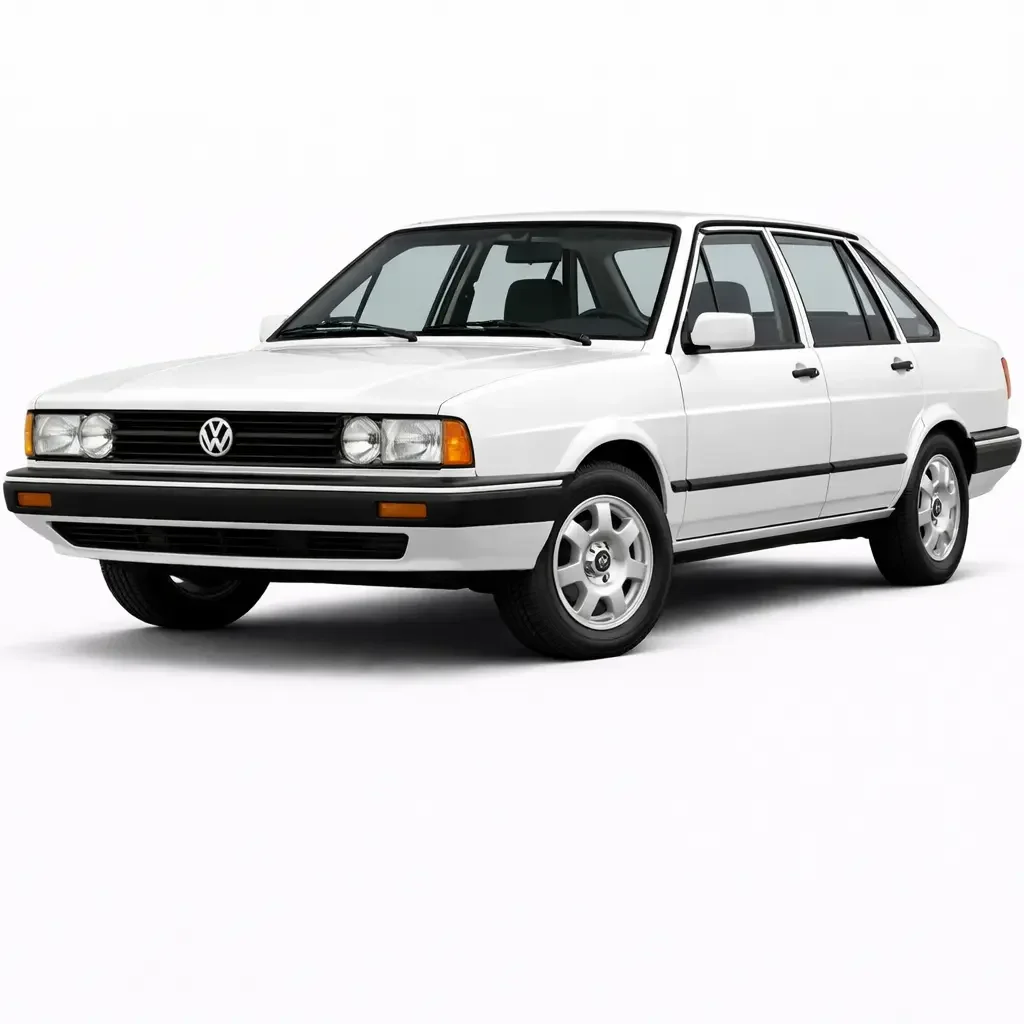
The Volkswagen Quantum is the North American name for the second-generation Passat, known internally as the B2 and sold in Europe from 1981 onward as both the Passat hatchback and wagon and the Volkswagen Santana sedan. In the United States, Volkswagen of America marketed all body configurations under the single Quantum nameplate beginning with the 1982 model year. The Quantum was sold in the US only; this generation was not sold in Canada. It replaced the Dasher, which was the B1 Passat, and it continued in the US market through the 1988 model year. This guide covers the first window of that run, 1982 through 1985, which spans the original launch specification through the January 1985 facelift.
The Quantum is one of the most frequently misidentified vehicles in the North American Volkswagen Group catalog. The root of almost every catalog error is the same: because the Quantum shares its platform with the Audi 80 B2 (sold in the US as the Audi 4000), parts researchers and catalog builders treat the two as interchangeable. They are not. The B2 Quantum and the B2 Audi 4000 share a platform family and an engine family, but the Quantum is approximately 10 centimeters longer in wheelbase, uses a different rear suspension design, and came to the US market with body styles and engine configurations that do not always match those of the Audi. Understanding exactly where the two vehicles cross and where they diverge is the central task of this guide.
Platform: B2 and Its Relationship to the Audi 80
The Passat B2 platform was derived from the Volkswagen Group B2 architecture, which itself was based on the second-generation Audi 80 (Typ 81), introduced in 1978. The Audi 4000 is the North American market name for that Audi 80 B2. The platform relationship between the Quantum and the Audi 4000 is therefore direct: both ride on the B2 architecture, share a longitudinal front-engine front-wheel-drive layout, and use the EA827 engine family for their gasoline powerplants. This shared heritage is the correct basis for specific cross-references. It is not a basis for treating all Audi 4000 applications as interchangeable with Quantum applications, because several important differences exist at the structural and chassis level.
The Quantum's wheelbase is approximately 10 centimeters longer than the Audi 4000's. This difference affects rear suspension geometry, rear axle mounting, driveshaft length, and floor pan design. Rear axle assemblies, rear suspension arms, and rear subframe components are not interchangeable between the Quantum and the Audi 4000 without confirmation against specific part numbers. The rear suspension design also differs by type: the Quantum uses a torsion beam rear axle, while the Audi 4000 uses a trailing arm independent rear suspension. These are fundamentally different designs that serve the same general function but require entirely different replacement parts.
The Quantum should also not be confused with its predecessor, the VW Dasher, which is the North American name for the B1 Passat. The B1 and B2 platforms are entirely separate. No mechanical component from the Dasher crosses to the Quantum. A catalog that treats the Dasher and Quantum as a continuous application spanning pre-1982 model years into 1982 and beyond will produce wrong parts for both generations.
Body Styles and Year Windows
Three body configurations were sold in the US under the Quantum name: a three-door hatchback marketed as the Coupe, a four-door sedan, and a five-door wagon. The five-door hatchback sold in Europe was never brought to North America. The three-door Coupe was dropped from the US lineup after less than two model years, making it available for 1982 and into 1983 before being discontinued. Any catalog application that assigns three-door hatchback listings to 1984 or 1985 Quantum entries is wrong; the Coupe had already left the US market by that point.
The sedan and wagon continued through the full 1982 to 1988 US run. For catalog purposes, the sedan and wagon are separate body-style applications within the same platform and should not be merged into a single Quantum entry. Engine availability differs by body style across this window, and the Syncro AWD system was offered exclusively on the wagon. A single undifferentiated Quantum entry cannot accurately represent both configurations.
In January 1985, the B2 range received a facelift that introduced revised bumpers, a new front grille, interior updates, and, specifically for North American Quantum models, composite headlamp assemblies to replace the sealed beam units used from 1982 onward. The sealed beam headlamps are specific to pre-facelift Quantum applications. The composite headlamp assemblies introduced at the 1985 facelift are a different part from those earlier sealed beam units and must not be treated as interchangeable. Headlamp listings for the 1982 to early 1985 Quantum must specify sealed beam units. Listings for the January 1985 facelift and later must specify composite units.
Engine Windows: Four Distinct Powerplants Across 1982 to 1985
The 1982 to 1985 US Quantum window contains four different engine configurations, each requiring its own catalog application. Treating the Quantum as a single-engine vehicle across this window will generate wrong parts for the majority of service categories involving the fuel system, ignition, exhaust, and engine management.
1.7L Four-Cylinder (1982 to 1983)
The launch engine for the 1982 Quantum is a 1.7-liter inline four-cylinder from the EA827 engine family, producing 74 horsepower at 5,000 rpm and approximately 90 lb-ft of torque. It uses Bosch K-Jetronic CIS fuel injection. This engine is longitudinally mounted, which is the distinguishing layout characteristic of the entire Quantum lineup versus the transversely mounted EA827 derivatives used in the contemporary Golf and Jetta. The longitudinal mounting changes the orientation of the intake manifold, fuel distributor, exhaust routing, and accessory drive, meaning that fuel system components from the transversely mounted Golf or Jetta 1.7L applications do not cross to the longitudinally mounted Quantum 1.7L application. The 1.7L engine was discontinued after the 1983 model year.
1.8L Four-Cylinder (1984 to 1985, Wagon)
The 1.7L was replaced by the 1.8L version of the EA827 family, producing 88 horsepower at 5,500 rpm, designated with engine code JN in CIS-E (K-Jetronic with electronic fuel enrichment) configuration. For the 1985 model year, the 1.8L was available in the wagon only; the sedan moved to either the 2.2L five-cylinder or the turbodiesel. The 1.8L longitudinal application used in the Quantum is the same engine family code found in the Audi 4000 four-cylinder, and fuel system and ignition components cross to that application under the same longitudinal mounting orientation. The 1.8L transverse applications used in the Golf and Jetta are a different mounting orientation and do not cross to the Quantum.
2.1L and 2.2L Five-Cylinder (1983 to 1985, GL5 Sedan)
The five-cylinder engine arrived in the US Quantum for 1983 as the GL5 trim sedan, initially displacing 2,144 cc (commonly referred to in VW promotional materials as a 2.2L, though technically 2.1L). It produced 100 horsepower at 5,500 rpm and 112 lb-ft of torque, using Bosch K-Jetronic CIS. This is the same five-cylinder engine family used in the Audi 4000 five-cylinder, making the Audi 4000 5-cylinder the primary fuel system and ignition cross-reference for this application. For 1985, the five-cylinder was enlarged to a true 2.2 liters and 110 horsepower. Parts research for the five-cylinder Quantum must confirm whether the application is the 2.1L (1983 to 1984) or the 2.2L (1985), as displacement affects certain internal specifications and part numbers for items such as the fuel injectors and throttle body. The five-cylinder was not available in the wagon in the standard FWD configuration; the wagon five-cylinder application is the Syncro AWD discussed separately below.
1.6L Turbodiesel (1985, GL Sedan)
For 1985, Volkswagen added the 1.6L turbocharged diesel to the Quantum GL sedan lineup. This engine produces 68 horsepower at 5,500 rpm and approximately 98 lb-ft of torque. The 1.6L turbodiesel is the same engine family used in the contemporary Golf and Jetta turbodiesel applications, but again the longitudinal mounting in the Quantum changes the orientation of the turbocharger, exhaust manifold, and ancillary components compared to the transversely mounted Golf and Jetta diesel applications. Diesel fuel system components, glow plugs, and turbocharger assemblies must be confirmed against longitudinally mounted Quantum specifications and not assumed to match the transversely mounted Golf or Jetta diesel layout. The turbodiesel was available only in the sedan for this window; a turbodiesel wagon was not offered in the US.
Longitudinal Engine Mounting: The Most Important Cross-Reference Boundary
Every engine in the 1982 to 1985 Quantum is longitudinally mounted. Every engine in the contemporary Golf, Jetta, and Rabbit is transversely mounted. These two mounting orientations are the hardest cross-reference boundary in the B2-era Volkswagen Group catalog, because the engine codes and displacement numbers appear identical between the two orientations. The EA827 1.8L longitudinal Quantum application and the EA827 1.8L transverse Golf application share the same family designation but use different intake manifolds, different fuel distributor mounting orientations, different exhaust manifolds, different accessory drive layouts, and different motor mount configurations.
The correct cross-reference for Quantum fuel system and ignition components is to the Audi 4000 of the corresponding engine type, because the Audi 4000 also uses longitudinal mounting. A K-Jetronic fuel distributor from a longitudinally mounted Audi 4000 1.8L crosses to the Quantum 1.8L. The same part from a transversely mounted Golf or Jetta 1.8L does not. Any catalog that groups the Quantum with the Golf and Jetta into a shared EA827 1.8L application is collapsing this boundary and will produce wrong fuel system, ignition, and exhaust components for all three vehicles.
Transmissions
The 1982 to 1985 Quantum was available with a four-speed manual, a five-speed manual, or a three-speed automatic transmission. All transmission options are longitudinally oriented to match the engine mounting. The four-speed was the base option on four-cylinder models; the five-speed was available on four-cylinder and standard on the five-cylinder. The three-speed automatic was a no-cost or low-cost option on the four-cylinder applications.
Transmission cross-references follow the Audi 4000 pattern rather than the Golf or Jetta pattern. Forum documentation from VW Vortex confirms that Quantum transmission units are shared with the Audi 4000 and with the VW Fox, which also used longitudinal mounting. The Quantum turbodiesel transmission in particular has been documented crossing to the Fox application. Manual gearbox ratios on the five-cylinder five-speed differ from the four-cylinder application, and clutch disc specifications follow engine torque output. All clutch and flywheel part numbers must be confirmed against the specific engine and transmission combination.
The automatic transmission is a three-speed unit and uses Dexron-compatible ATF, which was standard VW automatic transmission service fluid for this generation. No DSG or dual-clutch transmission was available on the Quantum of any year.
Quantum Syncro: AWD Wagon with a Unique Floor Pan
The Quantum Syncro wagon was introduced in October 1984, entering the US market as a 1985 model. It was sold exclusively with the five-cylinder gasoline engine; no four-cylinder and no turbodiesel Syncro was offered in North America. The Syncro was only available in the wagon body; no Syncro sedan was offered, specifically to avoid direct competition with the sedan-only Audi 80 quattro.
The Syncro drivetrain has a specific cross-reference profile that is important for catalog accuracy. The center section and front AWD hardware are shared with the Audi 80 quattro drivetrain of the era. The rear axle, however, is adapted from the Volkswagen Transporter (Type 2) rear axle rather than from a reversed Audi front axle as used on the quattro. This was a deliberate engineering choice to retain a flat loading floor in the wagon. The consequence for catalog builders is that Syncro rear axle components, rear differential housing, and rear driveshaft assemblies do not cross to the Audi 80 quattro rear axle application. The front drivetrain and center differential components may cross; the rear axle does not.
The Syncro also required a substantially different floor pan from the standard FWD wagon. Wikipedia's B2 Passat article confirms that the Syncro's bottom plate was almost entirely different, requiring a new transmission tunnel, a relocated fuel tank, and elimination of the spare tire well to accommodate the rear axle assembly. This means structural body components below the beltline on the Syncro wagon are Syncro-specific and do not cross to the FWD wagon. Fuel tank assemblies in particular must distinguish between the FWD wagon fuel tank location and the Syncro's relocated fuel tank.
Because the Syncro entered the market in October 1984 as a 1985 model, any catalog entry that assigns Syncro AWD listings to 1982, 1983, or 1984 Quantum applications is wrong. The Syncro did not exist in the US market for those years.
Suspension: Where the Quantum and Audi 4000 Diverge
The front suspension of the Quantum is MacPherson strut, shared with the B2 platform family and cross-referencing to the Audi 4000 for strut cartridges, spring seats, upper strut mounts, and front lower control arms. This is the most reliable cross-reference zone between the Quantum and the Audi 4000. Front wheel bearings and front hub assemblies also cross to the Audi 4000 application at the same B2 platform level.
The rear suspension is where the two vehicles diverge. The Quantum uses a torsion beam rear axle, which is a semi-independent design in which the two rear wheel carriers are connected by a torsion beam that provides both lateral location and a degree of torsional compliance. The Audi 4000 uses trailing arm independent rear suspension with separate links for each wheel. These are different designs with no parts commonality at the beam, arm, or carrier level. Rear shock absorbers mount differently, rear spring seats differ in geometry, and rear wheel bearing assemblies may differ. All rear suspension parts for the Quantum must be confirmed against Quantum-specific or B2 Passat part numbers and not assumed to cross from the Audi 4000 rear suspension application.
Curbside Classic's B2 Quantum overview notes that the Quantum was a bit longer than the Audi and had a different rear suspension, which is the community-level summary of this engineering split. Rear sway bar, rear sway bar end links, and rear sway bar bushings are all torsion beam specific and do not cross to the Audi 4000 trailing arm rear end.
Audi 4000 Cross-Reference: What Crosses and What Does Not
Crosses to Audi 4000 (B2)
Engine internal components under matching engine codes within the EA827 family (gasoline four-cylinder applications share code and internals; five-cylinder applications share internals with the Audi 4000 five-cylinder). Bosch K-Jetronic and CIS-E fuel system components for longitudinally mounted applications. Ignition components including distributor, ignition coil, and spark plugs under the same engine code. Front suspension: MacPherson struts, front control arms, front wheel bearings, front hub assemblies, front sway bar, and steering rack. Transmission internal components and gearbox casings where the same transmission code is confirmed. Cooling system components including radiator, water pump, and thermostat housing under matching engine and mounting specifications.
Does Not Cross to Audi 4000
Rear suspension: torsion beam axle assembly, rear shock absorbers, rear spring seats, rear sway bar, rear wheel bearings and carriers. Wheelbase-dependent driveshaft lengths. Fuel tank (different location and size on FWD wagon; Syncro fuel tank relocated entirely). Body structure aft of the B-pillar due to the longer wheelbase. Sealed beam headlamp assemblies (Quantum US pre-1985) versus composite units (Audi 4000 used composite throughout its US run). Any component specific to the Syncro AWD floor pan. Rear-body sheet metal and trunk/cargo area components due to the body style differences between the Quantum wagon/sedan and the Audi 4000 sedan.
US-Market Specific Equipment and the 1985 Facelift
The federalized Quantum received standard US-market modifications at introduction: oversized front and rear bumpers to meet federal 5 mph impact standards, sealed beam headlamps to meet US lighting requirements, side marker lights, and additional emissions control equipment. These US-specific components added to the vehicle's overall weight and increased its aerodynamic drag coefficient to Cd 0.41, measurably worse than the European-market Passat.
The sealed beam headlamp units used from 1982 through the early 1985 facelift are specific to the US Quantum application. European Passat B2 headlamp assemblies, which used composite projector units from the beginning, do not directly substitute for the sealed beam US units without modification. The January 1985 facelift brought composite headlamps to the US Quantum, aligning it with the European specification for the first time. Composite headlamp assemblies from the 1985 facelift onward cross to the European Passat B2 post-facelift specification and, in principle, to other composite-equipped B2 platform applications, but the pre-1985 sealed beam US units remain unique to the pre-facelift North American application.
The large US-spec bumper assemblies are also Quantum-specific and do not interchange with European Passat B2 bumpers, which were notably smaller. Bumper cover, bumper reinforcement, and bumper isolator listings for the Quantum must specify US-market dimensions.
Common ACES/PIES Catalog Mistakes
1. Merging Quantum fuel system applications with Golf and Jetta under the same EA827 engine code. The Quantum's longitudinal engine mounting and the Golf/Jetta's transverse mounting require different intake manifolds, fuel distributors, exhaust manifolds, and accessory drive components. An EA827 1.8L CIS fuel distributor from a transverse Golf is not the same part as the one from a longitudinal Quantum, even though both vehicles share the engine family designation and engine code JN.
2. Applying Audi 4000 rear suspension parts to the Quantum. The Audi 4000 uses trailing arm independent rear suspension; the Quantum uses a torsion beam rear axle. These are different designs with different part numbers for shock absorbers, springs, spring seats, sway bars, and wheel carriers. Sourcing Audi 4000 rear suspension parts for a Quantum will produce geometrically incompatible components for every rear suspension service item.
3. Treating the 2.1L and 2.2L five-cylinder applications as a single undifferentiated entry. The 1983 to 1984 Quantum uses a 2,144 cc (technically 2.1L, marketed as 2.2L) five-cylinder. The 1985 Quantum uses an actual 2.2L five-cylinder with updated specifications including higher output. Injector sizing, fuel distributor calibration, and certain engine management components differ between the two displacements and must be listed under separate year-specific applications.
4. Assigning Syncro AWD drivetrain components to pre-1985 Quantum wagons. The Syncro did not enter the North American market until October 1984 as a 1985 model. A catalog that opens the Syncro application at 1982 or 1983 will generate AWD drivetrain listings for vehicles that were FWD only. The Syncro wagon and the FWD wagon are separate ACES applications from 1985 onward.
5. Applying Syncro rear axle components using Audi quattro rear axle cross-references. The Quantum Syncro uses a Volkswagen Transporter-derived rear axle to preserve the flat cargo floor, not the reversed front axle design used on the Audi 80 quattro. Rear differential housing, rear driveshaft, and rear axle carrier parts from the Audi quattro do not cross to the Quantum Syncro rear end.
6. Using a single undifferentiated Quantum headlamp listing across 1982 to 1985. Pre-facelift 1982 to early 1985 Quantum models use sealed beam headlamp units specific to the US market. The January 1985 facelift introduced composite headlamp assemblies. These are different parts with different housings, mounting geometry, and wiring connections. A single Quantum headlamp listing will supply the wrong assembly for roughly half the applications in this window.
7. Assigning three-door Coupe body parts to 1984 or 1985 Quantum applications. The three-door Coupe was discontinued in the US after less than two model years and was gone from the lineup by 1984. Rear body panel, rear hatch, and rear glass listings specific to the Coupe body configuration should not appear in 1984 or 1985 Quantum entries.
8. Extending the Quantum application backward to include the Dasher. The Dasher is the B1 Passat; the Quantum is the B2 Passat. They are different platforms with no mechanical parts commonality. An ACES year range that starts before 1982 for the Quantum, or that tags pre-1982 Dasher applications as Quantum-compatible, is a platform misidentification.
9. Applying FWD wagon fuel tank listings to the Syncro wagon. The Syncro required a relocated fuel tank as part of its completely different floor pan design. The FWD wagon fuel tank does not fit in the Syncro's tank location. Fuel tank, fuel filler neck, and fuel sending unit listings must distinguish the FWD wagon from the Syncro wagon as separate applications.
Pre-Listing Checklist for the 1982–1985 Quantum
• Platform confirmed as B2 Passat; Dasher (B1) and later Passat B3 (1990+) applications excluded as separate platforms with no parts commonality
• Market confirmed as US-only; this generation was not sold in Canada
• Body style confirmed and separated: three-door Coupe (1982 to early 1983 only), four-door sedan, and five-door wagon are three distinct ACES sub-applications for body-specific parts
• Engine code confirmed and year window established: 1.7L four-cylinder (1982 to 1983), 1.8L four-cylinder engine code JN (1984 to 1985 wagon), 2.1L five-cylinder (1983 to 1984 GL5 sedan), 2.2L five-cylinder (1985 GL sedan and Syncro wagon), 1.6L turbodiesel (1985 GL sedan)
• Engine mounting confirmed as longitudinal for all Quantum applications; transverse Golf/Jetta EA827 fuel system and exhaust components excluded
• Audi 4000 confirmed as correct cross-reference for front suspension, engine internals under matching code, and fuel system in longitudinal orientation; Audi 4000 rear suspension excluded due to trailing arm vs. torsion beam difference
• Syncro AWD confirmed as 1985 wagon only, five-cylinder only; Syncro not applicable to any pre-1985 entry, any sedan, or any four-cylinder wagon
• Syncro rear axle confirmed as Transporter-derived, not quattro-derived; Audi quattro rear axle parts excluded from Syncro rear end cross-reference
• Headlamp type confirmed by build date: sealed beam units for pre-facelift 1982 to January 1985; composite units for January 1985 facelift and later
• Fuel tank listing separated between FWD wagon (standard tank location) and Syncro wagon (relocated tank, different floor pan)
• Five-cylinder displacement confirmed: 2.1L (2,144 cc) for 1983 to 1984 versus 2.2L (full displacement) for 1985
Final Take
The 1982 to 1985 Quantum is a relatively low-volume North American application sitting at an uncomfortable catalog position between two more prominent vehicles: the Audi 4000 on the cross-reference side and the contemporary Golf and Jetta on the engine family side. Its catalog identity gets pulled toward both, and both pulls are wrong in specific ways. The Audi 4000 cross-reference is legitimate at the front suspension and in the longitudinal drivetrain, but breaks at the rear axle. The Golf and Jetta engine family relationship is legitimate in displacement and code, but breaks at the intake and fuel system orientation.
The Syncro wagon is the most catalog-intensive sub-application in this window. It introduces a completely different floor pan, a relocated fuel tank, a Transporter-derived rear axle, and AWD-specific drivetrain components, all packaged inside a body that looks from the outside identical to the FWD wagon. Treating the Syncro and the FWD wagon as a single application will produce wrong parts for nearly every undercar service category. The payoff for getting the Syncro right is meaningful: surviving Quantum Syncro Wagons are actively sought by collectors and enthusiasts, and their owners are among the most knowledgeable and exacting parts buyers in the vintage Volkswagen community.
Disclaimer
This guide is intended for catalog research, fitment analysis, and parts advisory reference. Production specifications, option availability, and regulatory compliance requirements vary by model year, regional market, and assembly date within any given window. Always confirm application data against vehicle identification number decoding, factory build sheets, and OEM parts documentation before finalizing a listing or parts recommendation. PartsAdvisory and its contributors are not responsible for fitment errors arising from catalog data that has not been independently verified against physical vehicle inspection or official OEM sources.