
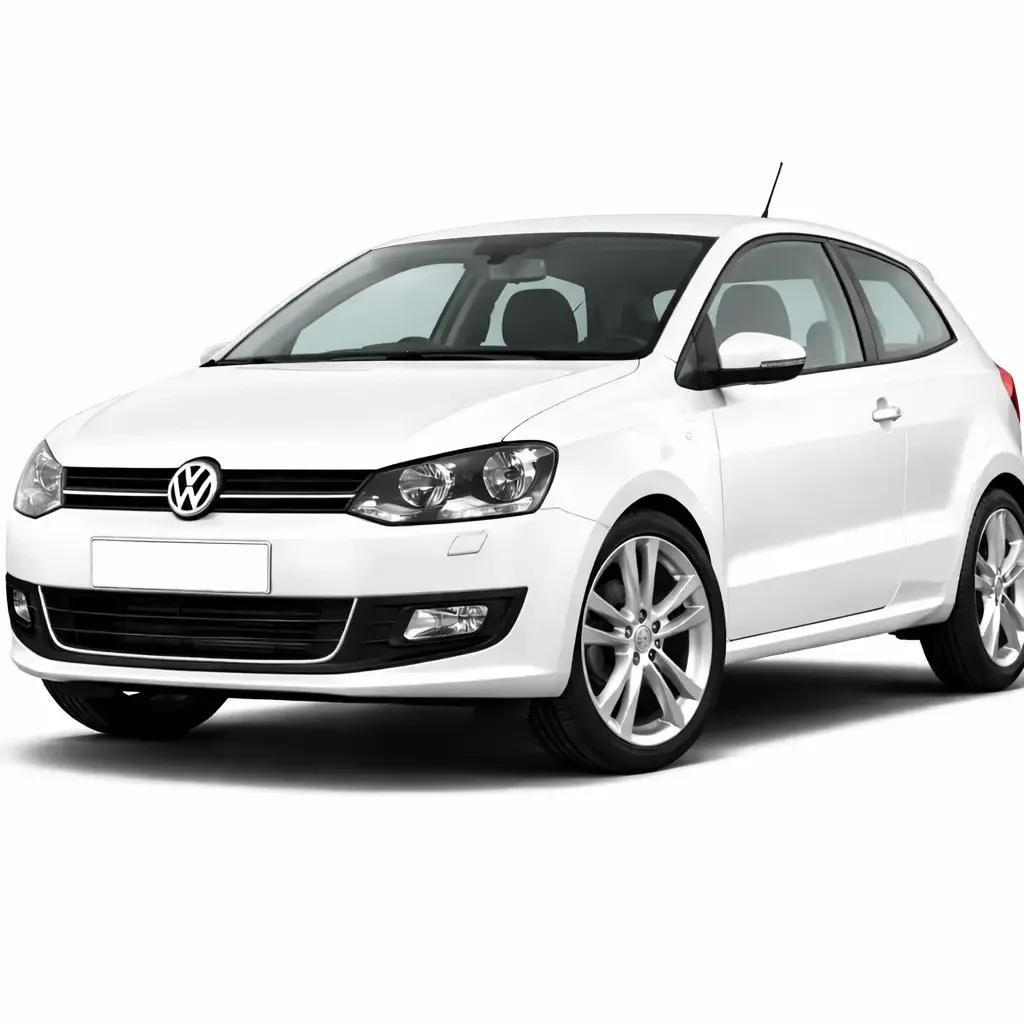
Written by Arthur Simitian | PartsAdvisory
The fifth-generation Volkswagen Polo carries the internal designation Typ 6R in its original form and Typ 6C after the 2014 facelift. Unveiled at the 2009 Geneva Motor Show, it entered production in March 2009 at the Pamplona plant in Spain and was built through 2017 in most markets, earning the 2010 European Car of the Year award in its first full year on sale. This guide covers the complete production run from 2009 through 2017, addressing both the pre-facelift 6R and the facelifted 6C as distinct catalog applications.
The Polo Mk5 was not sold in the United States or Brazil. It is a European and global market vehicle, produced additionally in South Africa (where it continued as the Polo Vivo after 2018), India, and China. The platform is the PQ25, shared with the SEAT Ibiza Mk4 (6J), the Audi A1 Mk1 (8X), and through the extended A05+ variant with the Škoda Fabia Mk3 and SEAT Toledo Mk4. These vehicles form the primary cross-reference family for mechanical components across the range.
The dominant catalog challenge in this generation is the engine family transition that occurs at the 2014 facelift. The 6R uses EA111 turbocharged petrol engines and EA189 diesel engines. The 6C largely replaces these with EA211 turbocharged petrol engines and EA288 diesel engines. The EA111 and EA211 families are not interchangeable in any component. Their timing drives differ (chain on EA111, belt on EA211), their mounting geometry differs, their ancillary layouts differ, and their engine management systems are entirely different generations. A catalog that does not enforce the 6R versus 6C boundary at the engine family level will produce wrong fuel system, ignition, timing, and engine management components for a significant share of Polo Mk5 orders.
Platform, Designations, and the 6R / 6C Facelift Boundary
The PQ25 platform is a development of the PQ24 used in the previous Polo Mk4, redesigned for improved structural stiffness and reduced weight. The Polo Mk5 is 44mm longer, 32mm wider, and 13mm lower than the Mk4, with a wheelbase of 2,470mm. Suspension uses MacPherson struts at the front and a torsion beam at the rear, the same broad architecture as the Mk4, but with revised geometry and new subframe design. The PQ25 platform introduced the DQ200 seven-speed dry-clutch DSG as the standard automatic option, paired with all turbocharged petrol engines.
The 2014 facelift that created the 6C brought subtle exterior changes: revised front and rear bumpers with a new fog light treatment, updated interior with a touchscreen as standard, a new steering wheel, and the addition of automatic post-collision braking system across all trim lines. CarPlay and Android Auto support followed from June 2015. The exterior changes are less dramatic than the 9N to 9N3 facelift of the previous generation; front wings, bonnet, and door pressings are shared between 6R and 6C. The bumper covers, headlamp clusters, and rear lamp clusters differ between the two designations. A headlamp or bumper listed for the 6R will not directly fit the 6C without confirmation of the facelift-specific mounting changes.
The most significant 6C change for catalog purposes is the engine lineup. The 2014 facelift replaced the 1.2 TDI BlueMotion with a 1.0 TSI BlueMotion, replaced the 1.6 TDI with a 1.4 TDI (three-cylinder, EA288 family), and replaced the 6R GTI's 1.4 TSI twincharged EA111 engine with an Audi-developed 1.8 TSI EA888 engine. These are not minor calibration changes; they are different engine families with different part numbers for every engine-specific component.
MPI versus TSI: The Foundational Fuel System Split
Every petrol engine in the Polo Mk5 range is either a port-injected MPI (multi-point injection) unit or a direct-injected TSI (Turbocharged Stratified Injection) unit. These two fuel delivery architectures require entirely different fuel system components and must never be merged in a catalog entry regardless of shared displacement or cylinder count.
MPI engines use low-pressure port injection where fuel is injected into the intake manifold upstream of the intake valve. They require a low-pressure fuel pump delivering fuel at approximately three to four bar. No high-pressure fuel pump and no direct injection rail are present. MPI engines found in the Polo Mk5 include the 1.0L CGPA (60 PS) and CGPB (70 PS), the 1.2L MPI CHFA (75 PS), and the 1.4L MPI CHGB (85 PS). These are naturally aspirated engines with no turbocharger, no intercooler, and no charge air system of any kind.
TSI engines use direct injection into the combustion chamber combined with turbocharging. They require a camshaft-driven high-pressure fuel pump delivering fuel at 150 bar or more, a high-pressure common rail, and high-pressure injectors rated for direct combustion chamber injection. The turbocharger, intercooler (water-cooled on EA211 engines, air-cooled on EA111), and charge air routing are also TSI-specific components absent from MPI applications. A catalog that assigns TSI high-pressure fuel pump listings to an MPI application, or that omits turbocharger listings from a TSI application, will produce wrong parts for every fuel system service call against those entries.
6R Petrol Engine Codes (2009–2014)
1.2 TSI EA111: CBZC (90 PS) and CBZB (105 PS)
The primary turbocharged petrol engine of the 6R is the 1.2 TSI from the EA111 engine family. Engine code CBZC produces 90 PS and CBZB produces 105 PS. Both use a timing chain drive, direct injection with a camshaft-driven high-pressure fuel pump, and an air-cooled intercooler mounted in the charge air path. The EA111 1.2 TSI cross-references to the SEAT Ibiza Mk4 and Audi A1 Mk1 applications under the same engine codes. The timing chain on this engine is documented by the AUTODOC UK Polo 6R engine guide as a known reliability item, with chain stretch reported from approximately 120,000 to 150,000 kilometres on the 90 PS CBZC variant. Timing chain kits and tensioners are high-demand service items that require engine code confirmation before listing.
1.4 TSI Twincharged EA111 GTI: CAVE (180 PS)
The 6R GTI uses engine code CAVE, a 1.4-litre EA111 twincharged unit combining a Roots-type supercharger and a turbocharger to produce 180 PS and 250 Nm of torque. The supercharger provides low-rpm torque fill while the turbocharger takes over at higher revs. This dual forced induction architecture requires both a supercharger assembly and a turbocharger assembly, with separate lubrication and drive circuits for each. No other engine in the 6R range uses a supercharger. A catalog that assigns single-turbo charge air components to the CAVE application, or that omits supercharger listings, will produce wrong forced induction components for the 6R GTI on every service call.
The Wikipedia Polo Mk5 article confirms that the 6R GTI's battery was relocated from the engine compartment to the spare wheel well to improve weight distribution, reducing boot volume from 280 litres to 204 litres. This relocation means the GTI uses a different battery tray, different battery vent routing, and a different battery specification from the standard Polo. Battery and battery tray listings must distinguish GTI from non-GTI applications.
1.0L MPI: CGPA (60 PS) and CGPB (70 PS)
The entry-level 1.0L MPI engines are three-cylinder naturally aspirated units with port injection. CGPA produces 60 PS and CGPB 70 PS. These are the simplest petrol engines in the range in terms of ancillary parts count: no turbocharger, no high-pressure fuel system, no intercooler. They cross-reference to the SEAT Ibiza 6J 1.0L MPI application under matching codes. Ignition coil packs are three-cylinder specific and do not cross to the four-cylinder 1.2L or 1.4L MPI applications despite sharing the port injection architecture.
6C Petrol Engine Codes (2014–2017): EA211 and EA888 Replace EA111
The 2014 facelift introduced the EA211 engine family as the replacement for EA111 across the turbocharged petrol range. The EA211 is an entirely new engine family sharing no components with the EA111 it replaces. The most visible architectural difference is the timing drive: the EA111 uses a chain, the EA211 uses a belt. The EA211 also reverses the engine's orientation within the bay, mounting the exhaust side facing rearward rather than forward. This changes the routing of the cooling system, the position of the turbocharger, and the layout of the ancillary drive. No EA111 and EA211 component cross-references are valid for any timing, fuel system, cooling, or engine management item.
1.2 TSI EA211: CJZC (90 PS) and CJZD (110 PS)
The 6C carries the 1.2 TSI in EA211 guise, with CJZC producing 90 PS and CJZD producing 110 PS. Both use a timing belt, a water-cooled intercooler integrated into the intake manifold (unlike the separate air-cooled unit on the EA111), and the EA211's reversed exhaust orientation. The AUTODOC Polo 6R engine guide confirms the EA211 1.2 TSI as a belt-driven engine, explicitly distinguishing it from the chain-driven EA111 predecessor. Timing belt kit listings for the 6C 1.2 TSI must not be assumed to apply to the 6R 1.2 TSI, and vice versa for timing chain kits.
1.0 TSI EA211 BlueMotion and 1.4 TSI EA211 ACT
The 6C introduced the 1.0 TSI three-cylinder EA211 as the BlueMotion engine, replacing the 1.2 TDI BlueMotion of the 6R. Engine codes in the CHY family produce 60 to 75 PS depending on market. This is a significant powertrain change at the BlueMotion trim level: 6R BlueMotion is diesel, 6C BlueMotion is petrol. Any catalog applying 6R BlueMotion diesel listings (fuel filter, glow plugs, diesel injectors) to a 6C BlueMotion entry is applying diesel service items to a petrol-powered vehicle.
The 1.4 TSI with Active Cylinder Technology (ACT) is a 6C-only engine producing 148 PS. The ACT system deactivates two of the four cylinders under light load, requiring cylinder deactivation solenoids and dedicated valve train hardware not present on any other engine in the Polo range. ACT-specific components including the deactivation solenoids and the cylinder-specific camshaft followers must be listed as ACT-exclusive applications. No ACT hardware exists in the 6R lineup.
GTI 6C: 1.8 TSI EA888 (CJSA, 192 PS)
The 6C GTI uses engine code CJSA from the EA888 family, an Audi-developed 1.8-litre turbocharged four-cylinder producing 192 PS and 320 Nm. The EA888 has no relationship to the EA111 CAVE engine used in the 6R GTI. The two engines differ in displacement, architecture, forced induction type (single turbo on EA888 versus twincharger on CAVE), cylinder count implications for ignition, and engine management system. The AUTODOC Polo 6R engine overview confirms the 6C GTI as powered by the 1.8 TSI, described as Audi-developed, with explicit distinction from the 6R GTI's 1.4 TSI.
The DQ200 seven-speed DSG paired with the 6C GTI is torque-limited to 250 Nm in DSG form, while the six-speed manual allows the full 320 Nm to reach the drivetrain. This torque discrepancy is a documented characteristic of the DQ200's dry clutch capacity limit. Clutch component listings for the 6C GTI must distinguish between DSG and manual applications at the clutch disc and pressure plate level, as the torque differential means the two are tuned differently. The battery relocation to the spare wheel well is carried forward from the 6R GTI to the 6C GTI.
Diesel Engine Codes: EA189 in the 6R, EA288 in the 6C
6R Diesels: 1.2 TDI and 1.6 TDI (EA189 Family)
The 6R carries two diesel families. The 1.2 TDI BlueMotion (engine code CFWA) is a three-cylinder 75 PS unit, the sole application of the 1.2 TDI in the Polo range. It uses a timing belt and crosses to the SEAT Ibiza 6J 1.2 TDI BlueMotion application. The 1.6 TDI (engine codes CAYC at 90 PS and CAYB at 105 PS) is a four-cylinder unit from the EA189 family that became the subject of the 2015 Volkswagen emissions compliance issue. Both the CAYC and CAYB carry EA189 NOx defeat device implications that affect the emissions system components in these applications; affected vehicles in certain markets received software and hardware updates that changed the EGR valve, flow straightener, and in some cases the diesel oxidation catalyst specification. Parts listings for CAYC and CAYB must account for pre-update and post-update specifications where markets required the technical measure.
6C Diesels: 1.4 TDI and 1.6 TDI (EA288 Family)
The 2014 facelift replaced the 6R diesel range with EA288 units. The 1.4 TDI (engine code CUTA, 90 PS) is a new three-cylinder diesel replacing both the 1.2 TDI and the lower-output 1.6 TDI positions. The 1.6 TDI (engine code CXMA, 95 PS) continues as a four-cylinder but in EA288 specification with SCR catalytic converter and AdBlue injection to meet Euro 6 emissions requirements. The AdBlue system is new to the 6C diesel applications: it adds an AdBlue tank, an AdBlue injector, a selective catalytic reduction catalyst, and a NOx sensor downstream of the SCR. These are components entirely absent from the 6R diesel applications. A catalog that applies 6R diesel exhaust and emissions system listings to 6C diesel entries will omit the AdBlue and SCR components that are mandated equipment on Euro 6 diesel applications.
The EA288 engines are not mechanically related to the EA189 engines they replaced, despite covering similar displacement and power output territory. Timing components, fuel injectors, turbocharger specifications, and EGR systems differ between EA189 and EA288 across all cross-displacements. No EA189 component crosses to an EA288 application under any circumstance.
DQ200 Seven-Speed DSG: Catalogue Implications
The DQ200 seven-speed dual-clutch transmission with dry clutch packs is the standard automatic option across all turbocharged petrol and diesel applications in the Polo Mk5. It is a dry-clutch design, unlike the DQ250 wet-clutch DSG used on higher-torque VAG applications. The dry clutch packs of the DQ200 are a known reliability item, and the mechatronic unit (the electro-hydraulic control assembly) is the primary diagnostic and replacement component when shift quality degrades.
The PQ25 platform documentation confirms the DQ200 is paired with the 1.4 MPI, 1.2 TSI, 1.4 TSI, and 1.6 TDI in the 6R, and with the 1.0 TSI, 1.2 TSI, 1.8 TSI, and 1.4 TDI in the 6C. The DQ200 uses its own proprietary DSG fluid (G 052 182) that is different from the DQ250 wet-clutch DSG fluid, from conventional automatic transmission fluid, and from manual gearbox oil. A catalog entry that does not list DSG fluid as a distinct service category for DQ200-equipped Polo Mk5 applications is missing a required transmission service item. Manual gearbox applications use a conventional six-speed or five-speed unit with standard gearbox oil; these must not share a fluid listing with DQ200 applications.
Brakes: Application-Specific Disc Sizes
Front brake disc diameter on the Polo Mk5 ranges from 230mm on the smallest drum-rear applications to 312mm on the GTI 6C, and the correct diameter cannot be determined from the model year or body designation alone. The AUTODOC brake disc page for the Polo 6R/6C lists possible front disc diameters of 230, 232, 255.7, 256, 288, 310, and 312mm across the range, reflecting the breadth of applications within a single model generation. The UK-Polos.net forum brake specification thread confirms the following approximate structure for European market applications: standard non-GTI models typically use 256mm front vented discs with rear drums; higher-specification non-GTI models may use 288mm fronts; the 6R GTI used 288mm on some builds and 312mm on others; the 6C GTI standardised at 312x25mm front vented discs.
Rear brake configuration varies by market and specification. The majority of European 6R and 6C models use rear drum brakes on standard applications. The GTI uses rear disc brakes with 232mm solid discs, and the GTI rear disc application also uses the red-painted brake calipers that are a GTI visual identifier. A standard model rear drum listing must not be applied to a GTI, and a GTI rear disc listing must not be applied to standard models. The UK-Polos.net brake forum confirms 232mm solid rear discs as the GTI rear specification, noting that upgrading from the factory 232mm solid rears to vented 256mm units is a known modification requiring different caliper carriers.
Brake cross-references to the SEAT Ibiza Mk4 (6J) and Audi A1 (8X) are valid at the caliper, disc, and pad level for matching engine code applications, as established by the PQ25 platform parts community. The shared platform and shared engine families mean brake components specified by engine code on the Polo Mk5 will carry the same part numbers on those vehicles under equivalent applications.
BlueMotion and CrossPolo: Variant-Specific Catalog Entries
The BlueMotion variant undergoes a fuel type change between the 6R and 6C that is the most significant variant-level catalog error in this generation. The 6R BlueMotion uses the 1.2 TDI diesel engine code CFWA. The 6C BlueMotion uses the 1.0 TSI petrol engine. These are different fuel types, different engine families, different ancillary systems, and different service schedules. A BlueMotion catalog entry that does not enforce the 6R versus 6C boundary at the engine family level will supply diesel service components to a petrol vehicle or petrol service components to a diesel vehicle on every fuel system, filter, and glow plug order.
The CrossPolo (available in both 6R and 6C) is a raised-ride-height styling variant with body cladding, roof rails, and off-road aesthetic details. It was never offered with four-wheel drive at any specification level in any market. The CrossPolo uses the same PQ25 front-wheel-drive drivetrain as the standard Polo. No AWD-specific prop shaft, rear differential, or rear driveshaft listings apply to the CrossPolo. Its raised suspension uses different spring rate specifications from the standard Polo, and those spring rates must be confirmed against the CrossPolo-specific application rather than assumed to match the standard Polo or the GTI.
Platform Cross-References: SEAT Ibiza 6J and Audi A1 8X
The SEAT Ibiza Mk4 (6J) and Audi A1 Mk1 (8X) are the primary PQ25 platform cross-reference vehicles for the Polo Mk5. The PQ25 platform analysis at polo.blue confirms that suspension, brake, and chassis components from the SEAT Ibiza 6J and Audi A1 8X will fit the Polo 6R and 6C at the structural level. Cross-references are valid for MacPherson front strut cartridges, front control arms and ball joints, front wheel bearings and hub assemblies, rear torsion beam bushings and shock absorbers, and brake components under matching engine code applications.
Engine component cross-references to the SEAT Ibiza 6J are valid under matching engine codes: 1.2 TSI CBZB and CBZC on the 6R cross to Ibiza 6J 1.2 TSI; 1.2 TSI CJZC and CJZD on the 6C cross to Ibiza 6P 1.2 TSI (the Ibiza Mk4 facelift). Timing chain kits for EA111 and timing belt kits for EA211 follow these cross-references. The Škoda Fabia Mk3 (NJ), which uses the extended A05+ version of the PQ25 platform, also shares engine families and engine management systems with the 6C and is a valid cross-reference for EA211 engine components under matching codes.
Body panel cross-references between Polo, Ibiza, and A1 are not valid. Each nameplate uses its own exterior styling with unique bonnet, wing, bumper, headlamp, and door panel pressings. The platform sharing is mechanical, not cosmetic.
Common ACES/PIES Catalog Mistakes
1. Applying EA111 timing chain kits to 6C 1.2 TSI EA211 applications. The EA111 1.2 TSI (CBZB, CBZC) uses a timing chain. The EA211 1.2 TSI (CJZC, CJZD) uses a timing belt. A unified 1.2 TSI Polo listing that carries timing chain kits across both 6R and 6C will supply a chain kit to a belt-driven engine on every post-2014 order. The two timing systems are completely incompatible; a timing chain tensioner will not fit an engine that has a belt drive.
2. Merging 6R GTI and 6C GTI engine applications. The 6R GTI uses the 1.4 TSI twincharged EA111 (CAVE, 180 PS) with both a supercharger and a turbocharger. The 6C GTI uses the 1.8 TSI EA888 (CJSA, 192 PS) with a single turbocharger only. These are different engine families with different displacements, different forced induction architectures, and different part numbers for every engine-specific component. A catalog that groups both GTI generations under a single GTI entry will produce wrong forced induction components, wrong fuel system parts, and wrong engine management items for one of the two generations on every order.
3. Applying MPI fuel system components to TSI applications. The MPI engines (1.0L MPI, 1.2L MPI, 1.4L MPI) use low-pressure port injection. The TSI engines use high-pressure direct injection with a camshaft-driven high-pressure pump and direct injectors rated for combustion chamber delivery. A catalog that assigns fuel injectors or fuel pump listings across MPI and TSI applications will supply the wrong pressure-rated components to whichever fuel system is not the catalog default.
4. Applying 6R BlueMotion diesel listings to the 6C BlueMotion petrol application. The 6R BlueMotion is powered by the 1.2 TDI CFWA diesel. The 6C BlueMotion is powered by the 1.0 TSI petrol. A BlueMotion catalog entry that does not enforce the 6R and 6C designation boundary will supply diesel filters, glow plugs, and diesel injector service components to a petrol-powered vehicle, or vice versa.
5. Omitting DQ200 DSG fluid as a distinct service category. Every DQ200-equipped Polo Mk5 (which includes all turbocharged petrol and diesel automatic variants) requires G 052 182 dry DSG fluid that is different from DQ250 wet DSG fluid, ATF, and manual gearbox oil. A catalog that does not list DSG fluid as a standalone service item for DQ200-equipped applications leaves the primary automatic transmission service requirement unlisted.
6. Applying the 6R CAYC or CAYB 1.6 TDI EA189 listings to the 6C 1.6 TDI CXMA EA288. The EA189 and EA288 are different engine families with different timing components, different injectors, different turbocharger specifications, and different EGR systems. The 6C EA288 1.6 TDI also adds an SCR catalyst and AdBlue injection system entirely absent from the EA189 applications. Applying EA189 exhaust and emissions listings to a Euro 6 EA288 application will omit mandatory AdBlue and SCR components.
7. Omitting GTI battery tray and battery specifications as distinct applications. Both the 6R and 6C GTI relocated the battery from the engine compartment to the spare wheel well. This requires a GTI-specific battery tray, specific battery hold-down hardware, and a battery venting arrangement specific to the spare wheel location. A catalog that assigns the standard Polo engine bay battery tray to a GTI application, or that uses the standard Polo battery specification, will supply physically incompatible or incorrectly located components.
8. Assigning AWD drivetrain components to the CrossPolo. The CrossPolo was never offered with four-wheel drive in any market or specification. Its raised suspension and off-road styling carry no AWD drivetrain components. Any listing of prop shaft, rear differential, or rear driveshaft against a CrossPolo application is incorrect.
9. Applying a uniform front brake disc diameter across all Polo Mk5 applications. The range spans from approximately 256mm on standard non-GTI applications to 312mm on the 6C GTI. Applying the 256mm standard disc to a 312mm GTI application will deliver rotors that are 56mm too small in diameter and physically incompatible with the GTI caliper carrier geometry.
10. Applying 6R 1.4 TSI ACT cylinder deactivation components to non-ACT 1.4 TSI applications. The 1.4 TSI with Active Cylinder Technology carries deactivation solenoids and dedicated cam follower hardware not present on the non-ACT 1.4 TSI. A catalog that merges ACT and non-ACT 1.4 TSI listings at the valve train level will supply deactivation hardware to a standard valvetrain application or omit deactivation hardware from an ACT application.
Pre-Listing Checklist for the 2009–2017 Polo Mk5
• Platform confirmed as PQ25; SEAT Ibiza Mk4 (6J), Audi A1 Mk1 (8X), and Škoda Fabia Mk3 (NJ) confirmed as platform cross-reference siblings for mechanical components under matching engine codes
• Designation confirmed as 6R (2009 to 2014) or 6C (2014 to 2017); bumper cover and headlamp listings separated by designation; engine family confirmed as EA111 (6R TSI), EA211 (6C TSI), EA189 (6R TDI), or EA288 (6C TDI)
• Fuel delivery confirmed as MPI (port injection, low-pressure fuel system, no turbocharger) or TSI (direct injection, high-pressure fuel system, turbocharger); MPI and TSI listings maintained as separate applications
• 6R 1.2 TSI timing drive confirmed as chain (EA111 CBZB/CBZC); 6C 1.2 TSI timing drive confirmed as belt (EA211 CJZC/CJZD); timing chain kits and timing belt kits listed as separate applications with no cross-reference between them
• 6R GTI confirmed as 1.4 TSI twincharged CAVE with supercharger and turbocharger; 6C GTI confirmed as 1.8 TSI CJSA EA888 single turbo; no shared engine component listings between the two GTI generations
• 6R BlueMotion confirmed as 1.2 TDI CFWA diesel; 6C BlueMotion confirmed as 1.0 TSI petrol; diesel and petrol service item listings strictly separated
• 6C diesel confirmed as EA288 (CUTA 1.4 TDI, CXMA 1.6 TDI) with SCR catalyst and AdBlue injection; AdBlue tank, AdBlue injector, NOx sensor, and SCR catalyst listed as distinct service items for 6C diesel
• DQ200 DSG fluid (G 052 182) listed as a distinct service category for all DQ200-equipped applications; not merged with DQ250 fluid, ATF, or manual gearbox oil listings
• Front brake disc size confirmed by application: 256mm standard; 288mm or 312mm for GTI applications; 6C GTI front discs confirmed at 312x25mm; GTI rear discs confirmed as 232mm solid
• GTI battery position confirmed as spare wheel well; GTI-specific battery tray and venting listed as GTI-exclusive applications
• CrossPolo confirmed as FWD only throughout production; no AWD drivetrain listings applicable; CrossPolo suspension spring specification distinct from both standard Polo and GTI
Final Take
The Polo Mk5 is a generation where the facelift boundary matters more than it visually appears. From the outside, the 6R and 6C look very similar — the bumpers changed, but the doors, bonnet, and roof pressings carried over. From an engine and transmission catalog perspective, the 6C might as well be a different vehicle. The EA111 to EA211 transition, the diesel switch from EA189 to EA288 with AdBlue, and the GTI engine swap from a 1.4 TSI twincharger to a 1.8 TSI single turbo make the 2014 boundary the most consequential facelift date in recent Polo history for parts catalog purposes.
The practical summary for catalog work is this: confirm engine code before every mechanical listing, enforce the 6R and 6C boundary at the engine family level, keep MPI and TSI fuel systems completely separate, and list the DQ200 DSG fluid as its own service category wherever a DQ200 is confirmed. The brake disc size needs its own confirmation workflow because the range from 256mm to 312mm within a single model generation is wide enough that a default assumption will be wrong for a meaningful percentage of orders. The timing chain versus belt question on the 1.2 TSI is the single most common source of wrong parts in this generation and deserves a confirmation step of its own.
Disclaimer
This guide is intended for catalog research, fitment analysis, and parts advisory reference. Production specifications, option availability, and regulatory compliance requirements vary by model year, regional market, and assembly date within any given window. Always confirm application data against vehicle identification number decoding, factory build sheets, and OEM parts documentation before finalizing a listing or parts recommendation. PartsAdvisory and its contributors are not responsible for fitment errors arising from catalog data that has not been independently verified against physical vehicle inspection or official OEM sources.