
Volkswagen Polo (2017–2025): Mk6 AW and BZ Fitment Guide
Written by Arthur Simitian | PartsAdvisory
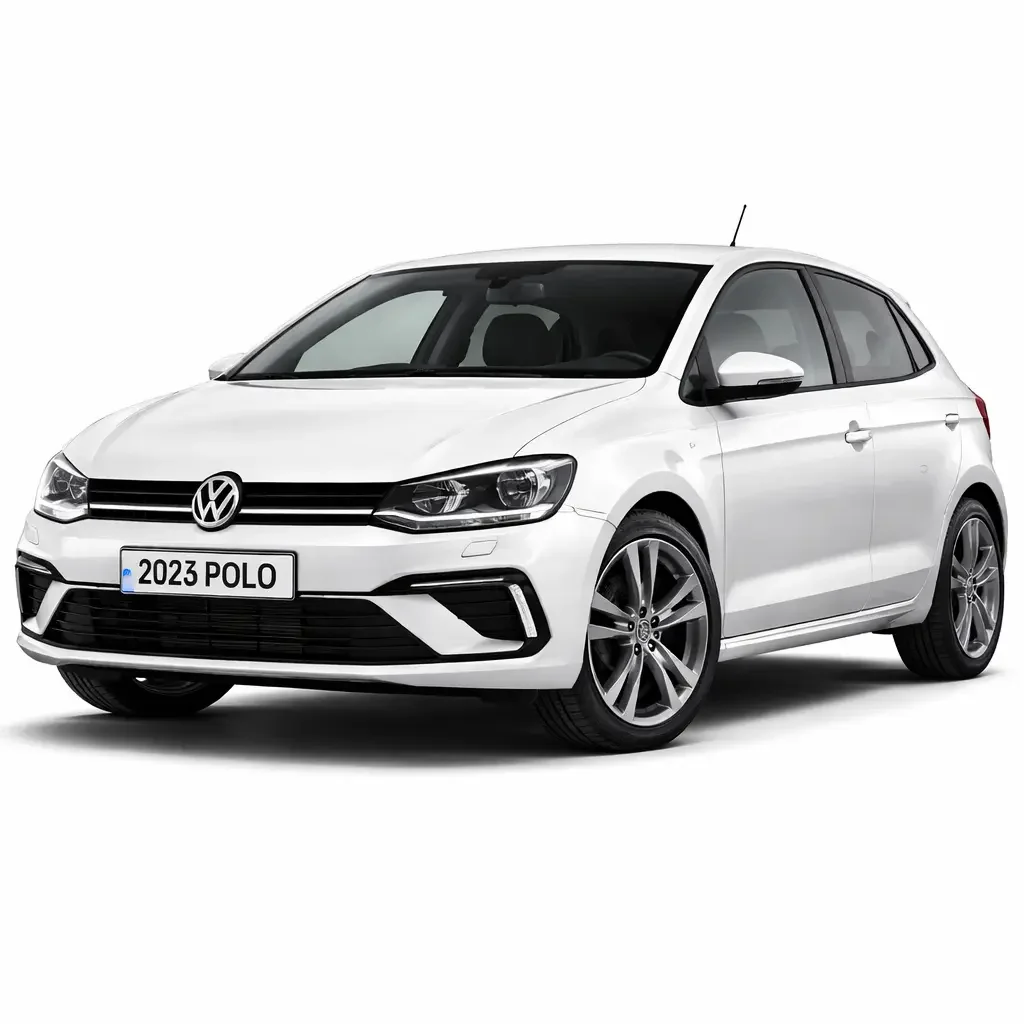
The sixth-generation Volkswagen Polo carries the internal designation Typ AW in its pre-facelift form and Typ BZ after the April 2021 facelift. Unveiled in Berlin on 16 June 2017, it entered production at the Pamplona plant in July 2017. It is the first Polo generation built on the MQB A0 platform and the first not available in a three-door body style. Five-door hatchback is the only configuration sold in European markets. This guide covers the full production window from 2017 through 2025, spanning both the AW and BZ designations.
The platform change from PQ25 to MQB A0 is the defining structural break from the Mk5 Polo. The two platforms share no mechanical components at the subframe, suspension, or driveshaft level. The MQB A0 architecture is a shortened derivative of the Volkswagen Group's MQB platform that underpins the Golf Mk7 and Mk8, Tiguan, and Passat, bringing Golf-class structural rigidity and electronics architecture to the B-segment for the first time. Stiffness increased from the PQ25's 14,000 Nm per degree to more than 18,000 Nm per degree according to Volkswagen. The wheelbase grew by 92mm to 2,564mm, making the Mk6 Polo substantially larger than any previous Polo and approximately the same size as a second-generation Golf.
The central catalog challenge in this generation is distinguishing the GTI's 2.0 TSI EA888 four-cylinder from the three-cylinder EA211 engines used across every other application in the range. The GTI is not simply a more powerful version of the 1.0 TSI or 1.5 TSI. It is a different engine family with a different cylinder count, a different displacement, a different fuel system architecture, a different transmission type, and a different brake specification. A catalog that treats the Polo GTI as a power output variant of the standard Polo range will produce wrong engine, transmission, and brake components for the GTI on every order.
Platform: MQB A0 and What It Brings to the B-Segment
The MQB A0 is the smallest expression of Volkswagen Group's Modular Transverse Matrix platform family. It shares its fundamental longitudinal and lateral dimensions, mounting positions, and electronics architecture with the full MQB platform, but is scaled down for B-segment vehicle proportions. The primary MQB A0 cross-reference siblings for the Polo Mk6 are the SEAT Ibiza Mk5 (Typ 6F), the Audi A1 Mk2 (Typ 8X), the SEAT Arona (Typ KJ), the Škoda Fabia Mk4 (Typ NJ, from 2021), and the Volkswagen T-Cross (Typ C11). These vehicles share the MQB A0 suspension geometry, brake mounting points, wheel bearing specifications, and engine management architecture under matching engine code applications.
The MQB A0 platform uses a MacPherson strut front suspension and a twist beam rear axle, the same broad architecture as the previous Polo generations, but with revised geometry reflecting the longer wheelbase. Front control arm ball joints, front strut cartridges, front wheel bearings, and front hub assemblies cross to the SEAT Ibiza Mk5 and Audi A1 Mk2 under matching engine weight applications. Rear twist beam components — shock absorbers, coil springs, and beam bushings — are specific to the MQB A0 geometry and cross to the same sibling vehicles. No Mk5 Polo (PQ25) suspension component crosses to the Mk6 Polo (MQB A0) at any point; the two platforms have different geometry, different subframe design, and different mounting configurations throughout.
AW and BZ: The 2021 Facelift Boundary
The April 2021 facelift that created the BZ designation brought exterior and interior changes more visible than the equivalent Mk5 Polo facelift. At the front, the headlamp units were reshaped and an LED light bar was added across the grille, previewing the broader VW Group design language shift of that period. Matrix LED headlamps became available as an option on the Polo for the first time. At the rear, wider LED tail lamp clusters extended onto the tailgate rather than being contained within the body-side panel. These exterior changes make the AW and BZ visually distinct to the degree that headlamp units, front bumper assemblies, and rear tail lamp clusters are non-interchangeable between the two designations.
Below the skin, the AW and BZ share the same MQB A0 platform, the same fundamental suspension and brake architecture, and for most engine codes the same mechanical components. The 2021 facelift updated the GTI's output from 200 PS to 207 PS in some markets and introduced a revised version of the IQ.Drive driver assistance suite. Where a GTI application straddles the AW and BZ boundary, engine code confirmation is required to determine whether the 200 PS or the higher-output specification applies.
The facelift also introduced an option for matrix LED headlamps that includes a different wiring harness and a different headlamp control module from the standard LED or halogen headlamp applications. A catalog that treats all BZ headlamp assemblies as a single entry without distinguishing halogen, standard LED, and matrix LED specifications will supply wrong assemblies for matrix LED-equipped vehicles.
Petrol Engine Codes: Three-Cylinder EA211 Across the Standard Range
With the exception of the GTI, every petrol engine in the Polo Mk6 is a three-cylinder unit from the EA211 family. This is a uniform architecture across the non-GTI range: all units share the same cylinder count, the same timing belt drive, the same aluminium cylinder block design with integrated exhaust manifold, and the same belt-driven overhead camshaft layout. The three-cylinder architecture eliminates the balance shaft that would be expected in a three-cylinder engine through careful crankshaft and flywheel design. This uniformity simplifies some catalog work but makes engine code confirmation even more important because the output range from 65 PS to 150 PS is achieved with different turbocharger specifications, different fuel system calibrations, and in the case of the 1.5 TSI, a different cylinder deactivation system.
1.0 MPI (65–80 PS): CHYC and CHYB
The entry-level petrol engines are naturally aspirated 1.0L MPI three-cylinder units with port injection, no turbocharger, and no high-pressure fuel system. Engine code CHYC produces 65 PS and CHYB produces 75 PS, with an unlisted 80 PS MPI variant also offered in some markets. These are the simplest petrol applications in the Mk6 range: low-pressure fuel pump, port injection, no charge air system, no direct injection rail. The three-cylinder cylinder head, ignition coil packs, and timing belt are specific to the three-cylinder 1.0L architecture and do not cross to the four-cylinder 2.0 TSI GTI application. Cross-references to the SEAT Ibiza Mk5 1.0 MPI and Audi A1 Mk2 1.0 MPI applications under matching engine codes are valid for fuel system and engine components.
1.0 TSI (95–115 PS): CHZL, DLAA, CHZJ, DKJA
The 1.0 TSI is the volume engine of the Polo Mk6 range, available in multiple output variants across the production window. The Vag-Perf database for the Polo Mk6 confirms engine code CHZL at 95 PS, DLAA at 110 PS, and CHZJ or DKJA at 115 PS. All are turbocharged direct injection three-cylinder EA211 units using a timing belt drive and a water-cooled intercooler integrated into the intake manifold. The higher output variants use a larger turbocharger and a different fuel pressure calibration, making turbocharger and wastegate actuator part numbers output-specific within the 1.0 TSI family. A unified 1.0 TSI Polo Mk6 entry that does not split by engine code will generate wrong turbocharger specifications for at least some of the output variants it covers.
The 1.0 TSI is the engine used in BlueMotion variants where the Polo Mk6 carries that designation. It represents a continuation of the pattern established in the Mk5 6C, where the BlueMotion model uses a petrol TSI rather than a diesel. The BlueMotion 1.0 TSI uses specific gearbox ratios and aerodynamic treatment but is not a mechanically distinct engine from the standard 1.0 TSI application. BlueMotion transmission and gearbox ratio listings must be confirmed against the specific gearbox code, not assumed to match the standard 1.0 TSI manual application.
1.0 TGI (90 PS, CNG): DBYA
Engine code DBYA is the compressed natural gas (CNG) variant of the 1.0L three-cylinder, producing 90 PS when running on gas and able to use petrol as a fallback. The TGI fuel system is fundamentally different from the petrol TSI: it adds a high-pressure CNG storage tank, a CNG pressure regulator, CNG-specific injectors, and a bi-fuel control strategy in the engine management system. The petrol fuel system is retained in reduced form for the fallback mode. No petrol-only TSI fuel system component crosses to the TGI application at the CNG circuit level, and no TGI-specific fuel system component applies to a TSI application. A catalog that merges TGI and TSI fuel system listings will produce wrong components for both applications.
1.5 TSI ACT (150 PS): DADA and DPCA
The 1.5 TSI with Active Cylinder Technology is a three-cylinder EA211 unit that uses cylinder deactivation to improve fuel economy under light load, running on two active cylinders and deactivating one. Engine code DADA is the pre-GPF (gasoline particulate filter) version; DPCA is the GPF-equipped version introduced as Euro 6d-Temp and Euro 6d emissions requirements took effect. The Wikipedia List of Volkswagen Group petrol engines confirms both DADA and DPCA carry ACT. The ACT system requires cylinder deactivation solenoids integrated into the valve train that are not present on the 1.0 TSI. The GPF filter on the DPCA is a particulate filter installed in the exhaust downstream of the catalyst, an additional service item absent from the pre-GPF DADA application.
The 1.5 TSI is a four-cylinder engine despite carrying the 1.5 TSI designation — it is not an uprated three-cylinder 1.0. The 1.5 TSI EA211 Evo is a four-cylinder 1,498 cc engine, and its cylinder head, timing belt, spark plugs, and ignition system are all four-cylinder units. The three-cylinder 1.0 TSI engines in the Polo Mk6 range use three spark plugs; the 1.5 TSI uses four. A catalog that treats the 1.5 TSI as a three-cylinder application at the cylinder head, ignition, or timing level will produce wrong component counts for every related service item.
GTI: 2.0 TSI EA888, DQ250, and a Completely Separate Parts Profile
The Polo Mk6 GTI is powered by the 2.0 TSI EA888 Gen 3 engine, producing 200 PS and 320 Nm, in a slightly detuned form relative to the Golf Mk7 GTI at 230 PS. Engine code CZPC covers the launch specification; a higher-output variant producing 207 PS was introduced at or following the BZ facelift. The EA888 is a four-cylinder 1,984 cc engine. It is turbocharged, direct injected, and uses a timing chain rather than a timing belt. This places the GTI in a completely different engine family, cylinder count, displacement, and timing drive category from every other engine in the Polo Mk6 range.
The Wikipedia Polo article confirms the GTI is available with either a six-speed manual or a six-speed DQ250 DSG dual-clutch automatic. The DQ250 is a wet-clutch unit — distinct from the DQ200 seven-speed dry-clutch unit used with the 1.0 TSI and 1.5 TSI in automatic specification. The DQ250 uses a different fluid specification from the DQ200 and requires a different service interval and different mechatronic architecture. A catalog that assigns DQ200 dry-clutch DSG fluid to a GTI DQ250 application will supply fluid with the wrong specification for a wet-clutch system. The two DSG types are entirely different transmissions that share only the DSG commercial name.
The GTI's brake specification, confirmed by the Wikipedia Polo article, includes larger discs and red brake calipers, with 17-inch wheels as standard fitment. The specific disc diameter for the Polo Mk6 GTI is larger than the standard non-GTI application; front disc size for the GTI exceeds the 256mm standard that is typical for non-GTI Polo Mk6 applications. Caliper carriers, disc part numbers, and brake pad specifications are all GTI-specific and must not be sourced from the standard range listing. The GTI suspension is lowered by approximately 15mm relative to the standard Polo Mk6 and uses firmer spring and damper rates. Spring part numbers for the GTI must be confirmed against the GTI-lowered specification.
Diesel: 1.6 TDI EA288 Three-Cylinder (DGTC and DGTD)
The Polo Mk6 diesel range consists of the 1.6 TDI EA288 in two output levels: engine code DGTC at 80 PS and DGTD at 95 PS. These are three-cylinder EA288 common rail diesel units meeting Euro 6 emissions requirements, equipped with a diesel particulate filter, EGR system, and in certain markets an SCR catalyst with AdBlue injection. The three-cylinder diesel architecture means that glow plug listings specify three units rather than four, and cylinder head components are three-cylinder specific.
The 1.6 TDI EA288 in the Polo Mk6 is mechanically related to the EA288 units used in the Mk5 Polo 6C, but carried forward in three-cylinder form specific to the MQB A0 application. The DGTC and DGTD cross-reference to the SEAT Ibiza Mk5 1.6 TDI and Audi A1 Mk2 1.6 TDI applications under matching engine codes, as those vehicles share the MQB A0 platform and the same EA288 diesel family.
Where the 1.6 TDI application is equipped with an SCR system and AdBlue injection, the AdBlue tank, injector, NOx sensor, and SCR catalyst are distinct service items that must be listed separately from the DPF and EGR components. A catalog that covers DPF and EGR for the 1.6 TDI without listing AdBlue system components where fitted is incomplete for the Euro 6d-compliant applications within this engine code.
Transmissions: DQ200, DQ250, and the GTI Distinction
Two automatic transmission types appear in the Polo Mk6 range and they must not be merged in any catalog entry. The DQ200 seven-speed dry-clutch DSG is used with the 1.0 TSI, 1.5 TSI (in some configurations), and 1.6 TDI applications. It uses G 052 182 dry DSG fluid and has a mechatronic unit specific to the dry-clutch architecture. The DQ250 six-speed wet-clutch DSG is used exclusively with the GTI 2.0 TSI. It uses a different fluid specification (G 052 182 A2) and has a different mechatronic unit suited to the higher torque of the EA888 engine.
The manual transmission options are a six-speed unit with the GTI and a five-speed or six-speed unit with non-GTI applications depending on engine and market. Manual gearbox oil specifications differ between the GTI and non-GTI units. Clutch disc diameter and pressure plate specifications follow engine torque output and must be confirmed by engine code before listing.
IQ.Drive and ADAS: Catalog Implications of Driver Assistance Systems
The Polo Mk6 is the first Polo generation to offer the Volkswagen Group's IQ.Drive suite of driver assistance systems, which includes Travel Assist (adaptive cruise control with lane centring), Front Assist (automatic emergency braking with pedestrian detection), Lane Assist, and blind spot monitoring. The Wikipedia Polo Mk6 article confirms this generation introduces a series of assistance systems such as traffic sign recognition, blind spot assistant, and automatic emergency braking as part of its launch specification.
These systems rely on a forward-facing camera mounted at the top of the windscreen, a front radar sensor behind the bumper, and in some configurations ultrasonic sensors at the front and rear. The camera and radar are ADAS-calibrated components: their position, angle, and alignment are calibrated to the vehicle's steering geometry and ride height at the point of installation or replacement. Any windscreen replacement that disturbs the forward camera mounting position, any front bumper replacement that alters the radar sensor position, or any suspension work that changes the vehicle's static ride height requires recalibration of the affected sensor or sensors before the ADAS suite will function correctly.
For catalog purposes, this creates a service item category that did not exist in the previous two Polo generations: ADAS sensor and camera assemblies must be listed as distinct parts with their own application entries, and windscreen replacement listings must flag the ADAS camera recalibration requirement where the vehicle is camera-equipped. A catalog that lists windscreen glass for an IQ.Drive-equipped Polo Mk6 without noting the camera recalibration requirement is leaving a mandatory post-installation step unlisted. Vehicles without IQ.Drive equipped will not have the camera housing and do not require this step; the two applications must be distinguished.
MQB A0 Cross-References: SEAT Ibiza, Audi A1, and Škoda Fabia
The MQB A0 platform family is broader than the PQ25 family it succeeded, and the cross-reference network is correspondingly wider. The primary mechanical siblings for the Polo Mk6 are the SEAT Ibiza Mk5 (6F), the Audi A1 Mk2 (8X), the SEAT Arona, the Škoda Fabia Mk4 (NJ, from 2021), and the Volkswagen T-Cross. All of these vehicles share the MQB A0 platform, the same EA211 engine family across equivalent output levels, and the same DSG transmission architecture.
Cross-references to these vehicles are valid at the front suspension level (strut cartridges, control arms, wheel bearings, front hubs), the rear suspension level (shock absorbers, rear springs, rear beam bushings), the brake level (caliper bodies, disc dimensions, pad specifications) under matching engine weight applications, and the engine component level under matching engine codes. The 1.0 TSI CHZB used in the Golf Mk7 and Audi A1 crosses to the CHZB used in the Polo Mk6. The 1.5 TSI DADA used in the Polo Mk6 crosses to the DADA used in the Golf Mk7, T-Roc, and other MQB family vehicles.
The Audi A1 Mk2 is a particularly useful supply chain alternative for EA211 engine components, as its broader global distribution and Audi-brand service network often provides better parts availability than Polo-branded equivalents for the same component under a different part number cross-reference. Body panels between the Polo and any sibling vehicle are not interchangeable; the MQB A0 platform sharing is mechanical and does not extend to exterior styling components.
Common ACES/PIES Catalog Mistakes
1. Applying any Mk5 Polo (PQ25) suspension, brake, or platform component to the Mk6 Polo (MQB A0). The two generations use entirely different platforms with different subframe geometry, different suspension mounting points, and different brake dimensions. No strut, control arm, wheel bearing, hub assembly, or brake component from the PQ25 Polo Mk5 fits the MQB A0 Polo Mk6. A catalog that opens the Mk6 Polo application with carry-forward Mk5 chassis listings will generate wrong platform components for every chassis order.
2. Treating the GTI 2.0 TSI EA888 as a high-output variant of the 1.0 TSI or 1.5 TSI range. The GTI uses a four-cylinder EA888 engine with a timing chain, while all other Polo Mk6 petrol engines use three-cylinder EA211 units with a timing belt. Engine families, cylinder counts, timing drives, spark plug quantities, cylinder head specifications, and fuel system calibrations are all different. No engine-specific component from the EA211 1.0 TSI or 1.5 TSI crosses to the EA888 2.0 TSI GTI at any part number.
3. Applying DQ200 dry-clutch DSG fluid to the GTI DQ250 wet-clutch application. The DQ200 uses dry clutch packs and requires G 052 182 fluid. The DQ250 uses wet clutch packs and requires a different fluid specification. These are different transmissions with different fluid chemistry requirements. Supplying DQ200 dry DSG fluid to a DQ250 wet-clutch system will produce the wrong viscosity and additive package for a wet clutch that relies on the fluid for clutch pack lubrication and heat management.
4. Treating the 1.5 TSI as a three-cylinder application. Despite sharing the EA211 family designation with the 1.0 TSI, the 1.5 TSI is a four-cylinder engine. Spark plug listings, ignition coil listings, and cylinder head component counts must specify four cylinders for the 1.5 TSI application and three cylinders for the 1.0 TSI. A merged EA211 listing that applies three-cylinder component quantities to the 1.5 TSI will supply one fewer spark plug and one fewer ignition coil than the engine requires.
5. Applying standard 1.5 TSI DADA exhaust system listings to the DPCA GPF application. The DPCA adds a gasoline particulate filter downstream of the catalyst. The exhaust system layout, the GPF unit itself, and the lambda sensor positions downstream of the GPF differ from the pre-GPF DADA application. A catalog that does not distinguish DADA from DPCA at the exhaust and emissions level will omit the GPF assembly from DPCA applications or apply DADA exhaust routing to a DPCA vehicle.
6. Merging TGI CNG fuel system listings with TSI petrol fuel system listings under the same 1.0L engine displacement. The TGI is a bi-fuel system with a high-pressure CNG storage circuit, CNG-specific injectors, and a bi-fuel engine management strategy. The TSI uses petrol only with a single fuel system. No CNG storage tank, CNG pressure regulator, or CNG injector applies to a TSI application, and no petrol TSI high-pressure fuel pump or direct injector applies to the CNG circuit of a TGI.
7. Using AW headlamp assemblies for BZ applications or vice versa. The 2021 BZ facelift reshaped the headlamp units and added an LED light bar across the grille. AW and BZ headlamp assemblies are physically different parts that do not interchange. Within the BZ designation, matrix LED headlamps are a distinct option requiring a different headlamp housing and a different control module from the standard LED or halogen BZ assemblies; all three must be treated as separate applications.
8. Omitting ADAS camera recalibration as a requirement for windscreen replacement on IQ.Drive-equipped vehicles. The forward-facing camera mounted at the top of the windscreen is a calibrated ADAS component. Any windscreen replacement disturbs its position and requires static or dynamic recalibration before Front Assist, Lane Assist, and Travel Assist will function correctly. A windscreen listing for an IQ.Drive-equipped Polo Mk6 that does not flag this requirement leaves the post-installation calibration step unlisted, which can result in disabled or incorrect ADAS operation after glass replacement.
9. Carrying forward three-door body style listings from the Mk5 Polo or earlier generations to the Mk6. The Mk6 Polo is exclusively a five-door hatchback in European markets. No three-door body panels, three-door glass, or three-door weatherstrip listings apply to the Mk6 in any market specification. Any three-door application entered under the Mk6 AW or BZ designation is wrong.
10. Applying non-GTI brake disc listings to the GTI application. The GTI uses larger front brake discs, different caliper carriers, and GTI-specific brake pads compared to the standard Polo Mk6 range. The red brake calipers are cosmetically painted but mechanically GTI-specific in carrier geometry. A standard Polo disc listing applied to a GTI application will deliver rotors of the wrong diameter for the GTI caliper carrier geometry.
Pre-Listing Checklist for the 2017–2025 Polo Mk6
• Platform confirmed as MQB A0; PQ25 (Mk5 Polo) excluded as a different platform with no parts commonality; SEAT Ibiza Mk5 (6F), Audi A1 Mk2 (8X), SEAT Arona, Škoda Fabia Mk4 (NJ), and VW T-Cross confirmed as MQB A0 cross-reference siblings for mechanical components under matching engine codes
• Designation confirmed as AW (2017 to April 2021) or BZ (April 2021 onward); headlamp, tail lamp, and front bumper listings separated by designation; matrix LED headlamp application distinguished from standard LED and halogen within the BZ designation
• Body style confirmed as five-door hatchback only for all markets; no three-door body panel or glass listings applicable to any Mk6 AW or BZ entry
• GTI confirmed as EA888 Gen3 2.0 TSI four-cylinder with timing chain and DQ250 wet-clutch DSG (or 6-speed manual); no EA211 engine component, no DQ200 fluid, and no standard Polo brake disc listings applicable to GTI applications
• 1.5 TSI confirmed as four-cylinder despite EA211 family designation; spark plug, ignition coil, and cylinder head component counts confirmed at four; ACT cylinder deactivation solenoids listed as 1.5 TSI-specific items
• DADA (pre-GPF) and DPCA (GPF) confirmed as distinct 1.5 TSI applications; GPF assembly listed as a DPCA-specific exhaust item not applicable to DADA
• TGI CNG fuel system (DBYA) confirmed as a distinct application from TSI petrol; CNG tank, pressure regulator, and CNG injectors listed as TGI-exclusive items with no cross-application to TSI fuel systems
• DQ200 dry-clutch DSG fluid (G 052 182) confirmed for non-GTI automatic applications; DQ250 wet-clutch DSG fluid confirmed for GTI automatic; the two fluid specifications maintained as distinct catalog entries with no shared listing
• IQ.Drive equipment level confirmed where applicable; windscreen glass listings for camera-equipped vehicles flagged with ADAS camera recalibration requirement; front radar sensor listing included for Front Assist-equipped applications
• 1.6 TDI AdBlue/SCR equipment confirmed by market specification where Euro 6d requirements apply; AdBlue tank, NOx sensor, and SCR catalyst listed as distinct service items for applicable DGTC and DGTD applications
Final Take
The Polo Mk6 is a generation where the platform change from PQ25 to MQB A0 is not just an architectural upgrade but a complete break from the previous generation's parts catalog. The two platforms share no chassis or suspension components at any level, and no Mk5 Polo mechanical listing should carry forward to a Mk6 application. Within the Mk6 range itself, the GTI stands entirely apart from the rest of the lineup: different engine family, different cylinder count, different timing drive, different transmission type, different DSG fluid, and different brake specification. Treating it as a high-powered variant of the standard range rather than as a separate application is the most consequential single error available in the Polo Mk6 catalog.
Beyond the GTI boundary and the platform break, the Mk6 introduces a service category that is new to the Polo line: ADAS component listings and calibration requirements tied to windscreen and front-end body work. This is not unique to the Polo — it is present across the MQB family — but it appears here for the first time in a Polo, and catalogs built on legacy Polo Mk4 or Mk5 data structures will not have placeholder entries for camera or radar sensor assemblies. Adding those entries and the associated calibration notes is one of the structural catalog updates that correctly distinguishes a Mk6 application from its predecessors.
Disclaimer
This guide is intended for catalog research, fitment analysis, and parts advisory reference. Production specifications, option availability, and regulatory compliance requirements vary by model year, regional market, and assembly date within any given window. Always confirm application data against vehicle identification number decoding, factory build sheets, and OEM parts documentation before finalizing a listing or parts recommendation. PartsAdvisory and its contributors are not responsible for fitment errors arising from catalog data that has not been independently verified against physical vehicle inspection or official OEM sources.