
Volkswagen ID.4 (2026-2027): MEB and MEB+ Platform Fitment Guide for North America
Written by Arthur Simitian | PartsAdvisory
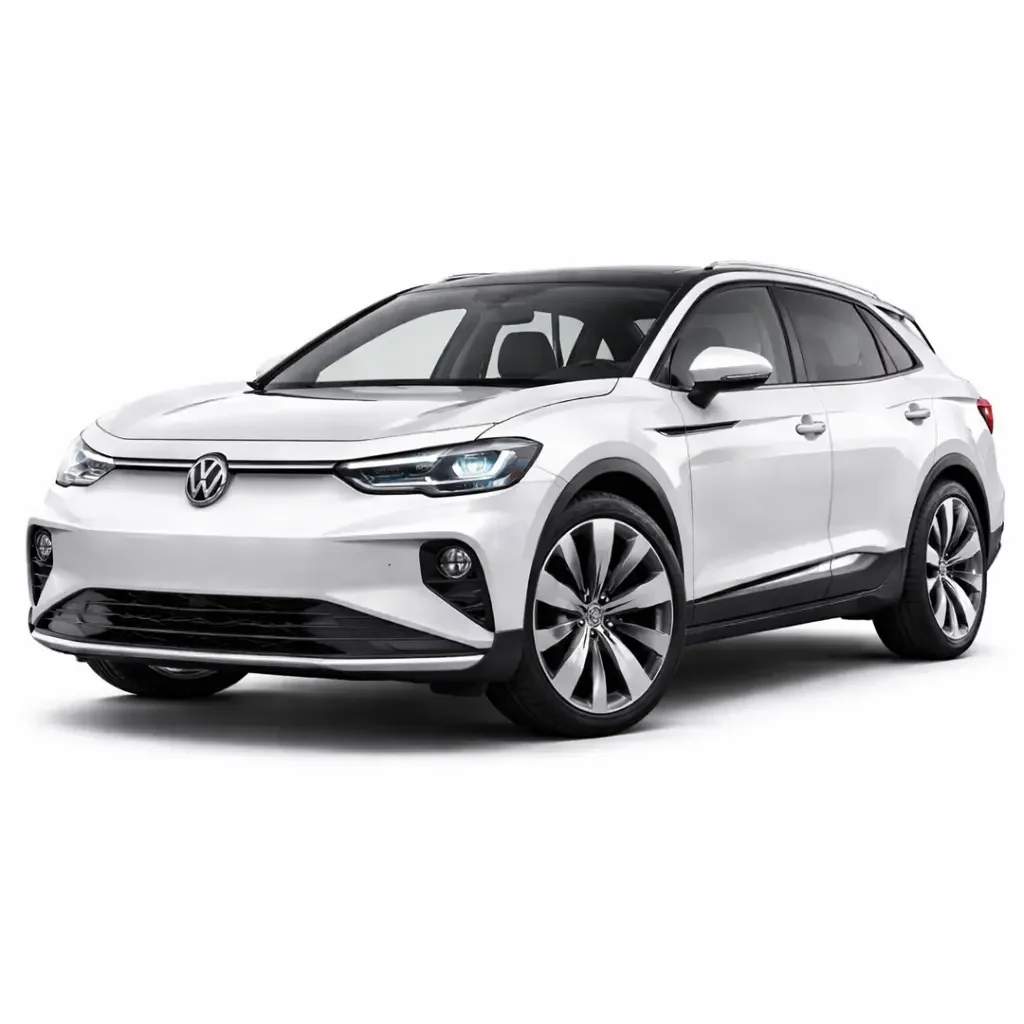
The Volkswagen ID.4 sold in North America for the 2026 and 2027 model years spans two meaningfully different configurations that share a nameplate and a Chattanooga assembly address but diverge in platform revision, battery chemistry, charging architecture, and interior hardware in ways that create distinct catalog boundaries. The 2026 model year is a carryover of the first-generation MEB architecture with one consequential change: the adoption of the North American Charging Standard port across the entire lineup. The 2027 model year introduces a significant mid-cycle update built on the revised MEB+ platform, bringing new battery cell chemistry options, a redesigned interior with physical controls returning to the steering wheel and center console, updated software infrastructure, and exterior styling aligned with VW's revised design language for the electric lineup. The 2027 update is substantial enough that VW leadership has described it as practically a fresh vehicle, and it carries an internal and market-level name discussion around the ID.Tiguan designation that has direct consequences for how catalog entries are labeled and cross-referenced.
This two-year window cannot be treated as a single continuous application in any powertrain, charging hardware, interior electronics, or battery system category. The 2026 entry is itself cleaner than any prior ID.4 model year because the 62 kWh battery pack, which had been progressively marginalized through 2024 and 2025, was effectively discontinued for the United States market by the time 2026 production began. The 2027 entry introduces the MEB+ platform and the LFP battery chemistry option, both of which create new catalog boundaries that do not exist anywhere in the 2021 through 2026 window.
This guide addresses the United States market throughout. Canadian specifications for both years carry their own trim and pricing structures but share the same platform, powertrain, and charging architecture described here.
The 2026 Model Year: Carryover MEB with NACS and Lineup Consolidation
The 2026 ID.4 is mechanically continuous with the late 2025 production configuration. The MEB platform, the APP 550 rear motor producing 282 hp in RWD configuration and contributing to a combined 335 hp in AWD configuration, the 82 kWh gross capacity battery pack, the 175 kW DC fast-charge rate, and the Chattanooga assembly location all carried forward from 2025 without revision. No motor mount, no rear drive unit cooling component, no front drive unit component on AWD configurations, and no suspension geometry component changed at the 2025 to 2026 model year boundary. A component confirmed for a 2025 ID.4 at matching trim and drivetrain specification crosses to a 2026 ID.4 without modification.
The one catalog-relevant change for 2026 is the adoption of the North American Charging Standard port as the standard charge inlet across all trims. Prior to 2026, the North American ID.4 used a Combined Charging System Type 1 inlet for DC fast charging. Beginning with the 2026 model year, the NACS inlet is integrated into the vehicle's charge port assembly as the primary DC fast-charge and AC charge interface. A CCS-to-NACS adapter is made available separately by VW for owners who need to access CCS infrastructure, but the onboard charge port hardware itself is the NACS design. This means the charge port assembly, charge port door mechanism, and charge port housing on a 2026 ID.4 are physically different components from those on a 2025 or earlier ID.4. A charge port assembly confirmed for a 2022 through 2025 ID.4 does not cross to a 2026 ID.4. The connector type is different at the port level.
The 2026 lineup also dropped the Limited trim designation that had been used in 2025 for the 62 kWh battery application. For 2026, the US market lineup consists of the Pro, Pro S, and Pro S Plus trims, all using the 82 kWh battery. No 62 kWh battery pack application exists for the 2026 United States ID.4 as a standard production vehicle. A catalog that carries a 62 kWh battery configuration or the APP 310 motor specification into the 2026 United States ID.4 lineup is assigning hardware that was not part of the standard production window for that year in this market.
The 2-in-1 Mobile EV Charging Cable, previously sold as an accessory, became standard equipment included with the 2026 ID.4. This is an equipment-level change that affects accessory catalog listings but does not change any mechanical or platform component. The inclusion of the charging cable as standard does not affect brake, suspension, motor, or thermal management catalog entries.
The 62 kWh Battery: Discontinuation History and Catalog Consequence
The 62 kWh battery pack and its associated APP 310 motor were progressively withdrawn from the North American ID.4 lineup across the 2024 and 2025 model years. In 2025 the 62 kWh application was renamed from the Standard trim designation to the Limited designation and removed from the standard configurator, becoming an off-menu dealer allocation. For the 2026 model year, the 62 kWh pack does not appear in the standard US production lineup.
This discontinuation history creates a catalog consequence that runs in both directions. First, no 62 kWh battery service component, no APP 310 motor mount specific to the 62 kWh configuration, and no CCS charge port assembly designed for a pre-2026 vehicle should be assigned to a 2026 application as a standard fitment. Second, any component confirmed for a 2026 ID.4 that is specific to the 82 kWh and APP 550 combination does not retroactively cross to 2022 or 2023 applications that used the APP 310 in the 62 kWh configuration. The motor families are distinct, and the motor mounts, inverter architecture, and rear subframe integration points differ between the APP 310 and APP 550 units.
The APP 310 motor used in 62 kWh applications and in early 82 kWh applications through 2023 is an oil-cooled brushless permanent magnet synchronous machine producing 201 hp in single-motor configuration. The APP 550 motor introduced for 82 kWh applications from the 2024 model year onward is also an oil-cooled brushless permanent magnet synchronous machine but produces 282 hp in single-motor configuration, operates at higher rotational speeds, and uses different inverter electronics. Motor mounts are not interchangeable between the APP 310 and APP 550 configurations. A motor mount confirmed for a 2021, 2022, or 2023 82 kWh RWD ID.4 using the APP 310 does not cross to a 2024, 2025, or 2026 ID.4 using the APP 550 without individual part number confirmation.
The 2027 Model Year: MEB+ Platform, LFP Chemistry, and the Interior Redesign
The 2027 ID.4 represents the most significant revision to the vehicle since its North American introduction in 2021. It is built on the MEB+ platform, an updated version of the original MEB architecture that introduces structural and electrical refinements without moving to a new voltage architecture. The 2027 ID.4 remains a 400-volt system. It is not an 800-volt platform. Any catalog or marketing entry that assigns 800-volt charging hardware, 800-volt battery components, or ultra-high-voltage charging capability to the 2027 ID.4 is incorrect. VW has indicated that the next fully new-generation ID.4 successor, anticipated for 2028 or later, will be the vehicle that transitions to an 800-volt architecture. The 2027 model year is explicitly a carry-through on the 400-volt MEB+ platform, not the vehicle that introduces 800-volt charging.
The MEB+ revision brings updated battery cell chemistry as a platform-level change. The 2027 ID.4 is expected to offer Lithium Iron Phosphate battery cells in at least some configurations alongside the existing Nickel Manganese Cobalt chemistry used in all prior North American ID.4 model years. LFP and NMC are different cell chemistries with different thermal management characteristics, different charge curve profiles, different capacity retention behaviors at low and high states of charge, and different voltage response curves. This distinction matters for catalog work primarily in the battery management system and thermal management circuit categories.
LFP cells are generally charged to a higher state of charge ceiling and are less susceptible to degradation from regular full charges than NMC cells, which affects how the battery management software calibrates the usable capacity window. The thermal management requirements of LFP cells differ from NMC in that LFP cells are less sensitive to high-temperature exposure during fast charging. This may affect the duty cycle of the battery thermal management cooling pump and the heat exchanger sizing in the battery circuit on LFP-equipped vehicles relative to NMC-equipped vehicles of the same platform. Battery thermal management components should be confirmed against cell chemistry specification before a 2027 LFP application is cross-referenced to a 2026 NMC application.
The powertrains themselves did not receive major architectural changes for 2027. The APP 550 rear motor and its associated inverter carry forward as the primary drive unit. Output figures in RWD and AWD configurations are expected to remain consistent with the 2025 and 2026 specifications, at 282 hp single-motor and 335 hp combined, with efficiency improvements coming from the MEB+ platform refinements and the updated cell chemistry rather than from a new motor design. Motor mounts, motor cooling components, and rear drive unit hardware confirmed for a 2025 or 2026 APP 550 application may cross to a 2027 application, but this should be confirmed by part number rather than assumed at the platform level given the MEB+ revision.
The DC fast-charge rate for the 2027 ID.4 is expected to increase beyond the 175 kW ceiling of the 2026 model, with improvements in charging speed consistent with the MEB+ platform update. Official EPA and charging rate figures for the 2027 model year had not been published as of the date of this guide. Charge port hardware on the 2027 ID.4 continues with the NACS inlet established for 2026. No charge port conversion is needed between the 2026 and 2027 model years at the inlet standard level.
The ID.Tiguan Name and Its Catalog Consequence
The 2027 update to the ID.4 is accompanied by an unresolved naming question that has direct catalog consequence. VW leadership and multiple market sources have confirmed that the facelifted ID.4 is expected to carry the ID.Tiguan name in at least some markets, including a potential North American application. The Emden production facility, which handles the facelifted model for European markets, has been confirmed by trade union sources as producing the ID.Tiguan-badged vehicle. The North American question, where the 2027 ID.4 continues to be built in Chattanooga, involves whether the ID.Tiguan branding will be applied to the North American vehicle or whether the ID.4 nameplate will be retained for this market.
For catalog purposes, this naming uncertainty creates a specific risk: a catalog that assigns the 2027 application exclusively under the ID.4 product line without accommodating an ID.Tiguan alias, or conversely one that creates a fully separate ID.Tiguan product line for 2027 without cross-referencing ID.4, will generate a split that prevents correct fitment lookup regardless of which name the buyer uses. The safest catalog treatment for 2027 is to maintain both the ID.4 and ID.Tiguan as linked application entries pointing to the same vehicle configuration, with notes indicating the naming transition. VIN-based confirmation is the authoritative method for resolving which name applies to a specific vehicle once the 2027 model year production is fully underway.
Interior Hardware: Physical Controls Return and Their Catalog Impact
The 2027 ID.4 interior introduces physical push-button controls on the steering wheel in place of the haptic touch surfaces used from 2021 through 2026. The center console and climate control area also return to physical buttons and a rotary volume control, replacing the touch-sensitive slider and capacitive panel used in the current generation. The digital instrument cluster grows in size relative to the 5.3-inch unit used in 2026.
These interior changes affect catalog entries for steering wheel components, steering column switch assemblies, clock spring and contact reel assemblies compatible with the new switch architecture, climate control panel hardware, and instrument cluster modules. A steering wheel assembly confirmed for a 2021 through 2026 ID.4 does not cross to a 2027 application because the switch type, connector specification, and haptic actuator hardware are replaced by different mechanical switch assemblies. A clock spring or spiral cable confirmed for the haptic steering wheel of a 2026 application does not cross to the physical-button steering wheel of the 2027 application without part number confirmation.
The infotainment system receives the Android-based One Connected platform that VW introduced across the updated lineup in Europe, replacing the prior software stack. This is a software and module-level change that affects the central infotainment head unit specification. A head unit confirmed for a 2021 through 2026 ID.4 is a different hardware assembly from the 2027 One Connected unit and must not be cross-referenced without individual confirmation.
Brakes: Continuity Across the Window
The brake system specifications carry forward across the 2026 and 2027 model years without change at the rotor dimension or caliper family level. Front rotors remain 358 mm in diameter and rear rotors remain 310 mm in diameter across all trims and drivetrain configurations. The rear integrated electric parking brake actuator continues to require electronic retraction via a compatible scan tool before rear caliper service. This service procedure requirement applies to both 2026 and 2027 applications identically.
Brake pad compound listings for the ID.4 should continue to note the extended service interval profile of a vehicle where the friction brakes are engaged primarily for heavy stops, with regenerative deceleration handling the majority of normal driving deceleration. This is not a part number distinction but a service note that should accompany brake pad listings for accuracy.
Suspension: DCC and Standard Damper Continuity
The MacPherson strut front suspension and four-link independent rear suspension continue across 2026 and 2027 without geometry change. DCC adaptive damper availability follows the same trim alignment established in prior years: standard on Pro S and Pro S Plus, not available on base Pro trim. Spring and shock absorber listings must confirm DCC or standard specification before the rate specification is assigned. A DCC rear spring confirmed for a Pro S application does not cross to a standard-damper Pro application in either model year.
The suspension geometry of the 2027 MEB+ application is expected to be continuous with the MEB geometry of the 2026 application at the strut, control arm, and wheel bearing level. Until individual part numbers for 2027 suspension components are confirmed in OEM documentation, cross-references from 2026 confirmed components to 2027 should be treated as unverified.
Wheels and Tires: Continuity with Trim Confirmation
Wheel diameter specifications carry forward from the prior window. The 19-inch wheel with 235/55R19 tire remains the base Pro specification. The 20-inch wheel with 235/50R20 tire applies to AWD Pro and higher configurations. Wheel and tire specifications must be confirmed against trim and drivetrain before hub, bearing, or tire pressure monitor sensor listings are assigned.
Common ACES/PIES Catalog Mistakes
The first error is assigning a 62 kWh battery application or an APP 310 motor specification to any 2026 United States ID.4. The 62 kWh pack was not part of the standard 2026 US production lineup. The APP 310 motor was not used in any 2026 US ID.4. Any listing for components specific to those configurations must not appear in a 2026 US catalog entry.
The second error is applying a CCS Type 1 charge port assembly to a 2026 or 2027 ID.4. The NACS inlet became standard from 2026 onward. The charge port assembly, port door, and port housing on 2026 and later vehicles are physically different from those on 2022 through 2025 vehicles. A CCS port confirmed for a 2025 ID.4 does not cross to a 2026 or 2027 application.
The third error is extending a 2026 charge port listing to a 2025 or earlier application without confirmation. The NACS port is specific to 2026 onward. A 2025 vehicle uses the CCS port. The two inlets are not interchangeable, and the cross-reference does not work in either direction without part number verification.
The fourth error is applying APP 310 motor mount or inverter listings from 2021 through 2023 applications to a 2026 or 2027 application. All 2026 and 2027 ID.4 vehicles in the United States use the APP 550 motor. The APP 310 and APP 550 use different motor mounts, different inverter electronics, and different rear subframe integration points. A motor mount confirmed for an APP 310 application does not cross to an APP 550 application.
The fifth error is assigning 800-volt charging hardware, an 800-volt battery management module, or any ultra-high-voltage component to the 2027 ID.4. The 2027 ID.4 is a 400-volt platform. The MEB+ revision does not introduce 800-volt architecture to this model year. A fully new 800-volt successor is anticipated for 2028 or later, but that vehicle is not the 2027 ID.4.
The sixth error is treating 2027 LFP battery thermal management components as identical to 2026 NMC components without part number confirmation. LFP and NMC cell chemistries have different thermal management requirements and different charge curve profiles. Battery thermal management circuit components should be confirmed against cell chemistry specification for the specific 2027 variant before a cross-reference to a 2026 NMC-based application is published.
The seventh error is applying a 2026 steering wheel assembly, clock spring, or steering column switch to a 2027 application. The 2027 steering wheel uses physical push-button switches in place of the haptic touch surfaces of the 2021 through 2026 generation. The switch hardware, connector specification, and clock spring compatibility differ between the two interface generations. These are different assemblies and must not be cross-referenced without individual part number confirmation.
The eighth error is applying a 2026 infotainment head unit to a 2027 application. The 2027 ID.4 receives the One Connected Android-based infotainment platform, which is a different hardware module from the prior-generation head unit. A head unit confirmed for a 2026 or earlier ID.4 is not confirmed for the 2027 vehicle without individual part number verification.
The ninth error is creating a 2027 catalog entry exclusively under the ID.4 product line without accommodating an ID.Tiguan alias, or creating a fully separate ID.Tiguan entry without linking to the ID.4. The naming transition for the 2027 model year is unresolved for North America. A catalog that handles only one name without cross-referencing the other will prevent correct fitment lookup for buyers who use the alternate designation. Both names should be maintained as linked entries pointing to the same 2027 configuration until VW confirms the North American naming decision.
The tenth error is applying a 2027 suspension component to a 2026 application, or vice versa, without individual part number confirmation. The MEB+ revision may introduce updated subframe, control arm, or bushing specifications relative to the original MEB. Until OEM part numbers for 2027 suspension components are confirmed and compared against 2026 numbers, cross-references between the two model years in suspension categories should be treated as unverified rather than assumed continuous.
The eleventh error is assigning a windscreen to a 2026 or 2027 ID.4 without noting the ADAS camera recalibration requirement. The IQ.Drive front camera is mounted to the windscreen on all configurations. Windscreen replacement on both model years requires camera recalibration by a qualified technician using compatible ADAS calibration equipment. This service note must accompany windscreen listings for both model years.
The twelfth error is applying a rear brake pad or rear caliper listing for either model year without noting the electric parking brake retraction requirement. The integrated EPB actuator in the rear caliper requires electronic retraction via a scan tool before caliper piston compression is possible. This requirement is identical between the 2026 and 2027 model years and must accompany rear brake service listings for both.
Pre-Listing Checklist for the 2026-2027 ID.4
Platform confirmed as MEB for 2026 and MEB+ for 2027; both confirmed as 400-volt architecture; no 800-volt charging hardware, 800-volt battery module, or ultra-high-voltage component applies to either model year.
Motor confirmed as APP 550 throughout the 2026 and 2027 window for all US applications; no APP 310 motor listing applies to either year in the United States; RWD single-motor output confirmed at 282 hp; AWD combined output confirmed at 335 hp.
Battery confirmed as 82 kWh NMC for all 2026 applications; 2027 applications confirmed as NMC or LFP before battery thermal management components are assigned; no 62 kWh battery application exists for the 2026 or 2027 United States lineup.
Charge port confirmed as NACS for both 2026 and 2027; no CCS Type 1 charge port assembly applies to either year; CCS-equipped 2025 and earlier charge port components do not cross to 2026 or 2027 applications.
Drivetrain confirmed as RWD single-motor or AWD dual-motor; AWD front drive unit, front halfshafts, front motor, and front inverter confirmed as AWD-exclusive; no front drivetrain component applies to RWD applications in either model year.
Interior hardware confirmed as haptic touch steering wheel for 2026 and physical push-button steering wheel for 2027 before steering wheel assembly, clock spring, and column switch listings are assigned; head unit confirmed as prior-generation software stack for 2026 and One Connected Android platform for 2027.
2027 name confirmed as ID.4, ID.Tiguan, or both linked as aliases before catalog entry is published; VIN-based confirmation used to resolve name for specific 2027 vehicles once production is established.
DCC adaptive damper or standard passive damper confirmed before rear spring and shock absorber listings are assigned; DCC confirmed as standard on Pro S and Pro S Plus, not available on Pro trim.
Windscreen listings confirmed as carrying ADAS camera recalibration service note for both model years.
Rear brake listings confirmed as carrying EPB electronic retraction service note for both model years.
Suspension cross-references between 2026 MEB and 2027 MEB+ applications confirmed by individual OEM part number rather than platform assumption until 2027 part numbers are fully documented.
Final Take
The 2026 ID.4 is the simplest catalog entry in the entire North American ID.4 window to date. The elimination of the 62 kWh battery configuration and the standardization of the APP 550 motor across the entire US lineup means that the 2026 application has no battery split and no motor family split. The only structural change from 2025 is the NACS charge port, which is a clean model year boundary rather than a mid-year transition. A catalog built correctly for the 2025 ID.4 at the 82 kWh APP 550 level requires only the charge port assembly update and the Limited trim removal to be accurate for 2026.
The 2027 entry is the opposite situation. It is the most consequential model year boundary in the ID.4 window since the APP 550 motor introduction in 2024. The MEB+ platform revision, the LFP battery chemistry option, the interior hardware redesign replacing haptic controls with physical switches, and the infotainment platform change create four independent catalog boundary categories that must each be handled separately. The naming uncertainty around the ID.Tiguan designation adds a fifth category, one that does not affect mechanical component fitment but does affect how catalog entries are structured and how buyers will search for their vehicle.
The risk in this two-year window is asymmetric. Errors in 2026 are mostly of the carry-forward type: 62 kWh listings surviving from 2025, CCS port assemblies surviving from 2025, or APP 310 components surviving from 2023. Errors in 2027 are mostly of the new-application type: 800-volt component assignments based on platform update assumptions, NMC thermal management components applied to LFP applications without chemistry confirmation, and 2026 interior hardware crossed to 2027 without noting the control interface change. Both error types are detectable by confirming the three baseline facts for any ID.4 application in this window: which model year, which motor, and which charge port. Those three facts resolve the majority of catalog boundary questions across the 2026 and 2027 entries.
Disclaimer
This guide is intended for catalog research, fitment analysis, and parts advisory reference. The 2027 model year specifications described in this guide reflect published information and confirmed industry sources as of the date of writing; final production specifications, EPA-certified figures, and OEM part number releases for the 2027 ID.4 and any ID.Tiguan-designated variant had not been fully published at time of writing, and catalog entries for 2027 should be updated as official OEM documentation becomes available. Production specifications, option availability, software version dependencies, and high-voltage service requirements vary by model year, regional market, and assembly date within any given window. Always confirm application data against vehicle identification number decoding, factory build sheets, and OEM parts documentation before finalizing a listing or parts recommendation. High-voltage system components require specialized training and equipment; no listing or reference in this guide constitutes authorization or guidance for high-voltage service work. PartsAdvisory and its contributors are not responsible for fitment errors arising from catalog data that has not been independently verified against physical vehicle inspection or official OEM sources.