
Volkswagen ID. Buzz (2025-2026): MEB LWB Platform Fitment Guide for North America
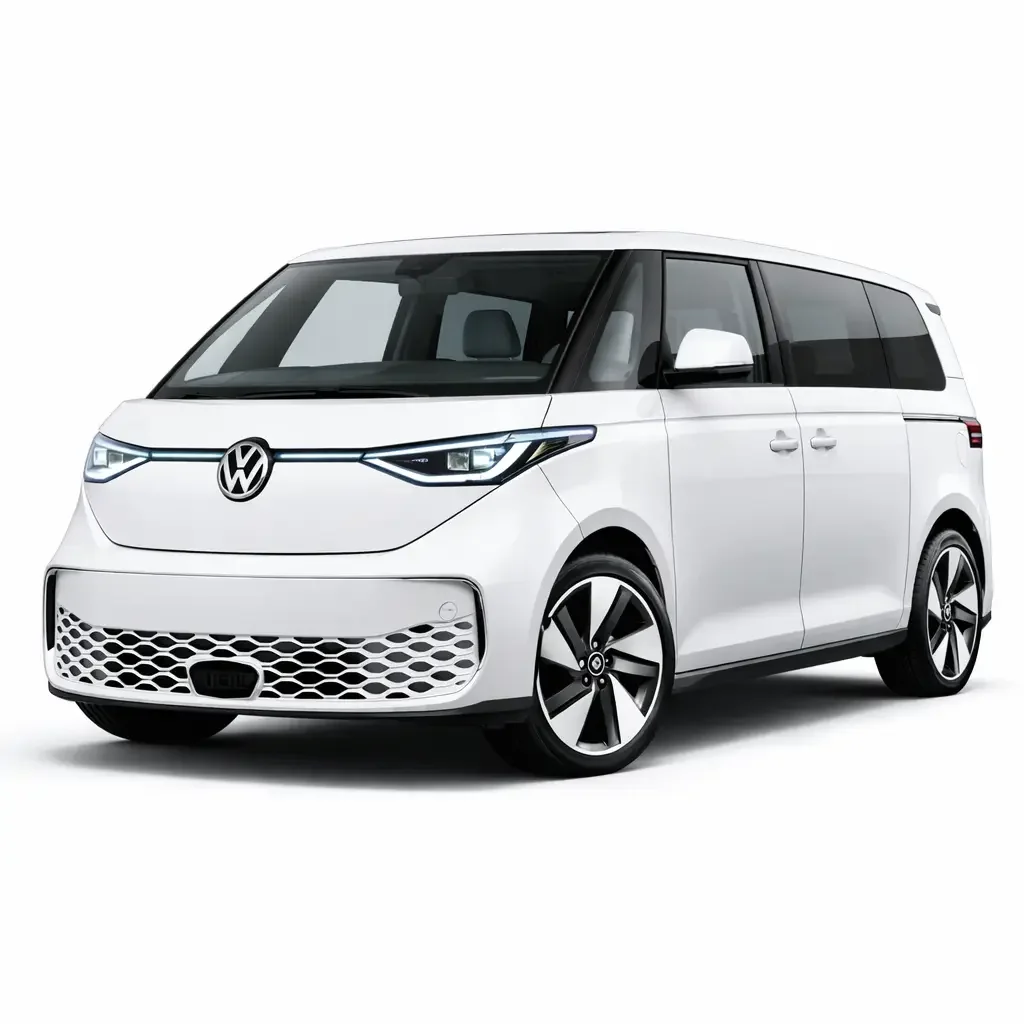
Volkswagen ID. Buzz (2025-2026): MEB LWB Platform Fitment Guide for North America
Written by Arthur Simitian | PartsAdvisory
The Volkswagen ID. Buzz sold in North America for the 2025 model year is the long-wheelbase three-row variant of the MEB-platform electric minivan, built at Volkswagen Commercial Vehicles' Hanover, Germany facility. It is the only model year of the ID. Buzz sold in the United States and Canada during this window. Volkswagen confirmed in December 2025 that no 2026 model year ID. Buzz would be produced for the North American market. The company characterized the decision as a strategic pause rather than a cancellation, stating its intent to sell existing 2025 model year inventory through dealers and to return with a 2027 model year vehicle later in calendar-year 2026. This means the North American ID. Buzz catalog for the 2025 and 2026 window consists of a single model year with no predecessor and no successor within the window itself, a circumstance that creates a specific set of catalog risks different from those of any other vehicle in the VW North American EV lineup.
The ID. Buzz is the only vehicle in the Volkswagen North American EV lineup not built in Chattanooga. It is imported from Hanover throughout its North American sales window. This production origin is relevant to catalog work because import-sourced vehicles carry different regulatory and service part distribution timelines than domestically produced vehicles, and because the Hanover-built North American LWB specification shares body structure with the European LWB but differs in wheelbase confirmation, interior configuration, infotainment hardware, and electrical system specification from the European short-wheelbase and cargo variants sold outside North America. A component confirmed for a European SWB ID. Buzz or an ID. Buzz Cargo must not be applied to the North American LWB application without individual part number verification.
This guide addresses the United States market throughout except where Canadian market distinctions are noted.
Platform and Wheelbase: LWB Only for North America
The North American ID. Buzz is built exclusively on the long-wheelbase MEB configuration, designated LWB, with a wheelbase of 3,239 mm (approximately 127.5 inches). The short-wheelbase version of the ID. Buzz, with a wheelbase of 2,988 mm (approximately 117.6 inches) and a five-seat two-row configuration, is sold in Europe and other markets but was never offered in the United States or Canada. Any catalog entry that assigns SWB ID. Buzz components to a North American application is assigning hardware from a different vehicle configuration. Rear body structure, rear door assemblies, rear glass, rear seat hardware, and rear suspension geometry differ between the SWB and LWB. SWB components and LWB components do not cross at the rear body level.
The LWB configuration achieves its additional wheelbase through a 250 mm extension inserted between the sliding side doors and the rear wheel arches, a section that also includes longer sliding side doors relative to the SWB. The extended sliding door assemblies are LWB-specific. A sliding door assembly confirmed for a European SWB ID. Buzz does not cross to the North American LWB application. The sliding door track, door glass, and door latch assemblies are dimensionally specific to the LWB door size.
The MEB platform in the ID. Buzz LWB uses the same fundamental architecture as the MEB platform in the ID.4, including the skateboard battery pack integrated into the floor structure, the MacPherson strut front suspension, and the multi-link independent rear suspension. The front suspension geometry of the ID. Buzz LWB does not cross to the ID.4 because the ID. Buzz carries significantly greater vehicle mass, 2,426 kg to 2,565 kg depending on configuration versus the ID.4's approximately 2,045 kg to 2,205 kg, and the front strut and spring specifications reflect the higher gross vehicle weight. A front strut confirmed for an ID.4 does not cross to the ID. Buzz LWB without part number confirmation, and the assumption that MEB platform sharing extends to suspension component interchangeability between the two vehicles is incorrect.
Production: Hanover, Not Chattanooga
The 2025 North American ID. Buzz is built at Volkswagen Commercial Vehicles' Hanover plant, the same facility that produces all global ID. Buzz variants. Volkswagen Group of America confirmed that production for US-market ID. Buzz models would not be transferred to the Chattanooga, Tennessee facility that builds the ID.4. The Hanover origin means the ID. Buzz is a fully imported vehicle for North America throughout its sales window, subject to import documentation, port of entry processing, and regulatory compliance at the federal level for imported passenger vehicles.
For catalog purposes the Hanover production origin is relevant in two ways. First, body and structural components are European production parts with North American certification rather than domestically tooled assemblies. Second, because no US production of the ID. Buzz exists, there is no variation in assembly specification that could result from domestic production tooling changes of the type that occurred with the ID.4's transition from Zwickau to Chattanooga. The 2025 North American ID. Buzz has a single production source with a single specification for each component family.
Motor: APP 550 and the North American LWB Distinction
The North American 2025 ID. Buzz uses the APP 550 rear motor producing 282 hp and 413 lb-ft of torque in the RWD configuration. This is the same motor family used in the 2024 and later ID.4 at 82 kWh specification, but it is not the same calibration or mount specification as the ID.4 application. The ID. Buzz LWB carries significantly more vehicle mass and uses a different rear subframe design to accommodate the longer wheelbase and the sliding door sill structure. Rear motor mounts, rear subframe geometry, and rear drive unit integration points are ID. Buzz LWB-specific and do not cross to the ID.4 APP 550 application.
The European SWB ID. Buzz used the APP 310 motor producing 201 hp in its initial production configuration. The North American LWB ID. Buzz used the APP 550 from the start of US deliveries. This motor difference between the SWB and LWB configurations is a fundamental split: any component confirmed for a European SWB ID. Buzz at the APP 310 specification does not apply to the North American LWB APP 550 application at the motor or motor cooling level.
The AWD 4Motion configuration adds a front-mounted asynchronous induction motor, the same front motor architecture used in the ID.4 AWD configuration. The front motor, front drive unit, front halfshafts, and front inverter are AWD-exclusive components with no RWD equivalent. A front halfshaft listing for the ID. Buzz applies only to AWD applications and must not be extended to RWD applications.
Battery: 91 kWh Gross, Single Configuration for North America
The North American 2025 ID. Buzz uses a single battery pack specification: 91 kWh gross capacity with approximately 85 kWh usable. This is a larger pack than the 82 kWh pack used in the ID.4, sized to account for the ID. Buzz LWB's greater vehicle mass and its positioning as a longer-range capable family vehicle. There is no second battery option for the North American ID. Buzz. A catalog entry assigning a smaller battery configuration, such as the 82 kWh pack of the European SWB or the ID.4, to a North American ID. Buzz application is assigning hardware from a different vehicle.
The 91 kWh battery pack delivers an EPA-estimated range of 234 miles in the RWD configuration and 231 miles in the AWD 4Motion configuration. The DC fast-charge rate is 200 kW, which is higher than the 175 kW rate of the ID.4. This difference in charge rate is relevant to catalog entries for charge port hardware and onboard charger specifications. The charge port assembly on the 2025 ID. Buzz uses the Combined Charging System Type 1 inlet. The NACS port adopted for the 2026 ID.4 was not implemented on the 2025 ID. Buzz. A NACS charge port assembly confirmed for a 2026 ID.4 does not cross to the 2025 ID. Buzz.
Seating Configurations: Seven-Seat and Six-Seat, and the Third-Row Removal
The North American ID. Buzz LWB is offered in both seven-seat and six-seat configurations, and the distinction between them affects catalog entries for second-row seat hardware and interior trim components.
The standard seven-seat configuration uses a three-passenger bench seat in the second row with 40/60 split folding backrests and a sliding range of 200 mm fore and aft. Two individual captain's chairs are available as an option in place of the second-row bench, reducing seating capacity to six and creating a six-seat configuration with enhanced second-row comfort and a walk-through path between the second and third rows. The third row consists of two individual seats that are fully removable from the vehicle.
Second-row bench seat and second-row captain's chair assemblies are different hardware items that must be maintained as separate catalog entries. A seat cushion, seat back, seat track, or seat heating element confirmed for the second-row bench application does not cross to the second-row captain's chair application. The trim panel around the second-row seating area also differs between the bench and captain's chair configurations due to the walk-through clearance in the captain's chair layout.
The third-row seat is a separately removable assembly. Third-row seat latching hardware, third-row seat fold mechanism, and third-row seat trim components are specific to the removable third-row assembly and do not cross to second-row or first-row seat hardware.
Trim Structure: Pro S, Pro S Plus, and 1st Edition
The 2025 North American ID. Buzz was offered in three trim levels: Pro S, Pro S Plus, and a launch-only 1st Edition.
The Pro S is the entry-level trim and is available only in the RWD single-motor configuration. No AWD option exists at the Pro S trim level. A 4Motion AWD application assigned to a Pro S trim designation is incorrect for the 2025 US lineup.
The Pro S Plus adds power sliding side doors, a hands-free power liftgate, available second-row captain's chairs, and additional driver assistance and comfort features relative to the Pro S. The Pro S Plus is available in both RWD and AWD configurations. AWD applications within the 2025 ID. Buzz window are confined to the Pro S Plus and 1st Edition trims.
The 1st Edition is a launch-allocation trim based on the Pro S Plus with additional equipment including the electrochromic panoramic glass roof, the Area View camera system, the 700-watt Harman Kardon audio system, the Flexboard cargo system, and power-assisted sliding doors and liftgate as standard. The 1st Edition was available only in two-tone exterior finishes. A 1st Edition application implies AWD 4Motion, Pro S Plus equipment level, and the panoramic electrochromic glass roof. A catalog entry assigning the electrochromic panoramic glass to the Pro S or a standard Pro S Plus application without confirming 1st Edition or option package must verify equipment presence before assigning glass assembly components, as the electrochromic panoramic roof is a different assembly from a standard fixed panoramic glass.
Power Sliding Doors and Liftgate: Pro S Plus and Above
The power sliding side doors and power liftgate are standard on the Pro S Plus and 1st Edition trims and are not present on the Pro S. Door actuator assemblies, door cable assemblies, sliding door motor units, and liftgate actuator components for the powered door and liftgate systems are trim-specific. A power sliding door actuator confirmed for a Pro S Plus application must not be applied to a Pro S application. The Pro S uses manually operated sliding side doors and a manually operated liftgate.
The Flexboard cargo system, available on Pro S Plus and standard on 1st Edition, consists of a retractable floor panel that spans the cargo area load floor when the third-row seats are removed, creating an extended flat cargo surface with underfloor storage bins. Flexboard components are system-specific and do not cross to cargo area floor panel specifications on vehicles without the Flexboard option.
Brakes: Larger Specification Than ID.4, Regenerative Blend
The ID. Buzz LWB uses larger brake hardware than the ID.4, consistent with its substantially greater vehicle mass. Front brake rotor diameter is 400 mm. Rear brake rotor diameter is 330 mm. These specifications are distinct from the ID.4's 358 mm front and 310 mm rear rotor dimensions. A brake rotor or caliper confirmed for an ID.4 does not cross to the ID. Buzz LWB, and the assumption that MEB platform sharing extends to brake component interchangeability between the two vehicles is incorrect.
The rear caliper uses an integrated electric parking brake actuator identical in function to the EPB system on the ID.4. Rear caliper service requires electronic retraction of the EPB actuator via a compatible scan tool before the piston can be compressed. This service note must accompany rear brake pad and rear caliper listings for the ID. Buzz.
The 2026 Gap: Catalog Consequences of a Skipped Model Year
The confirmation that no 2026 model year ID. Buzz was produced for the United States creates a catalog situation with no direct parallel in the VW North American lineup. The practical consequences for catalog management are as follows.
First, no 2026 ID. Buzz catalog entry should exist for the United States market as a current production application. A catalog that carries a 2026 ID. Buzz application entry forward from 2025 by default is creating a model year application for a vehicle that was not produced or sold new in that year. Dealers selling 2025 model year inventory during calendar-year 2026 are selling 2025 vehicles, not 2026 vehicles. The model year of a vehicle is fixed at production and does not advance with the calendar year of sale.
Second, parts sold during calendar-year 2026 for ID. Buzz vehicles in service should be referenced against the 2025 model year application, not a 2026 application that does not exist. A 2025 ID. Buzz that receives brake service, suspension service, or any other maintenance during calendar-year 2026 is still a 2025 vehicle and must be serviced from the 2025 application listing.
Third, the absence of a 2026 model year means there is no forward cross-reference from 2025 components to a subsequent model year within this window. Component continuity from 2025 to a future model year must be established against the 2027 model when that vehicle's specifications are confirmed, not assumed based on the 2025 application.
Common ACES/PIES Catalog Mistakes
The first error is assigning SWB ID. Buzz components to the North American LWB application. The SWB was never sold in the United States or Canada. Rear body panels, rear door assemblies, rear suspension components, and the APP 310 motor specification from the European SWB configuration do not apply to any North American ID. Buzz application.
The second error is applying ID.4 suspension components to the ID. Buzz on the basis of shared MEB platform. The ID. Buzz LWB carries substantially greater vehicle mass than the ID.4. Front strut cartridges, front springs, front wheel bearings, front brake rotors, and front calipers are specified to the higher gross vehicle weight of the ID. Buzz and are not interchangeable with ID.4 components without individual part number confirmation.
The third error is applying ID.4 brake rotor or caliper specifications to the ID. Buzz. The ID. Buzz uses 400 mm front rotors and 330 mm rear rotors. The ID.4 uses 358 mm front rotors and 310 mm rear rotors. These are different components. A brake rotor confirmed for an ID.4 does not fit the ID. Buzz.
The fourth error is assigning AWD 4Motion drivetrain components, including front halfshafts, front drive unit, and front motor mounts, to a Pro S RWD application. The Pro S trim was offered only in RWD in the 2025 US lineup. All AWD applications are confined to Pro S Plus and 1st Edition trims. A front halfshaft listing applied to a Pro S application is assigning hardware to a vehicle that has no front drive unit.
The fifth error is assigning a power sliding door actuator or power liftgate actuator to a Pro S application. Power sliding doors and power liftgate are Pro S Plus and 1st Edition standard equipment. The Pro S uses manually operated doors and liftgate. A powered door actuator confirmed for a Pro S Plus application does not cross to the Pro S.
The sixth error is applying the NACS charge port assembly from a 2026 ID.4 to the 2025 ID. Buzz. The 2025 ID. Buzz uses the CCS Type 1 charge port. The NACS inlet was not implemented on the 2025 ID. Buzz. Charge port assemblies between the 2025 ID. Buzz and the 2026 ID.4 are different components and must not be cross-referenced.
The seventh error is creating a 2026 model year catalog entry for the ID. Buzz in the United States. No 2026 ID. Buzz was produced or sold new in the US market. A 2026 application entry for the North American ID. Buzz is a phantom application. Service parts for 2025 vehicles sold or serviced during calendar-year 2026 must reference the 2025 application.
The eighth error is assigning the electrochromic panoramic glass roof assembly to all ID. Buzz applications without confirming trim level. The electrochromic panoramic glass roof was standard on the 1st Edition and available as a package option on the Pro S Plus. It was not standard on the base Pro S Plus and was not available on the Pro S. A glass assembly confirmed for an electrochromic-equipped application must not be applied to a standard panoramic or non-panoramic application without confirming roof specification.
The ninth error is applying a second-row bench seat component to a six-seat captain's chair application, or vice versa. The second-row bench and second-row captain's chair are different seat assemblies with different track hardware, different cushion and back dimensions, and different trim panel interfaces. Seat components must confirm second-row configuration before the listing is assigned.
The tenth error is applying an ID.4 battery thermal management or coolant system component to the ID. Buzz on the basis of shared MEB platform and similar voltage architecture. The ID. Buzz uses a 91 kWh battery pack with a different physical module count and different coolant circuit sizing than the ID.4's 82 kWh pack. Battery thermal management components including coolant pumps, coolant hoses, and heat exchanger assemblies are vehicle-specific and must be confirmed against ID. Buzz LWB part numbers rather than ID.4 specifications.
The eleventh error is assigning a windscreen without noting the ADAS camera recalibration requirement. The ID. Buzz is equipped with the IQ.Drive driver assistance suite, including a front camera mounted to the windscreen. Windscreen replacement requires camera recalibration by a qualified technician using compatible ADAS calibration equipment. This service note must accompany windscreen listings for all 2025 ID. Buzz applications.
The twelfth error is applying rear brake service listings without noting the electric parking brake retraction requirement. The integrated EPB actuator in the rear caliper requires electronic retraction via a scan tool before the caliper piston can be compressed. This is identical in procedure to the ID.4 rear caliper service requirement and must be noted in rear brake pad and rear caliper listings for the ID. Buzz.
Pre-Listing Checklist for the 2025 ID. Buzz
Platform confirmed as MEB LWB; no SWB configuration was sold in North America; no SWB body, door, rear suspension, or motor specification applies to any North American ID. Buzz application.
Production confirmed as Hanover, Germany throughout the US sales window; no Chattanooga production applies.
Motor confirmed as APP 550 for all North American LWB applications; no APP 310 motor application exists for the North American ID. Buzz; RWD single-motor output confirmed at 282 hp; AWD combined output confirmed at 335 hp.
Battery confirmed as 91 kWh gross capacity for all North American applications; no 82 kWh or smaller battery application exists for the North American ID. Buzz.
Charge port confirmed as CCS Type 1 for the 2025 model year; NACS port was not installed on the 2025 ID. Buzz; NACS components from 2026 ID.4 applications do not cross to the 2025 ID. Buzz.
Drivetrain confirmed as RWD or AWD 4Motion; AWD confirmed as available only on Pro S Plus and 1st Edition trims; Pro S confirmed as RWD-only; front halfshafts, front drive unit, and front motor mounts confirmed as AWD-exclusive.
Trim confirmed as Pro S, Pro S Plus, or 1st Edition before power sliding door actuators, power liftgate actuators, electrochromic panoramic glass, Area View camera, Harman Kardon audio hardware, and Flexboard cargo system listings are assigned.
Second-row seating configuration confirmed as bench or captain's chairs before second-row seat component listings are assigned; bench and captain's chair assemblies confirmed as different hardware items with no cross-reference.
2026 model year confirmed as not applicable for North American catalog entries; service parts for 2025 vehicles serviced during calendar-year 2026 confirmed as referencing the 2025 application.
Brake specifications confirmed as 400 mm front and 330 mm rear rotors; ID.4 brake rotor and caliper specifications confirmed as not applicable to the ID. Buzz.
Windscreen listings confirmed as carrying ADAS camera recalibration service note.
Rear brake listings confirmed as carrying EPB electronic retraction service note.
Final Take
The 2025 ID. Buzz is the most straightforward application in this catalog window simply because there is only one model year and one body configuration for North America. Every ID. Buzz in the US market is a 2025 LWB vehicle with the 91 kWh battery and the APP 550 motor. There is no annual variation to manage within the window because there is only one entry.
The complexity in this window comes not from year-over-year changes within the lineup but from two external catalog pressures. The first is the proximity to the ID.4 and the MEB platform assumption: the ID. Buzz and the ID.4 share a platform name but are different vehicles with different motor specifications, different battery capacities, different brake hardware dimensions, and different suspension load ratings. The platform name is not a license to cross-reference components between them. The second is the proximity to the European SWB and Cargo variants: the North American ID. Buzz shares a model name and a factory with European configurations that use a shorter wheelbase, a smaller battery, an earlier motor family, and different rear body structure. The North American application is specifically the LWB, and every European SWB or Cargo part number is a different vehicle.
The 2026 skipped model year is catalog-relevant primarily as a prohibition: no 2026 US application exists, and no phantom 2026 entry should appear in a catalog claiming to represent North American production data. The vehicle that will return for 2027 is a different subject that will require its own fitment analysis as specifications are confirmed.
Disclaimer
This guide is intended for catalog research, fitment analysis, and parts advisory reference. Production specifications, option availability, software version dependencies, and high-voltage service requirements vary by trim level, regional market, and assembly date. Always confirm application data against vehicle identification number decoding, factory build sheets, and OEM parts documentation before finalizing a listing or parts recommendation. High-voltage system components require specialized training and equipment; no listing or reference in this guide constitutes authorization or guidance for high-voltage service work. PartsAdvisory and its contributors are not responsible for fitment errors arising from catalog data that has not been independently verified against physical vehicle inspection or official OEM sources.