
Volkswagen Hormiga (1977-1978): EA489 Basistransporter Platform Fitment Guide for Mexico
Written by Arthur Simitian | PartsAdvisory
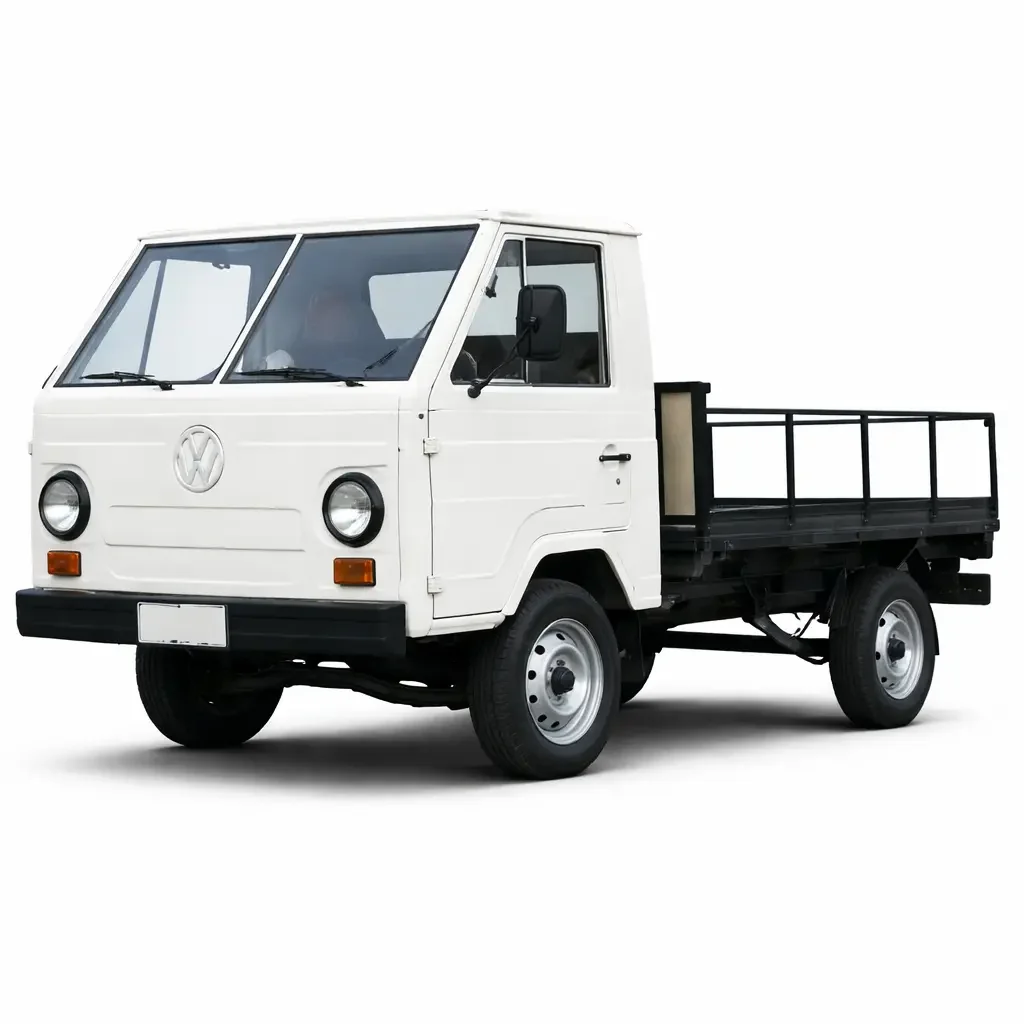
The Volkswagen Hormiga is the Mexican market designation for the EA489 Basistransporter, a small front-wheel-drive utility truck developed by Volkswagen AG and assembled at the Volkswagen plant in Puebla, Mexico from 1977 through 1978. Hormiga means ant in Spanish, a reference to the vehicle's intended role as a compact, load-capable workhorse for developing markets. Approximately 3,600 units were assembled in Puebla across the full Mexican production run, which extended through 1979, from completely knocked-down kits sourced from Hanover, Germany. The 1977 and 1978 model years are the two years currently assigned ACES base vehicle IDs: 135608 for 1977 and 135609 for 1978. The two years share identical specifications. No mechanical, platform, or powertrain distinction separates the 1977 from the 1978 application, and components confirmed for one year cross to the other without modification.
The EA489 platform was sold concurrently under different names in other markets: the Trakbayan in the Philippines, the Mitra in Indonesia, and the EA489 in Turkey. The Mexican Hormiga is the only version assembled in the Western Hemisphere and the only version currently present in the ACES vehicle database. Cross-references from other market variants of the EA489 to the Hormiga ACES application must be confirmed against the Hormiga's specific Puebla-assembled specification rather than assumed from the shared platform designation.
The Hormiga is one of the rarest production Volkswagens ever made and is not a vehicle that appears in the general aftermarket catalog with meaningful application coverage. Its presence in ACES is significant precisely because it allows suppliers with confirmed fitment data to assign applications correctly rather than leaving the vehicle unaddressed.
Platform: EA489 Ladder Frame, Front-Wheel Drive
The EA489 is a purpose-built light utility platform with no derivation from any contemporary VW passenger car architecture sold in Mexico or elsewhere. It uses a simple ladder frame chassis, sized approximately to the external footprint of a Volkswagen Polo of the same era, with the engine mounted under the cab at the front of the vehicle driving the front wheels.
This front-engine, front-wheel-drive layout on a ladder frame is architecturally distinct from every other Volkswagen sold in Mexico during the 1977 and 1978 period. The Beetle uses a rear-mounted air-cooled engine on a platform-body structure with a rear-wheel-drive layout. The Type 2 Combi uses a rear-mounted engine on a separate ladder-type frame with rear-wheel drive. The Brasilia, sourced from Brazil, uses a rear-mounted engine on a floorpan shared with the Beetle family. None of these platforms share suspension geometry, drivetrain orientation, engine mounting, or frame architecture with the EA489. A component confirmed for any of these vehicles must not be applied to the Hormiga on the basis of shared brand or shared engine displacement family without individual physical confirmation.
The Hormiga's rated payload is 1,000 kg. Maximum speed is approximately 85 km/h. These figures reflect the vehicle's design intent as a basic urban and rural utility hauler, not a passenger vehicle.
Engine: 1,584 cc Air-Cooled Flat-Four, Front-Mounted
The Hormiga uses a 1,584 cc air-cooled flat-four cylinder engine with overhead valves and pushrod actuation. Output is rated at 33 kW (45 PS) at 4,000 rpm in base specification, with a 37 kW (50 PS) variant also documented across the EA489 platform family. The engine is front-mounted under the cab and drives the front wheels through the front axle assembly.
The 1,584 cc displacement is the same family as the Beetle 1600 and Type 2 1600 engines of the same period. This shared displacement does not indicate component interchangeability. In the Beetle and Type 2, the 1,584 cc engine is rear-mounted, fan-cooled from the rear, and drives the rear wheels. In the Hormiga the engine is front-mounted, with different cooling tin orientation, different accessory drive geometry, different mount points, and a front-drive output configuration. Engine consumables that are not installation-sensitive, including spark plugs, may cross between the Hormiga and the Beetle 1600 family within matching plug specifications, but any component that relates to engine mounting, cooling airflow direction, or accessory positioning must be confirmed against the front-mounted EA489 installation before a cross-reference is published.
The 1977 and 1978 Hormiga applications share the same engine specification. No engine code change or output revision occurred between the two model years within the ACES window.
Suspension and Running Gear
Front suspension uses independent longitudinal torsion bars with wishbones. This architecture is conceptually related to the Beetle's front torsion bar suspension of the era but is configured for a front-drive truck with different load geometry. The front suspension on the Hormiga carries both the engine mass and the driving load in addition to the front share of the vehicle's payload capacity. Torsion bar specifications, wishbone dimensions, and front bearing specifications are EA489-specific and are not confirmed as crossing to Beetle or Type 2 front suspension components without individual part number verification.
Rear suspension uses a rigid unpowered solid axle with leaf springs. Because the Hormiga is a front-wheel-drive vehicle, the rear axle carries load only and has no differential, halfshafts, or driven components. Rear axle and leaf spring specifications are EA489-specific and do not cross to the rear axle of any rear-wheel-drive VW of the period.
Road wheels are 4.5J x 14 inch across both model years.
Body and Configuration
The Hormiga in its Mexican market form is a cab-over or cab-forward utility truck. The body configuration is distinct from the Indonesian Mitra variant, which used a cowl derived from the Type 2 T2b, and from the Philippine Trakbayan, which was available in pickup, van, and jeepney body styles. The Hormiga's specific Mexican body configuration is the reference for any body component catalog entry assigned to the 135608 and 135609 ACES applications.
Common Fitment Mistakes
The first error is applying Beetle 1600 or Type 2 1600 engine components to the Hormiga on the basis of shared displacement. The 1,584 cc engine in the Hormiga is front-mounted and front-driving. Installation-specific components including engine mounts, cooling tins, fan housing, and accessory brackets are not interchangeable with the rear-mounted Beetle or Type 2 engine application.
The second error is applying front suspension components from the Beetle to the Hormiga on the basis of shared torsion bar architecture. The Hormiga front suspension is configured for a front-drive truck at a different load rating. Torsion bars, wishbones, and front bearings must be confirmed against EA489 specifications.
The third error is applying any rear-wheel-drive drivetrain component from a contemporary VW Mexico vehicle to the Hormiga. The Hormiga has no rear axle differential, no rear halfshafts, and no rear-drive hardware. Its rear axle is an unpowered beam.
The fourth error is treating the 1977 and 1978 applications as mechanically distinct. ACES assigns separate base vehicle IDs to the two years, 135608 for 1977 and 135609 for 1978, but the specifications are identical across both years. A component confirmed for either year crosses to the other.
The fifth error is applying EA489 components confirmed for the Indonesian Mitra or Philippine Trakbayan variants to the Mexican Hormiga without confirmation. Market-specific assembly differences in body structure, electrical system, and locally sourced hardware mean that a component confirmed for a non-Mexican EA489 variant is not automatically confirmed for the Puebla-assembled Hormiga.
Pre-Listing Checklist for the 1977-1978 Hormiga
ACES base vehicle ID confirmed as 135608 (1977) or 135609 (1978); both years confirmed as identical specification; a component confirmed for either year crosses to the other.
Platform confirmed as EA489 ladder frame, front-engine, front-wheel drive; no Beetle, Type 2, or Brasilia platform component applies without individual confirmation.
Engine confirmed as 1,584 cc air-cooled flat-four, front-mounted; installation-specific components confirmed against front-mounted EA489 geometry before any cross-reference to Beetle 1600 or Type 2 1600 components is published.
Front suspension confirmed as independent torsion bar with wishbones, front-drive configuration; rear suspension confirmed as rigid unpowered solid axle with leaf springs; no rear drivetrain components apply.
Wheel specification confirmed as 4.5J x 14 inch for both years.
Body configuration confirmed as Mexican Puebla-assembled specification before any body component cross-reference to Mitra or Trakbayan variants is assigned.
Disclaimer
This guide is intended for catalog research, fitment analysis, and parts advisory reference. The Volkswagen Hormiga is an extremely low-volume vehicle with limited surviving documentation. All specifications cited reflect published sources and ACES vehicle database records. Always confirm application data against physical vehicle inspection and any available OEM parts documentation before finalizing a listing or parts recommendation. PartsAdvisory and its contributors are not responsible for fitment errors arising from catalog data that has not been independently verified.