
Volkswagen GTI (2006-2009): Mk5 PQ35 Platform Fitment Guide for North America
Written by Arthur Simitian | PartsAdvisory
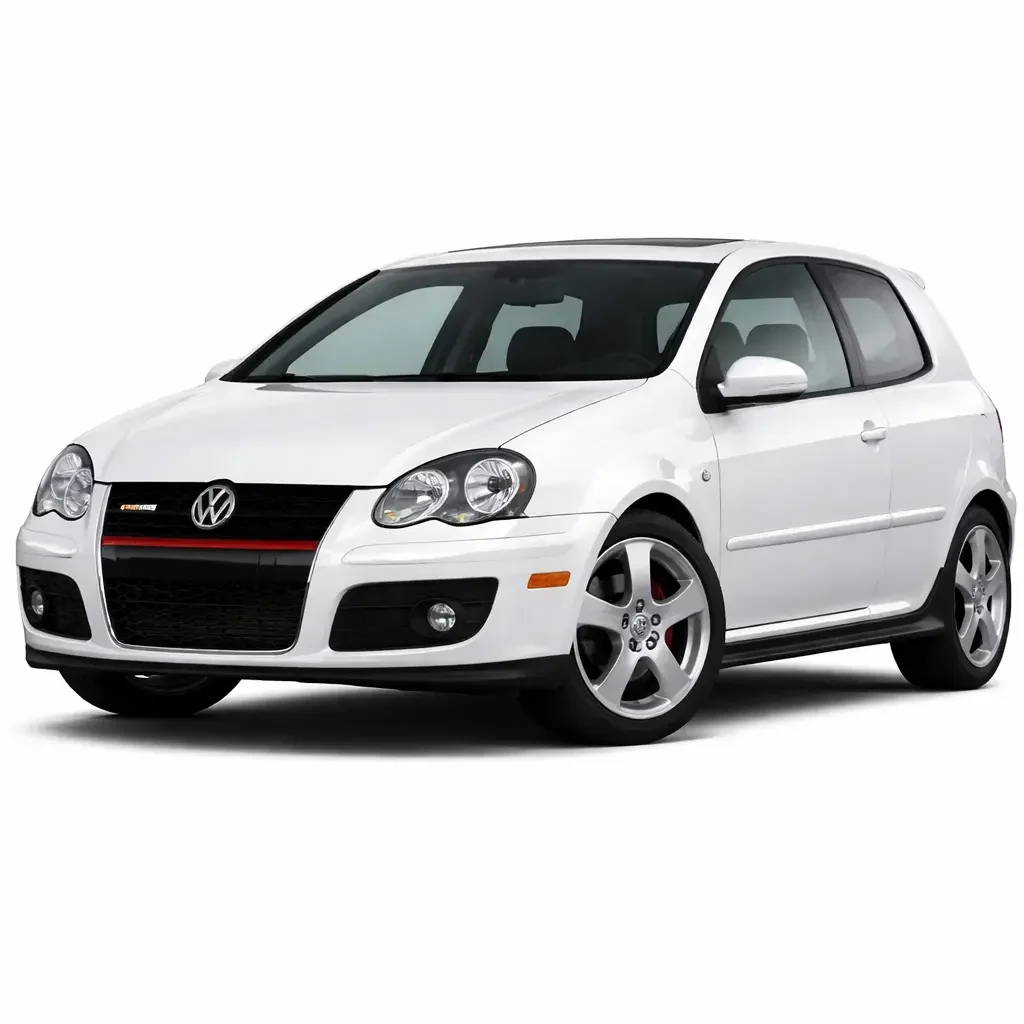
The Volkswagen GTI sold in North America from 2006 through 2009 is the fifth generation of the GTI nameplate, built on the PQ35 platform and designated Typ 1K internally. It made its North American debut at the Los Angeles Auto Show in January 2006 in 2-door guise only, with the 4-door variant becoming available later in the 2006 model year. The GTI was sold in the United States and Canada exclusively under the GTI nameplate throughout this window, with no reference to the Rabbit name used for the base Golf Mk5 sold alongside it. All North American Mk5 GTI models are produced in Wolfsburg, Germany and imported. No domestic production of the Mk5 GTI occurred in this market.
The Mk5 GTI is broadly credited with restoring the GTI's performance reputation following the criticism directed at the softer Mk4. It introduced the 2.0-litre turbocharged FSI direct-injection engine to the GTI nameplate in North America, the first time the model had been powered by a direct-injection turbocharged four-cylinder, and brought the DQ250 six-speed DSG dual-clutch transmission to the GTI for the first time. The DSG's arrival alongside the traditional six-speed manual made the Mk5 the first North American GTI to offer two genuinely performance-oriented transmission choices rather than a manual and a conventional automatic.
The four-year window from 2006 through 2009 contains one catalog boundary of consequence: a late-production engine code transition during the 2008 and 2009 model years in which some vehicles received the EA888 family engine rather than the EA113 BPY unit used throughout the earlier production run. This transition mirrors the BPY to CBFA shift in the Passat B6 window and creates the same category of quiet catalog error if it is not handled correctly.
This guide addresses the United States market throughout. Canadian specifications are mechanically identical within this window.
Platform: PQ35, Transverse Layout, and the Cross-Reference Family
The Mk5 GTI is built on the PQ35 platform, the same architecture shared with the Mk5 Golf Rabbit, the Mk5 Jetta, the Mk5 Jetta GLI, the Audi A3 8P, and the Passat B6 in its long-wheelbase PQ46 development. The PQ35 uses a transverse engine layout with front-wheel drive in all GTI applications. No all-wheel-drive variant of the Mk5 GTI was offered in North America. The Golf R32, which shared the Mk5 body and was sold in the United States as a limited-production 2008 model, uses a different front subframe and Haldex-based 4Motion all-wheel drive system. No R32 drivetrain component crosses to the GTI.
The PQ35 platform creates a cross-reference family relevant to catalog work. Front strut cartridges, front springs, front control arms, front wheel bearings, and front brake rotors and calipers cross between the Mk5 GTI and the Mk5 Jetta GLI at matching engine and equipment specifications. Front suspension and front brake components also cross to the Audi A3 8P 2.0T within matching specifications. These are platform-level cross-references that can be treated as confirmed within matching trim and equipment level, though individual part numbers should be verified before the cross-reference is published.
The Mk5 GTI does not share rear suspension or rear brake specifications with the base Mk5 Golf Rabbit. The GTI uses a rear suspension setup tuned specifically for the performance application, with different spring rates and damper specifications from the Rabbit. A rear spring or rear shock absorber confirmed for a Mk5 Rabbit does not cross to the Mk5 GTI.
Body: 2-Door and 4-Door, and What They Share
The Mk5 GTI was available in two body styles in North America: the 2-door three-door hatchback and the 4-door five-door hatchback. Both share identical front body structure from the front bumper through the B-pillar, including the front doors, front fenders, hood, headlamps, front bumper assembly, windscreen, and all front suspension and front brake components. Engine service components, cooling system components, fuel system components, and front suspension components cross freely between the 2-door and 4-door applications within matching engine and transmission specifications.
Aft of the B-pillar the two body styles diverge. The 4-door adds a rear door on each side with its own glass, door seal, and interior trim panel. The rear quarter glass on the 2-door is a fixed panel; the rear door glass on the 4-door is a different assembly entirely. Rear door handles, rear door lock cylinders, rear door seals, and rear door wiring harness sections are 4-door-specific. A rear door glass confirmed for a 2-door application does not cross to the 4-door. The rear quarter panel sheet metal also differs between the two body styles. Taillamp clusters are shared between the two body styles on the Mk5 GTI, as both use the same hatchback rear body structure.
The 2-door launched in North America first. Early 2006 production catalog entries that default to 2-door only are correct for the beginning of the model year. The 4-door arrived during the 2006 model year, and a 2006 catalog entry that does not include the 4-door must account for the mid-year body style addition.
Engine: BPY FSI and the Late-Production EA888 Transition
The primary engine throughout the North American Mk5 GTI window is the 2.0-litre turbocharged four-cylinder from the EA113 engine family, carrying the BPY engine code in North American specification. The BPY produces 200 hp and 207 lb-ft of torque. It uses Fuel Stratified Injection, a combined port-and-direct injection approach, and is driven by a timing belt. The timing belt, water pump, tensioner, and idler pulleys are maintenance items with a defined replacement interval. The BPY is an interference engine, meaning timing belt failure causes catastrophic internal damage. Any timing drive service component listing for the Mk5 GTI must confirm the engine code before the specification is assigned, because the timing belt service requirement does not carry over to the late-production EA888 application.
Some North American Mk5 GTI vehicles produced in late 2008 and into 2009 received the EA888 Gen1 engine in place of the BPY. The EA888 Gen1 uses a timing chain rather than a timing belt, eliminating the scheduled timing belt replacement interval. The output of the EA888 Gen1 in GTI specification is identical to the BPY at 200 hp, but the injection system architecture, high-pressure fuel pump design, and timing drive system are fundamentally different. A timing belt kit confirmed for the BPY must not be applied to an EA888-equipped vehicle. An EA888 chain tensioner component does not apply to the BPY. The transition from BPY to EA888 occurred during production rather than at a clean annual model year boundary, making build date and engine code confirmation essential for any 2008 or 2009 Mk5 GTI powertrain or timing drive service listing.
The BPY engine is shared with the Mk5 Jetta GLI, the Audi A3 8P 2.0T, and the Passat B6 2.0T in the same production period. Engine consumables including oil filter, air filter, spark plugs, and coolant temperature sensor cross between these applications within the BPY family. Fuel system components including the high-pressure fuel pump cam follower, the HPFP itself, and fuel injectors are BPY-specific and must be confirmed before any cross-reference to TSI applications using a different injection architecture is published.
The cam follower, also called the fuel pump tappet, is a documented wear item on the BPY and related EA113 FSI engines. The cam follower rides against the camshaft lobe that drives the high-pressure fuel pump and can wear rapidly under certain conditions, particularly if oil changes are delayed. A cam follower listing for the BPY application should note the inspection requirement and the replacement interval guidance applicable to this engine family.
Transmissions: 02Q Six-Speed Manual and DQ250 Six-Speed DSG
The Mk5 GTI was offered with two transmission choices throughout the North American window: the six-speed manual and the six-speed DSG.
The six-speed manual in the Mk5 GTI is the 02Q, the first generation of what VW and Audi call the MQ350 family. The 02Q replaced the 02M used in the Mk4 GTI and brought a closer ratio set suited to the BPY's torque curve. The 02Q clutch uses a six-bolt flywheel pattern specific to the FSI engine family. This flywheel bolt pattern is different from the eight-bolt pattern used on TSI-engined vehicles that followed. A clutch or flywheel confirmed for a TSI-powered Mk6 GTI does not cross to the FSI-powered Mk5 GTI 02Q application without part number confirmation. The 02Q was also used in the Mk5 Jetta GLI and the Audi A3 8P 2.0T, creating a cross-reference family for clutch, flywheel, and gearbox service components within matching specifications.
The six-speed DSG in the Mk5 GTI is the DQ250, designated 02E in VW internal coding. The DQ250 is a wet-clutch dual-clutch unit that uses dedicated DSG fluid, a DSG-specific filter, and a mechatronic unit that governs shift logic and clutch engagement. The DQ250 fluid and filter service interval is separate from the engine oil service and must not be combined with or applied to conventional automatic transmission service items. A DSG fluid listing must confirm the DQ250 wet-clutch specification. The DQ250 was also used in the Mk5 Jetta GLI with DSG, creating a cross-reference family for DSG service components.
The 02Q manual and the DQ250 DSG are the only two transmissions offered in the North American Mk5 GTI. No conventional automatic transmission was available with the GTI in this generation. A conventional automatic transmission component assigned to any North American Mk5 GTI application is assigning hardware from a vehicle that was not sold in this configuration.
Brakes: GTI-Specific Front Specification
The Mk5 GTI uses front brake rotors of 312 mm diameter with single-piston sliding calipers finished in red. This is the standard GTI brake specification and applies to both 2-door and 4-door applications across all trims. The optional Performance Package, discussed below, does not change the brake rotor diameter but may affect pad compound specification. Rear brakes use 286 mm solid discs with a drum-in-hat integrated parking brake mechanism. The rear brake specification is shared with the Mk5 Jetta GLI.
The Mk5 Rabbit uses smaller front and rear brake hardware than the GTI. A front rotor confirmed for a Mk5 Rabbit does not cross to the Mk5 GTI. The same PQ35 platform cross-reference caution applies here as in suspension: platform membership does not guarantee brake hardware interchangeability across performance and base trim variants.
Suspension: Sport-Tuned Specific to the GTI
The Mk5 GTI uses a MacPherson strut front suspension and a torsion beam rear axle, the same fundamental architecture as the Mk5 Rabbit, but with GTI-specific spring rates, damper valving, and a larger rear anti-roll bar. The GTI suspension is approximately 15 mm lower than the Rabbit in standard configuration. GTI front struts, front springs, rear shocks, and rear springs are GTI-specific and must not be cross-referenced to Rabbit specifications. A rear spring rate confirmed for the Rabbit will not give the correct ride height or handling characteristic in the GTI application.
The Fahrenheit Edition, a limited special-edition GTI produced for the 2007 model year, used a European-tuned suspension that sits lower and is firmer than the standard North American GTI setup. The Fahrenheit suspension specification is distinct from both the standard GTI and the Performance Package suspension. A shock absorber or spring confirmed for the standard GTI does not cross to the Fahrenheit Edition without confirming the suspension specification matches.
Trims: Base GTI, Fahrenheit Edition, and the Autobahn Package
The North American Mk5 GTI was offered in a relatively simple structure compared to later generations. The standard GTI was the volume trim. The Fahrenheit Edition was a limited-production special variant for 2007, available in Magma Orange exterior only, with the European-tuned suspension, distinctive wheels, and unique interior accents. Only 1,200 Fahrenheit GTI units were produced for the United States and 150 for Canada. The Fahrenheit was available with either the 02Q manual or the DQ250 DSG.
The Autobahn package was an option grouping available on the standard GTI in certain model years that added a sunroof, dual-zone climate control, and additional convenience features. The Autobahn package does not affect powertrain, suspension, or brake component listings but does affect interior electronics and glass assembly entries. A sunroof glass assembly confirmed for an Autobahn-equipped GTI does not apply to a standard GTI without sunroof.
No trim-level change within the window creates a mechanical catalog boundary at the engine, transmission, or suspension level beyond the Fahrenheit suspension distinction noted above.
Cross-Reference Family: Jetta GLI, Audi A3 8P, and the EA113 FSI Ecosystem
The most reliable cross-reference family for the Mk5 GTI spans several applications. Front suspension struts, front springs, front control arms, front wheel bearings, and front brake rotors and calipers cross to the Mk5 Jetta GLI at matching equipment level. Engine service consumables for the BPY cross to the Mk5 Jetta GLI, the Passat B6 2.0T BPY, and the Audi A3 8P 2.0T within the EA113 FSI family. The 02Q manual transmission clutch and flywheel cross to the Mk5 Jetta GLI manual within the six-bolt FSI flywheel family.
The Mk5 GTI does not share engine components with the Mk6 GTI in the TSI family. The EA888 TSI used in the Mk6 has a different injection architecture, a timing chain, and an eight-bolt flywheel. A TSI-specific component confirmed for a Mk6 GTI must not be applied to the Mk5 GTI BPY application.
Common ACES/PIES Catalog Mistakes
The first error is applying a timing belt kit to a late-production 2008 or 2009 Mk5 GTI equipped with the EA888 engine. The EA888 uses a timing chain. A timing belt listing applied to an EA888 Mk5 GTI is assigning a service component that does not exist on the vehicle. Engine code confirmation is required for any 2008 or 2009 timing drive service listing.
The second error is applying EA888 TSI fuel system components, including the high-pressure fuel pump or injectors, to a BPY application. The BPY uses a different injection architecture from the EA888. Fuel pump, cam follower, injectors, and fuel rail components are engine-code-specific.
The third error is applying a conventional automatic transmission component to any North American Mk5 GTI application. No conventional automatic was offered with the GTI in this generation. A torque converter, conventional automatic filter, or conventional automatic fluid listing applied to any Mk5 GTI is assigning hardware from a transmission that was not installed in this vehicle.
The fourth error is applying a DQ250 DSG fluid, filter, or mechatronic listing to a 02Q manual transmission application, or vice versa. The two transmission choices are entirely different architectures. Transmission service components must confirm which unit is installed before a listing is assigned.
The fifth error is applying a TSI clutch or eight-bolt flywheel from a later GTI generation to the Mk5 02Q manual application. The BPY FSI engine uses a six-bolt flywheel. The TSI engines used from the Mk6 onward use an eight-bolt flywheel. These are different components and the clutch kit specifications differ accordingly.
The sixth error is applying Mk5 Rabbit front strut or front spring specifications to the GTI. The GTI uses a sport-tuned suspension that is lower and firmer than the Rabbit. A front strut or spring confirmed for the Rabbit does not produce the correct ride height or handling characteristic in the GTI.
The seventh error is applying the Fahrenheit Edition suspension specification to a standard GTI application, or applying a standard GTI suspension specification to a Fahrenheit Edition. The Fahrenheit uses a European-tuned setup that sits lower and is firmer than the standard North American GTI suspension.
The eighth error is applying a 4-door rear door glass or rear door assembly component to a 2-door application. The 2-door uses a fixed rear quarter glass. The 4-door uses an opening rear door glass in a different assembly. These are not interchangeable.
The ninth error is assigning a 4-door application as the default for the full 2006 model year. The 4-door arrived mid-year in 2006. Early 2006 production is 2-door only. A 2006 application that includes a 4-door entry must account for the mid-year introduction.
The tenth error is applying a front brake rotor confirmed for the Mk5 Rabbit to the GTI. The GTI uses 312 mm front rotors. The Rabbit uses smaller front brake hardware. The PQ35 platform does not guarantee brake hardware interchangeability between the Rabbit and GTI.
The eleventh error is applying Mk6 GTI EA888 engine service components to the Mk5 GTI BPY on the assumption that both are 2.0T GTI applications. The BPY and EA888 are different engine families with different oil filter housings, different coolant system architectures, different intake manifold designs, and different timing drive systems. The shared displacement and GTI nameplate do not confirm component interchangeability.
The twelfth error is treating the Autobahn package as a trim level that affects mechanical component listings. The Autobahn package is an equipment grouping that adds a sunroof and comfort features. It does not change powertrain, suspension, or brake specifications. Mechanical component listings for Autobahn and non-Autobahn GTIs are identical.
Pre-Listing Checklist for the 2006-2009 Mk5 GTI
Platform confirmed as PQ35 transverse, front-wheel drive throughout; no all-wheel-drive application exists for the North American Mk5 GTI.
Body style confirmed as 2-door or 4-door; 4-door confirmed as mid-year introduction for 2006; rear door and rear quarter glass listings confirmed as body-style-specific; front body components confirmed as shared between 2-door and 4-door within matching trim.
Engine confirmed as BPY FSI EA113 (timing belt, six-bolt flywheel, FSI injection) for 2006 through early 2008 production, or EA888 Gen1 (timing chain, direct injection) for late 2008 and 2009 production; build date and engine code confirmed before timing drive, fuel system, and injection components are assigned.
Cam follower confirmed as a required inspection and service item on BPY applications; cam follower listing confirmed as BPY-specific and not applicable to EA888 applications.
Transmission confirmed as 02Q six-speed manual (six-bolt FSI flywheel) or DQ250 six-speed DSG; no conventional automatic transmission applies to any North American Mk5 GTI; DSG fluid and filter confirmed as DQ250 wet-clutch specification before service listing is assigned.
Clutch and flywheel confirmed as six-bolt FSI pattern for 02Q manual applications; eight-bolt TSI flywheel from Mk6 and later confirmed as not applicable.
Front brake confirmed as 312 mm rotor; Mk5 Rabbit front brake specifications confirmed as not applicable to the GTI.
Suspension confirmed as GTI sport-tuned specification; Mk5 Rabbit suspension specifications confirmed as not applicable; Fahrenheit Edition suspension confirmed as European-tuned, lower and firmer than standard North American GTI, before spring and shock listings are assigned to Fahrenheit applications.
Autobahn package confirmed as equipment-level grouping only; no mechanical component distinction exists between Autobahn and non-Autobahn GTI applications.
Production origin confirmed as Wolfsburg, Germany for all North American Mk5 GTI applications throughout the window.
Final Take
The 2006 to 2009 Mk5 GTI window is one of the cleaner four-year catalog entries in the GTI series, with a single engine family for the majority of production, two well-defined transmission choices, and a straightforward body style split. The complications that do exist are concentrated at the tail end of the window. The BPY to EA888 transition during 2008 and 2009 production is the most consequential boundary in the window because it is invisible at the trim, nameplate, and output level. Both engines produce 200 hp, both are found in the same vehicle, and the only way to confirm which is installed is the engine code itself. A catalog that treats all Mk5 GTI 2.0T applications as BPY will assign a timing belt service kit to vehicles that have no timing belt, and will miss the cam follower inspection requirement on vehicles that genuinely need it.
The 2-door and 4-door split is the second boundary worth careful attention, specifically the mid-year 2006 availability of the 4-door. Any catalog entry that treats 2006 as a full-year 4-door application is assigning a body configuration to vehicles that were not yet in production at the start of the model year.
Disclaimer
This guide is intended for catalog research, fitment analysis, and parts advisory reference. Production specifications, option availability, and engine code assignments vary by build date within any given model year. Always confirm application data against vehicle identification number decoding, factory build sheets, and OEM parts documentation before finalizing a listing or parts recommendation. PartsAdvisory and its contributors are not responsible for fitment errors arising from catalog data that has not been independently verified against physical vehicle inspection or official OEM sources.