
Volkswagen GTI (2015-2021): Mk7 and Mk7.5 MQB Platform Fitment Guide for North America
Written by Arthur Simitian | PartsAdvisory
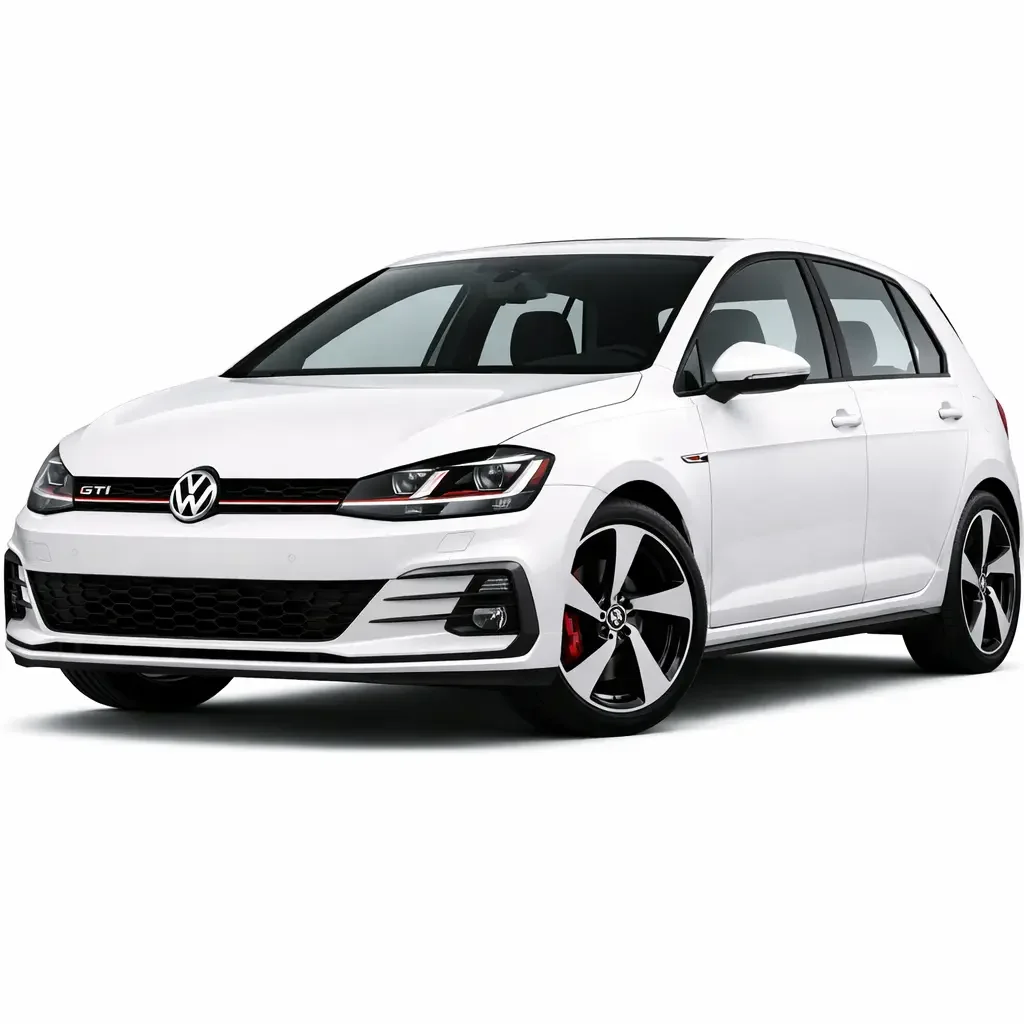
The Volkswagen GTI sold in North America from 2015 through 2021 spans the seventh generation of the nameplate and its mid-cycle refresh, referred to in the market and among enthusiasts as the Mk7 and Mk7.5 respectively. Both share the MQB platform, the Modular Transverse Matrix architecture that replaced the PQ35 platform beginning with the 2015 model year and represents the largest platform change in the GTI's North American catalog history. The MQB introduction separates the Mk7 from every prior GTI generation at the platform, suspension geometry, brake architecture, and subframe level. No PQ35 front suspension, front brake, or subframe component from the Mk5 or Mk6 crosses to the Mk7 or Mk7.5 at the platform level.
The seven-year window is divided at the 2018 model year into the Mk7 production run of 2015 through 2017 and the Mk7.5 facelift production run of 2018 through 2021. The facelift introduced revised exterior styling, an updated interior, a standard output increase, and, critically for catalog purposes, a new DSG transmission family. The Mk7 uses the DQ250 six-speed dual-clutch unit. The Mk7.5 uses the DQ381 seven-speed dual-clutch unit. These are different transmissions with different fluid specifications, different filter hardware, and different mechatronic modules. DSG service components confirmed for the Mk7 DQ250 do not cross to the Mk7.5 DQ381, and vice versa.
All North American Mk7 and Mk7.5 GTI models are assembled at Volkswagen de Mexico in Puebla, Mexico. This distinguishes the GTI from the Golf R of the same generation, which was produced in Wolfsburg. The Puebla production origin is reflected in the VIN with a 3VW prefix rather than the WVW prefix of German-produced vehicles.
This guide addresses the United States market throughout. Canadian specifications share the same platform, engines, and transmissions but may carry different trim designations.
Platform: MQB and the Break from PQ35
The MQB platform carries an independent MacPherson strut front suspension and an independent four-link rear suspension on the GTI, replacing the torsion beam rear axle of the Mk5 and Mk6. The four-link rear suspension is a significant architecture change from prior GTI generations and means that all rear suspension components including rear shock absorbers, rear springs, rear wheel bearings, rear control arm bushings, and rear subframe geometry are MQB-specific with no cross-reference to Mk5 or Mk6 rear suspension parts.
The front suspension geometry is also MQB-specific. Front strut cartridges, front control arms, front wheel bearings, and front stabilizer bar links confirmed for the Mk7 GTI do not cross to Mk5 or Mk6 applications. The MQB platform does create a cross-reference family with other MQB-based VW Group vehicles of the same era, including the Mk7 Jetta GLI, the Audi A3 8V, the Audi TT Mk3 8S, and the SEAT Leon Mk3 at the front suspension level within matching engine weight and equipment specifications. These cross-references are confirmed at the platform level but must be verified by individual part number before publication.
The MQB platform was introduced for the North American market beginning with the 2015 model year across the Golf, Golf SportWagen, and GTI. The e-Golf, sold in limited markets, also used MQB. The Golf R sold alongside the GTI uses the same MQB platform but with Haldex 4Motion all-wheel drive, a different front subframe configuration to accommodate the front differential, different front halfshaft specifications, and a larger IS38 turbocharger. Golf R drivetrain, halfshaft, and front subframe components are not interchangeable with GTI components despite sharing the same platform.
Engine: EA888 Gen3, Three Engine Codes, and the IS20 Turbocharger
The Mk7 and Mk7.5 GTI uses the EA888 Gen3 2.0-litre turbocharged direct-injection four-cylinder throughout the North American window. The IS20 turbocharger is the standard fitment on all non-Performance-Package GTI applications across the full window. The Performance Package, discussed below, uses the same IS20 turbocharger as the standard car.
Three engine codes appear across the North American Mk7 and Mk7.5 GTI window. The CXCA is the primary code for 2015 and 2016 production. The CXCB is the primary code for 2016 through 2018 production, spanning the Mk7 and the early Mk7.5. The CXCB is associated with Performance Package applications while the CXCA applies to non-Performance-Package configurations in overlapping production years, though both share the same fundamental engine architecture and most service components. The DKFA is the engine code for 2019 through 2021 production, corresponding to the later Mk7.5 production run. The DKFA uses a different oil pump design from the CXCA and CXCB, which means the engine wiring harness and oil pump specification differ for DKFA applications. A DKFA engine harness confirmed for a 2019 or later GTI must not be applied to a CXCA or CXCB application.
For the large majority of engine service consumables including oil filter, air filter, spark plugs, coolant thermostat, water pump, timing chain tensioner, and high-pressure fuel pump, the three engine codes share identical part numbers within the EA888 Gen3 family. The practical catalog split between CXCA/CXCB and DKFA is primarily relevant for the oil pump assembly and associated wiring harness, not for routine service items.
Output for the Mk7 standard GTI is 210 hp without the Performance Package and 220 hp with the Performance Package. At the Mk7.5 facelift, output increased to 228 hp as the standard specification across all trims, eliminating the output differential between standard and Performance Package that existed in the Mk7. A power output listing that assigns 210 hp to a 2019 or later GTI, or that treats the Performance Package as required for 220 hp output in the Mk7.5, is incorrect.
The Performance Package: Brake and Differential Catalog Splits
The Performance Package is the most consequential equipment-level catalog boundary in the Mk7 and Mk7.5 GTI window. It creates two distinct hardware configurations within the same model year and trim level that must be maintained as separate catalog entries in the brake and front differential categories.
Standard GTI front brake rotors are 312 mm in diameter with single-piston red-painted calipers, the same front rotor diameter used in the Mk5 and Mk6 GTI. Performance Package front brake rotors are 340 mm in diameter, also single-piston, with larger vented discs. Performance Package rear brake rotors are 310 mm vented discs, replacing the 286 mm solid discs of the standard GTI rear. A front brake rotor confirmed for a standard GTI must not be applied to a Performance Package GTI, and vice versa. A rear brake rotor confirmed for a standard GTI rear must not be applied to a Performance Package rear.
The Performance Package also adds the VAQ electro-hydraulic front limited-slip differential, internally designated VAQ for Vorderachsquersperre. The VAQ unit is integrated into the front differential housing alongside the standard open differential. Its electro-hydraulic actuator, multi-plate clutch pack, and hydraulic control module are Performance Package-exclusive hardware with no equivalent in the standard open differential GTI. A front axle halfshaft on a Performance Package GTI may also differ in length on the right-side output due to the VAQ unit geometry. Any front differential, front differential actuator, or right front halfshaft listing that does not distinguish between Performance Package and non-Performance Package applications is generating a potential fitment error for one of the two configurations.
The Performance Package was available throughout the Mk7 and Mk7.5 window, though its availability by trim changed across model years. In the Mk7, the Performance Package was an option on S, SE, and Autobahn trims. A standalone Sport trim was offered for 2017 only, which included the Performance Package as standard. In the Mk7.5, the Performance Package became standard equipment across the lineup progressively, with all S, SE, and Autobahn trims eventually including it as standard by the end of the window.
Transmissions: DQ250 Six-Speed DSG and DQ381 Seven-Speed DSG
The Mk7 GTI uses the DQ250 six-speed wet-clutch DSG, designated 02E internally, throughout the 2015 through 2018 production run. This is the same DQ250 family used in the Mk5 and Mk6 GTI, though calibrated for the higher output of the EA888 Gen3. DQ250 fluid, filter, and mechatronic service components are consistent with prior GTI DQ250 applications within the same fluid generation and service specification.
The Mk7.5 GTI from the 2019 model year onward uses the DQ381 seven-speed wet-clutch DSG. The DQ381 is a different transmission architecture from the DQ250. It uses a seven-speed ratio set, different internal clutch pack geometry, different fluid volume, and a different filter assembly. DQ381 fluid, filter, and mechatronic components do not cross to the DQ250, and DQ250 components do not cross to the DQ381. The DSG service interval and fluid specification must be confirmed against the specific unit before any service listing is assigned.
A DQ250 fluid or filter listing applied to a 2019 or later Mk7.5 GTI is assigning service components for the wrong transmission. A DQ381 listing applied to a 2015 through 2018 Mk7 GTI is equally incorrect. The transmission boundary at the 2019 model year is clean and annual with no mid-year transition.
The six-speed manual 02Q transmission is available throughout the Mk7 and Mk7.5 window. The 02Q specification in the Mk7 GTI uses the same eight-bolt TSI flywheel pattern established in the Mk6, continuous from that generation. Clutch and flywheel listings for the Mk7 and Mk7.5 02Q manual confirm the eight-bolt pattern throughout the window.
Brakes: Standard and Performance Package, Confirmed Before Assignment
Standard GTI front brakes use 312 mm vented rotors. Performance Package front brakes use 340 mm vented rotors. Standard GTI rear brakes use 286 mm solid rotors. Performance Package rear brakes use 310 mm vented rotors. These four specifications are distinct, and a brake rotor listing for any Mk7 or Mk7.5 GTI must confirm Performance Package fitment before the rotor diameter and venting specification is assigned.
The standard brake specification of 312 mm front and 286 mm rear is shared with the Mk6 GTI at matching rotor diameter. This dimension continuity does not confirm part number interchangeability between Mk6 and Mk7 applications, as the caliper mounting geometry changed with the MQB platform. Individual part number verification is required before a Mk6 brake rotor is cross-referenced to a Mk7 application.
Suspension: MQB Four-Link Rear and DCC Availability
The Mk7 GTI introduced an independent four-link rear suspension in place of the torsion beam rear used in the Mk5 and Mk6. This is the most significant suspension architecture change in the GTI's North American catalog history. All rear suspension components including rear shock absorbers, rear springs, rear wheel bearings, rear toe link, rear control arms, and rear subframe bushings are MQB-specific. No Mk6 or earlier rear suspension component crosses to the Mk7 GTI.
The Dynamic Chassis Control adaptive damper system, designated DCC, was available on the Mk7 and Mk7.5 GTI in North America as an optional package on SE and Autobahn trims. DCC-equipped GTIs use electronically controlled adaptive dampers with variable damping rates. The DCC strut and rear shock assembly are different from the passive damper assemblies used on non-DCC applications. A shock absorber or strut confirmed for a non-DCC GTI must not be applied to a DCC application, and vice versa. Equipment confirmation is required before any shock or strut listing is assigned.
Production: Puebla, Mexico, Throughout the Window
All North American Mk7 and Mk7.5 GTI models are produced at Volkswagen de Mexico in Puebla, distinguishable by the 3VW VIN prefix. This is the first GTI generation assembled outside Germany for the North American market. The Puebla production origin has no direct impact on mechanical component specifications, as the platform, engine, and transmission hardware is the same as the European production. However, it is relevant for understanding the VIN structure and for distinguishing the GTI from the same-generation Golf R, which carries a WVW prefix from its Wolfsburg assembly.
Trims: S, SE, Autobahn, Sport, Rabbit Edition, and Equipment Boundaries
The Mk7 North American trim structure consisted of the S, SE, and Autobahn trims from 2015 through 2016, with the Sport trim added for 2017 only as a Performance Package standard configuration without the sunroof that SE and Autobahn required. The Mk7.5 trim structure returned to S, SE, and Autobahn, with the Rabbit Edition introduced for the 2019 model year as a limited-production special variant.
The Rabbit Edition was limited to approximately 3,000 units for the 2019 model year and was significant for offering the Performance Package, LED adaptive headlights, and the Vmax rear spoiler without the mandatory sunroof that SE and Autobahn included. The Rabbit Edition used the DKFA engine code and the DQ381 DSG or 02Q manual transmission. Its brake and VAQ differential specifications follow the Performance Package configuration.
Equipment-level distinctions that create catalog boundaries are concentrated in the brake and differential category as described above. Sunroof glass assembly, LED headlamp assembly, and adaptive headlamp actuator listings must confirm trim and option fitment before assignment.
Common ACES/PIES Catalog Mistakes
The first error is applying PQ35 front suspension or front brake components from the Mk5 or Mk6 GTI to any Mk7 or Mk7.5 application. The MQB platform uses a different front strut specification, different control arm geometry, and different front wheel bearing specification from the PQ35. No PQ35 front suspension or brake component crosses to MQB without individual part number confirmation.
The second error is applying PQ35 rear suspension components to any Mk7 or Mk7.5 GTI. The Mk7 GTI uses a four-link independent rear suspension. The Mk5 and Mk6 GTI use a torsion beam. These are fundamentally different architectures with no component commonality.
The third error is applying a DQ250 DSG fluid, filter, or mechatronic component to a 2019 or later Mk7.5 GTI. The Mk7.5 from 2019 onward uses the DQ381 seven-speed DSG. DQ250 service components do not apply to the DQ381.
The fourth error is applying a DQ381 fluid or filter listing to a Mk7 GTI from 2015 through 2018. The Mk7 uses the DQ250. The two transmissions are different architectures with different service requirements.
The fifth error is applying standard GTI 312 mm front brake rotors to a Performance Package application. Performance Package front rotors are 340 mm. These are different components and must not be cross-referenced.
The sixth error is applying standard GTI 286 mm solid rear rotors to a Performance Package application. Performance Package rear rotors are 310 mm vented discs. A solid rotor listing applied to a Performance Package rear is assigning both the wrong diameter and the wrong venting specification.
The seventh error is assigning a front differential or right front halfshaft listing without confirming Performance Package fitment. The VAQ electro-hydraulic limited-slip differential is Performance Package-exclusive. Its actuator, clutch pack, and associated halfshaft geometry are specific to the Performance Package configuration.
The eighth error is assigning 210 hp output to any 2019 or later GTI application, or treating the Performance Package as required for 220 hp in the Mk7.5. All Mk7.5 GTIs produce 228 hp as standard. The 210 hp standard and 220 hp Performance Package distinction applies only to the Mk7 production run of 2015 through 2017.
The ninth error is applying a DKFA engine harness or oil pump assembly to a CXCA or CXCB application. The DKFA uses a different oil pump design requiring its own wiring harness. This wiring harness does not cross to earlier engine code applications.
The tenth error is applying a DCC adaptive damper shock or strut to a non-DCC application, or a passive damper component to a DCC application. DCC and non-DCC use different shock and strut assemblies. Equipment confirmation is required before any shock or strut listing is assigned.
Pre-Listing Checklist for the 2015-2021 Mk7 and Mk7.5 GTI
Platform confirmed as MQB throughout; no PQ35 suspension, brake, or subframe component applies from any prior GTI generation.
Rear suspension confirmed as four-link independent; no torsion beam rear suspension component from Mk5 or Mk6 applies.
Production confirmed as Puebla, Mexico throughout; VIN prefix confirmed as 3VW for all North American GTI applications.
Engine confirmed as EA888 Gen3 with engine code CXCA (2015 to 2016), CXCB (2016 to 2018), or DKFA (2019 to 2021); DKFA oil pump and engine harness confirmed as specific to that code and not applicable to CXCA or CXCB applications.
Output confirmed as 210 hp standard or 220 hp with Performance Package for Mk7 (2015 to 2017); 228 hp standard for all Mk7.5 applications (2018 to 2021).
Transmission confirmed as DQ250 six-speed DSG (2015 to 2018 Mk7 and early Mk7.5) or DQ381 seven-speed DSG (2019 to 2021 Mk7.5) or 02Q six-speed manual throughout; DSG fluid, filter, and mechatronic confirmed as DQ250 or DQ381 specific before service listing is assigned; no DQ250 component applies to DQ381 and vice versa.
Performance Package fitment confirmed before front brake rotor, rear brake rotor, and front differential listings are assigned; standard front confirmed as 312 mm vented, Performance Package front confirmed as 340 mm vented; standard rear confirmed as 286 mm solid, Performance Package rear confirmed as 310 mm vented; VAQ electro-hydraulic differential confirmed as Performance Package-exclusive.
DCC adaptive damper fitment confirmed before shock absorber and strut listings are assigned; DCC and non-DCC assemblies confirmed as different components with no cross-reference.
Rabbit Edition confirmed as Performance Package equipped with DKFA engine and DQ381 or 02Q manual for 2019 applications.
Final Take
The 2015 to 2021 Mk7 and Mk7.5 window is the most complex GTI catalog entry in the series to this point, driven by the MQB platform change, the mid-window DSG transmission change, and the Performance Package brake and differential splits that run through the entire window. The PQ35 to MQB transition is the cleanest of the three: it is a single model year boundary at 2015 with no overlap and no ambiguity. Every component from the prior platform is simply inapplicable. The DQ250 to DQ381 boundary is also clean at the 2019 model year. The Performance Package split is the one that generates ongoing catalog errors because it is not a year boundary. It runs across every model year in the window and requires equipment-level confirmation for brake and differential listings in every single application entry.
The three EA888 Gen3 engine codes add a layer of precision to the engine service side that the prior two generations, which each had a single primary engine code for most of their windows, did not require. For routine service items the codes share parts, but for oil pump, wiring harness, and secondary air system components the code matters. A catalog that treats all Mk7 GTI EA888 Gen3 applications as identical at the engine component level will generate errors in those categories.
Disclaimer
This guide is intended for catalog research, fitment analysis, and parts advisory reference. Performance Package availability varied by trim level and model year across the window. Always confirm application data against vehicle identification number decoding, factory build sheets, and OEM parts documentation before finalizing a listing or parts recommendation. PartsAdvisory and its contributors are not responsible for fitment errors arising from catalog data that has not been independently verified against physical vehicle inspection or official OEM sources.