
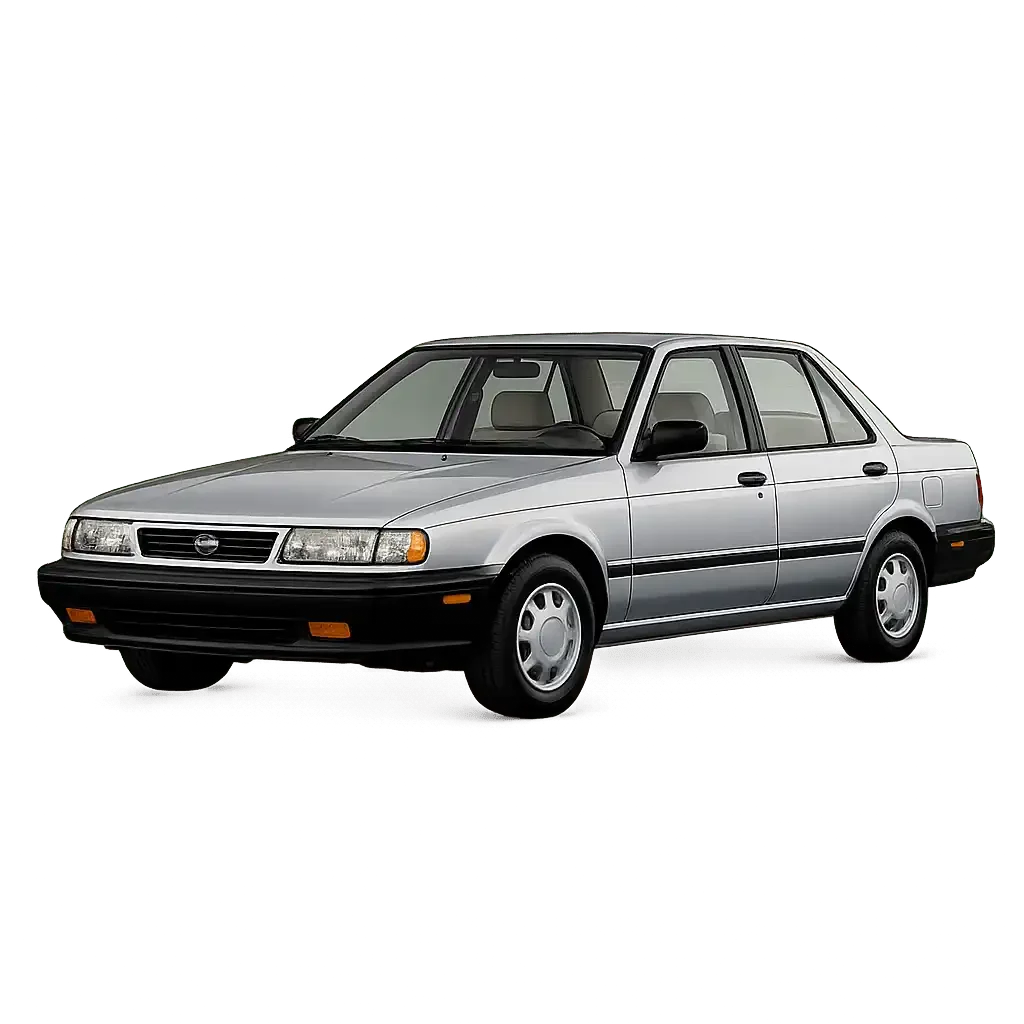
The B13 Sentra is a classic example of “same name, different parts.” Most wrong orders happen for two reasons:
People ignore the 1993 facelift split
People treat SE-R like it is just another trim
This guide is only for B13, model years 1991 to 1994.
What the B13 actually is
Body styles in the US market
• 4 door sedan
• 2 door coupe
If you sell exterior parts, you must force body style selection. Coupe and sedan parts are not a free swap in many categories.
The two biggest fitment splits
Split 1: 1991 to 1992 versus 1993 to 1994 (facelift)
From August 1992 production, the B13 received a facelift for the 1993 model year with revised front and rear fascias. Edmunds also notes minor nose work including redesigned grille, headlights, and front fascia.
High return categories affected by the facelift
• Headlights and corner lamps
• Grille and front bumper components
• Rear lamps and rear bumper components
• Brackets, absorbers, and undercovers that match the fascia shape
If your listing says “1991 to 1994” for any of those, expect returns.
Split 2: SE-R versus non SE-R (engine and brake package)
The B13 SE-R used Nissan’s SR20DE engine and came as a sporty two door model with performance hardware like four wheel disc brakes and a limited slip differential.
That means SE-R is not just a badge. It changes real parts.
SE-R risk categories
• Brakes: rotors, calipers, hoses, master cylinder logic
• Driveline: some listings get sloppy around hubs, axles, and transmission pairing
• Cooling and exhaust: SR20DE versus GA16DE differences matter
Engines and why you should care
Mainline B13 models used the 1.6 liter GA16DE in the US market, while the SE-R used the 2.0 liter SR20DE.
Practical takeaway: force “Engine” as a required attribute for anything underhood, cooling, exhaust, and drivetrain.
Sneaky trap: air conditioning refrigerant change in 1994
For 1994 models, CFC free refrigerant became standard on models equipped with air conditioning.
If you sell AC parts, do not assume 1991 to 1993 matches 1994. Service fittings, compressor variants, and system components can split when refrigerant standards change.
Common B13 listing mistakes that cause returns
Listing headlights as 1991 to 1994 with no facelift split (1993 to 1994 is different)
Mixing SE-R brake parts with non SE-R parts (disc versus disc drum logic is where returns live)
Ignoring coupe versus sedan on body parts
Ignoring the 1994 AC refrigerant change on AC components
Fitment checklist you can paste into your listings
Before confirming fitment, collect:
Model year: 1991, 1992, 1993, or 1994
Facelift bucket: 1991 to 1992 or 1993 to 1994
Body style: 2 door coupe or 4 door sedan
Trim: SE-R or non SE-R
Engine: GA16DE or SR20DE
If AC parts: confirm model year and AC setup because 1994 moved to CFC free refrigerant
If you want, tell me which parts you are targeting first (lights, bumpers, cooling, brakes, suspension). I will turn this into a simple “required attributes per part type” rules block specifically for B13.
For the full year, engine, trim, and body style breakdown across every Sentra generation, read my Complete Nissan Sentra Generations Guide 1982 to Present.
Disclaimer: This guide is based on publicly available specifications, Nissan press materials, and independent research. Part interchangeability should always be confirmed via VINand OEM part number lookup. Specifications may change without notice. This document does not constitute official Nissan parts catalog data. Visuals and illustrations in this article were generated using AI for representative purposes and may not reflect exact technical schematics.