
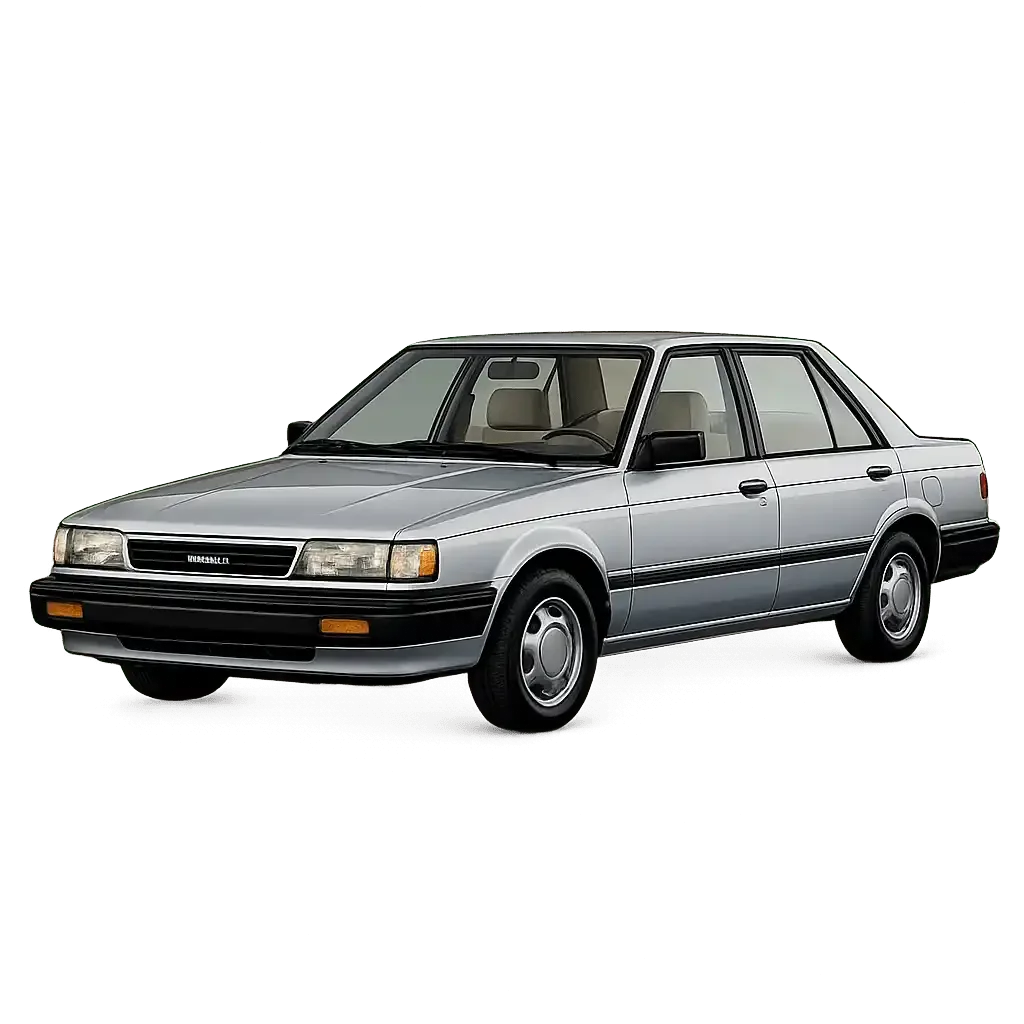
The B12 Sentra looks simple, but it punishes lazy fitment. If you bucket everything as 1987 to 1990 and call it a day, you will get returns on lights, body parts, and drivetrain items.
This guide is only for B12, model years 1987 to 1990.
Late 1986 production note
In the US, the B12 was introduced for the 1987 model year in August 1986, and Smyrna production for the B12 began on August 12, 1986. Hatchback production was added in December 1986, and the wagon followed in January 1987.
The splits that matter before you list anything
1) Body style is not optional
B12 came in multiple body styles, including sedan, hatchback, sport coupe, and station wagon.
If you do not force body style selection, exterior parts are where you bleed.
High risk categories:
Headlights, corner lamps, tail lamps
Bumper covers, grilles, brackets
Fenders, hood, radiator support, undercovers
2) The year splits inside B12 are real
For the US and Canada market, Wikipedia calls out clear changes by year:
1987
Standard engine was E16, except Sport Coupe and the later 4WD wagon which used E16i.
1988
All Sentras used E16i.
1989 to 1990
Engine choice moved to GA16i in 1989 to 1990, and there were also exterior lighting changes in 1989.
If you are building catalog rules, treat 1987, 1988, and 1989 to 1990 as three separate buckets for a lot of parts.
3) The wagon has its own trap: 4WD
B12 was the last Sentra generation to offer a wagon, and there were rare four wheel drive wagon versions offered for late 1987, 1988, and 1989 model years.
ImportArchive also shows a wagon AWD fitment line for 1987 to 1989.
If you sell anything drivetrain related or rear suspension related, you must separate FWD wagon from 4WD wagon.
The “common return” parts on B12, and how to stop them
Lighting
1989 introduced new, larger front corner lights and redesigned taillights for the sedan, while the wagon retained the same rear lights.
That means you do not want one universal tail lamp listing across all body styles and years.
Exterior front end
Even subtle changes in corners and fascia driven components are enough to cause “holes do not line up” returns. Force year and body style, then verify with photos showing tabs and bolt locations.
Engine and cooling
Do not list cooling parts as “fits 1987 to 1990” without engine logic. The B12 used E16, E16i, and later GA16i in North America.
Transmission
B12 offered 4 or 5 speed manuals and a 3 speed automatic.
If the part touches mounts, axles, seals, or driveline, force manual vs automatic selection.
Fitment checklist you can paste into listings
Before confirming fitment, collect:
Model year: 1987, 1988, or 1989 to 1990
Body style: sedan, hatchback, sport coupe, wagon
Drivetrain for wagon: FWD or 4WD
Engine family: E16, E16i, or GA16i
Transmission: manual or 3 speed automatic
If you want, tell me which parts you plan to sell first (lights, bumpers, cooling, brakes, suspension, sensors), and I will turn this into a simple “required attributes per part type” ruleset for B12.
For the full year, engine, trim, and body style breakdown across every Sentra generation, read my Complete Nissan Sentra Generations Guide 1982 to Present.
Disclaimer: This guide is based on publicly available specifications, Nissan press materials, and independent research. Part interchangeability should always be confirmed via VINand OEM part number lookup. Specifications may change without notice. This document does not constitute official Nissan parts catalog data. Visuals and illustrations in this article were generated using AI for representative purposes and may not reflect exact technical schematics.