
Rear Seat Speaker Switch (PartTerminologyID 4648): Signal Routing Architecture, Zone Function, and Head Unit Compatibility
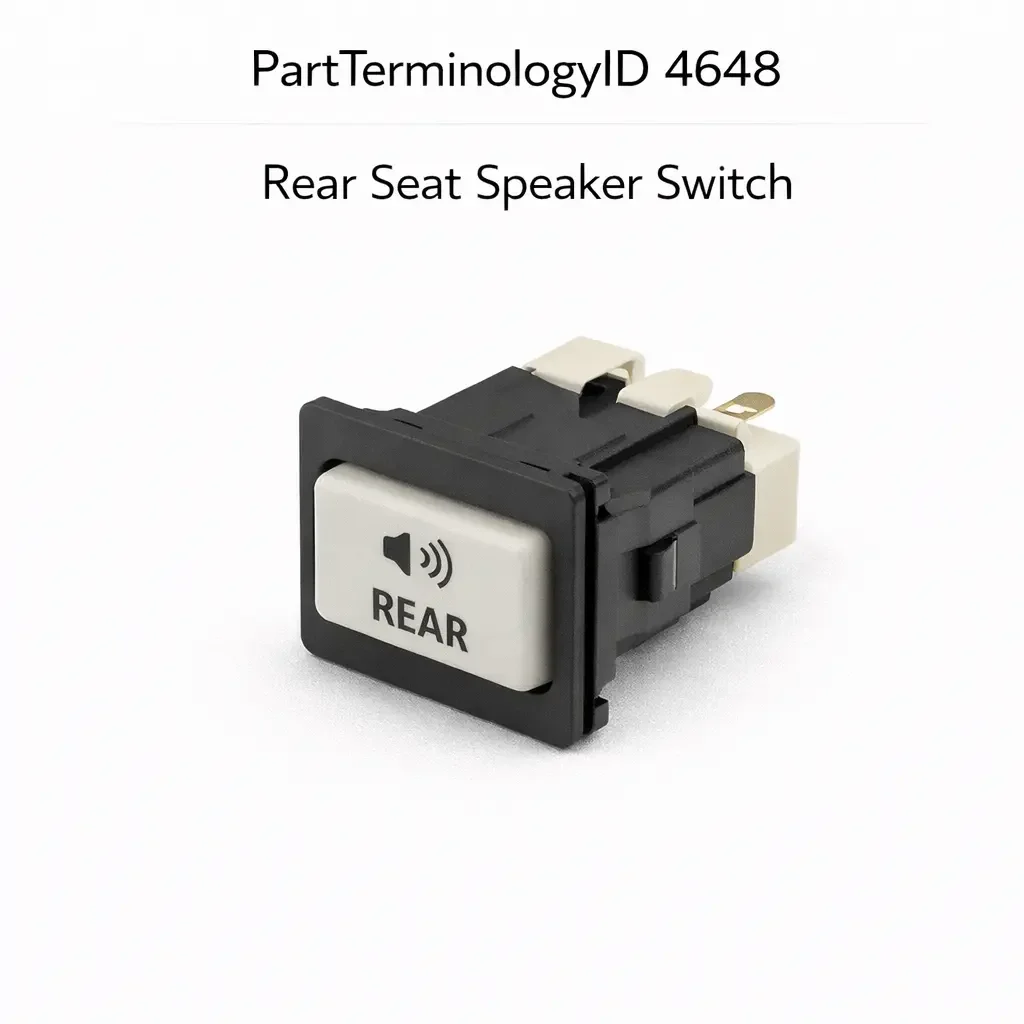
Written by Arthur Simitian | PartsAdvisory
Introduction
The rear seat speaker switch controls audio output routing to the rear cabin speaker zone. Found on vehicles with rear seat entertainment systems, multi-zone audio configurations, or factory rear speaker fade and zone control, it allows the driver or rear passengers to enable, disable, or adjust the rear speaker output independently of the front cabin audio. When it fails or is replaced with an incorrectly specified part, the rear speaker zone may become fixed in one state, unresponsive to input, or produce incorrect output levels that indicate a signal routing mismatch rather than a speaker or amplifier fault.
What the Rear Seat Speaker Switch Does
The rear seat speaker switch sends a control signal to the head unit, audio control module, or rear seat entertainment module that governs rear speaker output. Depending on the system architecture, the switch may enable or disable the rear zone entirely, adjust rear zone volume independently of the front zone, or switch the rear speakers between the main audio source and a dedicated rear seat entertainment source such as a DVD player or streaming input.
On simpler factory audio systems without a dedicated rear seat entertainment module, the switch connects directly to the head unit's rear zone control input. On vehicles with a rear seat entertainment module, the switch interfaces with the module, which processes the command and adjusts rear speaker output through its own amplifier stage. On both system types the switch carries only a low-current control signal, not speaker output current.
The switch may also provide a visual indicator, either a backlit button face or a status LED, that reflects whether the rear zone is active or muted. On systems where the rear zone status is communicated back to the head unit display, the switch output must produce a signal the head unit recognizes as a valid zone command to update the display correctly.
What Makes This Part Generate Returns
Signal routing architecture is the primary return driver. Rear seat speaker switches are used in two distinct circuit configurations. On direct head unit input systems the switch sends a switched ground or resistor-coded signal to the head unit's rear zone input pin. On rear seat entertainment module systems the switch connects to the module's control input, which uses a different signal format. A switch designed for direct head unit input installed in a rear seat entertainment module application will produce a signal the module does not recognize, leaving the rear zone unresponsive.
Head unit or module compatibility is the second return driver. On platforms where the rear zone control input uses a resistor-coded signal, the switch resistor values must match the head unit or module calibration. Two switches covering the same vehicle application but with different resistor values will produce different voltage levels at the control input. The module will recognize only the correct values as valid commands.
Zone function count is the third return driver. A switch that controls only rear zone on and off is not the same as one that controls rear zone volume in addition to on and off, even if both physically fit the same mounting location. A switch without the volume control contact set installed in a volume-control application leaves that function without a control input.
Cataloging Attributes: What to Confirm Before Listing
Signal routing architecture: State whether the switch connects to the head unit directly or to a rear seat entertainment module. This is the foundational compatibility attribute and must be confirmed before any other attribute is evaluated.
Signal output type: State switched ground, switched voltage, or resistor-coded. For resistor-coded applications, state the resistance value for each switch position.
Zone function count: State whether the switch covers on and off only, or on, off, and independent volume control. A listing that does not distinguish between these two function counts will generate returns from buyers whose vehicle has independent rear zone volume control.
Head unit or module part number compatibility: State the head unit family or rear seat entertainment module the switch is designed to interface with on platforms where input calibration is model-specific.
Illumination: State whether the switch includes zone status indication and whether the lamp circuit is continuously powered or function-switched.
Connector pin count: State the pin count. Rear seat speaker switches range from two-pin on simple on-off designs to six or more pins on multi-function designs with volume control and status indication.
Common Cataloging Mistakes
The most common mistake is listing rear seat speaker switches without stating the signal routing architecture. On platforms where both a direct head unit connection and a rear seat entertainment module were offered as options, both configurations share the same vehicle application data but require different switches. A listing that does not state the architecture will route head unit switches to entertainment module applications and vice versa.
The second mistake is omitting the zone function count. On platforms where the base audio package included rear zone on and off control only, and the premium audio package added independent rear zone volume, both configurations may use a switch in the same mounting location with the same connector body. Without the function count in the listing, buyers on the premium package will receive a switch that covers only on and off and find the volume function missing.
Status in New Databases
PIES/PCdb: PartTerminologyID 4648, Rear Seat Speaker Switch
PIES 8.0 / PCdb 2.0: No change in PartTerminologyID or terminology label
Summary
PartTerminologyID 4648, Rear Seat Speaker Switch, is an audio zone control component whose return rate is driven by signal routing architecture mismatch and missing zone function count data. Every listing must state whether the switch interfaces with the head unit directly or with a rear seat entertainment module, the signal output type and values, and the number of zone functions the switch controls. Connector pin count and illumination type must also be stated. Vehicle fitment alone is never sufficient for this PartTerminologyID on platforms where multiple rear audio configurations were offered.