
Written by Arthur Simitian | PartsAdvisory
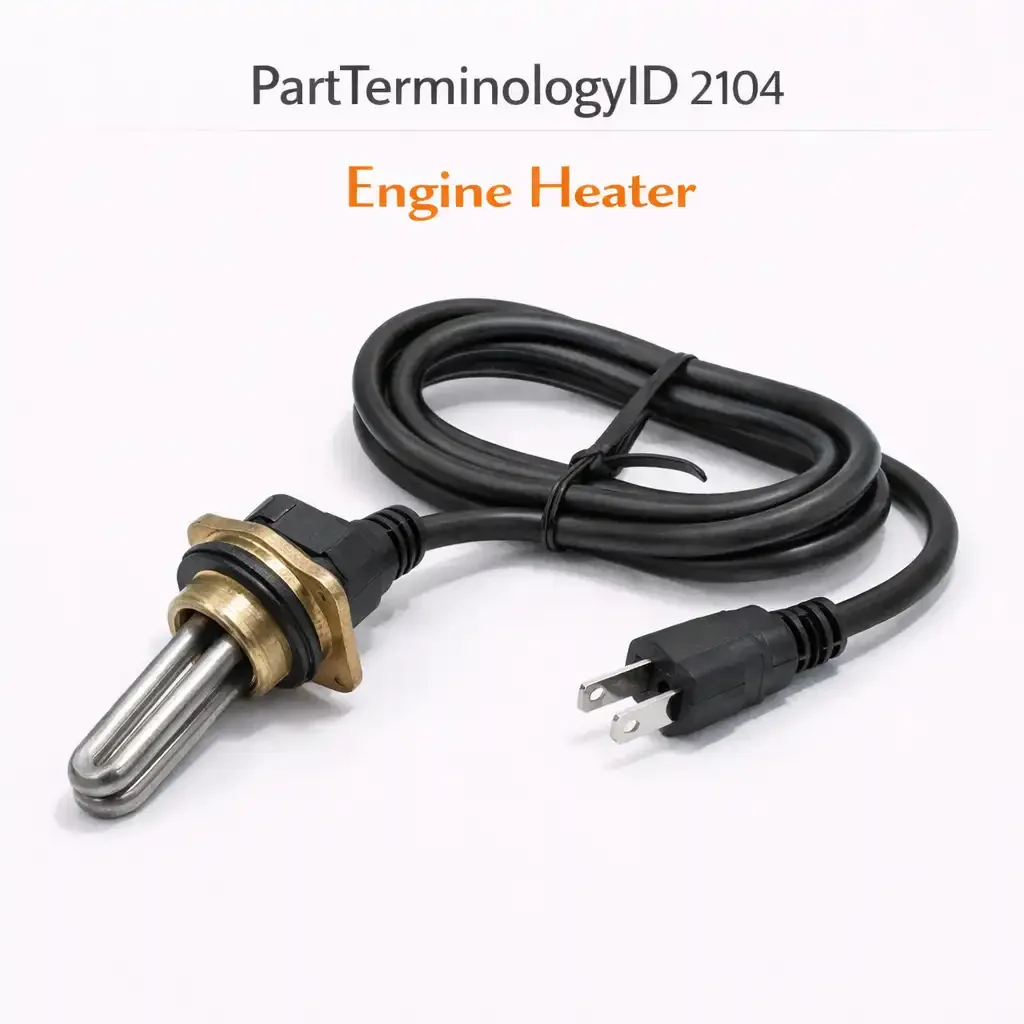
PartTerminologyID 2104, Engine Heater, is a device that heats the engine before startup. That definition covers the function without communicating anything about the heater type, the mounting location, the wattage, the voltage, the coolant or oil circuit it connects to, the thread specification if it is a threaded immersion heater, the hose diameter if it is an inline heater, or the engine it is designed for. A listing under PartTerminologyID 2104 without a heater type attribute is asking the buyer to guess whether the part installs in a freeze plug bore, threads into a block port, splices into a coolant hose, mounts on the oil pan, or sits under the engine on a pad. Each of those configurations is a different product, installs in a different location, connects differently, and serves a different segment of the buyer population. The same problem appears in PartTerminologyID 2056 (Cooling System Adapter), where the function attribute is the first and most important thing missing, and without it no other specification in the listing is actionable.
For sellers, the engine heater category is unusual because it contains both vehicle-specific and universal products sold to the same buyer under the same PartTerminologyID. A freeze plug heater for a specific block bore diameter is vehicle-specific. A magnetic oil pan heater is universal. A listing that does not distinguish between these configurations will be ordered by buyers who need one type and receive the other, with an installation that either cannot be completed or produces no meaningful heat because the heater is in the wrong location for the buyer's application.
For sellers, the listing under this PartTerminologyID is only useful if it includes the heater type, the wattage, the voltage, and the type-specific connection specification. Without those four attributes, the listing communicates that an engine heater exists, which is not enough information to order one.
The Heater Types Under This PartTerminologyID
Freeze plug heater (immersion block heater)
The most widely recognized engine heater type. A heating element is mounted inside a cup that replaces a freeze plug in the engine block. The heater element is submerged in the engine coolant and heats the coolant directly. The warm coolant circulates by convection through the block, warming the cylinder walls, the pistons, the oil passages near the block, and the coolant in the heater core.
The freeze plug heater must match the freeze plug bore diameter in the engine block. Block bore diameters for freeze plug heater applications range from approximately 1-3/4 inches to 2-1/4 inches on domestic engines, with metric bores common on European and Asian applications. The heater cup outer diameter must provide a correct interference fit in the bore: tight enough to seal against coolant pressure, loose enough to be installed without damaging the bore. A heater that is 1/8 inch undersized will not seal. A heater that is oversized will crack the bore on installation.
The wattage determines the heat output. Common wattages for passenger vehicle freeze plug heaters range from 400 watts to 1,500 watts. Higher wattage heaters warm the engine faster but draw more current. On a 120-volt AC circuit, a 1,000-watt heater draws approximately 8.3 amperes. Buyers using an extension cord must use a cord rated for the heater's current draw to avoid a fire risk from an undersized extension cord.
The listing must specify the plug bore diameter and the wattage. A freeze plug heater listing without a bore diameter is not a usable listing.
Inline coolant heater (hose heater)
An inline heater that splices into a coolant hose and heats the coolant as it passes through the heater body. The heater element is inside the heater body. Coolant enters one end, passes over the element, and exits the other end warmer. A pump may be integrated into the heater body to circulate coolant when the engine is off, or circulation may rely on convection alone.
The fitment attributes for an inline coolant heater are the hose inner diameter at the splice point and the hose type at that location in the cooling circuit. Common splice locations are the lower radiator hose or the heater inlet hose, both of which are accessible and in the lower portion of the cooling circuit where convective circulation is most effective. The hose inner diameter at the splice point must match the heater body barb outer diameter. The listing must specify the hose inner diameter the heater fits.
Wattage for inline coolant heaters typically ranges from 600 watts to 1,500 watts. Inline heaters with an integrated circulation pump can warm the engine more evenly than convection-only freeze plug heaters because the pump actively moves heated coolant through the block.
Magnetic oil pan heater
A pad-style heater with a magnetic base that attaches to the exterior of the oil pan. The heater warms the pan wall, which transfers heat to the oil inside. This type requires no installation beyond placement on the pan and routing of the power cord. It is the most universal engine heater type because it does not interact with the cooling system, does not require a freeze plug bore, and does not splice into any hose.
The fitment requirement for a magnetic oil pan heater is that the oil pan must be ferrous steel. Aluminum oil pans do not attract the magnet and the heater will not hold in place. The listing must state this limitation explicitly. A buyer with an aluminum oil pan who receives a magnetic heater cannot use it and has a guaranteed return.
Wattage for magnetic oil pan heaters typically ranges from 100 watts to 250 watts. The lower wattage reflects the fact that the heater is warming oil through the pan wall rather than immersed in coolant. Oil pan heaters are slower to warm the engine than freeze plug or inline coolant heaters, and they warm only the oil rather than the coolant, which means the engine block temperature and the heater core temperature are not significantly affected.
Dipstick heater
A heater that replaces the engine oil dipstick. The heating element runs the length of the dipstick tube and heats the oil directly. Dipstick heaters are engine-specific because the dipstick tube diameter, length, and handle configuration are specific to the engine and the model. They are more targeted to oil warming than to overall engine warming, and they provide faster oil viscosity reduction on cold starts than a magnetic pan heater without requiring any drilling, hose splicing, or freeze plug removal.
The listing must specify the engine code or the dipstick tube diameter and length. A dipstick heater with the wrong tube diameter will either not insert or will not seal in the tube. A heater that does not seal in the tube allows oil vapor to exit the tube during operation.
Tank heater (fuel or coolant reservoir heater)
A pad heater that adheres to the exterior of a fuel tank, a coolant reservoir, or a diesel fuel filter housing. These heaters prevent fuel gelling or coolant reservoir freezing in extreme cold. They are not engine heaters in the combustion chamber or oil circuit sense, but they fall under PartTerminologyID 2104 as engine-related heating devices in some catalog systems. Listing a tank heater under this PartTerminologyID without specifying the application creates a return when a buyer expecting a block heater receives a tank pad heater.
Battery and engine compartment heater (thermal blanket)
A large-format pad heater designed to be draped over the engine or positioned against the battery. These heaters warm the engine compartment broadly and are used when a localized block heater cannot be installed due to access constraints. Wattage ranges widely, from 150 watts to over 600 watts. Fitment is universal with no engine-specific attributes. A listing for a thermal blanket under PartTerminologyID 2104 must identify it clearly as a blanket-type heater so the buyer does not expect a block heater installation.
Why This Part Generates Returns
Buyers order the wrong engine heater because:
the listing does not specify the heater type and the buyer receives a freeze plug heater when they expected an inline hose heater, or a magnetic pad when they expected a freeze plug heater
the freeze plug bore diameter is not stated and the heater does not fit the block bore
the buyer has an aluminum oil pan and orders a magnetic heater because the listing does not disclose that the magnetic mount requires a ferrous steel pan
the wattage is not stated and the buyer's electrical circuit is not adequate for the heater's current draw, or the wattage is insufficient for the ambient temperature the buyer is in
the inline heater hose barb diameter does not match the hose inner diameter at the splice location
the dipstick heater tube diameter does not match the engine's dipstick tube, and the heater will not insert
the listing is for a tank heater and the buyer expected a block heater
Status in New Databases
PIES/PCdb: PartTerminologyID 2104, Engine Heater
PIES 8.0 / PCdb 2.0: No change
Top Return Scenarios
Scenario 1: "Wrong heater type entirely"
The buyer needed a freeze plug heater to replace an existing one in the block. They received a magnetic oil pan heater. The listing was categorized under PartTerminologyID 2104 without specifying the heater type. The buyer cannot install the magnetic heater in the block bore.
Prevention language: "Heater type: [freeze plug immersion heater / inline coolant hose heater / magnetic oil pan heater / dipstick heater / tank heater / thermal blanket]. Verify the heater type matches your installation before ordering."
Scenario 2: "Freeze plug heater does not fit the bore"
The bore diameter is not stated in the listing. The buyer selected the heater by wattage and price. The heater cup outer diameter is too small for the block bore and will not seal against coolant pressure.
Prevention language: "Freeze plug bore diameter: [1-3/4 inch / 2 inch / 2-1/4 inch / metric equivalent in mm]. Verify your engine block freeze plug bore diameter before ordering. An undersized heater will not seal and will leak coolant at operating temperature. Measure the bore or look up the specification by engine code."
Scenario 3: "Magnetic heater will not stay on the oil pan"
The buyer's oil pan is aluminum. The magnetic base has no attraction to aluminum. The heater fell off the pan on the first application. The listing did not specify that the magnetic heater requires a ferrous steel oil pan.
Prevention language: "Magnetic mount requires a ferrous steel oil pan. This heater will not adhere to aluminum, composite, or plastic oil pans. Verify your oil pan material before ordering. Many current-production four-cylinder and V6 engines use aluminum oil pans."
Scenario 4: "Inline heater barb does not fit the hose"
The buyer's lower radiator hose inner diameter is 1-3/4 inches. The heater barb is sized for a 1-1/2-inch hose. The barb will not seat in the hose and the clamp will not seal the connection.
Prevention language: "Hose inner diameter at splice point: [1-1/2 inch / 1-3/4 inch / 2 inch / metric equivalent in mm]. Verify the hose inner diameter at your intended splice location matches the heater barb outer diameter before ordering."
Scenario 5: "Wattage is too low, engine is still cold in the morning"
The buyer is in a region with overnight temperatures below negative 20 degrees Fahrenheit. They installed a 400-watt freeze plug heater on a 4-hour plug-in cycle. The 400-watt output was insufficient to warm the block adequately at that ambient temperature on a 4-hour cycle.
Prevention language: "Wattage: [X] watts. At extreme ambient temperatures below [X] degrees Fahrenheit, higher wattage heaters or longer plug-in cycles are recommended. Consult the heater manufacturer's ambient temperature and wattage selection guide for your climate."
What to Include in the Listing
Core essentials
PartTerminologyID: 2104
component: Engine Heater
heater type: freeze plug immersion, inline coolant hose, magnetic oil pan, dipstick, tank heater, or thermal blanket (mandatory)
wattage (mandatory)
voltage: 120V AC or 240V AC (mandatory)
type-specific connection specification (mandatory, see below by type)
cord length in feet
material: element material (steel, copper, stainless), body material
quantity: 1
Type-specific fitment essentials
freeze plug heater: bore diameter in inches or mm, cup outer diameter in inches or mm, engine code when bore diameter varies within the same platform
inline coolant heater: hose inner diameter at splice point in inches or mm, pump-assisted or convection-only
magnetic oil pan heater: compatible oil pan material (steel only), pad dimensions in inches
dipstick heater: engine code, dipstick tube outer diameter in mm, dipstick tube length in inches
tank heater: application (fuel tank, coolant reservoir, diesel filter housing), pad dimensions in inches
thermal blanket: covered area dimensions in inches, compatible engine bay clearance requirements
Dimensional essentials
freeze plug bore diameter in inches or mm
freeze plug heater cup outer diameter in inches or mm
heater body overall length in inches or mm
cord length in feet
pad dimensions for magnetic and blanket types in inches
Image essentials
heater in isolation showing the element, the mounting feature, and the cord
freeze plug heater: bore cup shown with diameter callout
inline heater: both barb ends shown with diameter callout
magnetic heater: magnet face and pad surface shown
installed context showing the heater in its operating position in the engine bay
Catalog Checklist for ACES/PIES Teams
PartTerminologyID = 2104
require heater type attribute (mandatory, non-negotiable)
require wattage
require voltage
require type-specific connection specification: bore diameter for freeze plug, hose inner diameter for inline, oil pan material requirement for magnetic, engine code and tube diameter for dipstick
require cord length
differentiate freeze plug heater from inline coolant heater: different installation, different location, different buyer population
differentiate magnetic oil pan heater from freeze plug heater: universal versus vehicle-specific, oil warming versus coolant warming, aluminum pan exclusion required
differentiate dipstick heater from oil pan heater: oil warming versus pan warming, engine-specific versus universal
differentiate tank heaters and thermal blankets from block heaters: different application, must be stated explicitly to prevent buyer expectation mismatch
flag that magnetic heaters require ferrous steel oil pans: this exclusion must be in the listing, not in the installation instructions only
flag that wattage and ambient temperature are related: a wattage that is adequate for minus 10 degrees Fahrenheit may be inadequate for minus 30 degrees Fahrenheit
FAQ (Buyer Language)
What type of engine heater do I need?
Start with your installation constraint. If you can access a freeze plug bore in the engine block and are willing to remove the freeze plug and install a heater cup, a freeze plug heater provides the most effective coolant warming. If you want no drilling or freeze plug removal, an inline coolant hose heater splices into an existing hose. If you want the simplest possible installation and your oil pan is steel, a magnetic oil pan heater requires no tools. If your oil pan is aluminum, the magnetic heater is not an option and you need a freeze plug or inline heater.
How many watts do I need?
A general guideline for passenger vehicles: 1,000 watts is adequate for most applications in temperatures down to approximately minus 20 degrees Fahrenheit on a 3-to-4-hour plug-in cycle. For temperatures below minus 20 degrees Fahrenheit, 1,500 watts or a longer plug-in cycle is recommended. Oil pan and dipstick heaters at 150 to 250 watts are supplemental warmers, not primary block heaters, and are not adequate as standalone heating solutions in extreme cold.
How long before startup should I plug in the engine heater?
Most freeze plug and inline coolant heaters reach effective engine warming within 2 to 4 hours. Plugging in 4 hours before a cold-start in temperatures below minus 10 degrees Fahrenheit is a common recommendation. Timer outlets are useful for scheduling plug-in time relative to the planned departure time. Leaving a freeze plug heater plugged in for more than 8 hours continuously is generally not recommended and some heater designs include thermostatic controls to prevent overheating the coolant when the vehicle is not running.
Can I use an extension cord with my engine heater?
Yes, but the extension cord must be rated for the heater's current draw. A 1,000-watt heater on a 120-volt circuit draws approximately 8.3 amperes. Use a 12-gauge or heavier extension cord rated for outdoor use and for the full current draw of the heater. An undersized cord will heat up, which creates a fire risk. Do not use indoor-rated extension cords for engine heaters.
My oil pan is aluminum. What are my options?
A freeze plug immersion heater installed in a block freeze plug bore, an inline coolant hose heater spliced into a coolant hose, or a dipstick heater if your engine has an accessible dipstick tube. None of these require a steel oil pan. A thermal blanket is also an option if access to the freeze plug bores and hoses is limited.
Cross-Sell Logic
Extension Cord, heavy-duty outdoor rated (sized for the heater wattage and the distance from the outlet to the vehicle: the most common accessory purchase alongside an engine heater, and the most commonly undersized)
Timer Outlet (a programmable timer allows the heater to turn on automatically before the planned startup time without leaving the heater running all night)
Freeze Plug Set (PartTerminologyID varies: if the freeze plug bore has never had a heater installed, the original freeze plug must be removed; having a replacement freeze plug on hand is prudent in case the heater is eventually removed)
Engine Oil, cold-weather viscosity (a synthetic low-viscosity oil such as 0W-20 or 0W-30 provides better cold-start lubrication in extreme cold regardless of whether an engine heater is used; the heater and the oil viscosity work together to reduce cold-start wear)
Battery (cold temperatures reduce battery capacity; an engine heater reduces the cranking load on the battery by warming the oil and coolant, but an aged battery may still fail to crank a warmed engine if its capacity has declined)
Frame as "the heater reduces the thermal load on the battery and the lubrication load on the oil on cold starts. The extension cord and the timer are the installation accessories. The freeze plug set is the concurrent replacement part if the original plug is damaged on removal."
Final Take for PartTerminologyID 2104
Engine Heater (PartTerminologyID 2104) covers six distinct product types that install in six different locations, connect through six different methods, and serve different segments of the buyer population. The PartTerminologyID name communicates the outcome, not the product. A buyer who searches for an engine heater and finds a listing without a heater type attribute cannot determine whether the listing is for the freeze plug heater they need or the magnetic pan heater that will not adhere to their aluminum oil pan.
State the heater type first. Then state the wattage, the voltage, and the type-specific connection specification. The freeze plug bore diameter, the hose inner diameter, the oil pan material requirement, or the engine code are all mandatory depending on the type. A listing that omits the heater type is a listing that communicates nothing actionable.
That is the same listing strategy as every other PartTerminologyID in this series: the generic PartTerminologyID requires specific attributes at every level to become a listing buyers can act on without guessing.