
Written by Arthur Simitian | PartsAdvisory
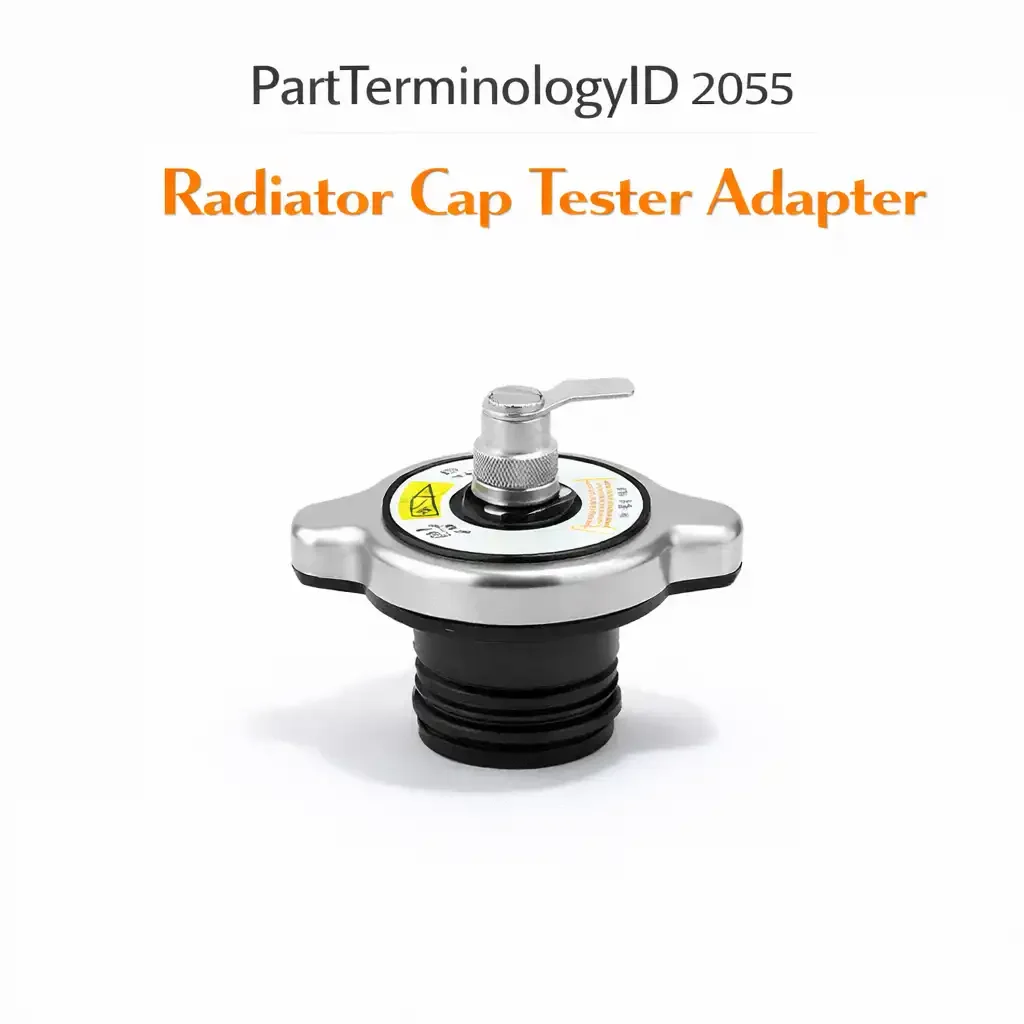
PartTerminologyID 2055, Radiator Cap Tester Adapter, is an adapter used to test a radiator pressure cap off the vehicle. That is all the PartTerminologyID tells you. It does not specify the cap neck diameter the adapter fits, the locking style it requires, whether it connects to a hand pump or a bench tester, or whether it is designed for a standard radiator cap, a coolant reservoir cap, or a filler neck cap on a remote reservoir system. A listing under PartTerminologyID 2055 that does not specify the cap outer diameter and locking style is asking the buyer to guess whether the adapter fits the cap they are holding, the same problem that PartTerminologyID 2054 (Engine Cooling System Pressure Tester Adapter) creates when the neck diameter is missing.
For sellers, the listing under this PartTerminologyID is only useful if it includes the cap outer diameter the adapter accepts and the locking style. Without those two attributes, the return rate is set at the moment the listing goes live.
What the Radiator Cap Tester Adapter Does
The difference between PartTerminologyID 2054 and PartTerminologyID 2055
PartTerminologyID 2054 (Engine Cooling System Pressure Tester Adapter) connects the pump to the vehicle's cooling system with the cap removed. PartTerminologyID 2055 connects the pump to the cap itself so the cap can be tested off the vehicle. These are two different adapters that serve two different functions and fit in two different orientations. The 2054 adapter seals against the radiator neck. The 2055 adapter accepts the cap and pressurizes through it to verify that the cap opens at the correct relief pressure and holds pressure below that threshold. Conflating the two PartTerminologyIDs in a listing is a direct source of returns.
How the radiator cap tester adapter works
The radiator cap is placed onto or into the 2055 adapter. The adapter connects to the pump. Pressure is applied gradually. The cap should hold pressure up to its rated opening pressure (typically 13 PSI to 18 PSI depending on the vehicle) and then vent. If the cap vents below its rated pressure, it is weak and needs replacement. If the cap does not vent at or above its rated pressure, the spring is fatigued or the seal is stuck, and the cap still needs replacement. The adapter makes this test possible without pressurizing the entire cooling system.
Standard radiator cap adapter
The most common configuration. The adapter accepts a traditional radiator pressure cap with a two-lug bayonet seating profile and tests it against a rated pressure. Cap outer diameters for standard radiator caps typically range from 38mm to 54mm. The adapter must match the cap's outer diameter and lug configuration. A 38mm cap will seat loosely and not seal in a 54mm adapter. A 54mm cap will not physically fit a 38mm adapter.
Reservoir cap adapter
On vehicles with a sealed pressurized reservoir, the reservoir cap performs the pressure-holding function and must be tested the same way a traditional radiator cap is tested. Reservoir caps are physically smaller than standard radiator caps and use a different seating profile. A standard radiator cap tester adapter will not accept a reservoir cap without a dedicated insert or a separate adapter sized for the reservoir cap. Listings for PartTerminologyID 2055 that do not distinguish between a radiator cap adapter and a reservoir cap adapter will generate returns on sealed-reservoir vehicles.
Bayonet lug variations
Even within the standard radiator cap category, lug count and lug geometry vary by manufacturer and region. Domestic applications commonly use a two-lug bayonet profile. Some European and Asian applications use a three-lug profile or a threaded cap profile. An adapter that accepts a two-lug bayonet cap will not correctly seat a three-lug or threaded cap. The adapter must match the lug geometry of the cap being tested, not just the outer diameter.
Brand-specific and proprietary cap profiles
Some manufacturers produce caps with proprietary profiles that deviate from the standard two-lug bayonet form. These caps require dedicated tester adapters specific to that profile. A generic adapter listed under PartTerminologyID 2055 without noting which cap profiles it accepts or excludes will be ordered for proprietary-profile caps it cannot accept.
Why This Part Generates Returns
Buyers order the wrong radiator cap tester adapter because:
the listing does not specify the cap outer diameter the adapter accepts, so buyers order based on PSI rating rather than cap size
the cap pressure rating does not determine the cap outer diameter: a 16 PSI cap is available in multiple outer diameters depending on manufacturer
they own a sealed-reservoir vehicle and order a standard radiator cap adapter that will not accept their smaller reservoir cap
the lug count does not match: the adapter is for a two-lug bayonet cap and the buyer has a three-lug or threaded cap
they confuse PartTerminologyID 2055 (cap tester adapter) with PartTerminologyID 2054 (cooling system pressure tester adapter) and order the wrong function entirely
the listing does not state which tester pump brands or handles the adapter is compatible with, so the adapter connection end does not fit the pump the buyer already owns
Status in New Databases
PIES/PCdb: PartTerminologyID 2055, Radiator Cap Tester Adapter
PIES 8.0 / PCdb 2.0: No change
Top Return Scenarios
Scenario 1: "This adapter does not fit my radiator cap"
Outer diameter mismatch. The buyer's cap is 54mm and the adapter accepts a 38mm cap, or the adapter is designed for a large-diameter cap and the buyer's cap is undersized for it.
Prevention language: "Accepts radiator caps with [X]mm outer diameter. Verify your radiator cap outer diameter before ordering. Cap PSI rating does not determine cap outer diameter."
Scenario 2: "I have a reservoir cap, not a radiator cap"
The buyer's vehicle uses a sealed pressurized reservoir. The reservoir cap is smaller and uses a different seating profile than a standard radiator cap. The listing did not specify that the adapter is for standard radiator caps only.
Prevention language: "For standard radiator pressure caps with [X]mm outer diameter. Not for coolant reservoir caps. Sealed-reservoir vehicles require a reservoir cap tester adapter sized for the reservoir cap outer diameter."
Scenario 3: "The lug configuration does not match my cap"
Correct outer diameter but wrong lug geometry. The adapter accepts a two-lug bayonet cap and the buyer has a three-lug cap, or the buyer has a threaded cap that does not engage the adapter lugs at all.
Prevention language: "Compatible with [two-lug / three-lug] bayonet radiator caps. Not compatible with [threaded / alternative lug profile] caps. Verify your cap lug count and profile before ordering."
Scenario 4: "This adapter does not fit my pressure tester pump"
The pump connection end of the adapter is not compatible with the buyer's existing tester pump handle. The adapter seals the cap correctly but cannot attach to the pump.
Prevention language: "Compatible with [brand / model] pressure tester pump handles. Verify pump handle compatibility before ordering if purchasing as a replacement or expansion adapter."
Scenario 5: "I needed the system adapter, not the cap adapter"
The buyer needed PartTerminologyID 2054 to pressurize the cooling system with the cap removed. They received PartTerminologyID 2055, which tests the cap off the vehicle. The two functions are different and the listing did not make the distinction clear.
Prevention language: "This adapter tests the radiator cap off the vehicle by connecting the cap directly to the pump. It does not pressurize the cooling system. To pressure test the cooling system with the cap removed, use a cooling system pressure tester adapter (for the vehicle neck) sold separately."
What to Include in the Listing
Core essentials
PartTerminologyID: 2055
component: Radiator Cap Tester Adapter
cap application: standard radiator cap, coolant reservoir cap (mandatory)
cap outer diameter accepted in mm (mandatory)
lug configuration: two-lug bayonet, three-lug bayonet, threaded
compatible tester pump brand and model
material: aluminum, brass, reinforced plastic
quantity: 1 or specify if sold as part of a set
Fitment essentials
cap outer diameter range accepted in mm
lug count and lug geometry
cap pressure rating range the adapter can test (PSI or bar)
compatible pump handle brand and connection type
market application: domestic, European, Asian
Dimensional essentials
cap seating bore diameter in mm (the opening the cap seats into)
adapter outer diameter in mm
adapter height in mm
sealing surface type: rubber O-ring, flat gasket, conical seat
pump connection type: threaded, push-fit, quick-connect
Image essentials
adapter in isolation with dimensional callouts showing bore diameter, outer diameter, and height
radiator cap seated in the adapter showing the lug engagement and seal contact
adapter connected to pump handle showing the full test assembly
close-up of the pump connection end showing thread or quick-connect detail
Catalog Checklist for ACES/PIES Teams
PartTerminologyID = 2055
require cap application attribute: standard radiator cap or reservoir cap (mandatory, non-negotiable)
require cap outer diameter accepted in mm
require lug configuration with lug count
require compatible pump brand and model
require market application: domestic, European, or Asian
require quantity: single adapter or set
differentiate from PartTerminologyID 2054 (Engine Cooling System Pressure Tester Adapter): 2054 connects to the vehicle neck with the cap removed, 2055 accepts and tests the cap off the vehicle
differentiate from radiator cap (operating part): this is the test tool adapter, not the replacement cap
flag that cap PSI rating does not determine cap outer diameter or lug profile
FAQ (Buyer Language)
How do I know which radiator cap tester adapter I need?
Remove the radiator cap from the vehicle and measure its outer diameter. Note the lug count and profile (two-lug bayonet is the most common domestic configuration). Match the outer diameter and lug profile to the adapter specification. Do not select the adapter based on the cap PSI rating alone. The same PSI rating appears on caps of different diameters depending on the manufacturer.
Can I use the radiator cap tester adapter to pressure test the cooling system?
No. PartTerminologyID 2055 tests the cap off the vehicle by pressurizing through the cap itself. It does not seal against the radiator neck. To pressure test the cooling system with the cap removed, you need PartTerminologyID 2054 (Engine Cooling System Pressure Tester Adapter), which seals against the neck opening.
My vehicle has a sealed coolant reservoir and no traditional radiator cap. What adapter do I use?
A reservoir cap tester adapter sized for your reservoir cap outer diameter. The reservoir cap on a sealed system is the pressure-bearing cap and must be tested the same way. Reservoir caps are physically smaller and use a different seating profile than standard radiator caps. A standard radiator cap adapter will not correctly seat a reservoir cap.
How do I know if my radiator cap is bad based on the test?
Apply pressure slowly. The cap should hold pressure up to its rated opening pressure and then vent. If it vents below the rated pressure, the spring is weak and the cap cannot maintain system pressure. If it does not vent at or near the rated pressure, the spring is stuck or overstressed. In either case, replace the cap. A cap that passes both conditions holds pressure below its rating and vents at its rating, and it is serviceable.
Can I test any brand of radiator cap with a universal adapter?
Only if the cap outer diameter and lug profile match the adapter specification. Caps described as universal typically refer to the most common domestic two-lug bayonet profile at 38mm or 54mm. European and Asian caps frequently use different diameters and lug profiles and require adapters specified for those markets.
Cross-Sell Logic
Radiator Cap (PartTerminologyID varies by cap type: if the cap fails the tester, the replacement cap is the immediate next purchase)
Coolant Reservoir Cap (if the reservoir cap fails testing on a sealed-reservoir vehicle)
Engine Cooling System Pressure Tester Adapter (PartTerminologyID 2054: test the cap with the 2055 adapter, then test the system with the 2054 adapter to confirm no leaks elsewhere)
Radiator Hose, upper and lower (if system pressure testing with PartTerminologyID 2054 reveals hose leaks after the cap tests good)
Thermostat Housing Gasket (revealed by follow-on system pressure test after confirming the cap is serviceable)
Water Pump (inspect weep hole during follow-on system pressure test)
Frame as "test the cap first, then test the system. If the cap passes, the 2054 adapter pressure tests the system. If the system holds pressure and the cap is good, the leak is elsewhere and the cross-sell parts address the most common leak locations."
Final Take for PartTerminologyID 2055
Radiator Cap Tester Adapter (PartTerminologyID 2055) is a specific tool component with a narrow function: it accepts a radiator pressure cap and connects it to a pump so the cap can be tested off the vehicle. Despite the narrow function, the PartTerminologyID does not communicate the cap outer diameter, the lug profile, the compatible pump, or whether the adapter works on standard radiator caps, reservoir caps, or both. Without those attributes, the listing does not give the buyer enough information to order correctly.
State the cap outer diameter. State the lug configuration. State the compatible pump. Distinguish this adapter from PartTerminologyID 2054, which serves a different function on the same vehicle. That is the same listing strategy as PartTerminologyID 2052 (Transmission Clutch Spring) and PartTerminologyID 2054 (Engine Cooling System Pressure Tester Adapter): the generic PartTerminologyID requires specific fitment attributes to become a listing buyers can act on without guessing.