
Tow Bar (PartTerminologyID 1200): Connection Types, Safety Ratings, and Catalog Accuracy
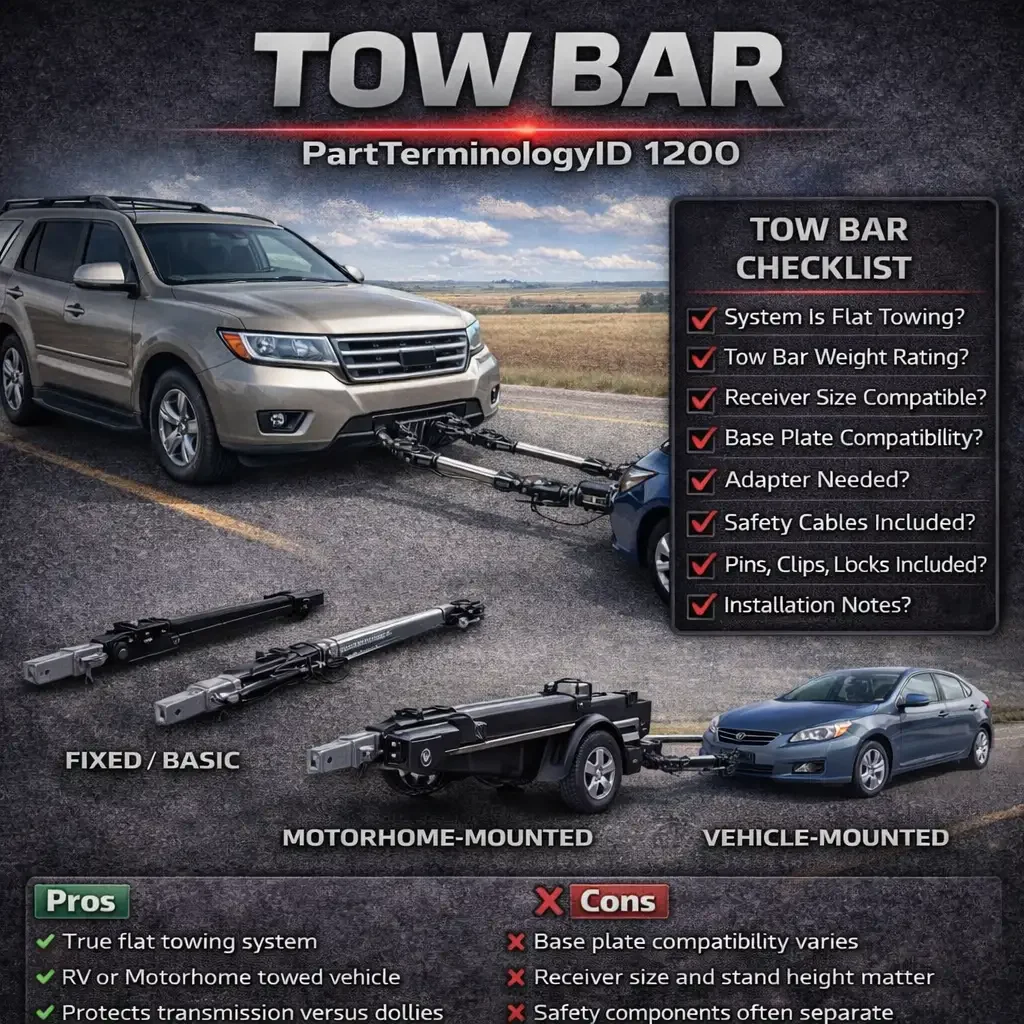
Tow Bar is one of those part names that looks simple in a catalog and becomes complicated the moment a buyer tries to install it.
It is also a category where the cost of a catalog mistake is high.
When a buyer orders the wrong Tow Bar, the problem is not just a return. It often creates a full install failure because Tow Bars depend on matching components, correct ratings, and the right connection style. If the listing is vague, the buyer may end up with a product that cannot connect to their base plate, does not match their motorhome receiver setup, or is not rated correctly for the towed vehicle.
That is why PartTerminologyID 1200 needs a disciplined catalog approach.
For most aftermarket retail use, Tow Bar usually refers to a flat towing tow bar system used to tow a vehicle behind a motorhome. It is not the same thing as a trailer hitch, ball mount, draw bar, or tow hook. That naming confusion alone causes a lot of wrong orders.
This PartsAdvisory guide is built for catalog teams, marketplace sellers, and e-commerce operators who want to classify Tow Bars correctly, present the right fitment and safety details, and reduce avoidable returns.
What a Tow Bar Usually Means in the Aftermarket
In most aftermarket contexts, a Tow Bar is a towing connection assembly used for flat towing a vehicle behind another vehicle, commonly behind an RV or motorhome.
It typically connects:
The towing vehicle receiver side
To a mounting system or base plate on the towed vehicle
Tow Bars can differ significantly in:
Connection style
Weight rating
Storage/folding behavior
Compatibility with base plate systems
Included safety components
Tow Bar is usually not:
A trailer hitch receiver
A ball mount or hitch draw bar
A tow hook
A recovery shackle mount
A trailer hitch accessory by itself
This distinction needs to be obvious in the listing because buyers often use broad search terms like towing bar, tow hitch bar, or hitch tow bar.
Why Tow Bar Creates Catalog Confusion
Tow Bar is a high-confusion term because buyers often mix it with other towing parts that look related but do very different jobs.
Common naming confusion
Tow Bar gets mixed up with:
Trailer hitch
Ball mount
Draw bar
Tow hook
Tow strap
Base plate
Tow bar mount brackets
A listing that says Tow Bar but uses a generic hitch image or vague copy can pull in the wrong buyer.
Component system confusion
Tow Bars rarely work as a standalone purchase for new installations. Buyers often also need:
Vehicle-specific base plate or mounting brackets
Safety cables
Electrical wiring for lights
Pins and clips
Lock kits
Auxiliary braking components depending on the setup
If the listing does not explain what is included and what is required separately, the order may be technically correct but still feel wrong to the buyer.
Rating confusion
Tow Bars are not one-size-fits-all. Weight rating is critical.
A buyer may choose by price or brand, but if the Tow Bar rating does not match the towed vehicle requirements and system setup, the product is not a safe or acceptable match.
That is why rating and compatibility details should sit near the top of the listing, not buried in long descriptions.
Status in New Databases
Status in New Databases
PartTerminologyID: 1200
Terminology Name: Tow Bar
Current: PIES 7.2 + PCdb
Future: PIES 8.0 + PCdb 2.0
Status: No change
The terminology remains stable. The improvement opportunity is in how you structure Tow Bar records with clear system compatibility, weight ratings, and included component details.
Pros and Cons for Buyers and Sellers
Tow Bar is an accessory-type category, so a Pros and Cons section is useful for buyer education and catalog clarity.
Pros
Strong solution for flat towing setups when matched correctly
High-intent category with buyers usually ready to purchase
Good attachment category with base plates, wiring, locks, and safety components
Premium models support strong margins
Clear fitment and system details can significantly reduce returns
Cons
Buyers often confuse Tow Bar with hitch, draw bar, or tow hook parts
Wrong system matching causes install failures, not just minor returns
Weight rating and connection style mistakes create serious compatibility issues
Listings that do not clarify included vs required components generate support tickets
Brand-specific base plate compatibility can be overlooked if catalog data is weak
This category rewards precise cataloging more than almost any other towing-related accessory.
Core Tow Bar Types and Why They Need Separate Catalog Handling
If your catalog treats all Tow Bars as a single generic type, buyer confusion increases fast. Tow Bars need style and connection details visible in structured attributes and listing copy.
1) Fixed or Basic Tow Bars
These are simpler Tow Bar designs with less convenience and fewer premium features.
Common characteristics:
More basic mechanical design
Lower cost entry point
May require more precise alignment during hookup
Often fewer convenience features
Common confusion:
Buyer expects easy self-centering hookup
Buyer assumes same release behavior as premium models
Buyer assumes all necessary adapters are included
Catalog details that matter:
Weight rating
Connection style
Required adapters
Included hardware
Storage behavior
2) Self-Aligning Tow Bars
These are popular because they are easier to connect and position during hookup.
Common characteristics:
Easier hookup in real-world use
Better user experience for frequent towing
Common premium feature category
Common confusion:
Buyer sees “self-aligning” and assumes universal compatibility
Buyer expects all base plate tabs and adapters to fit
Buyer assumes lock kits and cables are included
Catalog details that matter:
Self-aligning yes or no
Base plate connection compatibility
Included component list
Weight rating
Receiver-side connection type
3) Motorhome-Mounted Tow Bars
These mount to the towing vehicle receiver and store on the towing side when disconnected.
Common characteristics:
Common in modern RV flat towing setups
Cleaner storage and handling for many users
Popular with repeat RV buyers
Common confusion:
Buyer expects the same mounting style as vehicle-mounted systems
Buyer does not check receiver size compatibility
Buyer assumes the bar includes all pins and safety equipment
Catalog details that matter:
Motorhome-mounted classification
Receiver size compatibility
Storage/folding position
Included pins, clips, and cables
4) Vehicle-Mounted Tow Bars
These mount to the towed vehicle side and may differ in storage and connection behavior.
Common characteristics:
Different install and storage workflow
May appeal to specific legacy or budget setups
Common confusion:
Buyer assumes it stores and operates like motorhome-mounted models
Buyer does not verify the mounting hardware system
Catalog details that matter:
Vehicle-mounted classification
Required bracket/base plate setup
Included hardware
Weight rating
Connection method
5) Non-Binding or Easy-Release Tow Bars
A common premium feature category in buyer decision-making.
Common characteristics:
Easier release after towing
Better user experience on uneven ground or loaded setups
Often marketed heavily by brand
Common confusion:
Buyer assumes all Tow Bars have similar release behavior
Buyer buys entry-level unit expecting premium release performance
Catalog details that matter:
Non-binding or easy-release feature yes or no
Operating notes if provided
Premium feature tags for search and comparison
Weight Ratings and Safety Capacity Are Not Optional Fields
Tow Bar listings fail when rating data is hidden or incomplete.
A Tow Bar should not be merchandised like a cosmetic accessory. Buyers need rating information immediately.
Rating fields that matter
Maximum towing weight rating
Product-specific safety rating language from manufacturer
Safety cable rating if included
Any stated system limitations
Common buyer mistake
Buyer shops by brand or price and ignores vehicle weight and setup.
Catalog best practice
Put the weight rating in:
Structured attributes
Title or top bullets when appropriate
Product description
Comparison filters if your site supports them
If the Tow Bar rating is missing from the listing, the listing is not ready to publish.
Connection Compatibility and System Matching
This is the most important technical section for PartTerminologyID 1200.
Tow Bars are system products. The Tow Bar itself is only one piece of the flat towing setup. The catalog must make that clear.
Receiver-side compatibility
Buyers need to confirm:
Receiver size compatibility
Mounting style
Adapter requirements if any
A common return occurs when the buyer assumes all motorhome receivers and Tow Bar shanks match directly.
Base plate or mounting compatibility
Tow Bars often need:
Brand-specific adapters
Direct compatibility with certain base plate systems
Specific tab or lug connection styles
This is one of the biggest causes of confusion because buyers may already own a base plate and only need the Tow Bar. If your listing does not help them confirm compatibility, they may buy the wrong product.
Adapter and connector confusion
Many Tow Bar systems have optional or required adapters depending on:
Base plate brand
Connection tabs
Receiver configuration
Height alignment setup
Catalog best practice:
Clearly separate what is:
Included
Optional
Required separately
If possible, include a compatibility note such as:
Compatible with select base plate systems with adapter (if supported by manufacturer details)
Height Alignment and Level Towing Details
This is a frequent install issue and is often missed in listings.
Tow Bars generally perform best when the towing setup is within an acceptable level range between towing vehicle and towed vehicle connection points. Buyers may need rise/drop adapters depending on vehicle combination.
Common buyer problem
Buyer installs the Tow Bar and discovers the setup height mismatch is too large.
Catalog best practice
Do not overcomplicate the listing, but include a practical note:
Height alignment may require a rise/drop adapter depending on vehicle setup
This is a small line that prevents a lot of post-sale confusion.
Materials, Finish, and Corrosion Resistance
Tow Bars are functional products, but materials and finish still matter for durability and buyer trust.
Common material and finish considerations
Steel construction
Powder-coated finish
Corrosion-resistant coatings
Heavy-duty arm construction
Protective boots or covers on moving points in some designs
What buyers care about
Long-term durability
Weather exposure resistance
Brand quality perception
Maintenance expectations
Catalog best practice
Use clear manufacturer-backed material and finish language. Avoid generic phrases like “heavy duty” unless you also provide actual rating and construction details.
Included Components vs Required Components
Tow Bar returns often happen because the buyer assumes the kit is complete.
Some products include:
Tow Bar assembly
Safety cables
Pins and clips
Wiring items
Storage covers
Locks
Other products include only the Tow Bar itself.
Catalog best practice
Use a clear Contents Included block in plain language. Also add a Required Components Not Included note when appropriate.
Example structure in listing copy:
Includes Tow Bar and pins
Safety cables sold separately
Base plate required for vehicle-specific installation
Electrical wiring kit not included
That level of clarity reduces support tickets and return requests.
Compatibility Checklist for Tow Bar Buyers
This checklist belongs high on the page for this category.
Compatibility Checklist
Confirm your setup is flat towing and not a trailer hitch or ball mount application
Confirm the Tow Bar weight rating matches your towed vehicle setup
Confirm receiver-side compatibility and receiver size
Confirm base plate or vehicle mounting system compatibility
Confirm whether any adapters are required
Confirm whether the Tow Bar is motorhome-mounted or vehicle-mounted
Confirm whether you want self-aligning and non-binding release features
Confirm safety cables are included or purchase separately
Confirm pins, clips, and lock hardware included vs optional
Confirm whether you need a rise/drop adapter for level towing setup
Confirm finish and corrosion resistance features for your climate/use
Read all installation and compatibility notes before ordering
This checklist does a lot of work for RV and towing buyers who are comparing products quickly.
Catalog Checklist for Structured Data and Attributes
PartTerminologyID 1200 needs strong catalog discipline. A simple title and fitment line is not enough.
Catalog Checklist
Use PartTerminologyID 1200 and exact term Tow Bar
Add a required Tow Bar Type attribute (basic, self-aligning, motorhome-mounted, vehicle-mounted, etc.)
Populate maximum towing weight rating
Populate receiver-side compatibility details
Populate mounting classification (motorhome-mounted or vehicle-mounted)
Add base plate compatibility notes or adapter requirements
Populate self-aligning yes or no
Populate non-binding / easy-release yes or no if applicable
Populate material and finish
Populate corrosion-resistant coating details if supplied
Populate includes safety cables yes or no
Populate includes pins/clips yes or no
Populate includes lock kit yes or no
Add a plain-language Contents Included field
Add a plain-language Required Components field
Add a height alignment note for rise/drop adapter needs where appropriate
Use images that show the actual Tow Bar style and connection ends clearly
Include at least one product-only image and one installed-view image if available
A strong internal QA rule for Tow Bars is simple. If rating, mount type, and compatibility notes are missing, the listing should not publish.
Common Buyer Scenarios and How to Prevent Returns
Scenario 1: Buyer thought this was a trailer hitch part
They searched “tow bar” and ordered a flat towing Tow Bar for a trailer towing need.
Prevention: Put “Flat Towing Tow Bar” in the title or first bullet and clarify it is not a ball mount or trailer hitch.
Scenario 2: Buyer ordered the wrong rating
They chose by price and brand, not weight capacity.
Prevention: Put the Tow Bar weight rating in visible bullets and attributes, not hidden specs only.
Scenario 3: Buyer already has a base plate but the Tow Bar does not connect
The listing did not explain compatibility or adapter requirements.
Prevention: Add base plate compatibility notes and clearly identify adapter requirements.
Scenario 4: Buyer expected safety cables and pins in the box
The listing did not show contents clearly.
Prevention: Add a visible contents list and a required-components note.
Scenario 5: Buyer expected easy hookup and release, but ordered a basic unit
They assumed all Tow Bars perform the same.
Prevention: Call out self-aligning and non-binding features clearly so premium and entry-level units do not look identical.
Scenario 6: Buyer installs the Tow Bar and discovers height mismatch
The setup needs a rise/drop adapter to level the connection.
Prevention: Add a short alignment note near the compatibility section.
Scenario 7: Buyer expected lockable hardware included
They saw “security” or “lockable” wording in brand marketing but no locks were included.
Prevention: Add “Lock kit included: Yes/No” in the listing bullets or spec block.
Naming Best Practices for Listings
In the catalog record
Use the exact term:
Tow Bar
In listing titles
Add the high-value qualifiers that prevent confusion:
Tow Bar for Flat Towing, Self-Aligning, [Weight Rating]
RV Tow Bar, Motorhome-Mounted, Non-Binding Release, [Weight Rating]
Flat Towing Tow Bar, [Weight Rating], Safety Cables Included
In product descriptions
Use one clear expectation-setting line:
“This listing is for a flat towing Tow Bar only. Base plate compatibility and additional components may be required depending on your setup.”
That one sentence prevents a large number of wrong orders.
FAQ
Is a Tow Bar the same as a trailer hitch or ball mount?
No. In most aftermarket retail use, a Tow Bar refers to a flat towing connection system, not a trailer hitch ball mount or draw bar.
Does a Tow Bar include everything I need to tow a vehicle?
Not always. Many setups also require a vehicle-specific base plate, safety cables, wiring components, and other accessories.
What is the biggest mistake buyers make with Tow Bars?
The most common mistake is not confirming system compatibility, especially base plate compatibility and required adapters.
Why is the Tow Bar weight rating so important?
Because the Tow Bar must be rated for the towed vehicle setup. Rating is a core safety and compatibility requirement, not a minor feature.
What does self-aligning mean on a Tow Bar?
It generally refers to a design that helps make hookup easier and less exacting during connection, especially in real-world positioning.
What does non-binding release mean?
It usually means the Tow Bar is designed to release more easily after towing, even when the vehicles are not perfectly positioned.
Are all Tow Bars motorhome-mounted?
No. Some are motorhome-mounted and some are vehicle-mounted. The listing should clearly state the mounting classification.
Do I need to match the Tow Bar to my base plate brand?
Often yes, or you may need an adapter. Compatibility details should be checked before ordering.
Do Tow Bars include safety cables?
Some do and some do not. Always check the contents included section.
What catalog fields matter most for Tow Bar?
Tow Bar type, weight rating, mounting classification, receiver compatibility, base plate compatibility, and contents included are the most important fields.
Final Takeaway for Catalog Teams and Sellers
PartTerminologyID 1200 Tow Bar is a strong category, but only if the listing explains the system, not just the product name.
Tow Bars are not simple one-piece purchases for many buyers. They depend on:
Correct weight rating
Correct connection style
Correct mounting classification
Correct compatibility with base plates and adapters
Clear included vs required component details
If your catalog captures those details and your listing presents them clearly, Tow Bars become a high-confidence category instead of a costly return category.