
Tail Light Guard (PartTerminologyID 1164): Naming, Variants, and Catalog Best Practices
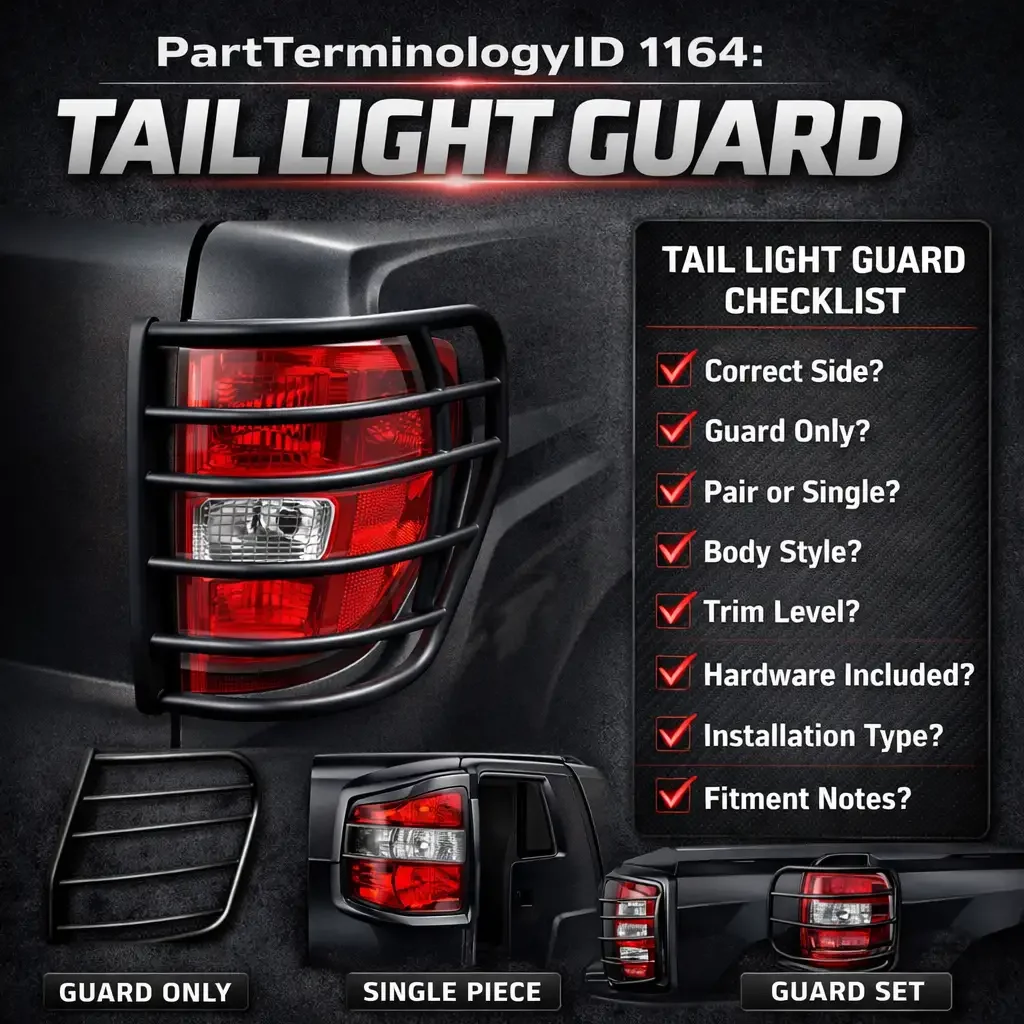
A small accessory term that creates big fitment and expectation problems
Tail Light Guard looks like an easy catalog term. It is not.
In the aftermarket, this part sits right next to several other rear lighting terms that buyers and even some suppliers mix together. Tail Light Cover. Tail Lamp Lens. Tail Lamp Bezel. Tail Light Assembly. Rear Lamp Protector. The names sound close, but the products are very different.
That is why PartTerminologyID 1164 deserves a clean, buyer-safe catalog strategy.
If your team sells truck, SUV, off-road, fleet, or styling accessories, Tail Light Guard is one of those terms that can quietly create avoidable returns. The buyer sees a photo around the lamp area and assumes the lamp is included. Or they assume the part is universal. Or they order a pair when the listing is for one side only.
This post is the practical guide for catalog teams, marketplaces, and sellers who want to keep Tail Light Guard listings accurate, searchable, and return resistant.
What a Tail Light Guard Usually Means
A Tail Light Guard is typically a protective or decorative component that mounts over or around the tail lamp area. It is not usually the tail lamp itself.
Depending on the product line, a Tail Light Guard may be:
A metal protective guard for trucks, Jeeps, and off-road vehicles
A molded plastic protector or trim style overlay
A side specific guard for the left or right lamp
A pair of guards sold together
A bolt-on accessory that uses existing mounting points
A version that requires drilling or added hardware
The key issue is that buyers often search for tail light parts broadly. They may type “tail light” when they actually need an assembly. If your listing is a guard, your content must make that clear immediately.
Why Tail Light Guard Creates Catalog Confusion
This part category fails when the catalog only captures the term and not the context.
The naming confusion
Tail Light Guard is often confused with:
Tail Light Cover
Tail Lamp Lens
Tail Lamp Trim
Tail Light Housing
Tail Light Assembly
Rear Lamp Protector
Some brands use “guard” and “cover” loosely in marketing copy. That creates problems if your catalog team mirrors supplier wording without reviewing the actual product.
A guard is usually a protective accessory or overlay. A cover may refer to a lens or cosmetic piece. An assembly is the full light unit. If those get mixed in your listings, your return rate climbs fast.
The fitment confusion
Tail Light Guards often look simple, but fitment is not always simple.
Common fitment differences include:
Left side vs right side
Sold individually vs sold as a pair
Trim package differences
Body style differences
Model year refreshes with different lamp shapes
Attachment style differences
Even one small shape change in the tail lamp can make a guard unusable.
Status in New Databases
Status in New Databases
PartTerminologyID: 1164
Terminology Name: Tail Light Guard
Current: PIES 7.2 + PCdb
Future: PIES 8.0 + PCdb 2.0
Status: No change
The terminology remains stable, which is good. It gives catalog teams a chance to standardize naming and attributes now so marketplace content stays consistent through database updates.
The Biggest Return Causes for Tail Light Guard
Most returns in this category are not defects. They are expectation mismatches.
1) Buyer thought the lamp assembly was included
This is the most common issue. The buyer sees a rear light photo and assumes it is a complete replacement light.
Prevention: Put “Guard Only” in the title and the first bullet. Repeat it in the description.
2) Buyer expected two guards but listing was for one
Some suppliers package single sides. Others sell pairs. If the quantity is not obvious, you get messages and returns.
Prevention: Clearly state “Sold Individually” or “Sold as a Pair” in title and bullets.
3) Wrong side ordered
Listings that only use LH or RH get missed by buyers.
Prevention: Spell out Driver Side (Left) or Passenger Side (Right).
4) Wrong vehicle variant
The model year may match, but the trim, body style, or refresh does not.
Prevention: Use full fitment qualifiers and notes. Year, make, and model alone is not enough in many cases.
5) Buyer expected no-drill installation
Some guards mount to existing holes. Others require drilling.
Prevention: Add installation notes to the listing and attribute set.
Compatibility Checklist for Buyers
This is the section I recommend placing in your product page bullets or description block. It helps prevent the “looked right in the photo” purchase mistake.
Compatibility Checklist
Confirm year, make, and model
Confirm body style and trim if listed
Confirm driver side, passenger side, or pair
Confirm the listing is Tail Light Guard only, not the lamp assembly
Confirm whether hardware is included
Confirm attachment style and whether drilling is required
Compare your tail lamp shape to the listing image
Check fitment notes for special editions or package restrictions
Verify the finish you want, such as black, chrome, or stainless
Read the quantity statement before ordering
If your buyers are mostly marketplace shoppers, this checklist does a lot of work that your customer service team would otherwise handle later.
Catalog Checklist for Structured Data and Attributes
Tail Light Guard needs clean structured data because title-only listings are too vague.
Catalog Checklist
Use PartTerminologyID 1164 with the exact term Tail Light Guard
Do not group it with Tail Light Assembly products
Do not merge it with Tail Light Cover records unless the supplier truly uses the same physical product and your merchandising rules support it
Populate Position (Left, Right, Rear) where applicable
Populate Quantity Sold (Individual or Pair)
Populate Material (steel, stainless, ABS, etc.)
Populate Finish (black powder coat, chrome, polished, etc.)
Populate Installation Type or attachment method
Add Hardware Included yes or no
Add a clear Contents Included note in buyer-facing content
Add Body Style / Trim / Submodel qualifiers where lamp shape differs
Use product images that show exactly what the buyer receives
Add search synonyms in description copy, but keep the part type accurate in your catalog record
A good internal QA rule is to flag all lighting accessory records that contain “guard,” “cover,” or “protector” for content review before publishing to marketplaces.
Common Buyer Scenarios and How to Prevent Problems
Scenario 1: “I thought this was the whole tail light”
This happens when the title starts with “Tail Light” and the image crops tightly around the rear lamp.
What to do: Use “Tail Light Guard” as the exact part type and add “Guard Only” in the title. Include a second image showing the guard separate from the lamp area if possible.
Scenario 2: “These do not fit my trim”
Same model year, different trim package, different lamp shape.
What to do: Use submodel and trim-level fitment, and call out restrictions in the first few bullets, not only in hidden fitment notes.
Scenario 3: “I only got one”
The buyer expected both sides.
What to do: State quantity in three places: title, bullets, and description. Marketplace buyers skim. Redundancy helps.
Scenario 4: “I do not want to drill”
The buyer expected a simple clip-on install.
What to do: Add a plain installation note. Example: “Uses existing mounting points” or “Drilling required for installation.”
Scenario 5: “Photo looked different from what I got”
A generic image was used across multiple variants.
What to do: Use variant-specific images when possible. At minimum, use an image set that matches side, finish, and shape.
Naming Best Practices for Tail Light Guard Listings
Your catalog should stay precise, and your listing copy should stay buyer-friendly.
In the catalog record
Use the exact term:
Tail Light Guard
In the listing title
Add qualifiers that remove ambiguity:
Tail Light Guard, Driver Side, Black, Guard Only
Tail Light Guard Set, Pair, Stainless, Rear Lamp Protector
Tail Lamp Guard, Passenger Side, Hardware Included
In the product description
Use a short clarification line:
“This listing is for the tail light guard accessory only. Tail lamp assembly is not included.”
That one sentence can save you from a large portion of avoidable returns.
FAQ
Is a Tail Light Guard the same as a tail light cover?
Not always. A Tail Light Guard is usually a protective or decorative accessory over or around the lamp area. A Tail Light Cover may refer to a different component, depending on the brand and product design.
Does a Tail Light Guard include the actual tail light assembly?
Usually no. Most Tail Light Guard listings are for the guard accessory only. Always check the contents included.
Are Tail Light Guards sold in pairs?
Sometimes. Some listings are sold individually by side, and others are sold as a pair. The listing should clearly state quantity.
Do Tail Light Guards fit all trims of the same vehicle model?
Not always. Tail lamp shape can vary by trim, body style, and model year refresh. Fitment notes matter.
Do Tail Light Guards require drilling?
It depends on the product. Some use factory mounting points, and some require drilling. This should be clearly stated in the listing.
What is the most important catalog field for Tail Light Guard besides fitment?
Quantity Sold is one of the most important. It prevents a lot of buyer confusion and return requests.
Final Takeaway for Catalog Teams and Sellers
PartTerminologyID 1164 Tail Light Guard is a simple term with a high risk of buyer misunderstanding if your catalog data is thin.
The best results come from three things:
Precise terminology in your product classification
Clear buyer messaging about what is included
Strong variant and fitment qualifiers for side, quantity, trim, and installation
When your catalog and listing content do that well, Tail Light Guard becomes an easy accessory category instead of a customer service problem.