
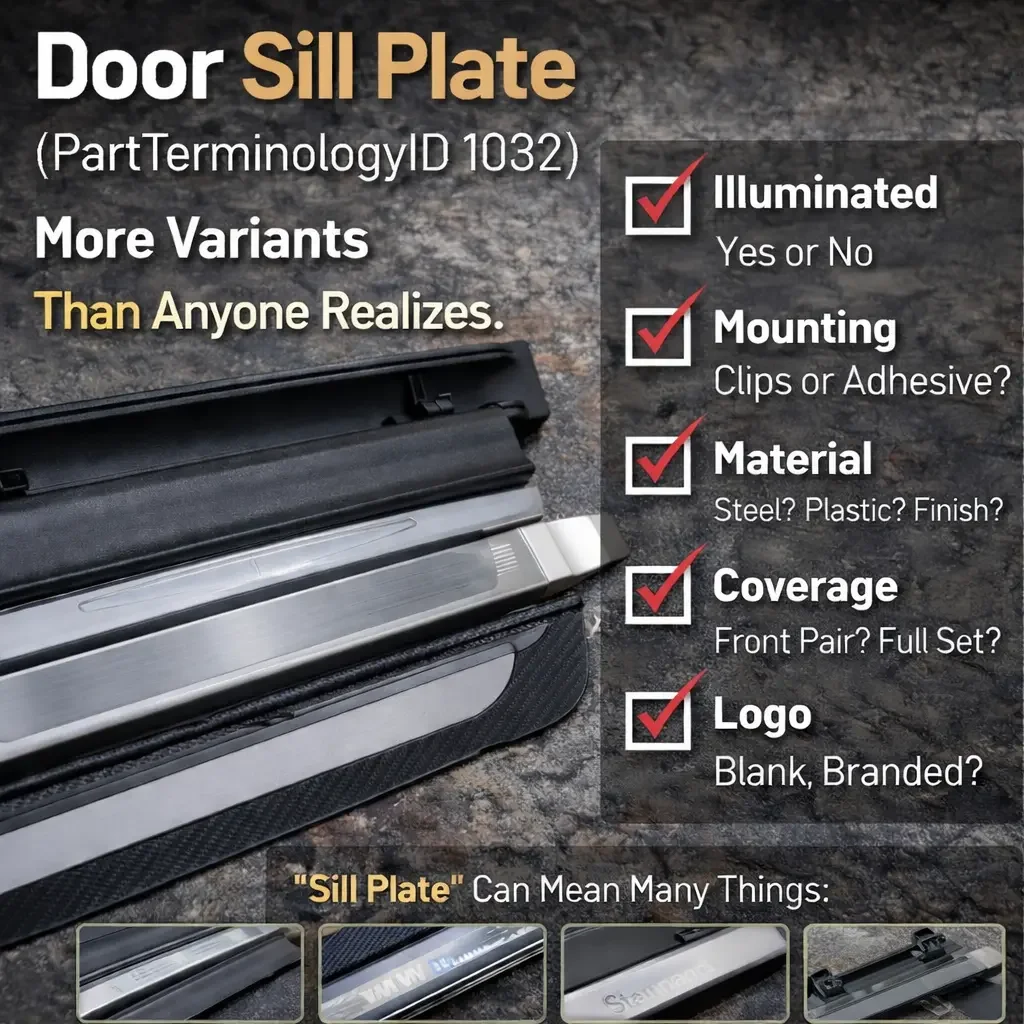
Door sill plates should be simple. They are not.
Customers call them scuff plates, door sills, step plates, entry trim, rocker plates, and sometimes they confuse them with rocker panel moldings entirely. Sellers often list them like a generic accessory.
Then the returns happen. Wrong door count. Wrong shape. Wrong finish. Wrong logo. Wrong lighting. Wrong mounting. Missing clips. Adhesive version sent when the vehicle needs clip-in, or the other way around.
This post is the practical guide for Door Sill Plate in PCdb PartTerminologyID 1032.
Status in New Databases (ID 1032)
Feature: Current (PIES 7.2 / PCdb) -> Future (PIES 8.0 / PCdb 2.0)
PartTerminologyID: 1032 -> 1032 (No change)
Terminology Name: Door Sill Plate -> Door Sill Plate
What a door sill plate actually is
A door sill plate is the trim piece at the lower door opening that protects the painted threshold from shoes, dirt, and cargo scuffs. Depending on the vehicle, it can be:
a thin trim cover that snaps in or sticks on
a larger molded step plate that wraps the threshold
a metal scuff plate insert inside a larger plastic surround
an illuminated sill that ties into interior lighting circuits
a branded plate with model name, trim name, or logo
The first catalog mistake is not defining which kind it is.
The option universe for Door Sill Plates
This is where the category gets big. Here are the variants buyers actively shop for.
Standard vs illuminated
Standard, no wiring
Illuminated with LED strip
Illuminated with logo projection or etched logo lighting
OEM style illumination with connector, harness, and resistor modules
Aftermarket illumination that is universal and spliced
Illuminated versions need a wiring story. If the listing does not explain how it connects, customers assume plug and play.
Material and finish
Stainless steel
Brushed stainless
Polished stainless
Aluminum
Painted plastic
Textured plastic
Rubberized step surface
Carbon fiber look overlays
Real carbon fiber trim, less common
Chrome finish, often disliked when it does not match OEM
Finish mismatch is a top return driver because this part is visible every time you open the door.
Branding and styling
Blank, no logo
OEM style model name
Trim name, like Sport, Limited, M, AMG, S line, etc
Logo insert plates
Replaceable badge inserts
Lighted logo plates
If your listing shows a logo in the photo, customers expect that exact logo in the box.
Mounting method
Clip-in, OEM style retention clips
Screw-mounted, less common but exists
Adhesive tape mounted, common for overlay style
Mixed mounting, clips plus tape
Requires reusing OEM clips, or includes new clips
Mounting is the difference between a five minute install and a return.
Coverage and selling unit
Front left only
Front right only
Rear left only
Rear right only
Front pair
Full set, four piece
Set plus hardware
Set plus wiring harness for illuminated kits
Customers do not want to decode “quantity” from a part number. Spell it out.
Vehicle architecture differences
2 door vs 4 door
SUV front and rear sill shapes differ widely
Sliding door sills on vans
Crew cab vs extended cab sills on trucks
Step plates integrated into running board systems on some platforms
Door count and body style matter more than people think.
The buyer expectation gap: “sill plate” vs “rocker trim”
A door sill plate is inside the door opening. A rocker molding is external body trim. They get confused constantly, especially in marketplaces.
If your title and photos do not show the part installed at the threshold, you will sell the wrong thing to the right customer.
The attributes that should be mandatory
If you want to reduce returns, these are the fields you should treat as mandatory for PartTerminologyID 1032:
Position: front left, front right, rear left, rear right
Set size: single, pair, full set
Door count and body style compatibility
Material: stainless, plastic, rubber, composite
Finish: brushed, polished, textured, painted
Color: black, silver, body color, other
Illuminated: yes or no
If illuminated, wiring included: yes or no
If illuminated, connector type or splice required
Logo or text: blank, model name, trim name, custom
Mounting method: clip-in, adhesive, screw, mixed
Hardware included: clips, screws, tape, yes or no
Notes: reuse OEM clips, requires removal tool, surface prep required
If you cannot express these in item specifics, put them in your bullets. Do not hide them.
Catalog checklist for PartTerminologyID 1032
Define what it is
Interior threshold trim. Not rocker molding. Not running board.Lock down position and set size
Single piece vs pair vs full set. Front vs rear.Capture mounting method explicitly
Clip-in and adhesive overlay are not interchangeable.Make illumination a hard split
If it has wiring, it is a different product family from a standard plate.Be precise about material and finish
This is a visible trim part. Customers care about match.Call out logo expectations
If it is blank, say blank. If it is branded, specify exactly what it says.List box contents like a bill of materials
Clips, tape, wiring, connectors. If not included, say so.
The three most common listing mistakes
Mistake 1: Quantity ambiguity
Customer wanted a set of four, they receive one piece.
Mistake 2: Illuminated confusion
Customer expects plug and play. They receive a universal splice kit, or no harness at all.
Mistake 3: Mounting mismatch
Overlay tape version sold to a customer who needed clip-in OEM style trim.
Quick FAQ
Are door sill plates universal?
Most are not. Shape, length, and mounting points vary by body style, door count, and trim.
Do illuminated sills require wiring?
Yes. Some are OEM style with connectors. Others are universal and require splicing. Your listing should state which.
Will adhesive sill plates stay on?
They can, if the surface is clean and the tape is quality. But customers need honest prep instructions, and they need to know it is an overlay.
Close
Door sill plates are easy to sell because they are visible and inexpensive. They are easy to return because the category is full of silent variants.
If you clearly state position, set size, mounting method, illumination, finish, and what is included, you stop the guessing. When guessing stops, returns drop.
If you want, paste the Category and SubCategory mapping for 1032 and I’ll align the header exactly like your earlier posts.